.svg)



Key Takeaways
- Digital product design consultancy aligns user needs with business goals.
- Strategic UX design improves usability, engagement, and product conversion rates.
- Research-driven design reduces risk and ensures better product decisions.
- Scalable design systems help products grow consistently across platforms.
- Expert consultancy transforms ideas into structured, high-performing digital products.
Most digital product teams don't fail because they can't design screens. They fail because they're unsure what to build, who it's for, or why users aren't sticking around.
This is where a digital product design consultancy makes the biggest difference, not by making things look better, but by bringing structure to product decisions. At Design Monks, that's the role we play. We work with SaaS, AI, and enterprise teams who need a strategic partner to sharpen direction, reduce guesswork, and design for outcomes, not just aesthetics.
This article walks you through when a consultancy is the right call, how we work, and what that process looks like in practice.
What Is a Digital Product Design Consultancy?
A Digital Product design consultancy helps businesses plan, design, and improve digital products. These products can include web apps, SaaS platforms, mobile apps, and AI tools.
It is not just about creating screens or visuals. A consultancy also focuses on Product Strategy, UX Consulting, and User Research. This means they help you decide what to build, why it matters, and how users will interact with it.
Instead of only executing design tasks, they work on the full product experience, from idea to improvement.
How Product Design Consulting Differs from Traditional Design Agencies
Traditional design agencies typically focus on execution. You come in with a brief, they design it, and the work is done.
A product design consultancy gets involved earlier, asking the harder questions. They ask about what problem you’re solving, who you’re solving it for, and whether the approach you’re taking actually makes sense.
They’re involved in product strategy, user research, prioritisation decisions, and stakeholder alignment, not just pixels and prototypes.
When Businesses Need a Product Design Consultancy
You might need a consultancy when you’re facing any of these situations:
- You’re launching a new product and want to get it right from the start
- You're redesigning an existing product that isn't hitting its goals
- Your conversion rates or activation numbers are stuck
- You're scaling a SaaS platform and the UX is starting to show cracks
- Your internal team needs senior design thinking to support them
Business Outcomes a Consultancy Helps Achieve
When design is guided by strategy and user research, it improves how your product performs and how users experience it. Working with a consultancy can lead to:
- Better adoption: More users understand the product and start using it correctly from the beginning
- Reduced churn: Fewer users leave early due to improved onboarding and a smoother user experience
- Higher retention: Users stay longer and return more often because the product is easier and more useful
- Faster product-market fit: The product aligns with real user needs through research-driven decisions
How Design Monks Helps Companies Build Better Digital Products?
We’ve worked with SaaS companies, AI platforms, startups, and enterprise teams across industries. What makes our work different isn't just the quality of the design; it's how we approach the entire product challenge:
Product Discovery Before Design
Before we start designing anything, we focus on Product Discovery. This helps us avoid assumptions and design with clarity. During this stage, we conduct stakeholder workshops with business owners, product managers, and teams to align on goals.
We also do User Research to understand how people actually use the product, not how we assume they do.
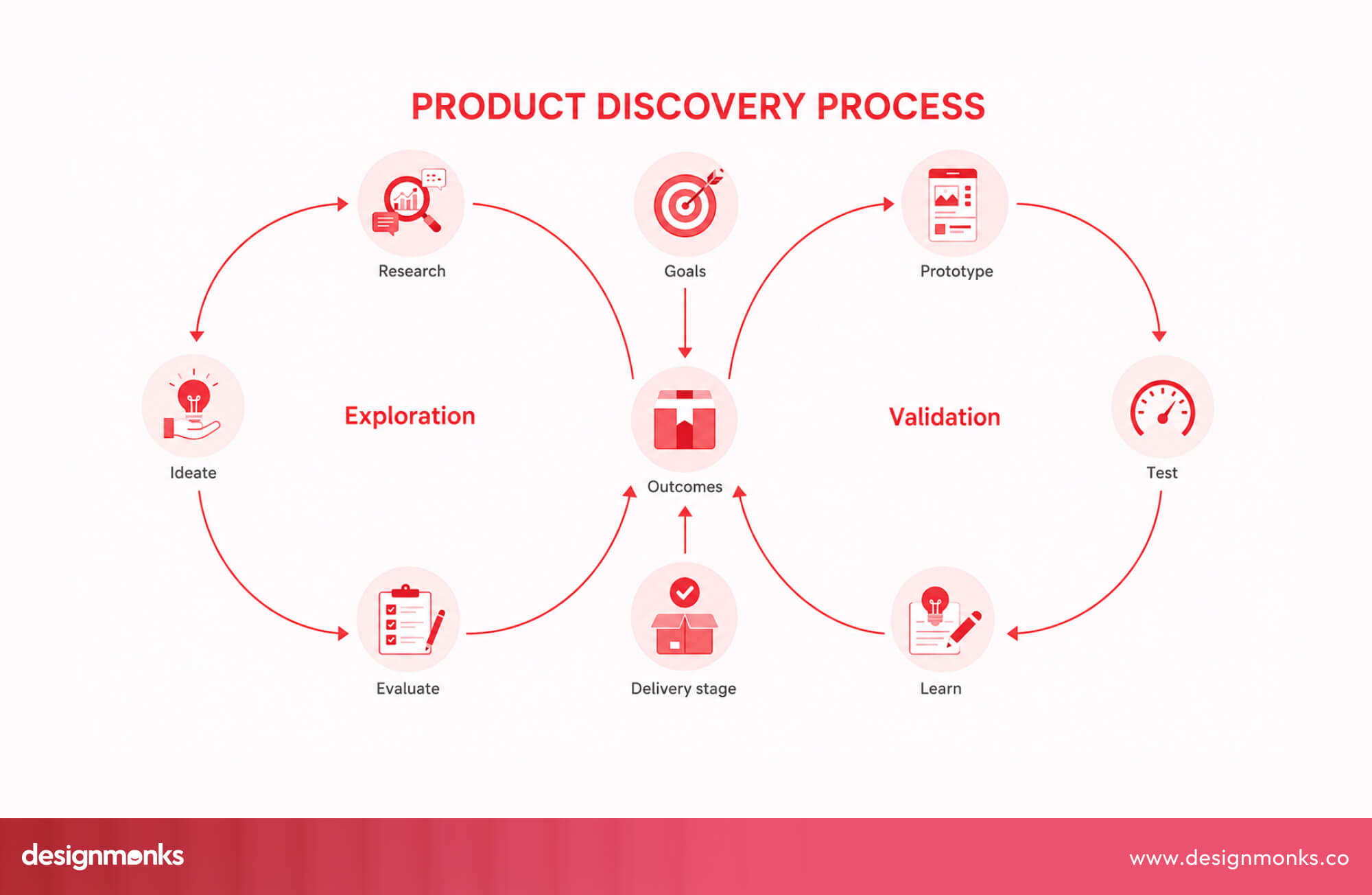
In addition, we run competitor analysis to study similar products in the market. This helps to identify gaps, opportunities, and areas where the product can stand out.
This stage ensures that design decisions are based on real insights, not guesswork.
Designing Around Business Goals
Every UX decision we make is tied to a clear business goal such as increasing adoption, improving engagement, or reducing drop-offs. Good design is not only about usability, but also about measurable impact.
For example, time-to-value refers to how quickly a new user reaches a product's core benefit. Reducing this time often leads to higher activation rates and better retention. Similarly, feature adoption refers to the number of users who actually start using a feature after it is released. Many SaaS products struggle here, with research showing that a large percentage of features go unused because they are not visible or easy to understand.
We use techniques like progressive disclosure and reveal complex information step by step instead of all at once. This helps reduce cognitive overload and improves decision-making for users.
Creating User Experiences That Drive Growth
User experience is one of the strongest drivers of product growth. Studies across SaaS and digital products consistently show that improving UX has a direct impact on retention and customer lifetime value.
When users can understand a product quickly, complete their first success early, and navigate without friction, they are more likely to stay and recommend it to others.

This creates a natural growth loop where better experience leads to higher usage, which leads to organic growth.
We design with this loop in mind and ensure every interaction reduces friction and increases clarity.
Acting as an Extension of Your Product Team
We don’t operate as an external vendor. Instead, we integrate directly into your product team and work closely with product managers, designers, and engineers.
We participate in sprints, which are short development cycles used in Agile product development. This approach helps teams make improvements faster and continuously refine the product based on feedback.
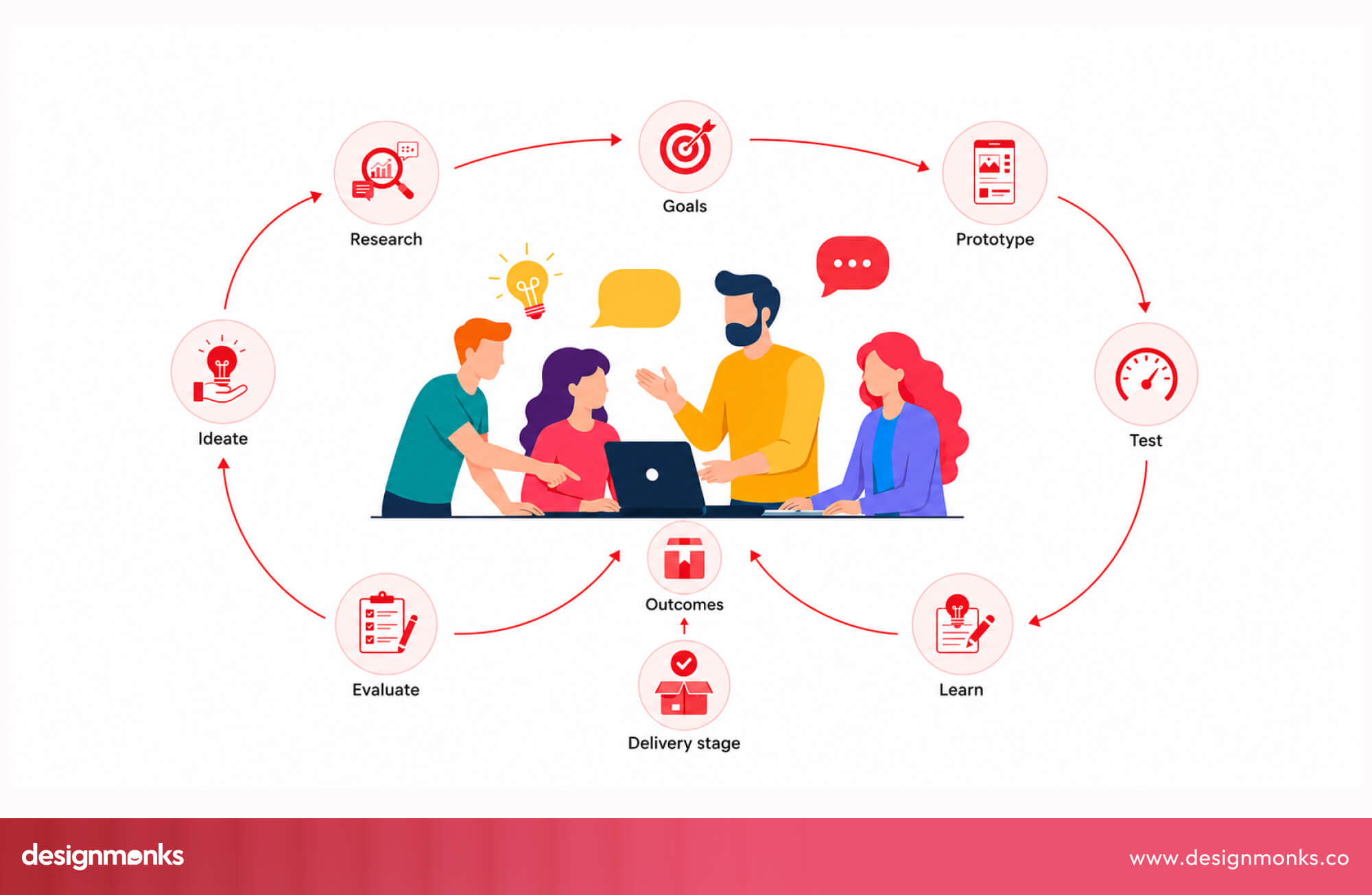
Our collaboration model is flexible. We can lead the design direction, support internal teams, or step in where specific expertise is needed, such as UX research or interface design.
This makes it easier for teams to scale product efforts without slowing down development.
Our Digital Product Design Consultancy Process
We follow a structured process that’s been refined across dozens of product engagements. It’s thorough where it needs to be, and fast where speed matters.
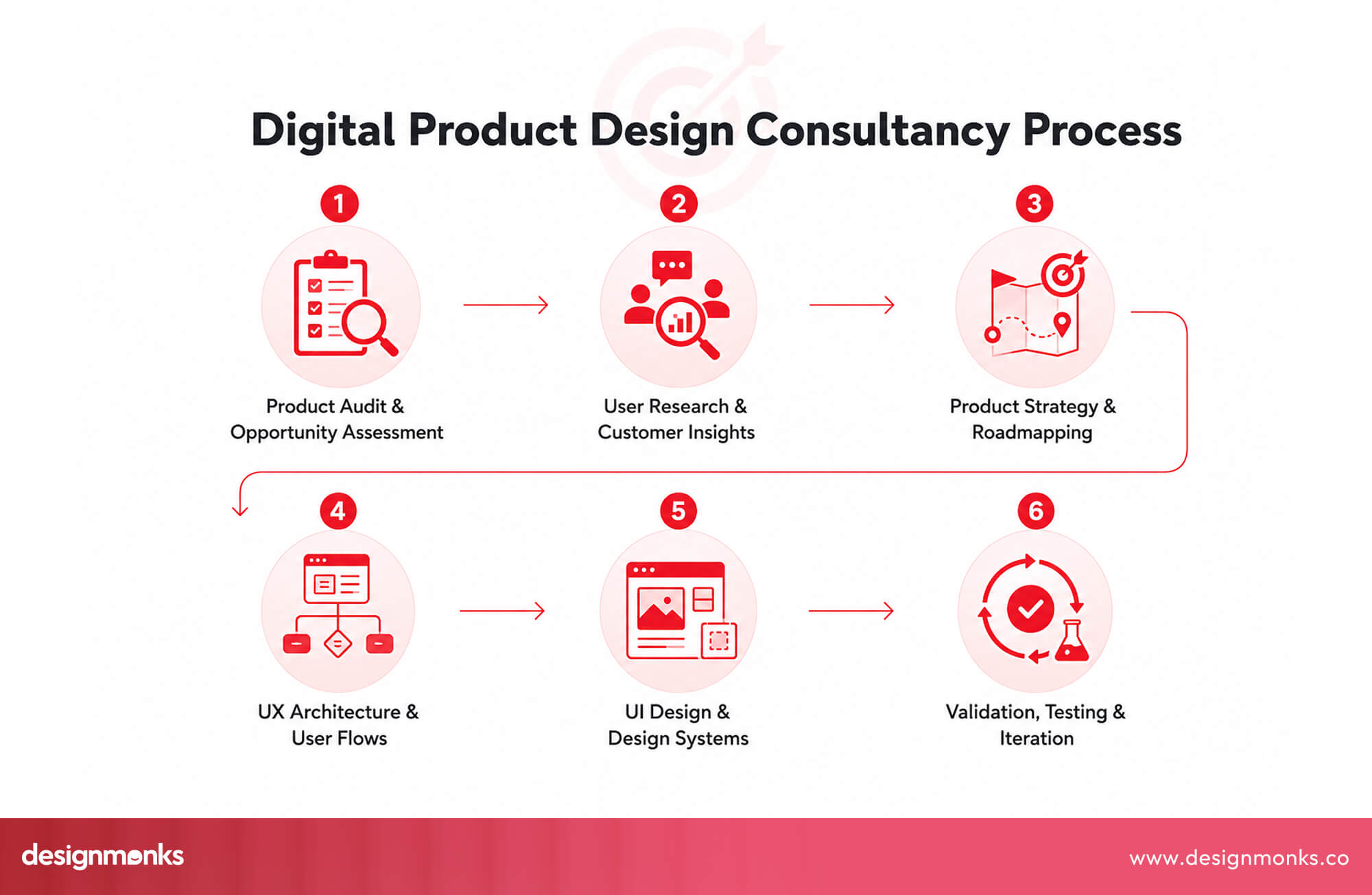
Product Audit & Opportunity Assessment
We start by reviewing your existing product in detail to understand how it currently performs. This includes evaluating user flows, interface structure, and overall usability.
We identify friction points that block users and highlight opportunities that can create the biggest impact. This gives us a clear and honest starting point before any design decisions are made.
User Research & Customer Insights
Then we focus on understanding real user behavior through structured research methods. This includes user interviews, usability testing, surveys, and product analytics review.
Instead of relying on assumptions, we study how users actually interact with the product. These insights help us uncover pain points, expectations, and behavioral patterns that shape better design decisions.
Product Strategy & Road Mapping
Once insights are gathered, we turn them into a clear product strategy. We prioritize features based on user needs, business impact, and technical feasibility.
This process helps teams avoid building unnecessary features and focus on what truly matters. The result is a practical roadmap that aligns product direction with business goals.
UX Architecture & User Flows
Then we define how the product is structured by mapping information architecture and user journeys. This ensures users can move through the product in a logical and friction-free way.
We simplify complex flows and make sure key actions are easy to reach. A strong structure here reduces confusion and improves overall usability.
UI Design & Design Systems
We then design clean and consistent user interfaces that reflect the product’s purpose and brand. Every screen is designed with clarity, accessibility, and scalability in mind.
We also build reusable design systems that help maintain consistency as the product grows. This ensures faster development and a more unified user experience over time.
Validation, Testing & Iteration
Before anything goes into development, we test ideas through prototypes and usability testing. This helps us identify issues early and refine solutions before they become costly to fix.
We also use iterative feedback loops to continuously improve the design. This reduces risk and ensures the final product is both usable and effective.
Types of Companies We Help
We work across company types and stages, but the common thread is always the same, teams who want to build products people actually love.
- Startups Seeking Product-Market Fit: For early-stage companies, design isn't a nice-to-have; it's a core part of finding what resonates with their product. We help startups move fast, test smart, and build products users actually want.
- SaaS Companies Scaling Their Platforms: As SaaS products grow, UX complexity tends to grow with them. We help scaling teams tackle feature sprawl, improve onboarding, and keep the experience coherent as the product evolves.
- AI Product Teams Improving Adoption: AI tools often fail not because the technology is lacking, but because users don’t understand or trust them. We help AI product teams close that gap with clearer, more intuitive interfaces.
- Enterprise Organisations Modernising Legacy Systems: Legacy enterprise systems are often painful to use and expensive to maintain. We work with enterprise teams to redesign internal tools that people actually want to use. We reduce friction, errors, and the need for constant training.
- Complex Digital Platforms Needing Strategic UX Support: For businesses managing large-scale or multi-layered systems, we are often the best digital product design consultancy. We simplify fragmented workflows, unify experiences across modules, and create scalable design systems that make even the most complex platforms usable and efficient.
Key Challenges We Solve Through Product Design Consulting
Great products don't happen by accident, they're the result of deliberate design decisions made at every stage. Whether you're struggling with retention, conversion, or simply keeping up with growth, we help teams identify what's broken and fix it in ways that last:
Low User Adoption
When users sign up but don't stick around, onboarding is usually to blame. We redesign activation flows so users reach their first "aha moment" quickly and always know what to do next.
Poor Conversion Rates
Conversion problems are almost always UX problems. We audit the full user journey, pinpoint where people drop off, then redesign those touchpoints to improve performance.
Complex User Journeys
Organically grown products often develop unnecessarily tangled flows. We simplify, cut steps, and make the path to key actions obvious without sacrificing functionality.
Product Scalability Issues
Design that works for 10 features often breaks at 50. We help teams build systems such as design systems, component libraries, and information architecture. These will hold up as products grow.
Design Debt and Inconsistency
Inconsistent UI confuses users and costs developers time. We audit for design debt, consolidate patterns, and put the right systems in place. So your team stays consistent going forward.
Digital Product Design Services We Offer
Our services cover the full product design lifecycle. From early strategy and research to scalable design systems and production-ready interfaces, we cover it all:
- Product Strategy Consulting: We help you figure out what to build and in what order. This helps to align product decisions with user needs and business goals before a single screen gets designed.
- UX Research & User Testing: From discovery interviews to usability testing, we gather the insights you need to design with confidence rather than assumptions.
- SaaS Product Design: We specialise in designing SaaS dashboard UX that are genuinely easy to use. This helps users get to value faster and build habits that reduce churn.
- AI Product Design: AI products have unique UX challenges. We help teams design interfaces that make AI outputs understandable, trustworthy, and useful for everyday users.
- Mobile App Design: We design mobile experiences that feel native and intuitive across iOS and Android with performance and usability at the core.
- Enterprise Product Design: We work with enterprise teams to modernise complex internal tools and workflows. This reduces training time, improves productivity, and makes sophisticated systems actually usable.
- Design System Development: We build component libraries and design systems that give your team a consistent visual language. This makes it faster to design and build new features at scale.
Case Studies & Product Success Stories
Here’s a look at the kinds of challenges our digital product design agency has helped teams solve:
Turning Complex SaaS Flows Into Retention-Driven Experiences
When we worked on Skillophy, Trackory, and Dwelio, the challenge was consistent. Users were signing up but not staying long enough to experience value.
Although each product had strong features, the experience felt fragmented. In Trackory, for example, users struggled with overloaded dashboards and unclear navigation.
In Skillophy, onboarding wasn’t guiding users toward their first success. In Dwelio, key actions were buried under unnecessary steps, creating drop-offs early in the journey.
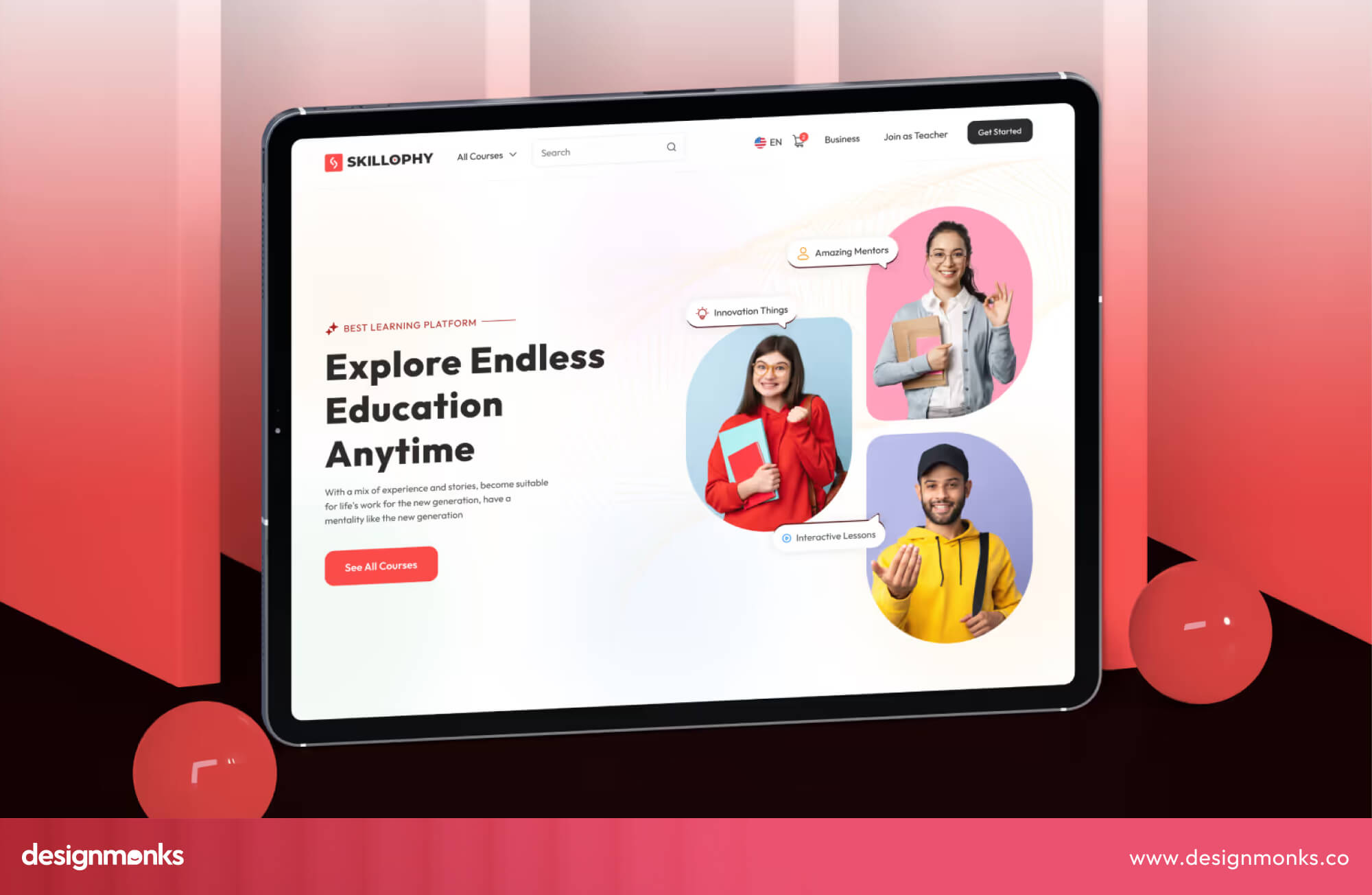
We started with deep product discovery and UX research across all three platforms. By analyzing user behavior, we identified where users were getting stuck and why retention was dropping.
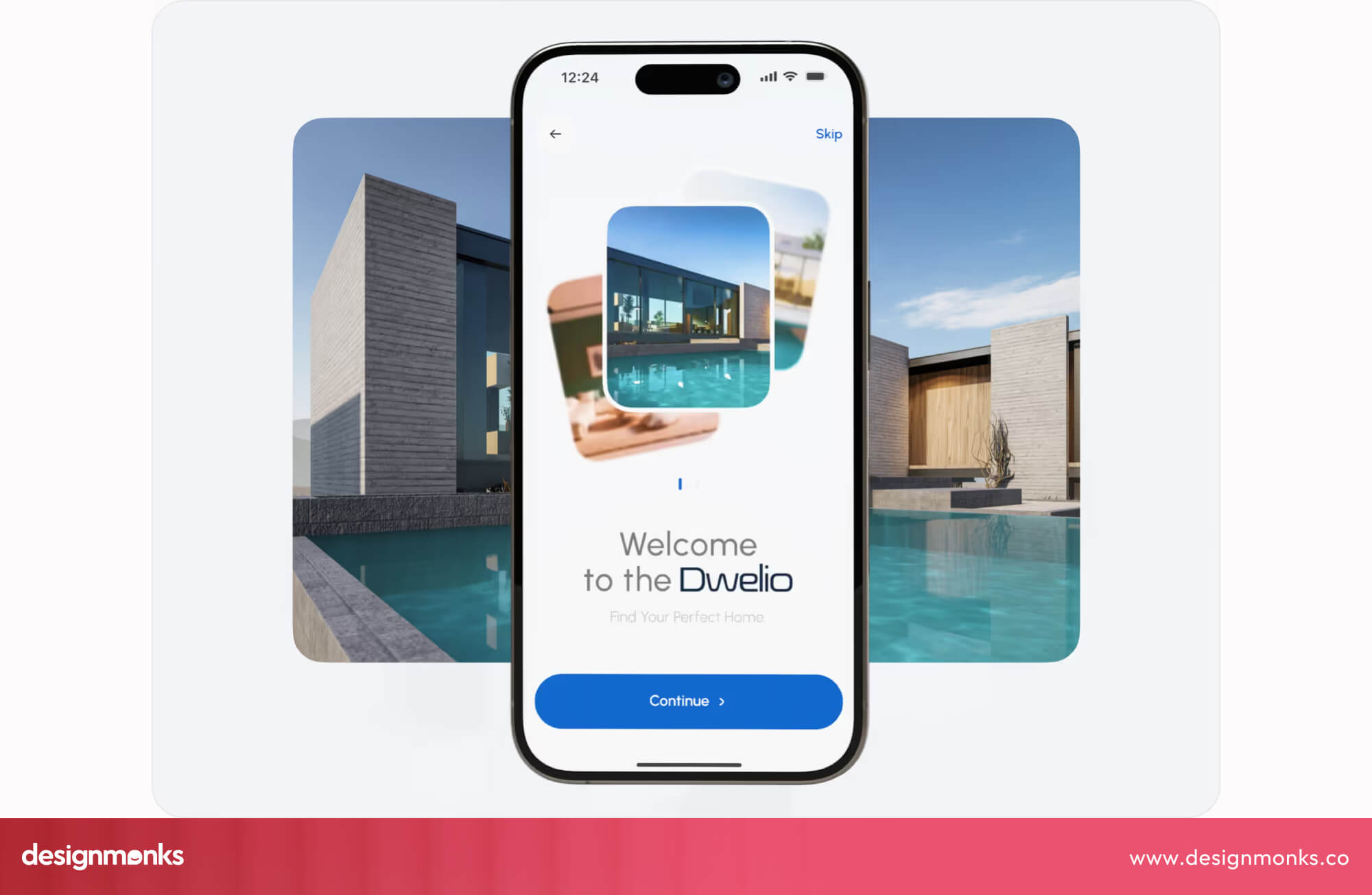
From there, we restructured onboarding flows in Skillophy, simplified core dashboards in Trackory, and streamlined user journeys in Dwelio. Every change was focused on one outcome, help users reach value faster with less friction.
The result was a noticeable improvement in engagement across all three products, with users completing key actions more consistently and staying active longer.
Making AI Products Understandable, Not Just Powerful
With Sivro, Bearister, and Netra, the core challenge was not capability, it was clarity. These AI-driven products were powerful, but users often struggled to understand what the system was doing or how to act on the output.
In Sivro, users lacked trust because AI decisions weren’t explained in a simple way.
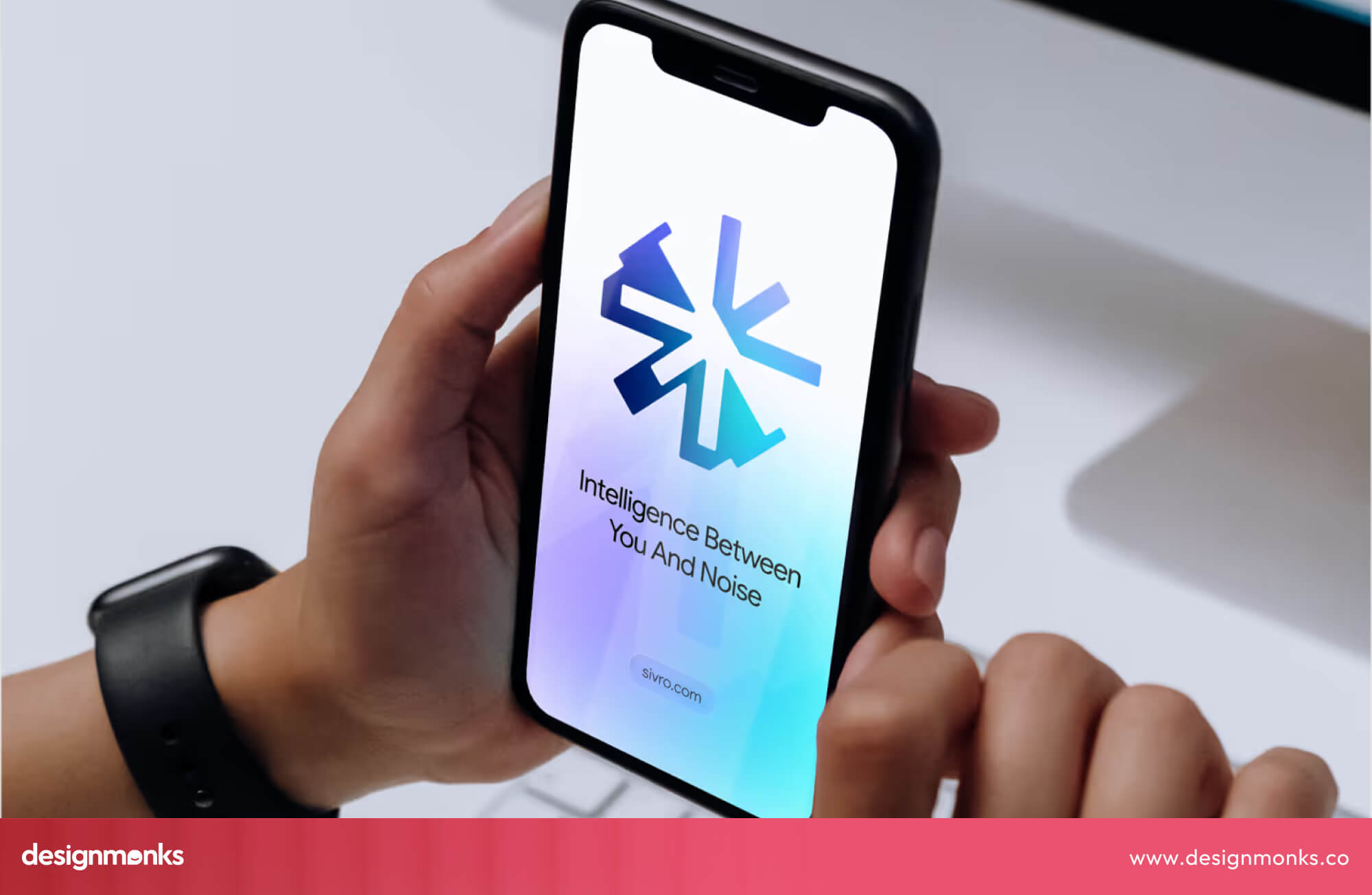
In Bearister, legal AI outputs were too complex for first-time users. In Netra, dashboards presented too much raw data without clear interpretation
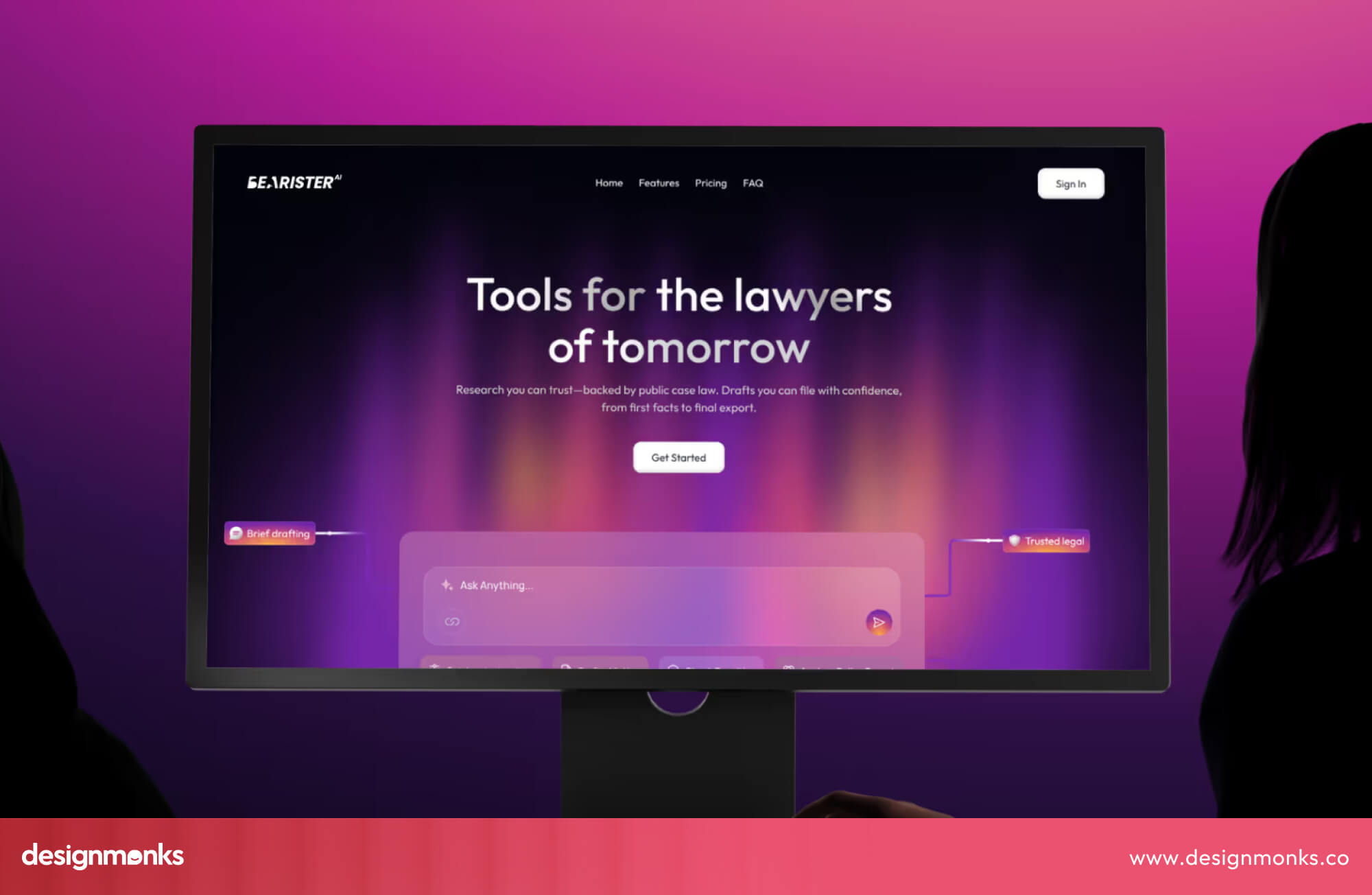
We focused on simplifying the experience through structured product discovery and UX design. In Netra, we redesigned dashboards to highlight decisions instead of raw data.
In Bearister, we introduced clearer explanation layers to make AI outputs more actionable. In Sivro, we restructured flows to improve trust and transparency in AI-driven actions.
As a result, users across these platforms started engaging more confidently. They understood outputs faster, relied on AI features more frequently, and integrated them into real workflows.
Rebuilding Enterprise Systems for Speed, Clarity, and Control
With enterprise tools like Airaxis, Materio, and Affines, the problem was scale. These systems had evolved over time, adding more features but also more complexity.
In Airaxis, flight control workflows were powerful but difficult to navigate quickly. In Materio, supply chain dashboards had become cluttered with overlapping data.
And in the case of Affines, decentralized finance workflows were hard for users to follow due to fragmented interfaces.
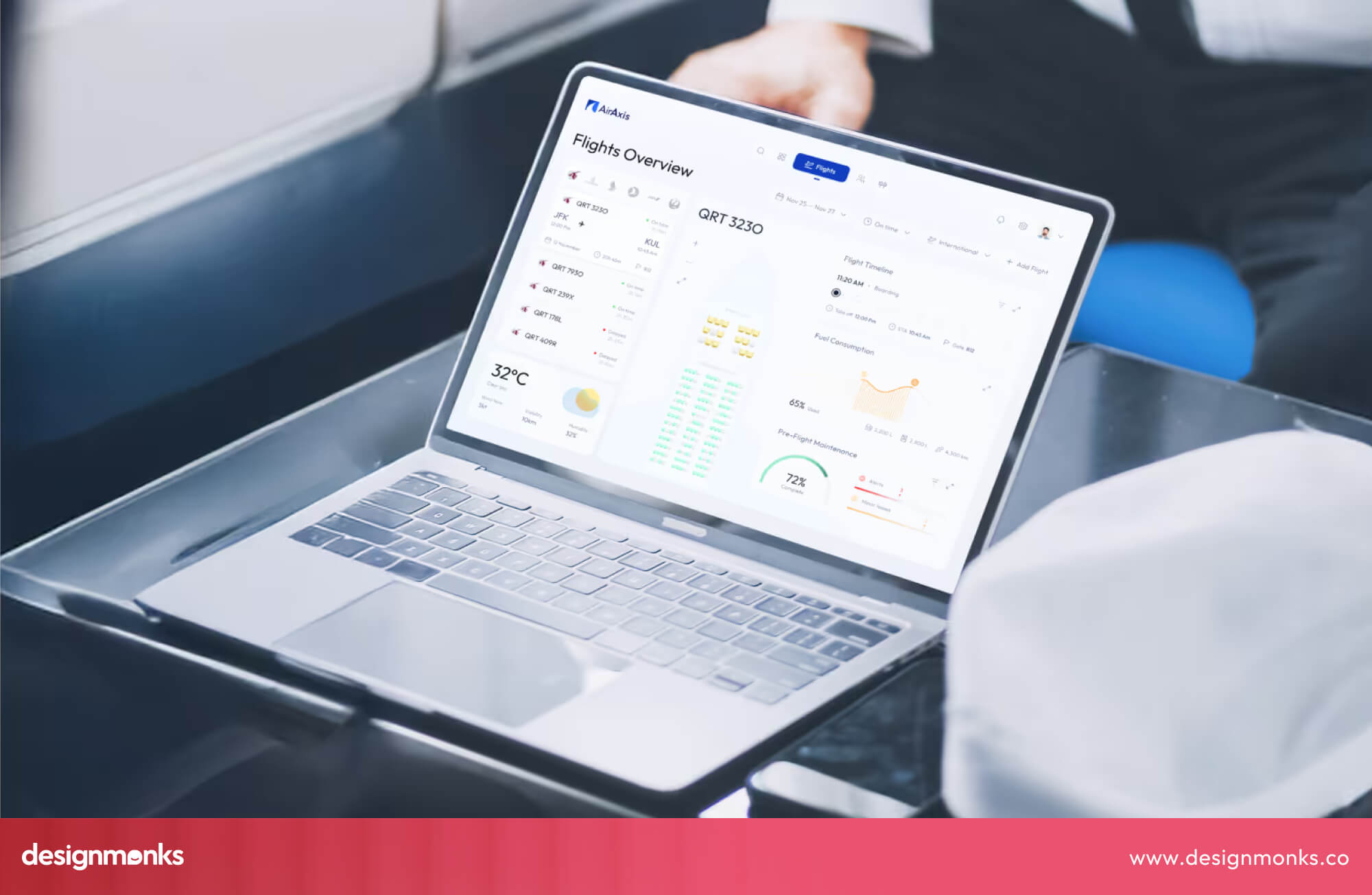
We approached all three by stepping back and rethinking structure before visuals. We mapped entire workflows in Airaxis, removed redundant steps in Materio, and unified scattered interfaces in Affines.
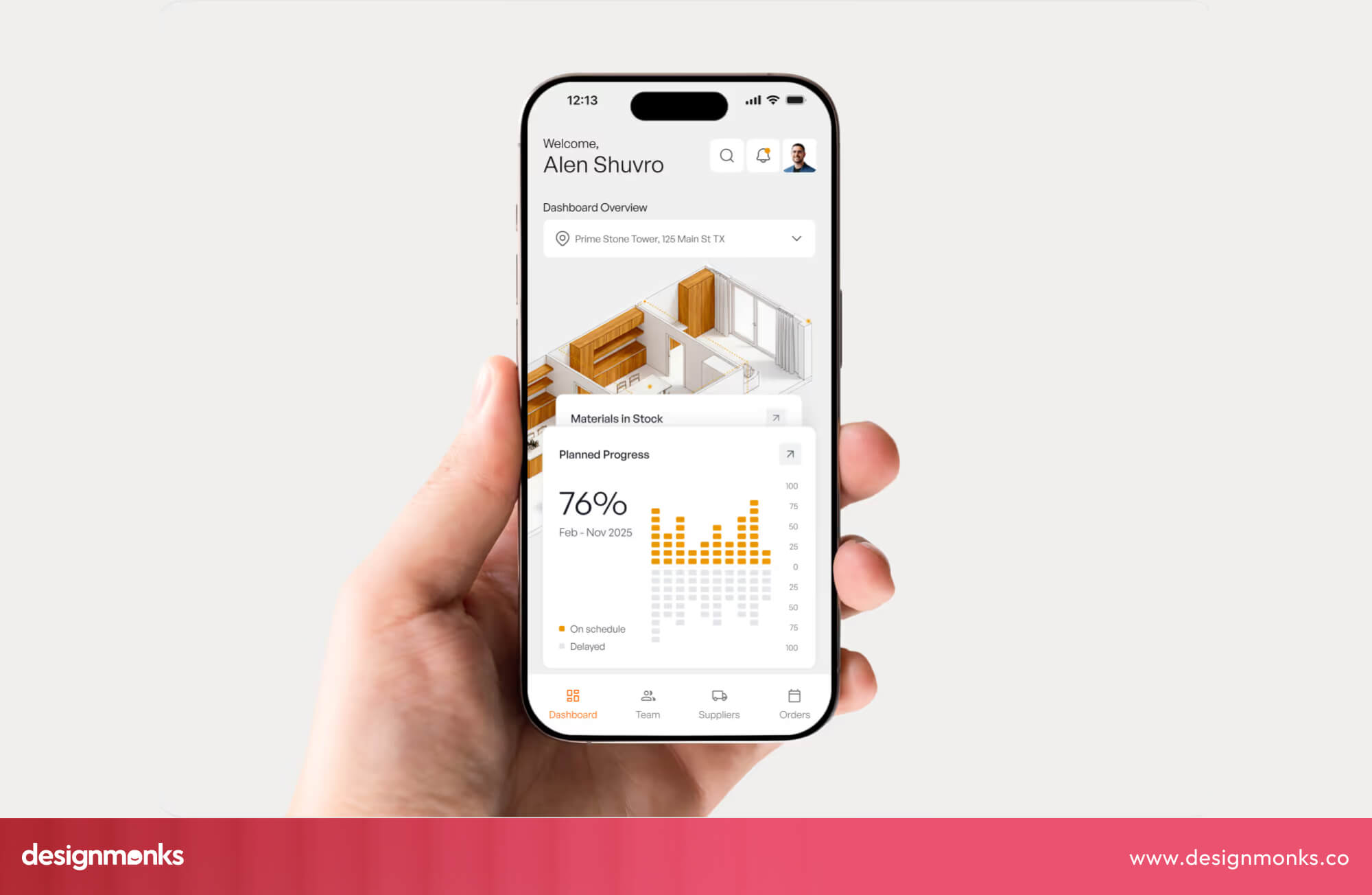
We also introduced scalable design systems across these platforms to ensure consistency as they continue to grow.
The outcome was clearer workflows, faster decision-making, and significantly improved usability across complex enterprise environments.
Why Choose Design M0nks as Your Digital Product Design Consultancy
There are many design teams available, but what sets Design Monks apart is how we approach product problems from strategy to execution.
We don’t just design screens, we help you think through what to build, validate it with real users, and shape it into a product that is usable, scalable, and aligned with business goals. Our role is to reduce guesswork, improve clarity, and help your team ship better product decisions with confidence.
- Deep SaaS & AI Product Experience: We solve real product challenges like onboarding drop-offs, feature complexity, and AI-driven UX clarity across SaaS and AI platforms.
- Research-Driven Design Decisions: We base every decision on user research, testing, and data so your product is built on evidence, not assumptions.
- Fast, Collaborative Workflow: We work in short feedback cycles with full visibility so your team always knows what is happening and why.
- Senior Product Designers Only: You work directly with experienced designers who take ownership of both strategy and execution.
- Proven Impact Across Industries: We’ve improved adoption, retention, and usability for SaaS, fintech, healthtech, and enterprise products by adapting to each context.
Together, this means you get a partner who doesn’t just design what looks good, but helps build products that actually work in the real world and drive measurable outcomes.
Frequently Asked Questions
What does a digital product design consultancy do?
A digital product design consultancy helps businesses design and improve digital products. It also helps with strategy, research, and product thinking.
How is a consultancy different from a UX agency?
A UX agency usually focuses on executing design based on a given brief. A consultancy gets involved earlier in the process by helping shape the strategy, define the problem, and guide research. This makes them a thinking partner as well as a design partner.
How much does product design consulting cost?
Pricing depends on scope, complexity, and engagement length, so there's no single number that fits every project. Most engagements start somewhere between $5,000 and $10,000 for focused audits or short-term projects, while longer strategic collaborations typically range from $15,000 to $50,000 or more.
How long does a product design engagement take?
Most engagements run anywhere from 4 to 16 weeks, depending on scope and complexity. Focused audits or sprints can wrap up in as little as 2–4 weeks, while longer strategic partnerships typically run 3–6 months or more.
Can the Consultancy Team work alongside the internal product team?
Yes, the consultancy team collaborates directly with in-house designers, product managers, and engineers. They integrate into your workflow rather than replacing your team and ensure smoother collaboration and faster execution.
What are the best digital product agencies for building a consumer app?
The best digital product agencies for building a consumer app depend on your product stage. Some agencies focus on execution, others, like Design Monks, work as consultancies, guiding strategy and research before design. For consumer apps, prioritize teams with strong experience in onboarding and retention.


.avif)
.avif)
.avif)
.avif)


.avif)
.avif)
.avif)
.avif)






.avif)