.svg)




Key Takeaways
- Healthcare app design demands compliance, patient trust, and clinical workflow expertise upfront.
- Match agency choice to your stage, budget, and long-term product roadmap needs.
- Pricing ranges from $1,800 MVPs to $100,000+ compliance-heavy enterprise healthcare platforms.
- Agencies beat in-house teams for early-stage startups needing speed without hiring overhead.
- Ask about HIPAA handling, tools, and past healthcare work before signing anything.
Users spend less than 30 seconds learning how to use a health app before they switch to another one or delete it entirely, according to a usability study published in Scientific Reports. That number tells you everything about why healthcare app design cannot follow the same playbook as a shopping or gaming app.
A confusing screen in this space does more than annoy someone. It can delay a diagnosis, hide a medication reminder, or push a patient to give up on care entirely. Every button and every word choice touches someone's health directly.
Founders often ask which agency understands this pressure and still ships fast, clean work. Three names come up again and again for good reason: Design Monks, Cieden, and KRUTSCH, each with a different strength depending on your stage.
This blog breaks down seven agencies worth your attention. Read on to find the right fit for your app.
Best Healthcare App Design Agencies: At A Glance
Before you start the big talk, I would like to share a quick comparison table of the 7 best healthcare app agencies I’ll list here. The table shows you the basics, but that’s not all. I’ll tell you why I chose them and how to reach them in the detailed discussion.
HIPAA and HITECH: The Compliance Rules Behind Every Healthcare App Screen
HIPAA and HITECH set the ground rules for anything a patient touches on screen. A design agency that skips this knowledge risks screens that look great but fail an audit, or worse, expose real patient data.
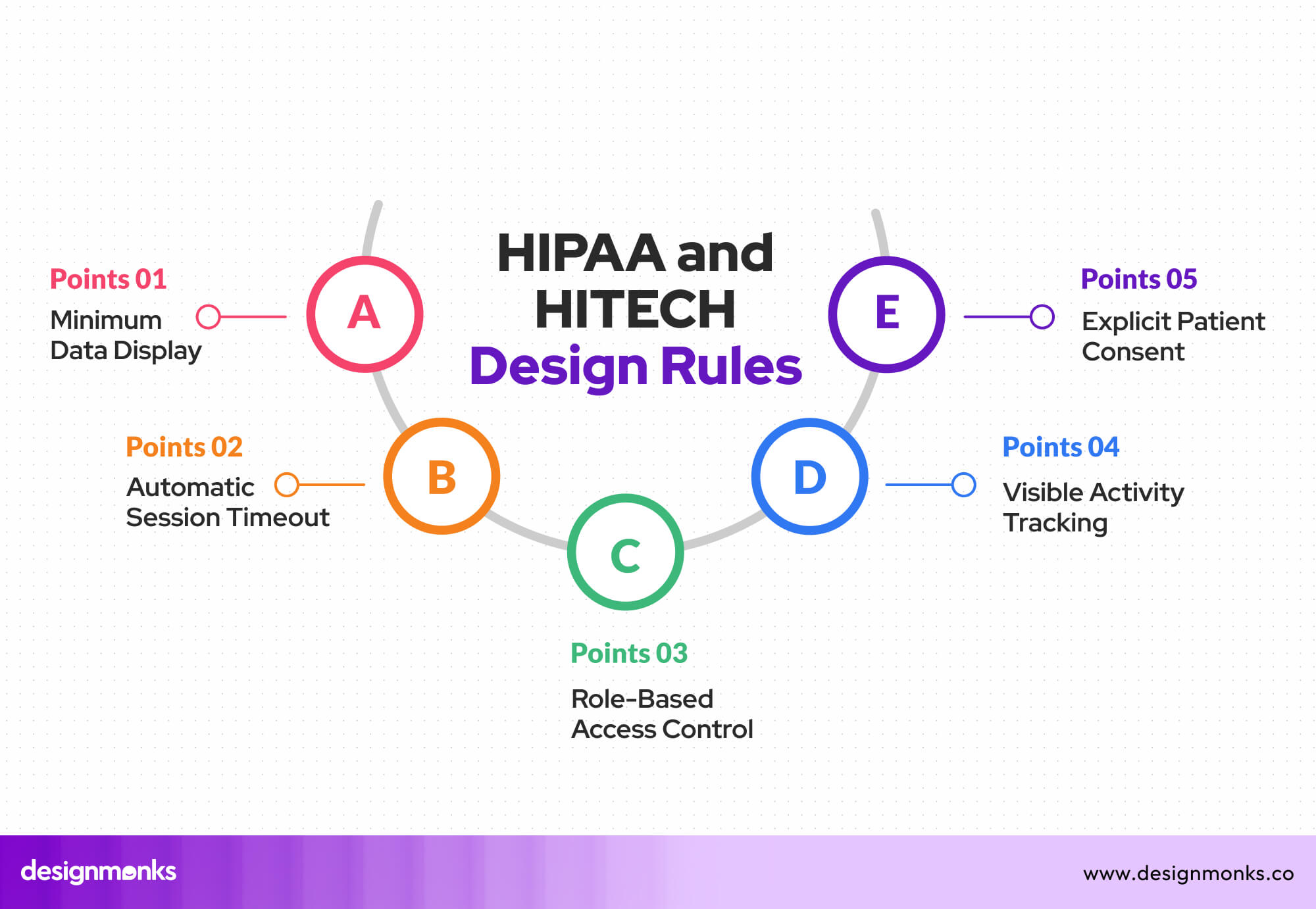
Show Only the Minimum Necessary Data on Any Screen
Every screen should display only the data a user actually needs for that task, nothing extra. A dashboard that shows a patient's full medical history when only an appointment time is needed breaks this rule immediately.
Build Auto-Logoff Into Every Session by Default
Any screen holding patient data needs an automatic timeout after a short period of inactivity. Designers often skip this for the sake of a smoother experience, but a forgotten open session on a shared device becomes a real breach.
Design Role-Based Views So Users See Only Their Own Data
A nurse, a billing clerk, and a patient should never see the same version of a screen. Interfaces need to adjust what's visible based on who's logged in, not rely on a single shared layout for everyone.
Keep an Audit Trail Visible in the Design, Not Just the Backend
Every screen where data gets viewed, edited, or shared needs a logged trail of who touched it and when. Good design surfaces this trail somewhere accessible, so admins can review it without digging through raw server logs.
Add Clear Consent Screens Before Any Telemedicine Session Starts
A telemedicine web design guide should always include a consent screen before video calls begin, showing what's being recorded and shared. Patients need to actively agree before a session starts, not discover the terms buried in a settings menu.
7 Best Healthcare App Design Agencies Worth Your Shortlist
I spent a good chunk of this week digging through Clutch profiles, agency case studies, and old client reviews. My goal was simple. I wanted a list I would actually hand to a founder who is about to spend real money on a healthcare app. Not a list stuffed with the same five giant names every blog repeats.
So here it is: 7 agencies that design healthcare apps well, along with what they cost, where they sit, and who they're best suited for.
1. Design Monks: Best for Patient-First App Design Without Agency Overhead.
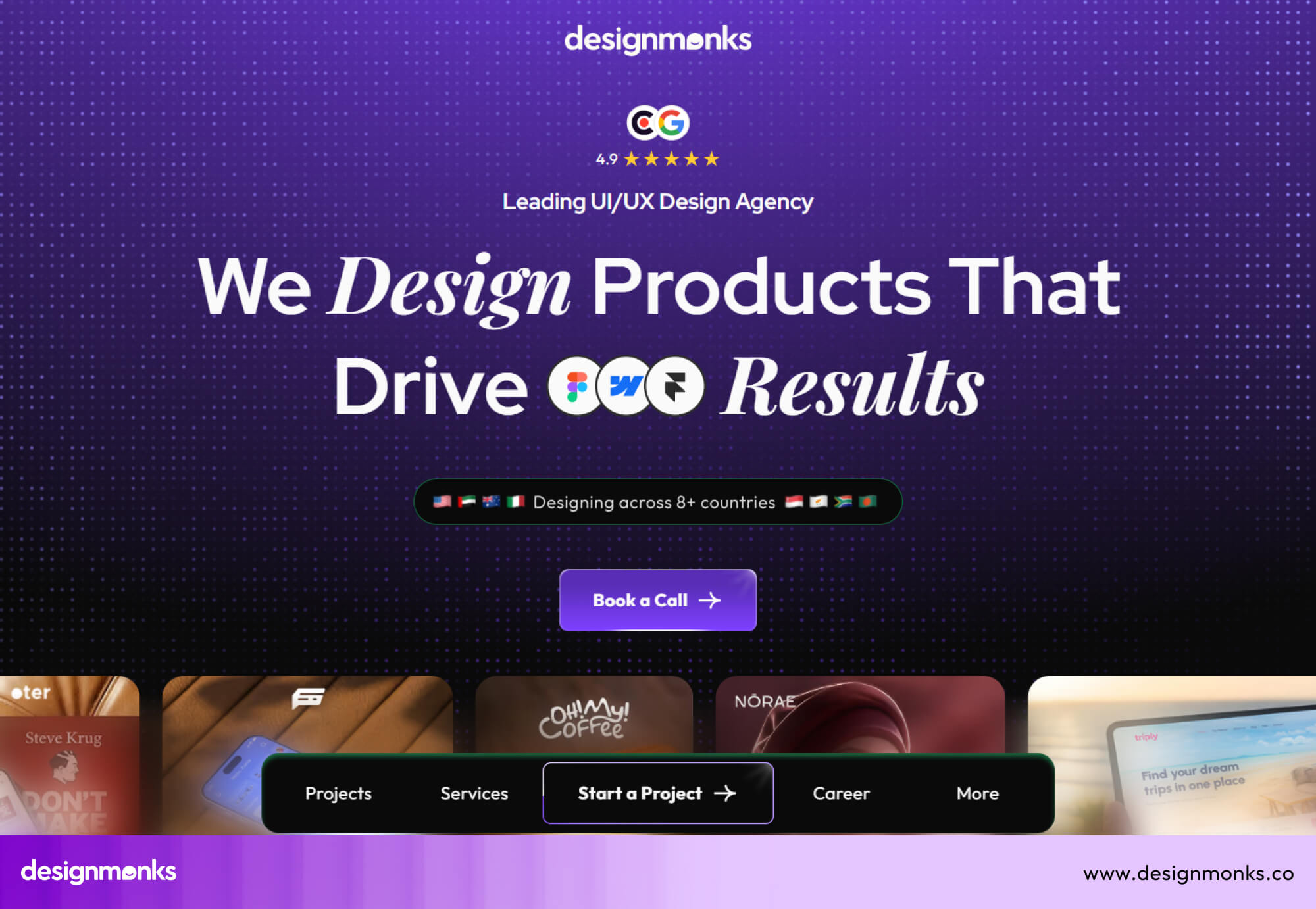
Technically, I work inside Design Monks, so I watch our healthcare work take shape up close. The team designed Calmora, a brand identity for an ADHD platform, plus telemedicine interfaces and hospital management redesigns that simplify daily patient tracking.
Their process starts with real research, not guesswork. Designers map how patients and clinicians actually move through a task, then build screens around that flow. Accessibility and clear navigation stay central to every screen they ship.
Design Monks works across seven countries and takes projects at every stage. Some clients arrive with a rough sketch, others have investors watching their next move. That range means the team has likely solved a problem close to yours before.
Clients keep coming back with the same word: reliable. The team answers fast, sticks to timelines, and treats feedback as part of the process, not a setback. A founder who cannot afford a slow or confusing partner will feel that steadiness fast.
- Location: United States, Australia, South Africa, Singapore, Italy, Dubai, Cyprus, Bangladesh
- Team Size: 50 to 70 designers and developers
- Services: UI/UX Design, Web Design, Logo & Branding, Webflow Design, Framer Design
- Price: Starting from $1,800
- Notable Projects: Telenor, Axiata, Crantech, Ostad, Oter, Alpine, PlentyPay, Yenex
- Client Reviews: 5-star rated on Clutch
- Awards & Recognition: Awwwards Nominee, Framer Expert Pro, Dribbble Select: Best Shots of the Year, Dribbble's Best Shot of the Year (featured on Instagram)
2. Cieden: Best For Health SaaS Products with HIPAA Rules
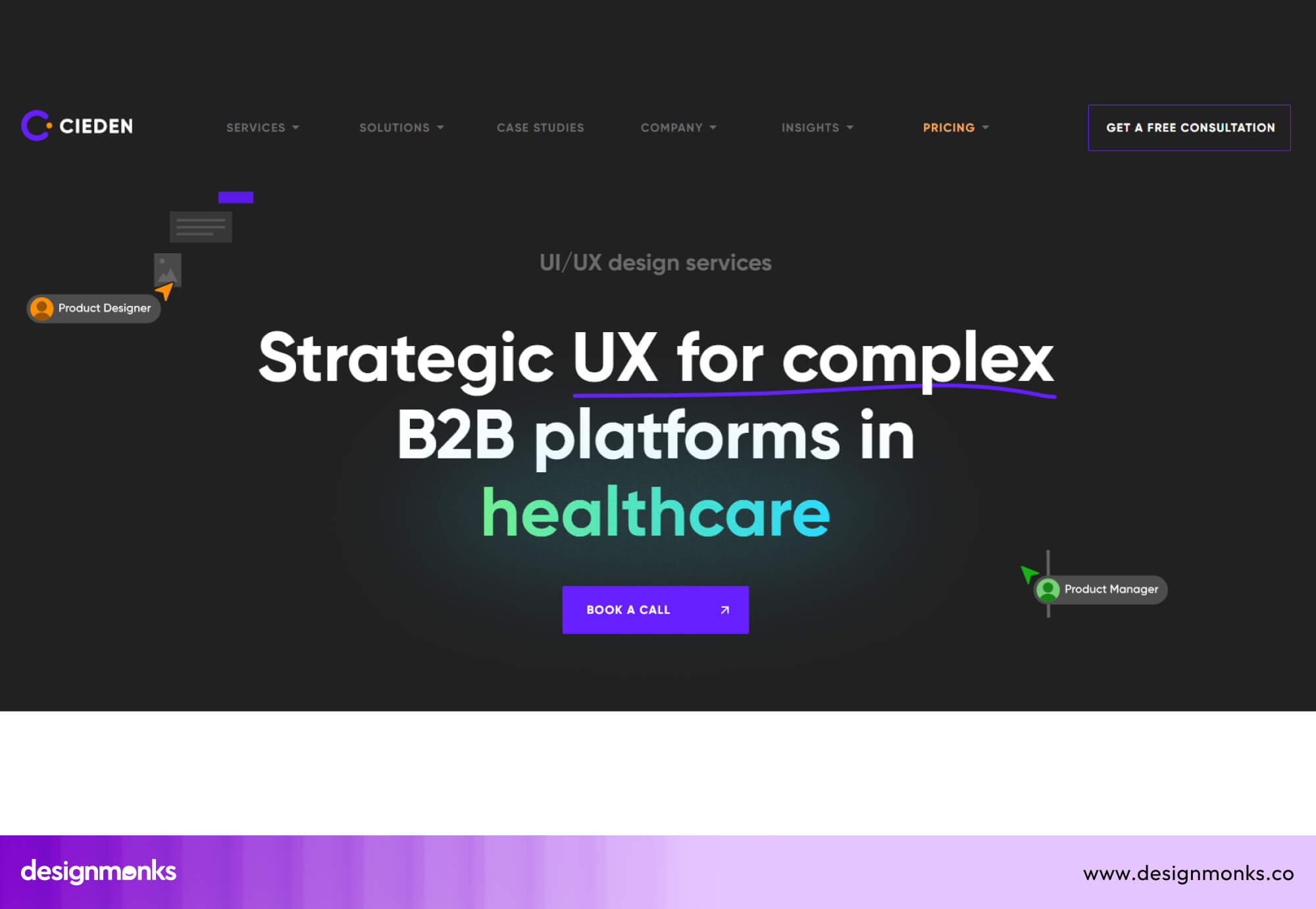
Cieden has spent years refining a niche in healthcare software, keeping a design director whose sole focus is the space. That depth means their team already understands clinical workflows before a project brief lands.
Their process leans on compliance from day one, embedding HIPAA and HITECH standards into every screen rather than patching them in later. Founders building regulated health products get fewer surprises during legal review.
The agency suits companies with an established product and a compliance checklist already in hand. Early founders still shaping their first version may find a startup-focused partner easier to move fast with.
- Location: Lviv, Ukraine, with offices in North America
- Service: HIPAA-aware UI/UX design for health SaaS
- Best For: Health SaaS products where HIPAA and HITECH rules shape every screen
- Price: $3,500 to $100,000 per project, $10,000 minimum
- Works: Health SaaS platforms across North America and Europe
3. Qubstudio: Best For Product Design And Brand Identity
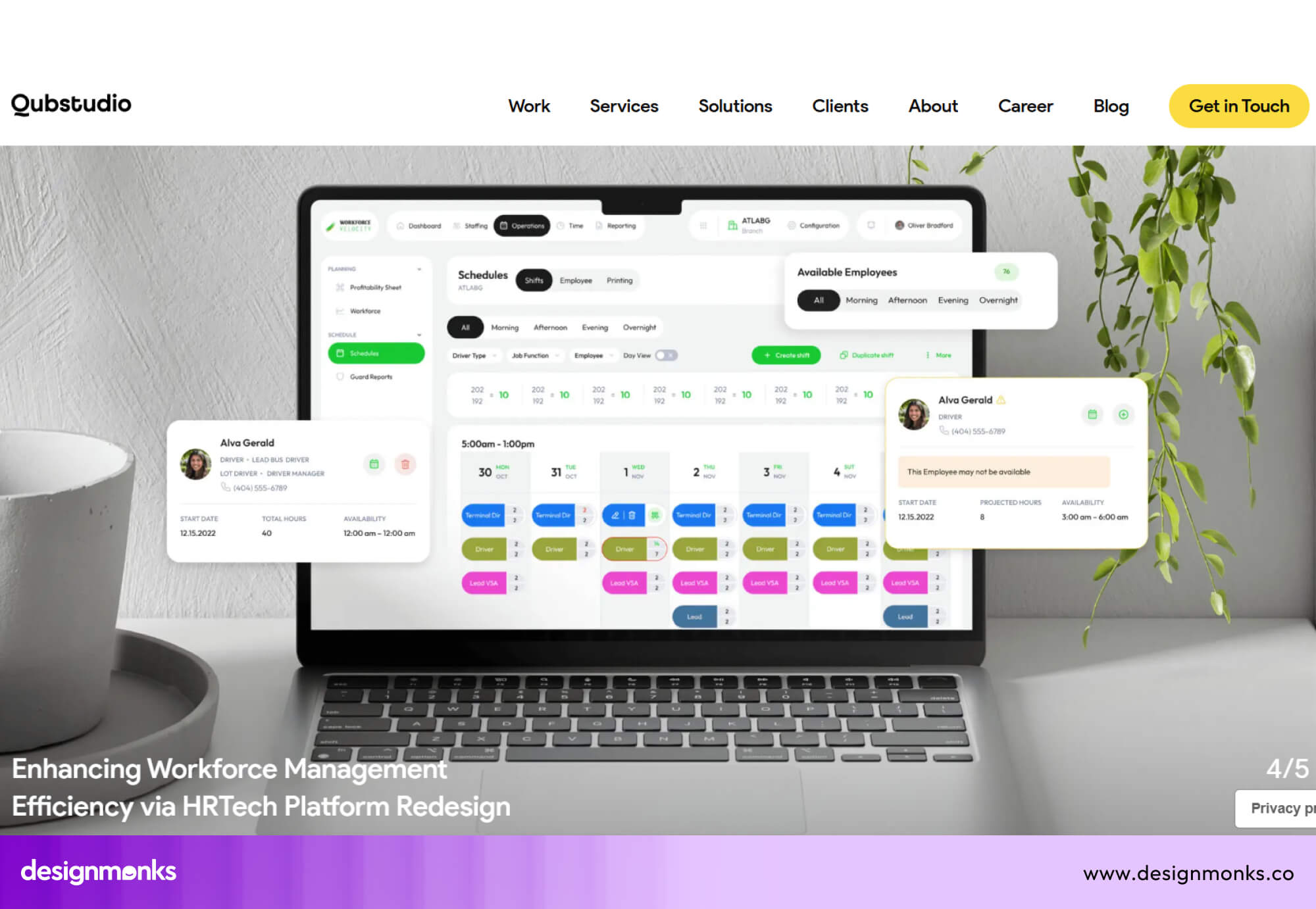
Qubstudio holds a Red Dot award and has built its name by mixing usability with real visual craft. Their portfolio leans into brand work as much as product screens, which shows in how finished their output feels.
One client reportedly cut paperwork time by a wide margin after a redesign, a strong signal of real workflow thinking behind the visuals. That kind of result matters more than a polished mockup alone.
Healthcare sits inside a broader, multi-industry client list rather than a dedicated practice built around the sector. A founder wanting a partner fluent in healthcare from day one may want extra ramp-up time here.
- Location: UK and Ukraine
- Service: Product design and brand identity for health teams
- Best For: Health teams that want product design and brand identity handled by one team
- Price: Starting from $10,000, hourly rate $50 to $99
- Works: Cross-industry product and brand design, healthcare among several verticals
4. The Skins Factory: Best For Polished Interfaces Without Top-Tier Agency Rates
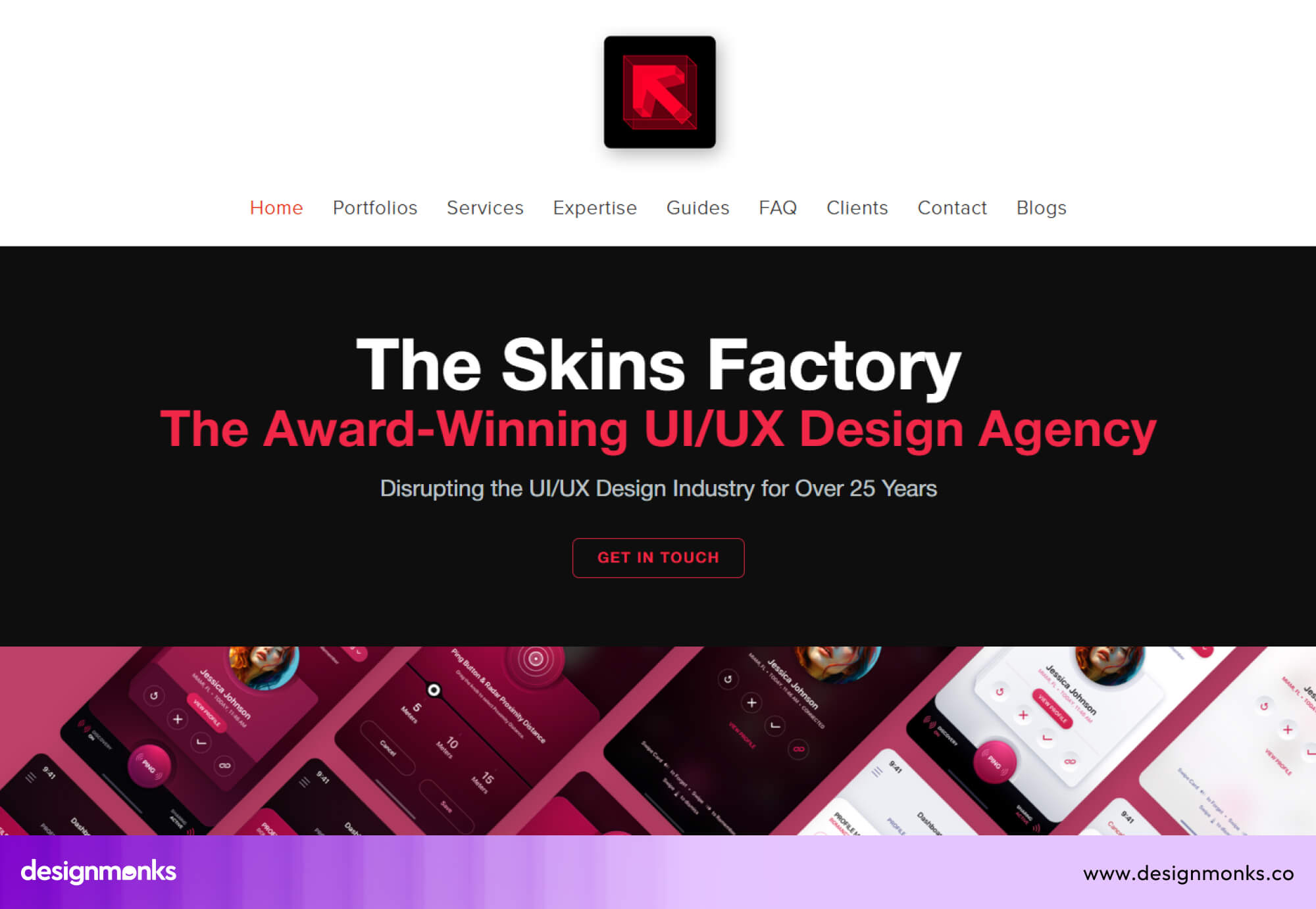
The Skins Factory has built interfaces since 2000, with a client list that includes major names like Microsoft and the NFL. That track record carries real weight for a portfolio built around brand recognition.
Healthcare sits as one vertical among many here, not a dedicated practice the way it is at Design Monks, where work like Calmora and hospital system redesigns runs as a core focus. That gap shows in how quickly clinical context gets understood.
A founder chasing a recognizable logo for investor decks might still lean toward this studio. A founder needing genuine healthcare depth from day one will find a thinner bench here than expected.
- Location: United States
- Service: UI/UX and product design across multiple industries
- Best For: Teams that want polished healthcare interfaces without paying top-tier agency rates
- Price: $150 to $250 per hour, fixed-scope projects $25,000 to $150,000+
- Works: Interfaces for major brands including Microsoft and the NFL, healthcare as one vertical among several
5. Cadabra Studio: Best For App wit An Adoption Problem
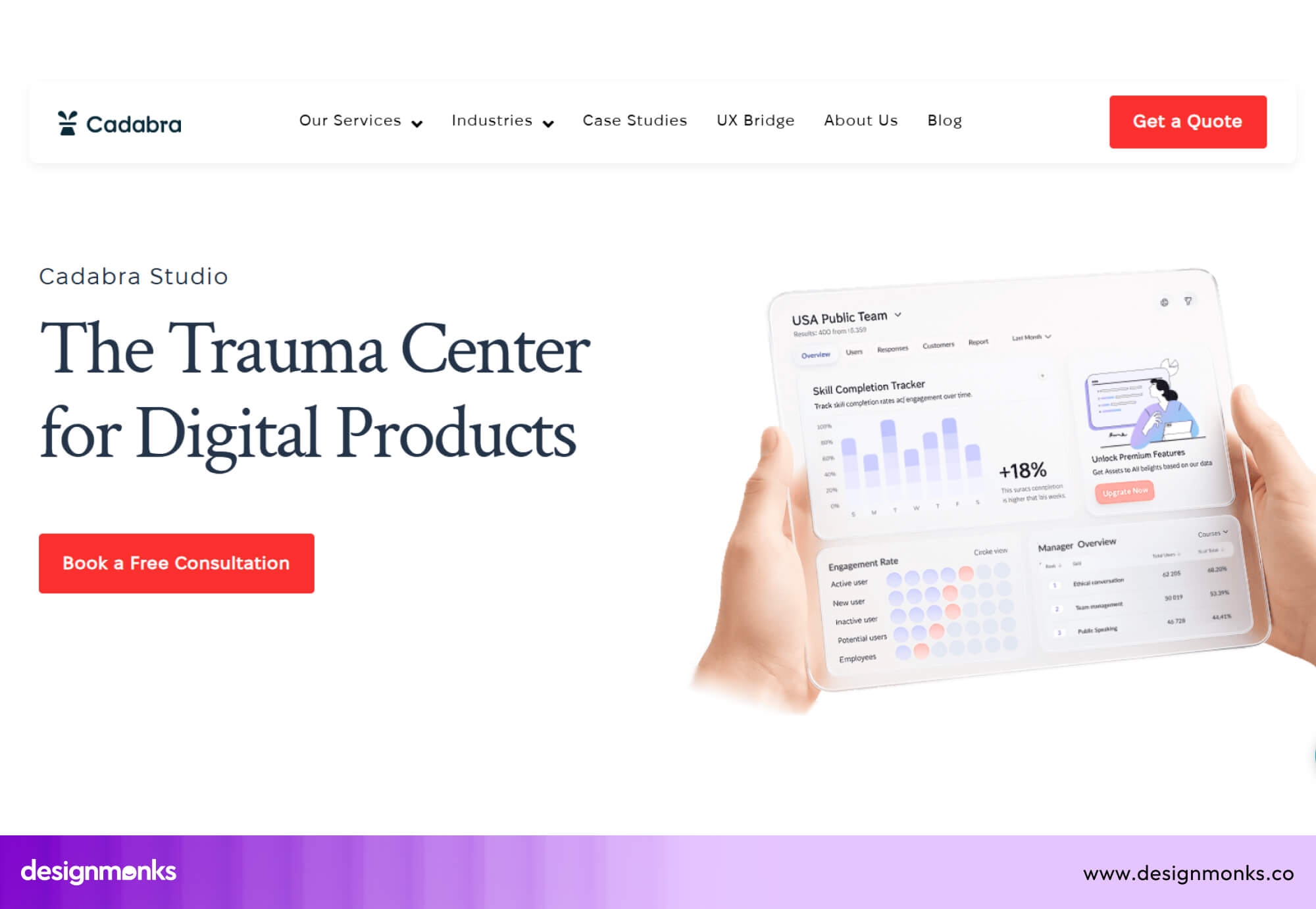
Cadabra Studio runs a diagnostic-first process, digging into why users abandon a product before touching a single screen. That order matters for teams that shipped fast and now face confusing flows nobody planned for.
Their combined San Francisco and Ukraine team gives clients a US-facing point of contact alongside a hands-on design and development bench. That structure suits founders who want oversight without managing two separate vendors.
The agency fits best when a product already exists and needs a fix, not a founder starting from a blank canvas. Teams building their first version may want a partner built around discovery from scratch instead.
- Location: San Francisco, US, with a Ukraine-based design and development team
- Service: UX diagnostics and interface redesign for healthcare apps
- Best For: Healthcare tech companies whose existing app has an adoption problem or a confusing interface
- Price: $10,000 to $50,000 per project, $5,000 minimum
- Works: Redesigns for healthcare products with existing user adoption issues
6. KRUTSCH: Best For Mid-Market Healthcare Organizations
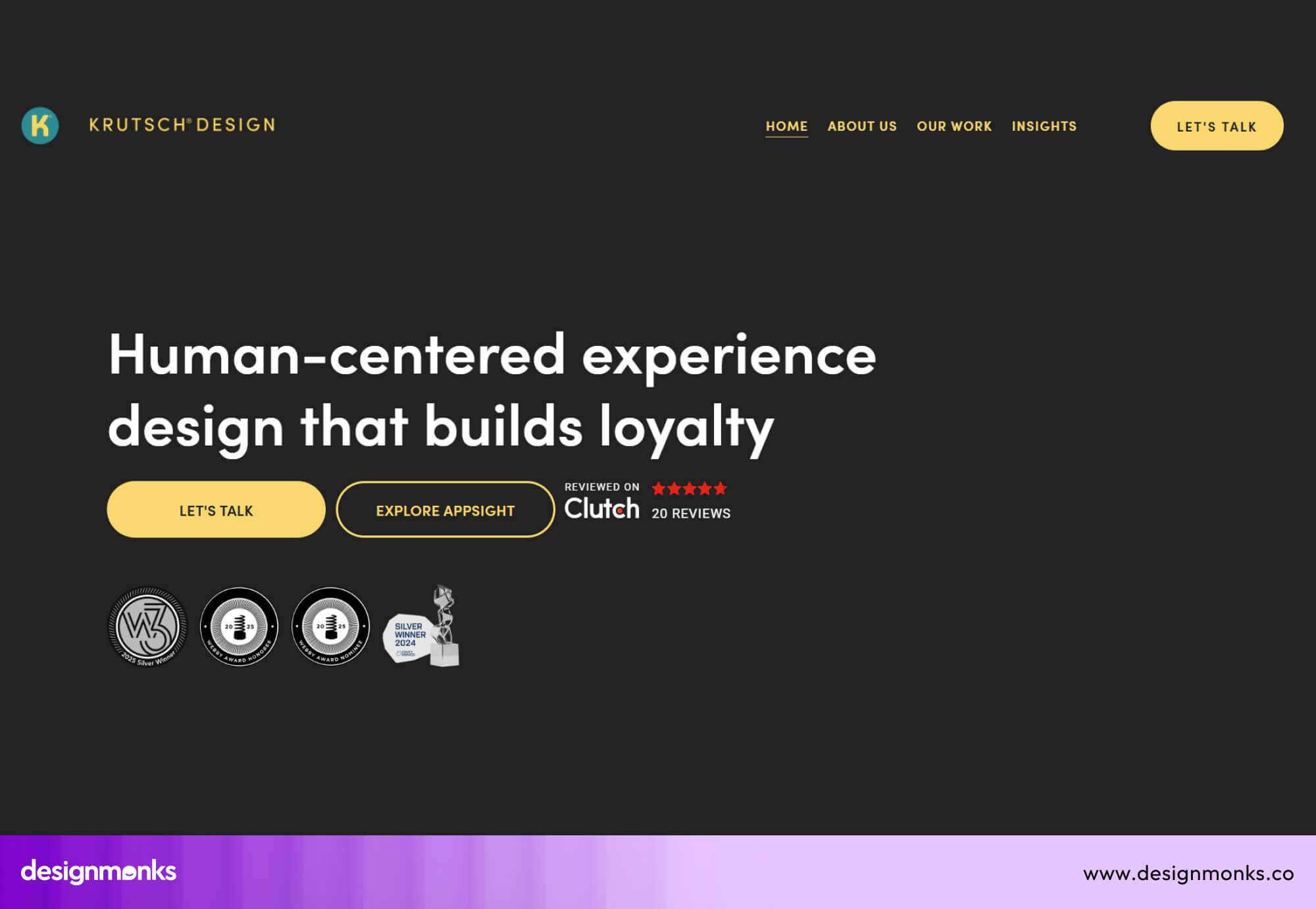
KRUTSCH counts Mayo Clinic among its healthcare clients and has picked up Webby and Davey award nominations for its app work. That recognition points to real craft behind the interfaces they ship.
Design and development sit under one small in-house roof here, so handoffs between the two stay tight instead of getting lost between vendors. Fewer moving parts usually means fewer surprises for the client.
Their focus on complex, established systems suits organizations modernizing something that already works but feels dated. A founder building a simple app from scratch may find a leaner, faster-moving partner elsewhere.
- Location: Minneapolis, Minnesota
- Service: UX strategy, mobile and web app design, in-house development
- Best For: Mid-market healthcare organizations that need to modernize a complex mobile or web app
- Price: Average hourly rate around $149, minimum budgets $25,000 to $50,000
- Works: Healthcare app modernization projects, including work with Mayo Clinic
7. SoftTeco: Best For UX/UI Bundled With Full App Development
.jpg)
SoftTeco
SoftTeco began as a software engineering company back in 2008, and that background still shapes how the agency operates today. Design lives inside a larger development offer rather than standing on its own.
That structure works well for a founder who wants a single team to design a healthcare app and then build it, skipping the handoff to a separate development shop entirely.
It is a weaker fit for a founder who already has developers in place and only needs design support. Paying for a bundled engineering team when you don't need one adds cost without adding value.
- Location: Warsaw, Poland, with offices across Europe, the US, the UK, and the UAE
- Service: UX/UI design bundled with full-cycle software development
- Best For: Healthcare organizations that want UX/UI design bundled with full app development, not design alone
- Price: Hourly rate $30 to $70
- Works: End-to-end healthcare app design and development projects
Case Study: Healthcare App Design
Reading design principles on a page only goes so far. Real-time examples show how those principles hold up once real users, real constraints, and real deadlines enter the picture. Here are three healthcare projects Design Monks built, each solving a different problem.
1. GoodGenes: A Premium Identity for Modern Telehealth
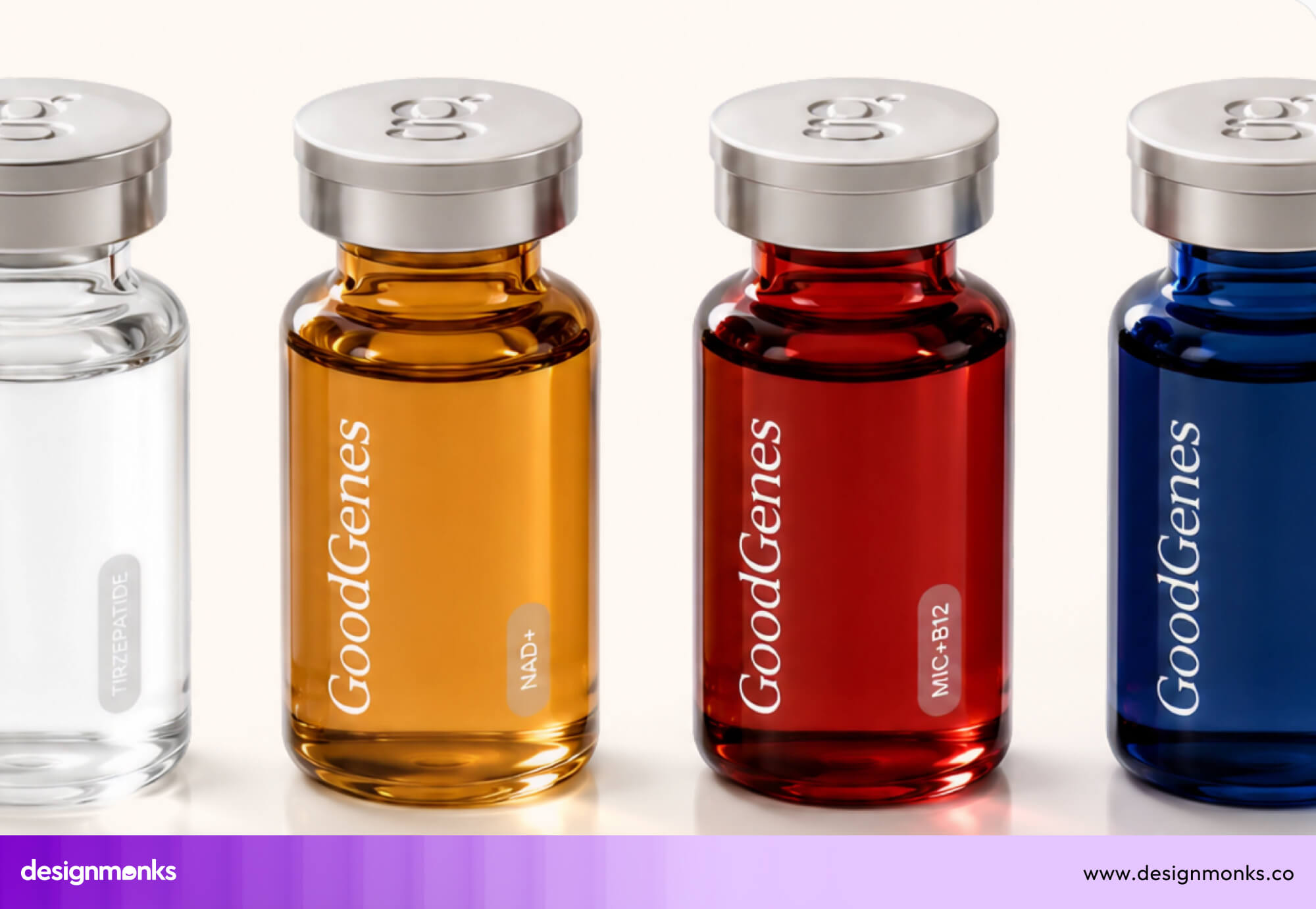
GoodGenes, a theme by Design Monks, needed a brand that felt scientific without feeling sterile. This telehealth and longevity company wanted an identity patients would trust immediately, without leaning on the cold, clinical visuals most healthcare brands default to.
What makes it work:
- Warm color shift: Conventional medical blues gave way to warm greens and refined neutral tones, softening the clinical edge without losing credibility.
- Organic logo system: The mark signals connection and longevity instead of relying on a generic medical cross or sterile symbol.
- Unified brand ecosystem: Packaging, typography, and every visual asset tie into one consistent system, so trust builds across each touchpoint a patient sees.
The result reads as premium and human at once. That balance matters most in telehealth, where a patient decides whether to trust a screen before they ever meet a doctor.
2. Relaxy: Mental Health Support Built Around Anonymity
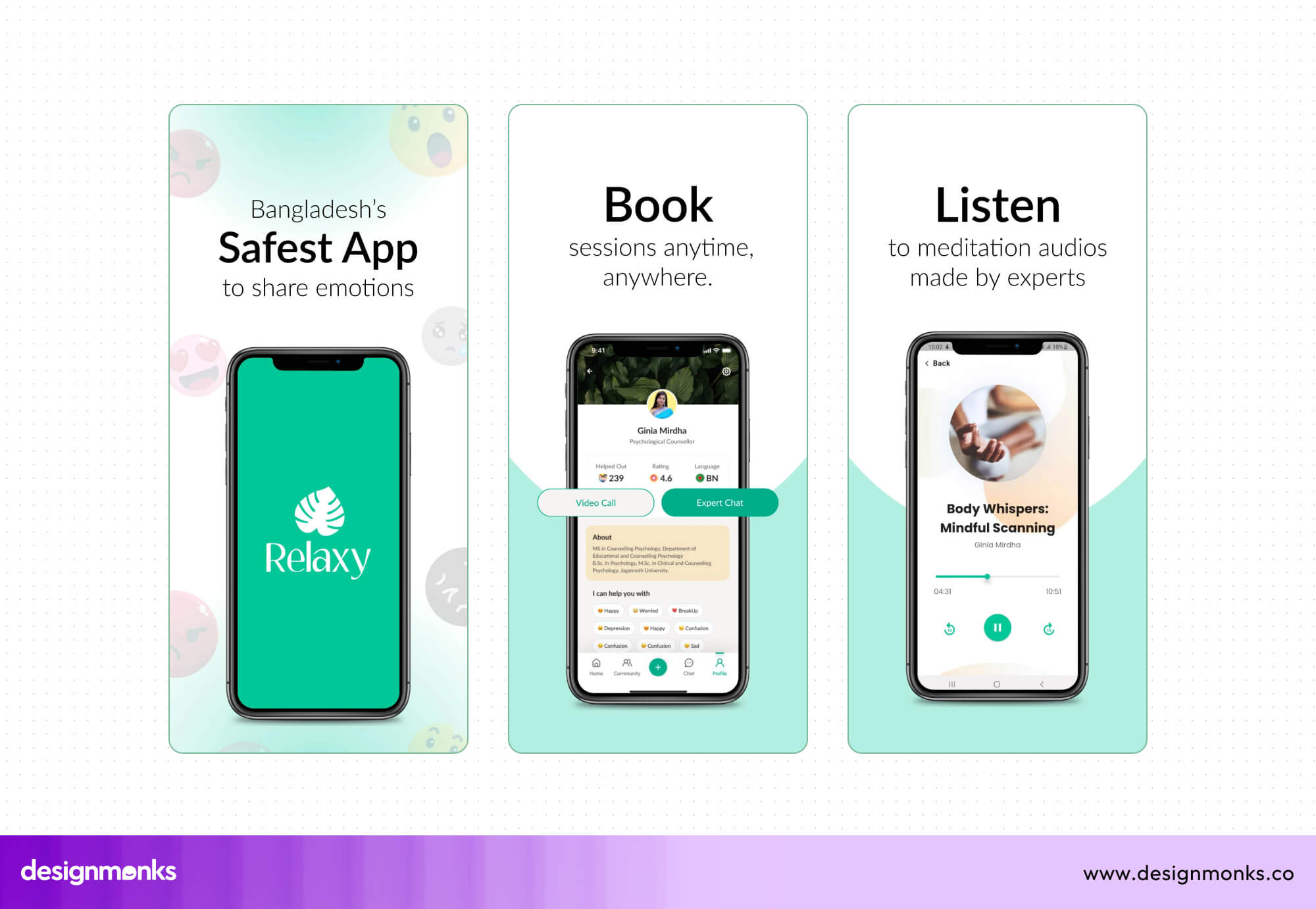
Relaxy is also a work of Design Monks. This platform tackles a different challenge: mental health support in a market where stigma keeps many people from ever admitting they need help. The design leans on anonymity and simplicity to lower that barrier before a single word gets typed.
What makes it work:
- Anonymous-first interface: Users post, journal, and chat without revealing identity, removing the fear that stops many people from seeking help.
- Bangla-first design: Every screen, label, and chatbot response speaks the user's own language, closing a gap most mental health apps in the region ignore.
- Low-friction access: Payment through bKash, Nagad, and Rocket sits inside the flow, so cost and unfamiliar tools never become a reason to quit.
The interface stays minimal on purpose, giving someone in distress fewer decisions to make and fewer reasons to close the app before reaching support.
3. Calmora: Designing for Focus and Overwhelm
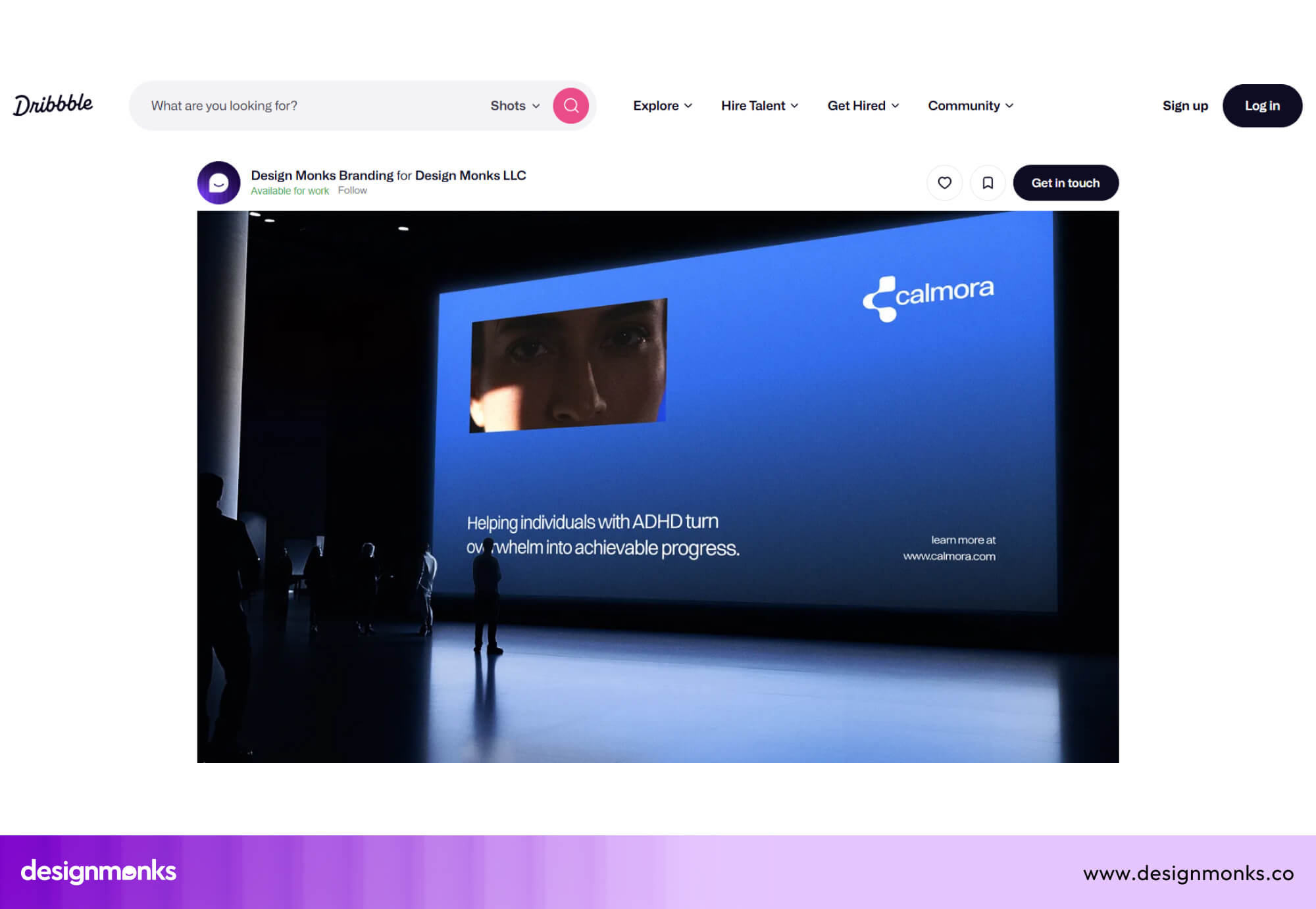
Most ADHD-related design advice never leaves the theory stage. Calmora by Design Monks puts it into practice, built for people who deal with distraction and mental overload as part of daily life, not as an occasional inconvenience.
Every screen was built around one goal: cut the noise. Layout, color, and typography choices all serve the same purpose, lowering the mental effort it takes to use the app rather than adding another thing to process.
What makes it work:
- Muted color system: Soft, low-saturation tones keep the interface calm without drifting into a cold, clinical feel.
- Plain-language copy: Labels and instructions skip jargon entirely, so a user grasps each screen the moment they see it.
- Soft visual identity: Rounded forms and friendly type build a sense of safety instead of pressure, which matters for someone already prone to feeling overwhelmed.
The app ends up feeling less like a task manager and more like a steady presence nearby. For someone who runs low on willpower some days, that steadiness counts more than another feature list.
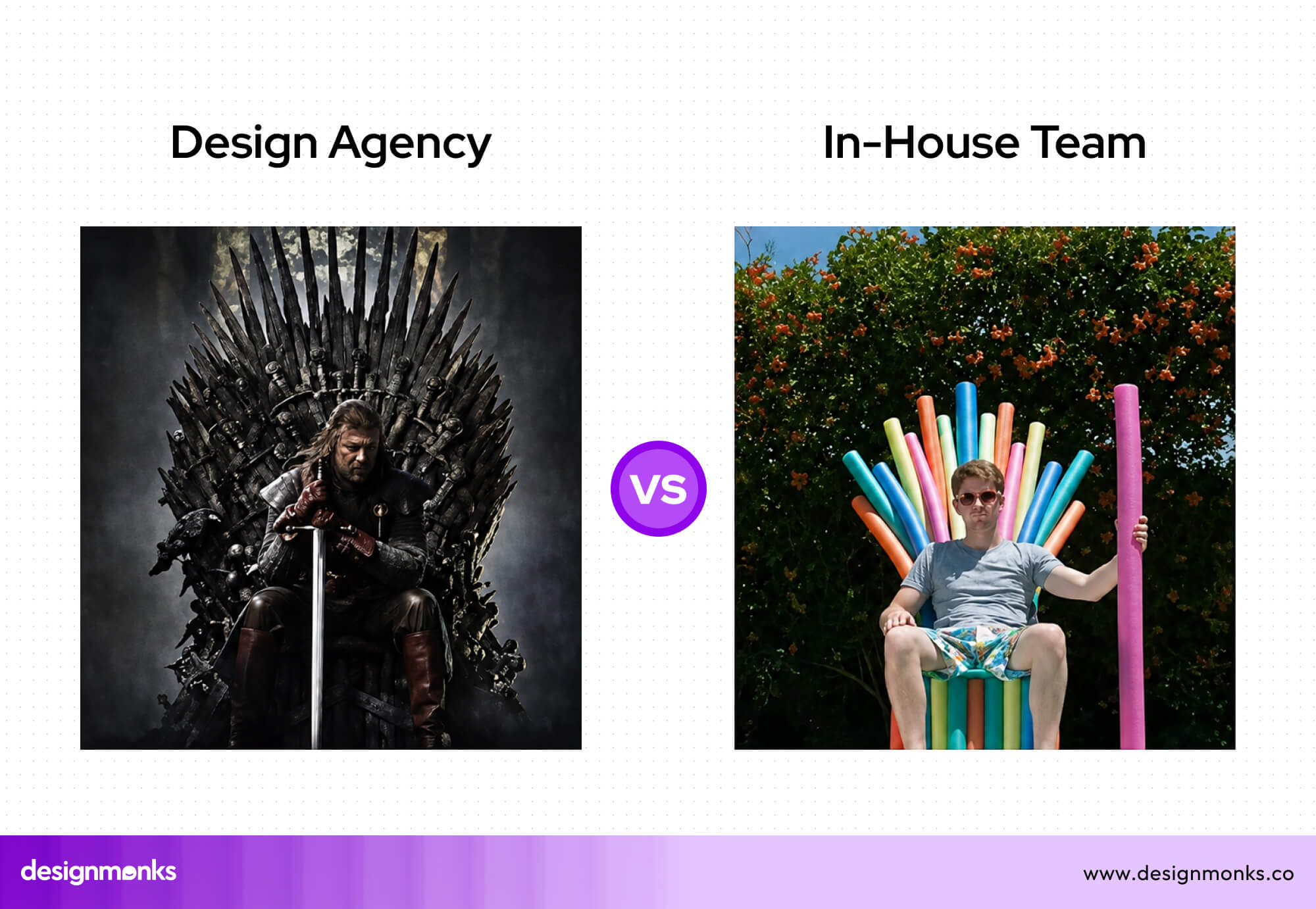
In-House Team vs Design Agency for Healthcare Startups
Every healthcare founder hits this question eventually. Do you hire designers and build a team inside the company, or bring in a startup UX agency that already has healthcare experience baked in? Both paths can work, but they fit very different situations.
The right answer depends on your budget, your timeline, and how much design work you actually need on an ongoing basis. A founder building one core product needs something different than a hospital network running ten internal tools.
Why an In-House Team Makes Sense
An in-house team fits companies with steady, long-term design needs and the budget to support full-time hires. Designers sit inside daily meetings, absorb product context naturally, and stay available for quick changes without a scope discussion first.
- Deep product knowledge builds up over time, since the same people work on the app every day.
- Communication happens instantly, with no handoff delays or time zone gaps to manage.
- Culture and product vision stay consistent, since designers grow alongside the company itself.
- Hiring, salaries, and benefits add real cost, even before the team ships anything.
Why a Design Agency Makes Sense
A design agency fits founders who need strong design work without carrying the cost and risk of full-time hires. Healthcare-focused agencies bring outside experience across many products, so patterns that took another client months to discover arrive on day one.
- Healthcare expertise already exists inside the team, so less time goes toward explaining clinical basics
- Costs stay flexible, since you pay for a project or a retainer, not a permanent salary
- A full team, including designers, researchers, and project managers, comes ready without separate hiring
- Work can scale up or down based on what a specific phase of the product needs
Why an Agency Is Usually the Better Answer
Most healthcare startups run lean, and every dollar spent on a slow hiring process is a dollar not spent on the product itself. An agency like Design Monks, unlike most in-house teams, skips that ramp-up period entirely, since the team already knows how to design around HIPAA, patient trust, and clinical workflows before the first call ends.
The flexibility matters just as much as the speed. A founder can start with a single project, see how the work holds up, and decide whether to expand the relationship, without the long-term commitment a full-time hire requires.
For a startup still finding its footing, that kind of low-risk, high-experience partnership usually beats building a team from scratch.
How Much Healthcare App Design Actually Costs in 2026
Healthcare founders ask this question before almost anything else, and the honest answer is that it depends heavily on scope. A simple brand identity costs far less than a full clinical dashboard with role-based access and compliance built into every screen.
The design agency pricing model also shapes the number you see. Some agencies charge hourly, others quote a fixed project fee, and a few offer a monthly retainer for ongoing work. Knowing which model an agency uses helps you compare quotes fairly instead of just comparing the final number.
Pricing breakdown by project type:
- Brand identity or simple app design: $1,800 to $10,000. Design Monks starts healthcare projects at $1,800, making this range realistic for an early founder validating an idea.
- Healthtech MVP: Designing MVP for healthtech startups starts at $10,000 to $25,000. This covers core screens, a working prototype, and enough polish to test with real users or investors.
- Full product design for an established app: $25,000 to $50,000. Expect deeper research, a complete design system, and coverage for both patient-facing and admin-facing screens.
- Compliance-heavy or enterprise healthcare platforms: $50,000 to $100,000+. HIPAA and HITECH requirements add extra design and documentation work, which raises the price accordingly.
- Hourly rates across the market: $30 to $250 per hour, depending on the agency's location, team size, and healthcare specialization.
A founder with a tight budget should not assume a low price means low quality. Some agencies, including Design Monks, keep entry pricing accessible by working efficiently rather than cutting corners, which matters most for a startup that needs both speed and credibility.
The bigger mistake is picking a price point without matching it to your actual stage. Paying enterprise rates for an early MVP wastes money the startup usually needs elsewhere, while underpaying for a compliance-heavy platform often means costly rework once an audit or investor review exposes the gaps.
Questions to Ask an Agency Before Your First Project Call
A first call sets the tone for the entire relationship. Coming prepared with the right questions helps you spot a genuine healthcare design partner early, before contracts and deadlines make a bad fit harder to walk away from.
Have you designed a healthcare or health-adjacent product before?
Past healthcare work matters more than a broad portfolio. An agency that already understands patient trust, clinical workflows, and compliance basics saves you weeks that would otherwise go toward explaining the industry from scratch.
How do you handle HIPAA and data privacy during the design process?
A strong answer covers business associate agreements, secure file sharing, and how patient data gets handled in mockups and prototypes. A vague answer here is a real warning sign worth taking seriously.
Which healthcare UX design tools does your team use day to day?
Healthcare UX design tools familiarity signals process maturity. Ask specifically about their research, prototyping, and handoff tools, since a team without a clear workflow often struggles to keep a healthcare project organized and on schedule.
Can you walk me through your design process from research to handoff?
A clear, repeatable process protects your timeline and budget. Agencies without a defined process tend to improvise, which creates delays and scope confusion once the project moves past the first few weeks.
How do you stay current with healthcare design trends and regulations?
Healthcare UI/UX design trends and compliance rules shift constantly, from accessibility standards to telehealth requirements. An agency actively tracking these changes protects your product from becoming outdated or non-compliant within a year of launch.
What does your pricing model look like, and what's included at each tier?
Get clarity on hourly rates, fixed fees, and what counts as a revision versus new scope. Surprise costs later usually trace back to an unclear pricing conversation during this very first call.
Can you share a case study similar to what we're building?
A relevant example shows real problem-solving, not just visual polish. Ask about the challenge they faced and how the final design addressed it, since that story reveals more than a portfolio screenshot ever will.
End Note
Picking the right healthcare app design agency comes down to matching your stage, budget, and compliance needs with a team that already understands the space. The seven agencies covered here each bring something different, and the right fit depends entirely on what your product needs right now.
If the search still feels overwhelming, reach out to Design Monks directly. The team offers free consultations to help founders figure out the right path forward, no obligation attached.


.avif)
.avif)
.avif)
.avif)


.avif)
.avif)
.avif)
.avif)






.avif)