.svg)




Key Takeaways
- Sustainable websites use less energy and produce lower carbon emissions overall.
- Faster load times improve both SEO rankings and user experience simultaneously.
- Green hosting providers run on renewable energy and reduce server emissions.
- Clean code, optimized images, and fewer scripts make websites more eco-friendly.
- Small design changes today lead to measurable environmental improvements over time.
Every website you visit right now is quietly consuming electricity and releasing CO2 into the atmosphere. The internet is not as clean as most people think, and the websites we build are a big part of the problem.
Sustainable website design is the practice of building websites that use less energy, load faster, and leave a smaller carbon footprint on the planet. It combines smart design choices, clean code, efficient hosting, and better user experience into one responsible approach to building for the web.
This blog covers everything from core principles and UX strategies to green hosting, real brand examples, and a full checklist you can use today. Keep reading to see exactly how it all works.
What Is Sustainable Website Design?
Sustainable website design is the practice of building websites that use less energy and cause less harm to the planet. The Green Web Foundation defines this as creating digital products with a lower carbon footprint.
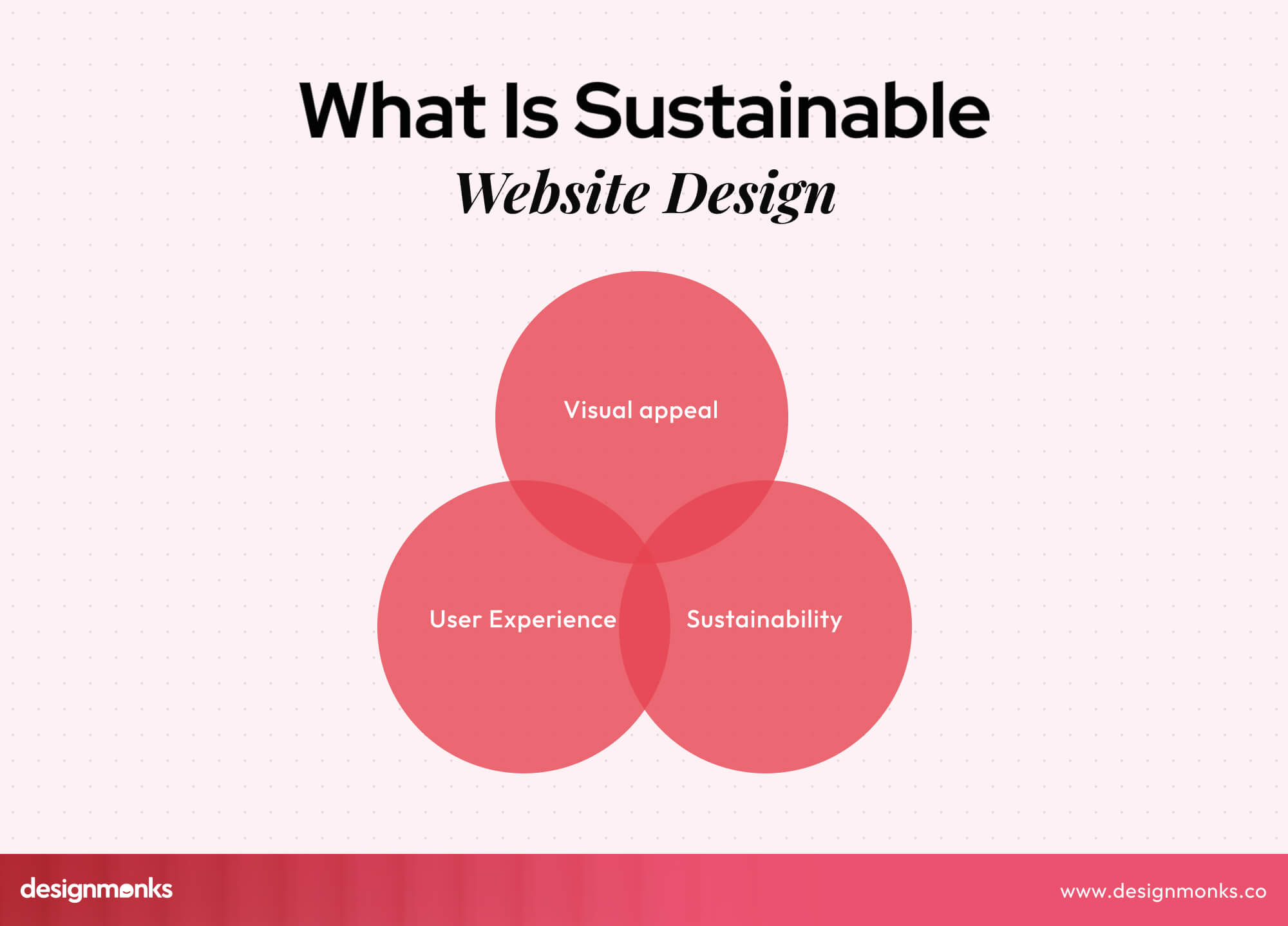
In a word, sustainable website design is a combination of sustainability, visual appeal, and better user experience.
It means writing clean and lightweight code, choosing energy-efficient hosting, and designing pages that load fast without wasting resources. Website Carbon is a tool that measures how much CO2 a single webpage emits per visit.
Digital sustainability is not a trend. It is a responsibility that web designers and developers now carry. A well-built site with proper web design can serve millions of users while keeping its environmental impact very low.
Why the Internet Has a Carbon Footprint
Most people think the internet is invisible and clean. The truth is very different. Every website lives on a physical server inside a data center, and those servers run on electricity all day and all night.
When you visit a webpage, data travels from that server to your screen. This data transfer uses energy at every step of the journey. Cloud infrastructure, network cables, and your own device all consume power during this process.
Data centers around the world are responsible for a large share of global CO2 emissions. Some reports compare internet emissions to the carbon output of the entire airline industry. Energy consumption from digital activity keeps growing every year as more people come online.
Sustainability in Web Design vs Traditional Web Design
Traditional websites are often built with heavy files, large images, and lots of extra code that slows everything down. Sustainable websites take a very different approach.
Here is a simple comparison:
- File size: Traditional sites carry heavy scripts and uncompressed images. Sustainable sites use compressed, optimized files.
- Design style: Traditional design often adds decorative elements. Minimalist web design removes everything that is not necessary.
- Performance: Traditional sites can be slow and resource-heavy. Website performance optimization is a core part of sustainable web practices.
- Hosting: Traditional hosting ignores energy sources. Sustainable hosting runs on renewable energy.
Efficient design systems help teams build faster and lighter websites. The goal is always the same: do more with less, and leave a smaller mark on the planet.
Why Sustainable Web Design Matters for Businesses
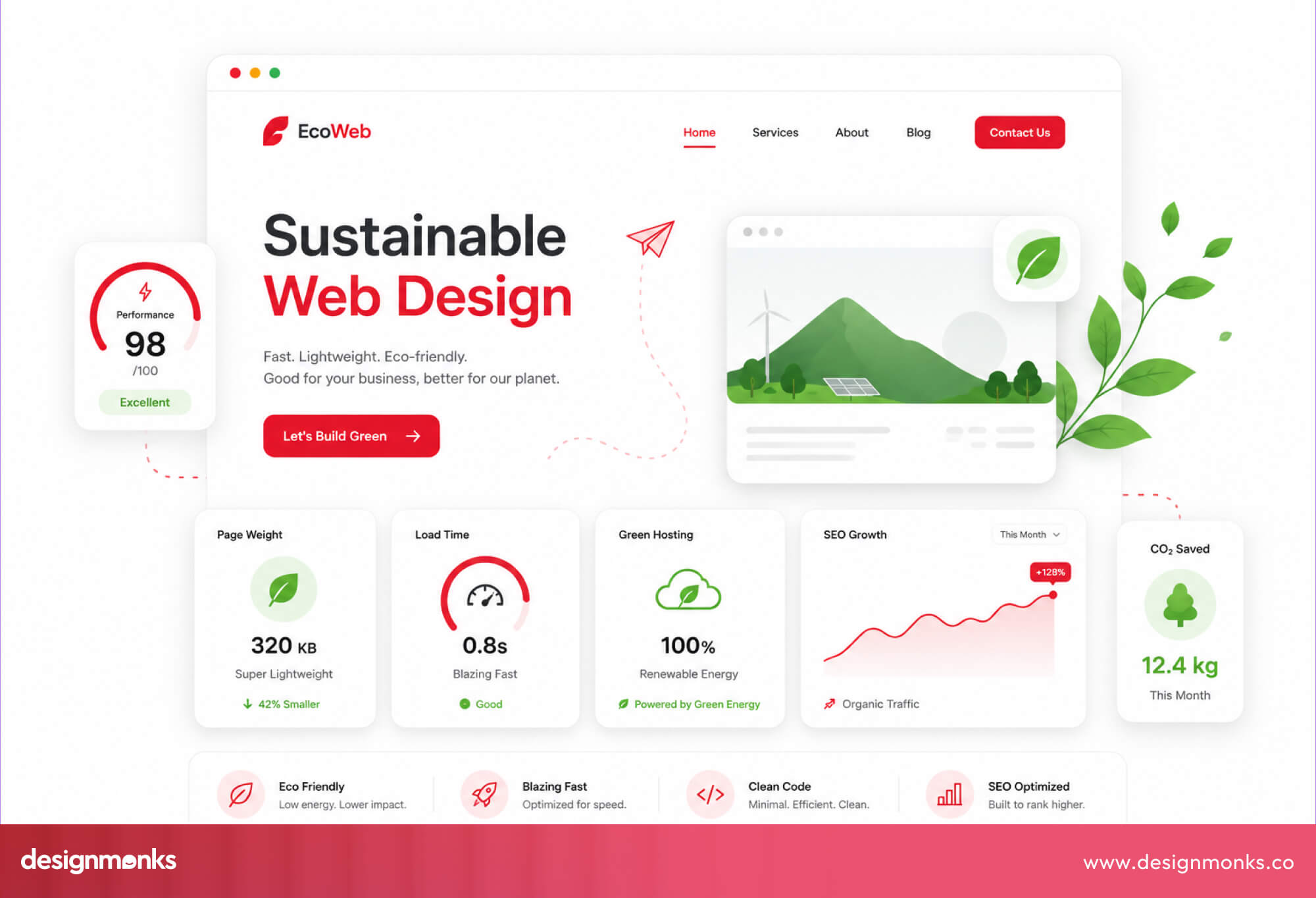
Businesses today face pressure from customers, investors, and governments to act responsibly. A sustainable website is one clear step toward a stronger sustainability strategy that people can actually see and measure.
Better SEO Through Faster Websites
Google Core Web Vitals measure how fast and smooth a website feels to real users. Websites that load quickly score better and rank higher in search results.
Sustainable websites are naturally lightweight, which means they load faster. Better website performance leads directly to better crawl efficiency and stronger search rankings over time.
Improved UX Through Simplicity
A cluttered webpage confuses visitors and pushes them away quickly by creating lots of user pain points. Sustainable design removes unnecessary elements and makes every page easier to read and use.
When users find what they need without struggle, they stay longer. Clean and simple layouts improve usability and create a much more comfortable experience for every visitor.
Sustainability as Brand Positioning
Consumers today trust brands that take real action on environmental issues. Green branding is no longer optional for companies that want to stay relevant and respected.
A sustainable website sends a clear message about a company's values. This kind of responsible digital transformation builds brand trust and attracts customers who care about the planet.
Lower Bounce Rates From Faster Load Times
Slow websites frustrate users and cause them to leave before the page even finishes loading. Every second of delay increases the chance that a visitor clicks away permanently.
Sustainable websites load faster because they carry less unnecessary weight. Faster pages keep visitors on the site longer and reduce bounce rates in a very natural way.
ESG Goals Get Stronger Digital Support
Many companies now follow ESG frameworks to show investors and partners that they operate responsibly. A sustainable website adds measurable proof to those environmental commitments.
Digital activity has a real carbon footprint, and reducing it supports ESG goals directly. Businesses that track and cut their website emissions show a genuine commitment to responsible digital transformation.
Cost Savings From Efficient Hosting and Code
Heavy websites need more server power, which means higher hosting bills every single month. Cleaner code and optimized files reduce the resources a website needs to run properly.
Efficient hosting on renewable energy often costs less over time as well. Businesses save real money while also reducing their environmental impact at the same time.
Core Principles of Sustainable Website Design
Every sustainable website is built on a clear set of rules that guide design and development decisions. These principles focus on efficiency, optimization, and reducing waste at every layer of a website.
Lightweight Page Architecture
A lightweight website starts with a smart structure where every element on the page has a clear purpose. Unnecessary sections, redundant layouts, and heavy design patterns all add extra load to the server.
Web Performance improves significantly when pages carry only what users actually need. A lean page architecture means faster delivery, less energy consumed, and a smoother experience for every visitor.
Minimalist Interface Design
Minimalist interface design removes every visual element that does not serve the user directly. Clean layouts, simple typography, and proper color UX design make pages easier to read and faster to render.
Lean design systems follow this same thinking at a larger scale across full websites and products. Less visual noise means the browser does less work, which saves energy with every single page load.
Efficient Codebase
An optimized codebase is one of the most powerful tools in sustainable web design. Bloated code forces browsers to process more data than necessary, which wastes both time and electricity.
Developers write efficient code by removing unused scripts, compressing files, and keeping the structure clean and simple. Every line of code that gets removed is one less thing the server has to deliver.
Reduced Third-Party Scripts
Third-party scripts are small pieces of code added from outside sources, like chat tools, ad trackers, or social media buttons. Each one adds extra weight to the page and slows the whole website down.
A sustainable website keeps third-party scripts to a strict minimum. Fewer external requests mean less data transfer, less energy use, and a much faster experience for the end user.
Accessibility and Inclusive Design
Accessibility means building websites that work well for every person, including those with disabilities or slow internet connections. This is a core part of UX Design that many teams still overlook completely.
Inclusive design reduces wasted effort by making content clear and reachable for everyone from the start. A website that works for all users naturally avoids overbuilt features that add unnecessary complexity and weight.
Mobile-First Efficiency
Most internet users today browse on a mobile device with a limited battery and a slower data connection. A mobile-first UX design approach means designing the simplest version of a page first, then expanding for larger screens.
This method naturally produces lighter and more efficient pages across all devices. Mobile-first efficiency is a direct path toward a more optimized codebase and a lower environmental footprint for the whole website.
Sustainable Web Hosting: What to Look For
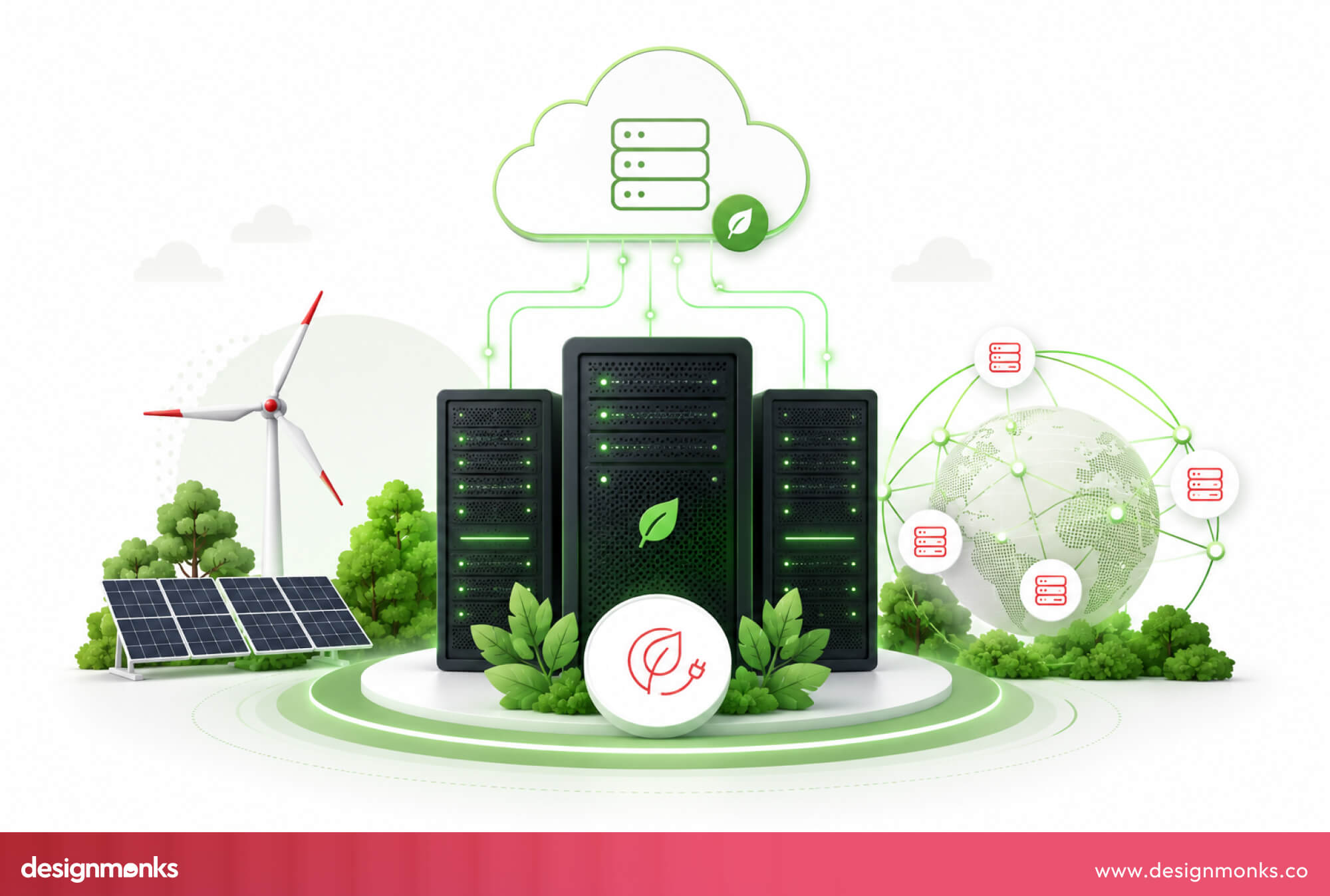
Sustainable web hosting means choosing a server provider that runs on renewable energy sources and actively works to reduce its carbon emissions. The right hosting provider can cut a website's carbon footprint significantly without affecting speed or reliability.
Renewable Energy Powered Servers
Renewable energy-powered servers run on solar, wind, or hydroelectric power instead of fossil fuels. The Green Web Foundation maintains a public database where anyone can check if a hosting provider uses clean energy sources.
Carbon Neutral Hosting Providers
Carbon-neutral hosting providers offset every unit of energy they consume by investing in environmental projects around the world. These providers calculate their total emissions and take active steps to balance them out completely.
Data Center Energy Efficiency
Data center energy efficiency is measured using a metric called PUE, which stands for Power Usage Effectiveness. A lower PUE score means the data center wastes less energy on cooling and non-essential operations.
Green Hosting Certifications to Trust
Green hosting certifications give businesses proof that a hosting provider meets real environmental standards. Look for certifications from recognized bodies like the Green Web Foundation or providers with verified renewable energy agreements in place.
CDN Usage for Lower Emissions
A CDN, or Content Delivery Network, stores copies of a website's files in multiple locations around the world. When a user visits the site, files load from the nearest location, which reduces data travel distance and energy use.
Sustainable Visual Design Strategies
Sustainable visual design means making smart choices about images, animations, and media files so that every visual user interface element on a page uses as little energy as possible. Heavy graphics and large video files are among the biggest contributors to a website's carbon footprint.
Use Vector Graphics Where Possible
SVG, which stands for Scalable Vector Graphics, is a lightweight image format that stays sharp at any screen size without adding heavy file weight. Vector graphics use simple mathematical instructions instead of pixel data, which makes them far smaller and faster to load than traditional image files.
Optimize Images Aggressively
Image optimization is one of the fastest ways to reduce a website's energy use and improve its loading speed. Modern formats like WebP and AVIF deliver the same visual quality as older formats but at a significantly smaller file size.
Here is what aggressive image optimization looks like in practice:
- Convert all images to WebP or AVIF format before uploading them to the website.
- Compress every image file without dropping quality below an acceptable visual standard.
- Set images to load only when a user scrolls down to that part of the page.
- Define the exact display size for each image so the browser never loads a larger file than needed.
Reduce Heavy Video Backgrounds
Video backgrounds look impressive, but they consume enormous amounts of data and energy every time a page loads. A full-screen looping video can add several megabytes to a single page, which slows everything down considerably.
Use Motion Sparingly
Animations and motion effects force the browser to do extra work on every frame, which drains device battery and increases energy use. Efficient design assets use motion only when it serves a clear purpose and adds real value for the user.
Here is how to keep motion lightweight and responsible:
- Replace heavy JavaScript animations with simple CSS transitions wherever possible.
- Avoid looping animations that run continuously without any user interaction to trigger them.
- Respect the user's system settings for reduced motion and disable animations for those users automatically.
- Test every animation on a low-powered device to check if it causes slowdowns or excessive battery drain.
System Fonts Over Custom Font Stacks
Custom fonts require the browser to download extra files before the page can display text properly. System fonts are already installed on every device, which means the browser displays them instantly without any additional download or energy cost.
Sustainable Development Practices
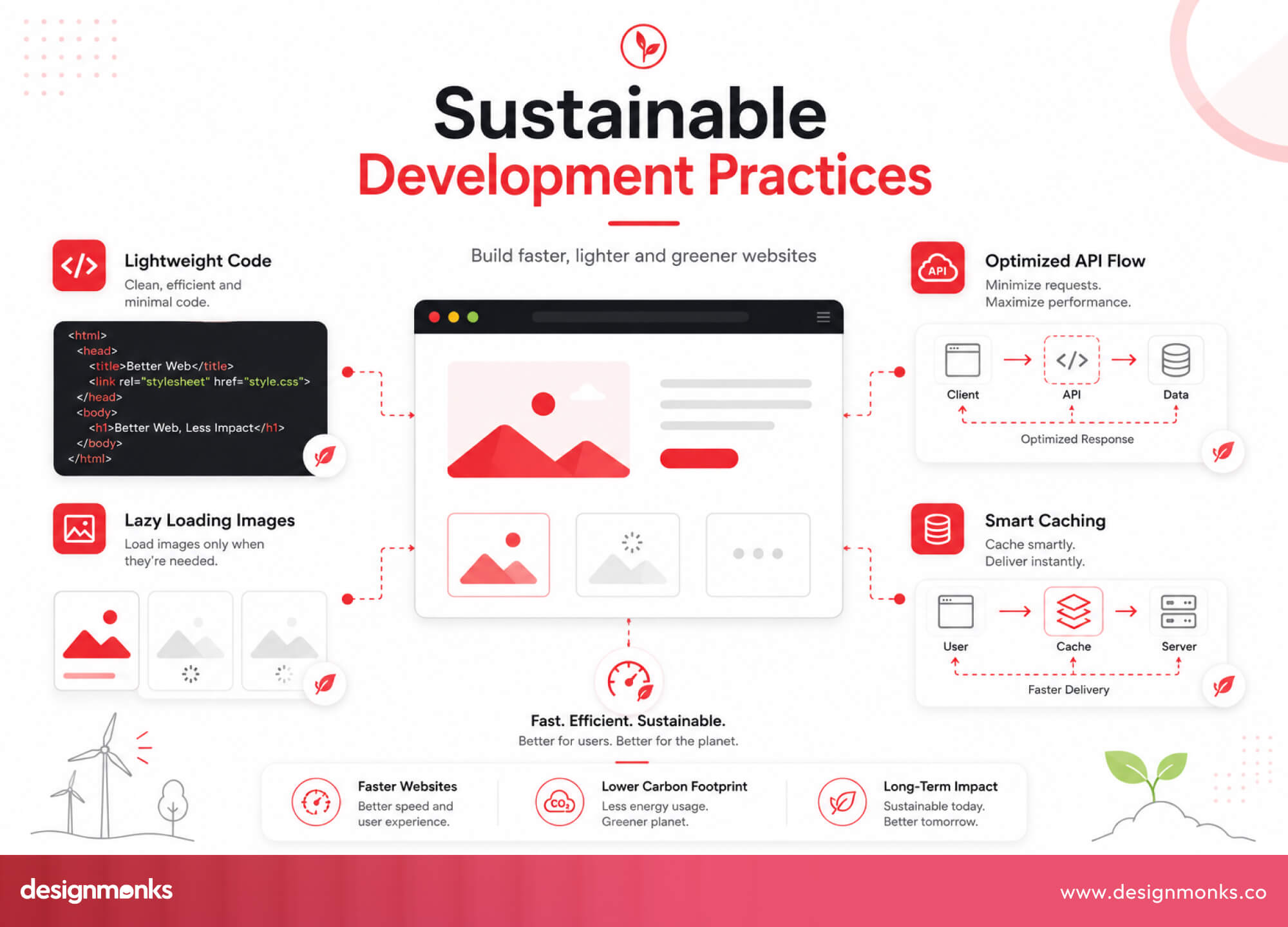
Sustainable development means writing code that does exactly what it needs to do without wasting server power or user bandwidth. Every engineering decision, from how scripts load to how data gets requested, has a direct effect on a website's energy consumption.
Reduce JavaScript Payload
JavaScript is one of the heaviest parts of any modern website, and too much of it slows down every page dramatically. Lighthouse, Google's free performance tool, helps developers identify which scripts are bloated and where the biggest savings can be made through script minimization.
Optimize CSS Delivery
CSS controls how a webpage looks, but poorly delivered CSS forces the browser to pause and wait before it can display anything to the user. Developers remove unused styles, combine files where possible, and deliver only the CSS that each specific page actually needs.
Static Site Generation
A static site generates all its pages in advance rather than building each one fresh every time a visitor arrives. This approach removes the need for heavy server processing on every request, which reduces energy use and improves response times significantly.
Lazy Loading Assets
Lazy loading means the browser only loads images and media files when a user scrolls close enough to actually see them. This prevents the page from downloading large files that the visitor may never reach, which saves both bandwidth and energy on every visit.
Caching Strategies
Caching stores copies of website files closer to the user so the server does not have to send the same data repeatedly. A CDN combined with smart caching rules means returning visitors load pages almost instantly, with very little server activity required each time.
Efficient API Calls
An API call is a request a website sends to fetch data from an external source, like a weather feed or a product list. Too many API calls, or calls that request more data than the page actually needs, add unnecessary load to both the server and the network.
HTTP/3 improves how these requests travel across the internet by making data transfer faster and more efficient than older protocols. Clean code architecture means each API call is purposeful, well-timed, and requests only the exact data the page needs to function properly.
Green Hosting and Infrastructure
The server where a website lives has just as much environmental impact as the code written on it. Choosing the right hosting infrastructure is one of the most powerful steps a business can take toward genuine digital sustainability.
Renewable Energy Powered Hosting
Green servers run on electricity sourced from wind, solar, or hydroelectric power instead of fossil fuels. The Green Web Foundation maintains a publicly accessible database that lets anyone verify whether a hosting provider genuinely uses renewable energy or simply makes that claim without proof.
Major cloud platforms like AWS and Google Cloud have both made significant public commitments toward running their data centers on clean energy. Businesses that host on these platforms benefit from that investment and can include it as part of their own sustainability reporting.
CDN Efficiency
A CDN, or Content Delivery Network, works by storing copies of a website's files across servers in multiple countries. Cloudflare is one of the most widely used CDN providers in the world, and its global network means users always load content from a server physically close to them.
This shorter travel distance for data reduces the energy spent on transmission significantly. A well-configured CDN also reduces the load on the origin server, which means the main hosting environment consumes far less power throughout the day.
Efficient Server Architecture
Efficient server architecture means the hosting environment is set up to use only the resources it actually needs at any given moment. Oversized servers that run at low capacity waste enormous amounts of electricity around the clock without delivering any extra benefit.
Modern approaches like serverless functions and auto-scaling infrastructure adjust resource use based on real traffic levels. This kind of eco hosting eliminates idle energy waste and ensures that every unit of electricity consumed by the server directly supports an active user request.
Measuring Website Sustainability
A sustainable website needs real numbers to prove its environmental impact to stakeholders and teams. Without proper emissions tracking and performance metrics, sustainability efforts remain guesswork rather than a strategy built on genuine, measurable progress.
Carbon Footprint Per Visit
The Website Carbon Calculator measures exactly how much CO2 a single page visit produces on any given website.
This tool gives designers and developers a clear sustainability benchmark to start from and a concrete target to improve with every optimization cycle. Many teams run this test before and after major changes to confirm that their work actually reduced emissions.
Energy Consumption Metrics
Energy consumption metrics show how much power a website uses across hosting, data transfer, and device rendering altogether. Regular measurement helps teams identify problem areas quickly and track real improvement after each round of optimization work is completed.
Core Web Vitals Correlation
Google Lighthouse measures Core Web Vitals, which track loading speed, visual stability, and responsiveness across all devices and connection types. These scores connect directly to energy efficiency because a faster and leaner website almost always consumes less power with every single visit it receives.
Sustainable Website Design Examples
Real examples make sustainable web design easier to understand and harder to ignore. These case studies show how actual brands turned digital sustainability strategy into measurable, real-world results.
Wholegrain Digital
Wholegrain Digital rebuilt its own website with sustainability as the primary goal. Heavy assets, unoptimized images, and bloated code were all removed completely during the process.
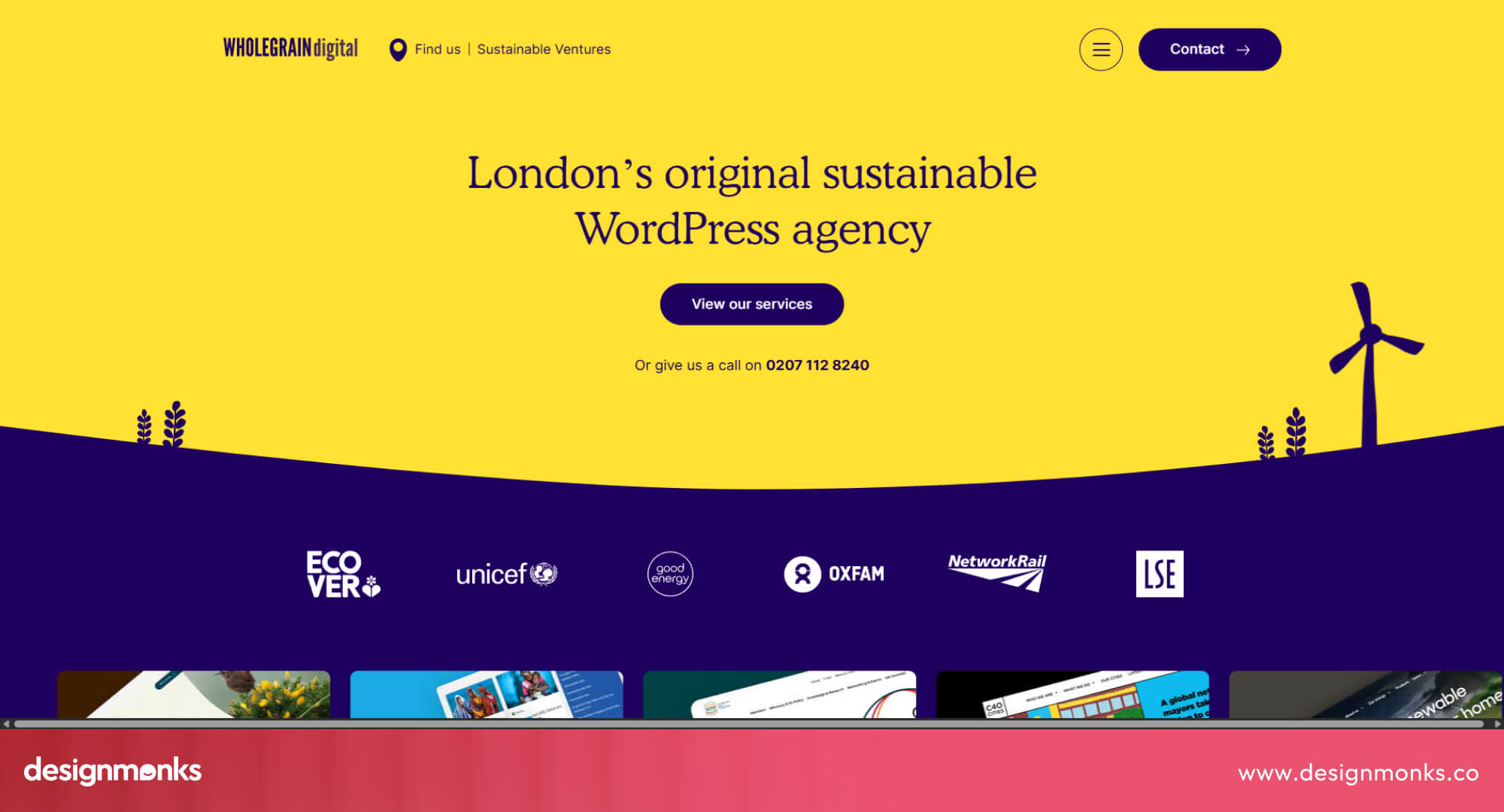
After the optimization, results became clear across every performance metric:
- Page's carbon footprint dropped to well below the global average
- Load speed improved significantly after aggressive asset compression
- A cleaner layout reduced the number of clicks users needed to find information
- UX scores improved alongside environmental performance
Patagonia
Patagonia treats its website as a direct extension of its eco-conscious brand values. The site uses optimized images, minimal third-party scripts, and a clean structure throughout.
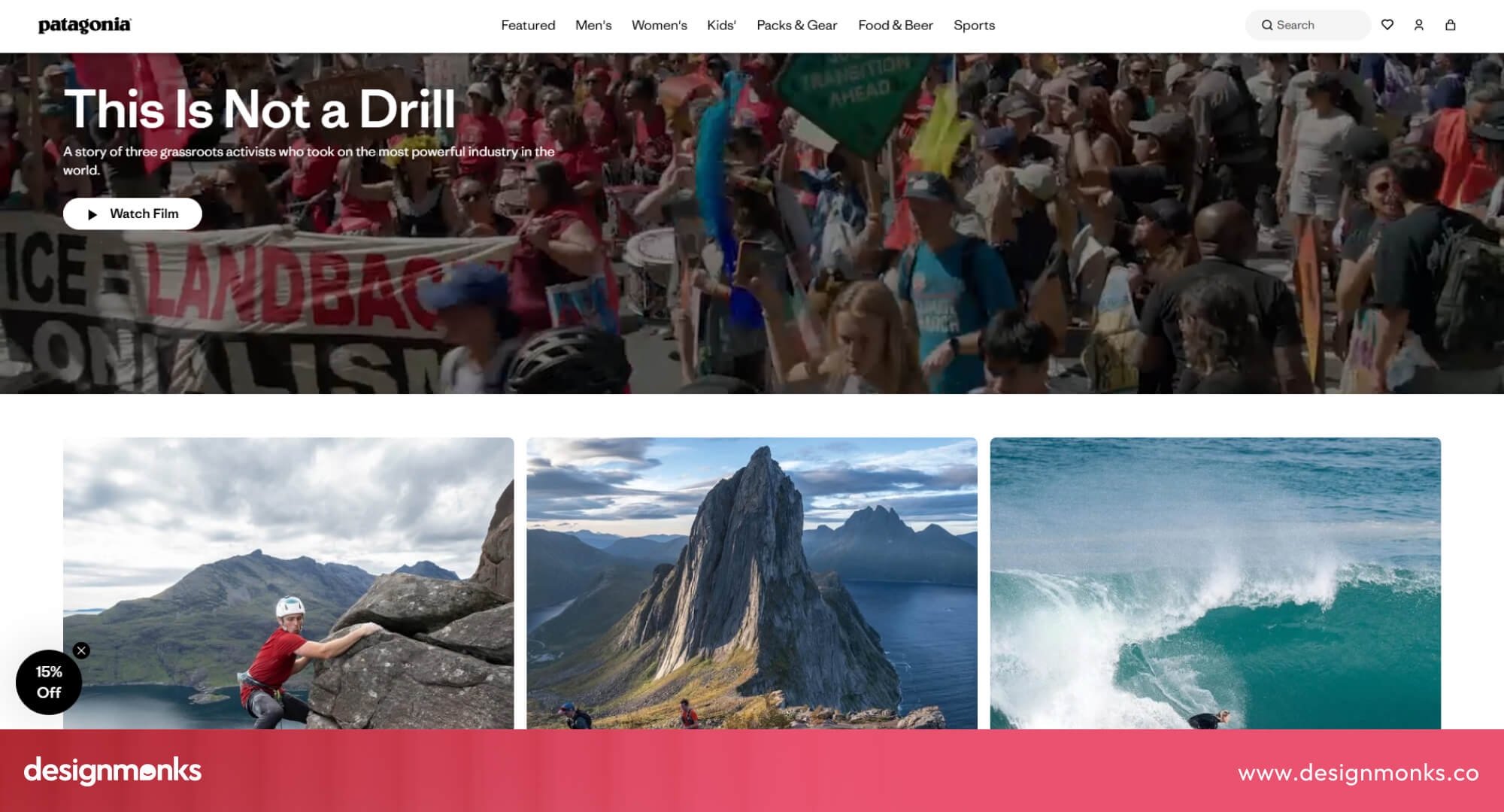
The improvements delivered both environmental and business results:
- Page weight stayed low across all device types consistently
- Faster load times reduced bounce rates across key landing pages
- Simplified user journeys helped more visitors complete purchases
- The site became a visible proof point for their digital sustainability strategy
Sustainable Website Design Checklist
This checklist gives designers, developers, and business owners a clear action plan to reduce their website's environmental impact starting today. Work through each item and track your progress using tools like Website Carbon Calculator and Google Lighthouse.
Images and Media
- Compress all images and convert them to WebP or AVIF format
- Remove decorative images that add weight without helping the user
- Set all images and videos to lazy load by default
- Replace heavy video backgrounds with static images or lightweight alternatives
Code and Scripts
- Remove all unused JavaScript and CSS from every page
- Reduce third-party scripts to only those that are absolutely necessary
- Minify all code files before they go live on the server
- Use static site generation wherever the content does not change frequently
Fonts and Visual Design
- Switch to system fonts and remove unnecessary custom font files
- Limit the total number of font weights loaded on any single page
- Remove animations that serve no clear purpose for the user
- Keep color palettes simple and avoid heavy graphical elements throughout
Hosting and Infrastructure
- Move to a verified green hosting provider that runs on renewable energy
- Set up a CDN to serve files from locations closer to each user
- Enable browser caching so returning visitors load pages with minimal server requests
- Review and improve server architecture to eliminate idle energy waste
UX and Navigation
- Simplify navigation so users reach their destination in fewer clicks
- Remove any page elements that add visual noise without helping the user
- Shorten user journeys by cutting unnecessary steps from key conversion paths
- Test every page on a low-powered device and a slow connection regularly
End Note
Sustainable website design is not a distant goal reserved for large companies with big budgets. Every designer, developer, and business owner can take small and practical steps today that add up to a real difference over time.
A faster website, a cleaner codebase, and a greener hosting provider all point toward the same outcome. Better performance, lower emissions, and stronger trust from the people who visit and use your website every day.


.avif)
.avif)
.avif)
.avif)


.avif)
.avif)
.avif)
.avif)







.avif)