.svg)



Key Takeaways
- A SaaS graphic design service helps brands create consistent visual content across channels.
- Design Monks, Ramotion, Clay and others offer SaaS graphic design services for growing companies.
- Services include website graphics, product visuals, ads, presentations, and branding assets.
- A SaaS graphic design service can support marketing, sales, and product launches.
- The right service depends on your budget, workload, goals, and design requirements.
New launches, website graphics, sales decks, social posts, and campaigns can quickly overload your design team. But a SaaS graphic design service can take that extra work off your plate and keep your projects moving.
Bringing in an external design team also gives your designers more room to focus on the work that matters most. You can handle more campaigns, create better visuals, and keep your brand looking consistent across every channel without rushing through every request.
But which agency is right for your SaaS business? Dont worry, we’ve rounded up 8 leading SaaS graphic design agencies to help you compare their services and areas of expertise to pick the right one.
What Is a SaaS Graphic Design Service?
A SaaS graphic design service provides design support customized to software companies. Instead of handling one-off projects, these teams understand the fast pace of SaaS, where new features, campaigns, product updates, and marketing assets are always in the works.
These services usually cover three main areas: brand design, marketing design, and product-related visuals. This can include website graphics, ads, sales decks, illustrations, product screenshots, and app store assets.
The goal is not just to make your brand look good. Good SaaS design should help explain your product, build trust, and support conversions.
How SaaS Design Differs from Traditional Graphic Design
Unlike traditional businesses, SaaS companies rarely have a fixed set of design needs. As products, campaigns, and customer needs change, their visual content has to change with them. This creates a few key differences in how SaaS design works:
- Ongoing vs. one-off work: Traditional design may involve completing a brochure, poster, or campaign and moving on. SaaS teams often need new landing pages, ads, product visuals, and updates regularly.
- Fast changes vs. fixed projects: A traditional project may stay mostly unchanged once approved. SaaS products evolve quickly, so visuals need to be updated whenever features, pricing, or messaging change.
- Growth-focused vs. visual-focused: Traditional graphic design may focus mainly on how something looks. SaaS design also needs to support goals such as conversions, sign-ups, product adoption, and retention.
- Product-driven vs. campaign-driven: SaaS design often connects directly to the product. New features, integrations, dashboards, onboarding flows, and product launches all create new design needs.
- Long-term consistency vs. individual assets: SaaS brands appear across websites, products, ads, emails, sales materials, and social media. Design must stay consistent across all these touchpoints as the company grows.
A traditional agency built around one-off projects often struggles to keep up with this pace or misses the nuance of software-specific UX conventions.
Who Needs SaaS Graphic Design?
SaaS graphic design can support companies at different stages of growth. The type of design support can vary based on the company’s size, goals, and audience:
- SaaS startups: Branding, website graphics, and marketing materials without the cost of a large design team.
- B2B SaaS: Sales decks, case studies, reports, and other visuals that build trust with business buyers.
- Enterprise SaaS: Consistent designs across products, websites, and marketing materials used by large teams.
- Product-led SaaS: Visuals that make products easier to understand, improve onboarding, and encourage sign-ups.
- SaaS scaleups: Extra design support for growing campaigns, new products, and expanding marketing needs.
What Is Included in a SaaS Graphic Design Service?
A full-service SaaS design offering typically spans four categories: branding, marketing assets, product marketing graphics, and sales enablement materials.
Most agencies and dedicated design teams work in tools like Figma and Adobe Creative Cloud, and increasingly deliver assets ready to drop directly into a marketing site or product:
Branding & Visual Identity
Branding and visual identity give your SaaS company a consistent look across every customer touchpoint. This includes logo design, color systems, typography, brand guidelines, and illustration styles.
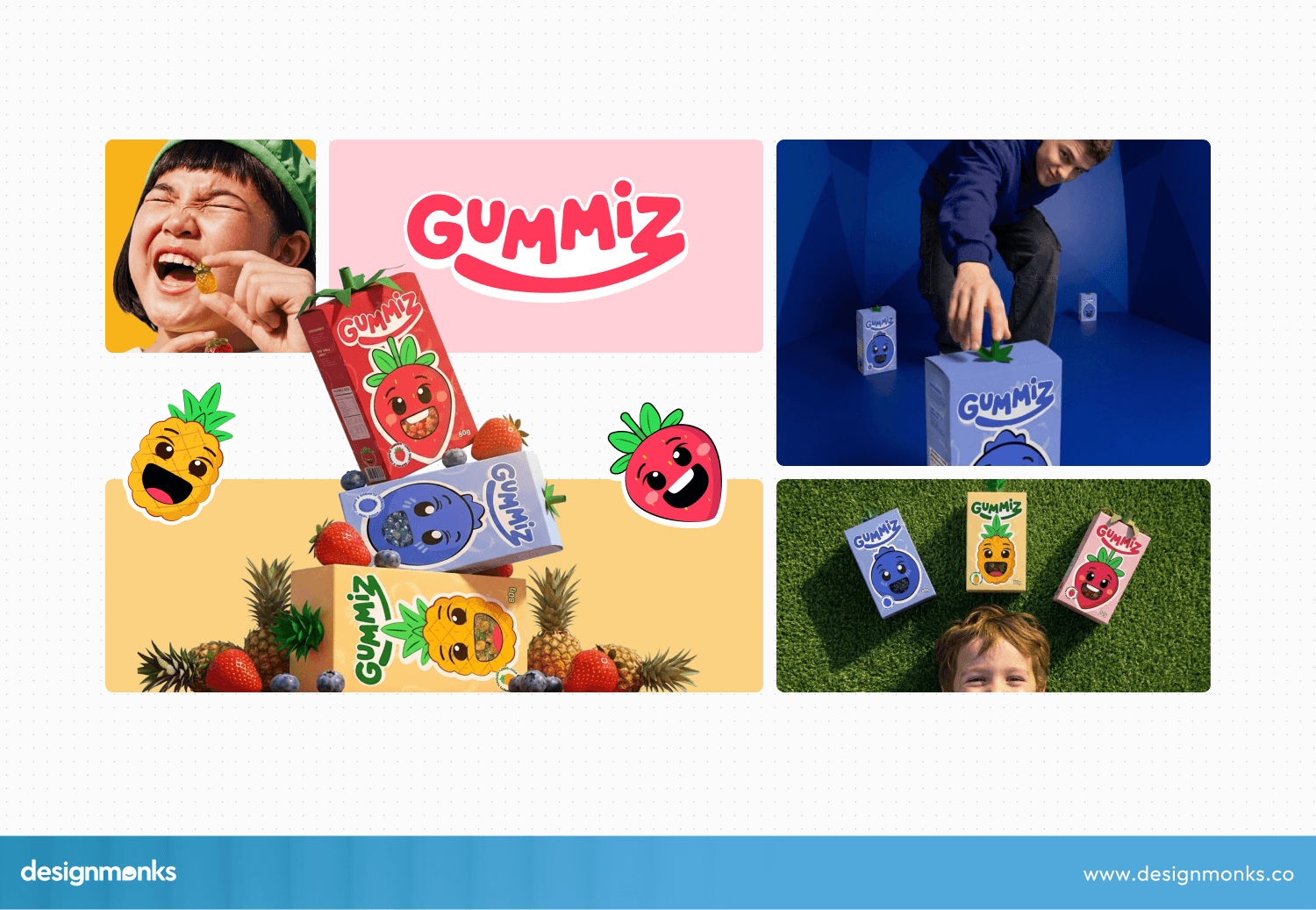
A color system, for example, goes beyond picking a few brand colors. It defines primary, secondary, and accent colors that can work across both marketing materials and the product itself.
Brand guidelines then document how these elements should be used so different designers, marketers, and vendors can create consistent work.
Marketing Design Assets
Marketing design includes the visuals used to attract visitors, promote campaigns, and generate leads. They are:
- Landing pages for campaigns, product launches, and paid traffic
- Ad creatives for paid social and display
- Email graphics for newsletters, nurture sequences, and product announcements
- Social media graphics and templates
- Blog graphics such as headers, in-post visuals, and diagrams
- Infographics that turn data into shareable content
- Whitepapers designed for lead generation
Product Marketing Graphics
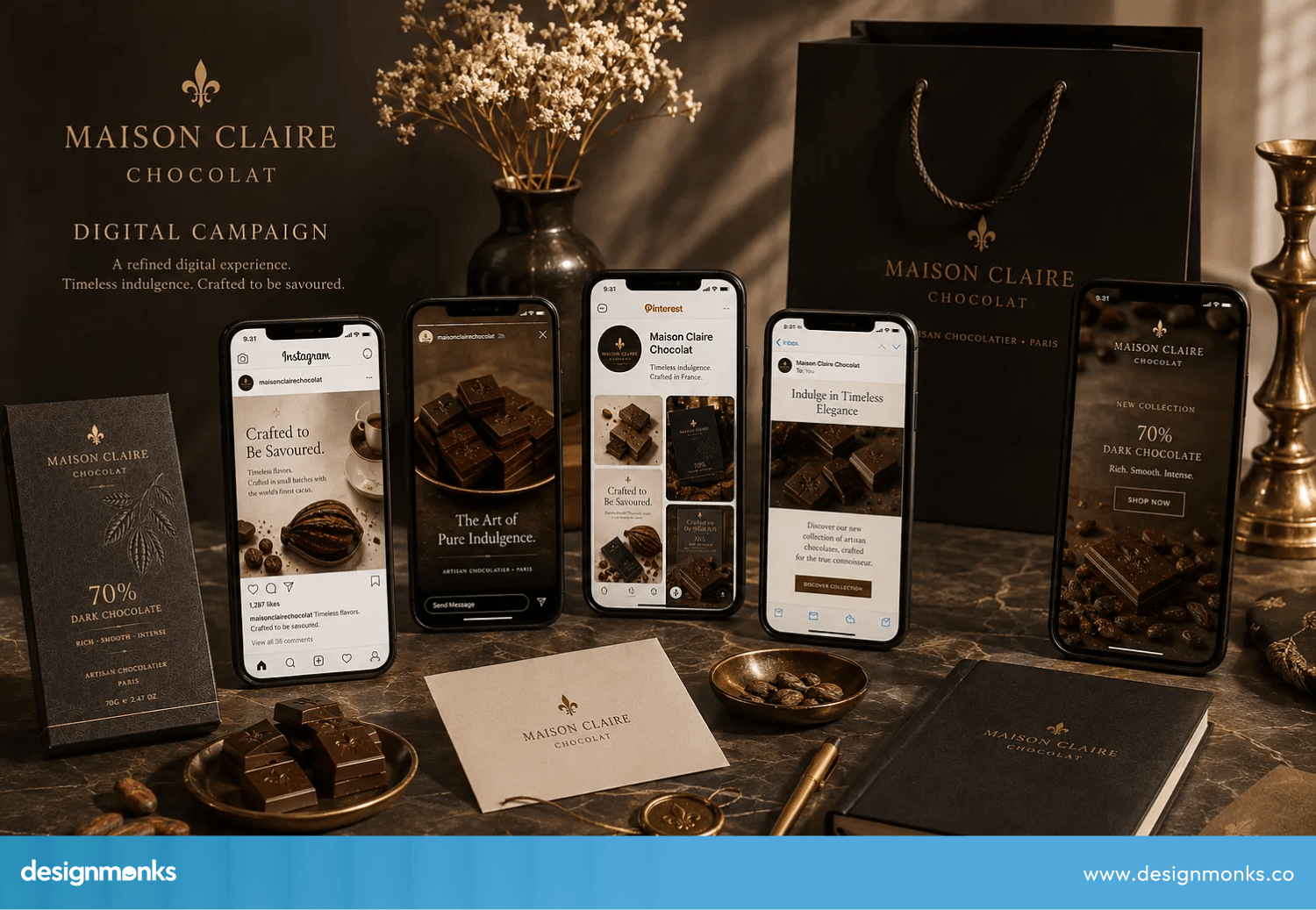
Product marketing graphics show potential customers what your software can actually do. These may include feature graphics, product screenshots, mockups, app store assets, and launch visuals.
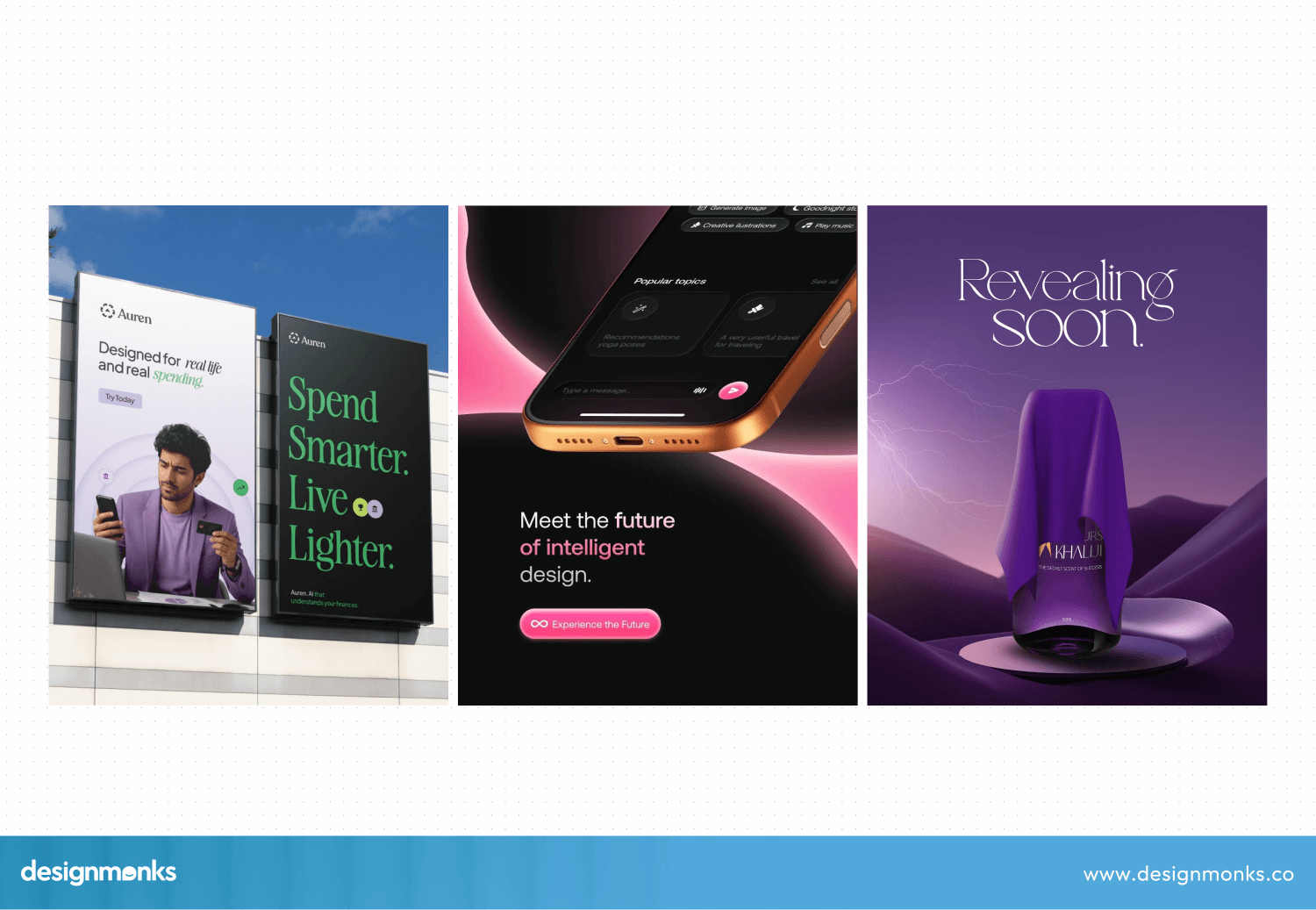
Product mockups place your software inside realistic settings, such as a laptop, phone, browser, or dashboard. This helps prospects picture how the product works in real life without needing to use it first.
Launch visuals, meanwhile, give new features or products a clear visual identity when they are released.
Sales Enablement Materials
Sales enablement materials help sales teams explain the product and move prospects toward a purchase. These can include pitch decks, sales presentations, one-pagers, case studies, and PDFs.
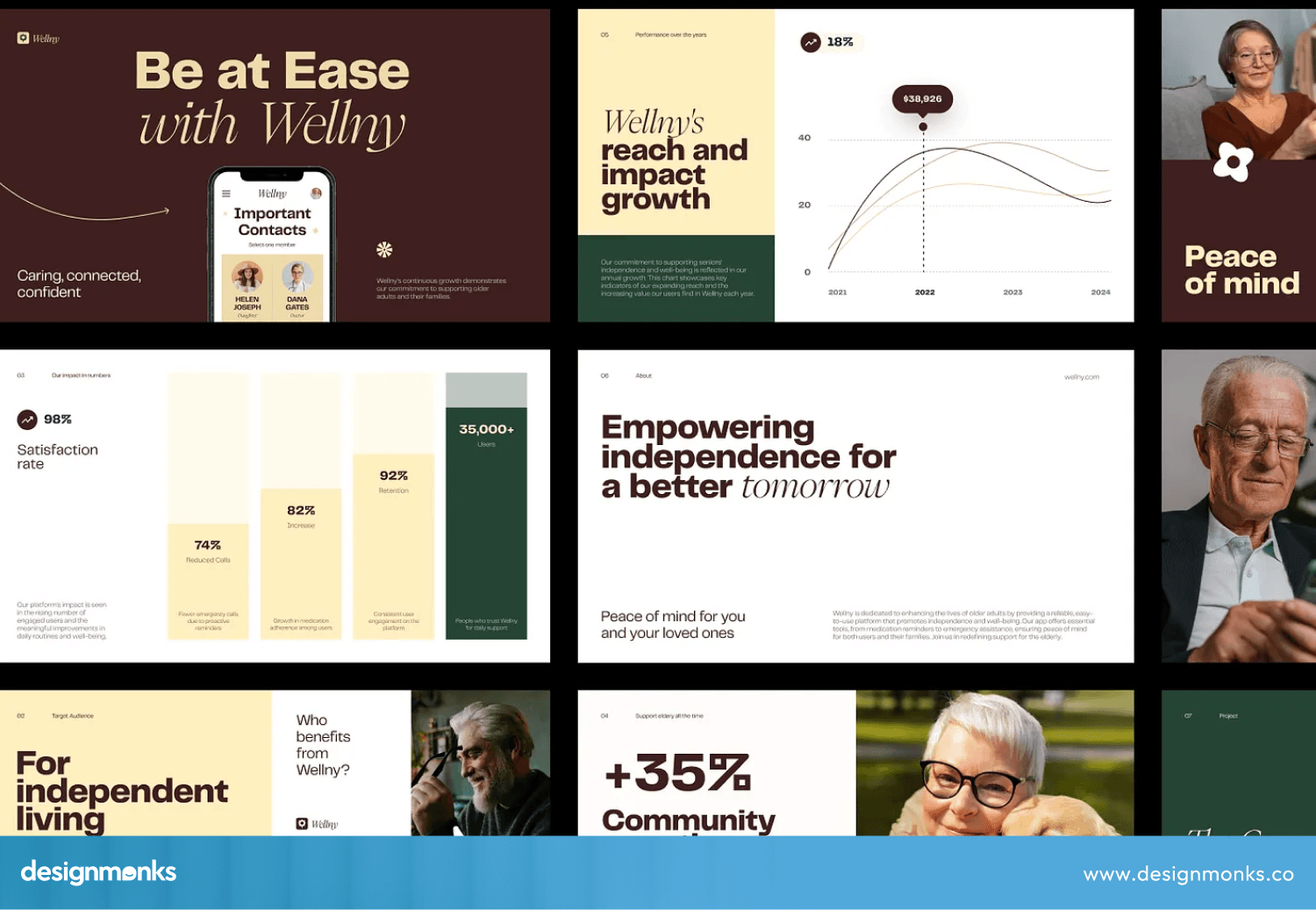
A one-pager is a short document that quickly explains a product, feature, or offer, while a case study uses a customer's experience and results to build trust. Pitch decks and sales presentations bring these ideas together into a clear story that sales teams can use during meetings and demos.
Why SaaS Companies Need Specialized Graphic Design
SaaS companies constantly create new campaigns, product launches, website graphics, sales materials, and social content. Unlike businesses with occasional design needs, SaaS brands need fresh visuals frequently as their products and marketing plans change. This ongoing demand can quickly put pressure on a small in-house team.
A specialized SaaS graphic design service gives companies extra creative support without requiring them to build a larger design team. Designers who understand SaaS can create visuals that match the brand while making complex products easier to understand.
They can also support landing pages, ads, presentations, product graphics, and other marketing materials.
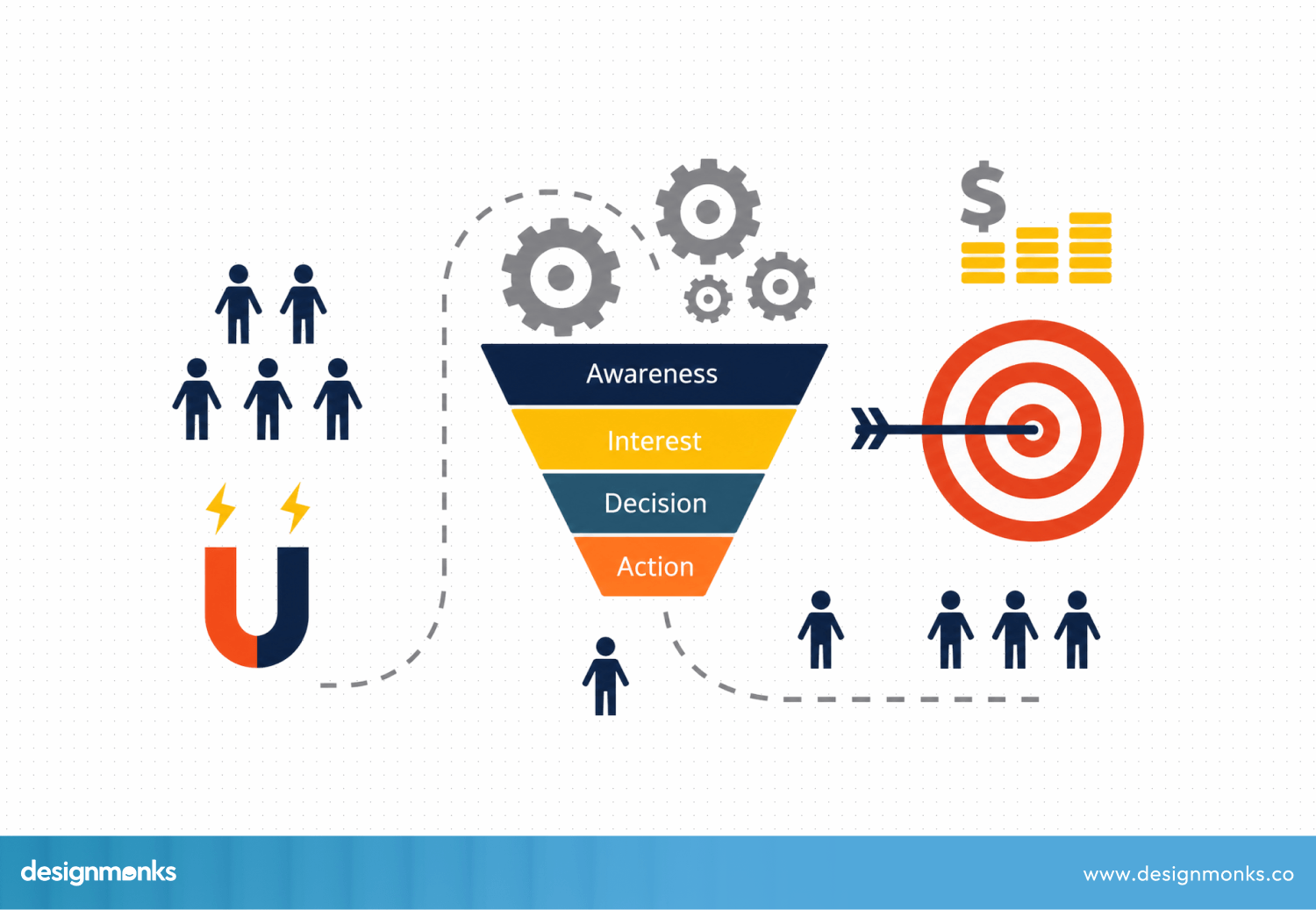
Most importantly, consistent and clear design can help SaaS companies look more professional and communicate their value faster. They can create a smoother experience across different customer touchpoints.
This can strengthen brand trust, improve engagement, and support better conversion rates as the company grows.
SaaS Graphic Design Process
A SaaS graphic design project usually follows a clear process from planning to final delivery. While every agency works differently, these steps help keep the design consistent, organized, and aligned with the company's goals:
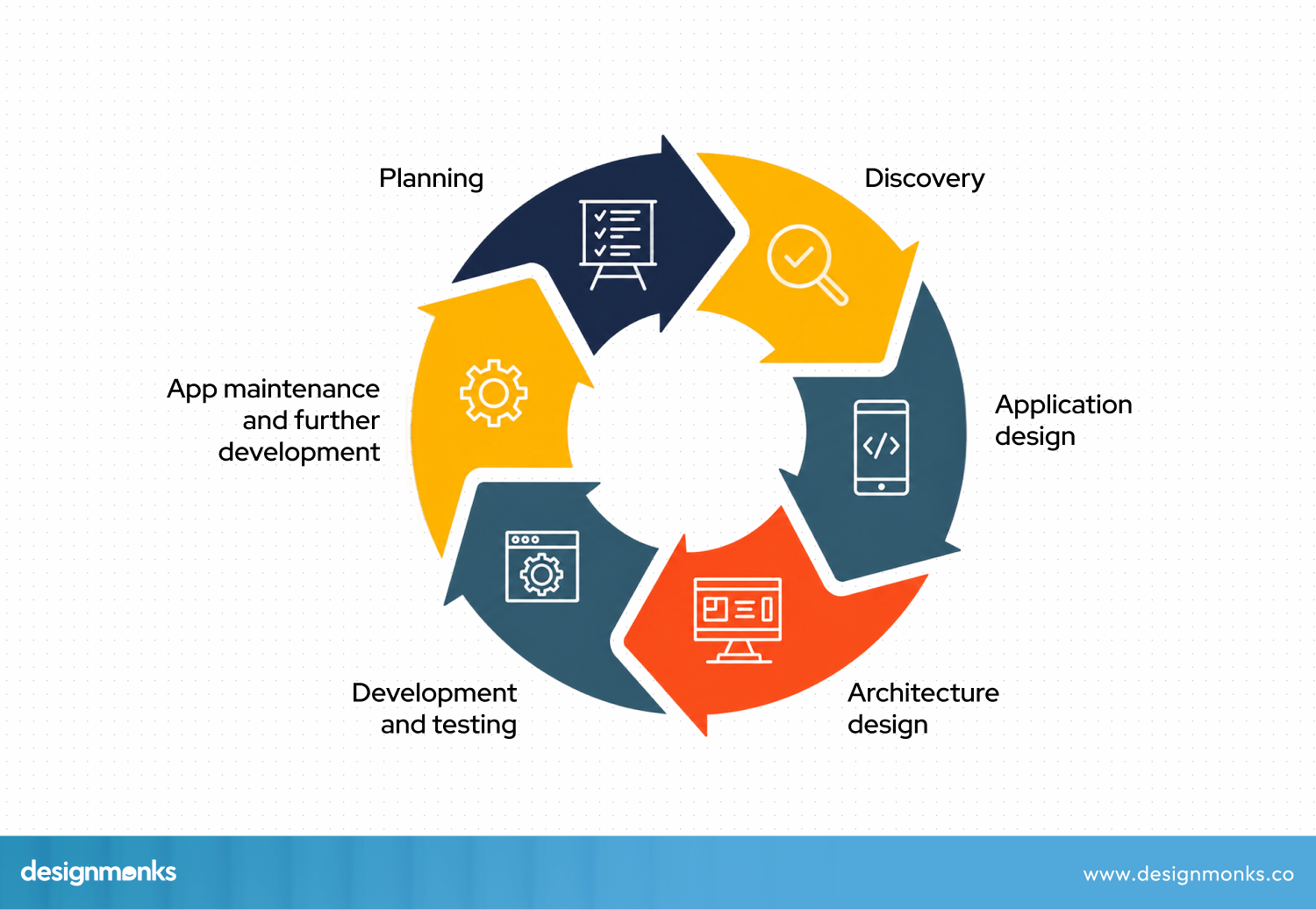
Discovery and Brand Research
The first step is understanding the product, target audience, competitors, and existing brand. Designers review current visuals, identify gaps, and learn what the business wants to achieve before creating new assets.
Design Strategy
The research is then turned into a clear plan. The team decides which graphics to create first, how they will support marketing or product goals, and how they will fit the overall brand.
Creative Production
Designers create the required assets, such as website graphics, landing pages, ads, social media visuals, presentations, and product graphics. Throughout the process, they keep colors, typography, and layouts consistent.
Feedback and Revisions
After the first designs are ready, the team reviews them together. Feedback is collected, changes are made, and the visuals are refined until they meet the project's goals.
Final Asset Delivery
Once approved, the finished files are organized and delivered in the right formats and sizes. This allows marketing, sales, and product teams to start using the assets immediately.
8 Best SaaS Graphic Design Companies
Whether you're after a full-service agency, a subscription-based design team, or a specialized studio, these eight companies represent some of the strongest options in SaaS graphic design:
Design Monks
Design Monks stands out as an all-around SaaS design partner, combining SaaS Graphic design, UI/UX, branding, and web design under one roof. This makes it a strong choice for startups that want consistent, high-quality visuals across their product, website, and marketing without building a large in-house design team.
With a 50+ member team, Design Monks has worked with 200+ brands across 7 countries, including Pepsi, Telenor, Rakuten Viber, Goldman Sachs, and Y Combinator-backed startups.
Its design process starts with research, using competitor analysis, user interviews, and journey mapping before moving into visual design.
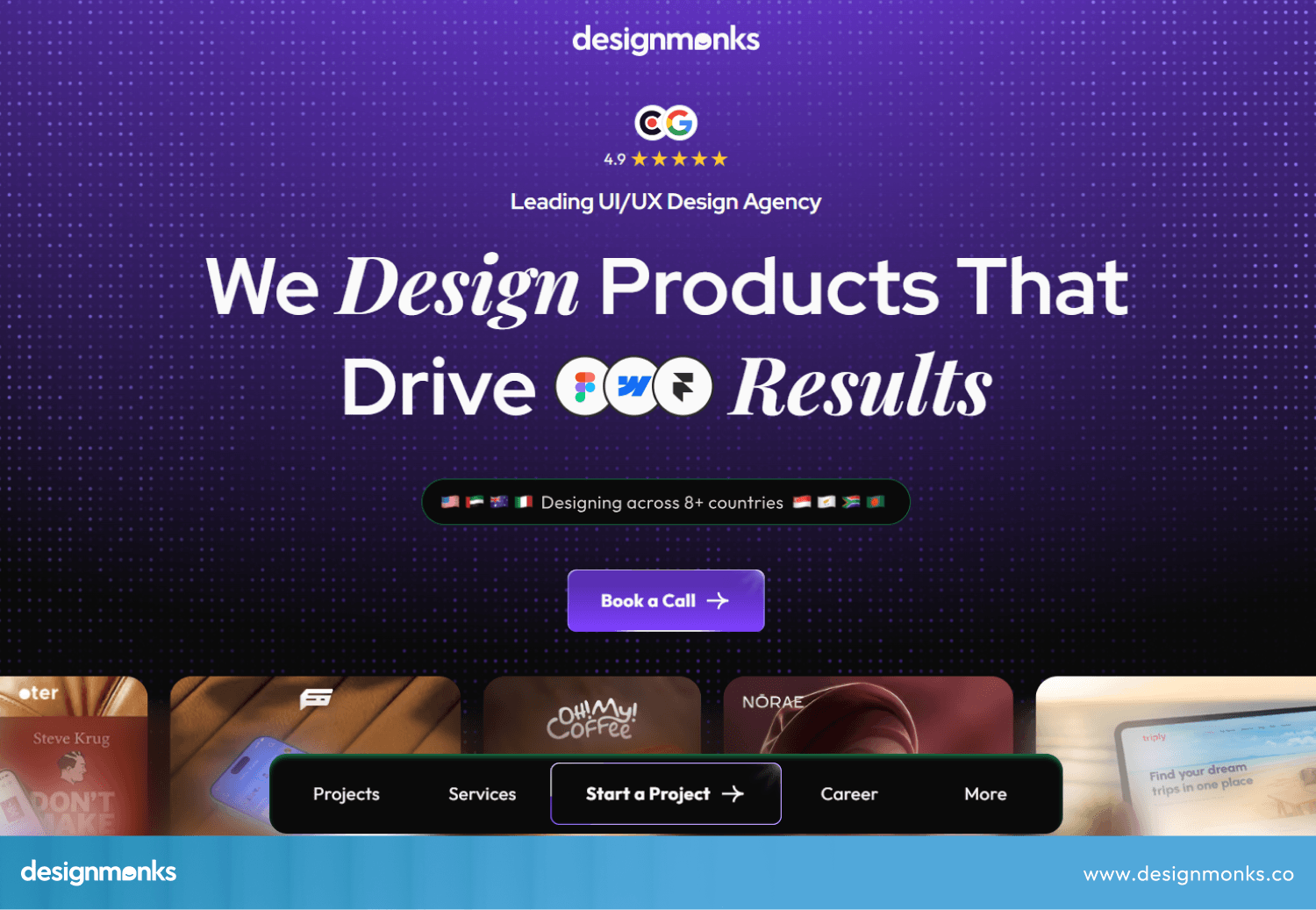
The team combines SaaS branding, website visuals, marketing graphics, and product design. It helps startups create a consistent visual identity as they grow. They can support everything from brand assets and campaign graphics to product visuals and web design.
Flexible project and retainer models, Agile sprints, dedicated contacts, and pricing starting at $1,800 make Design Monks a top choice for SaaS graphic design services.
- Services: SaaS Graphic Design, MVP Design, UI/UX Design, Branding, Web Design, Mobile App Design, UX Audits, Post-Launch Support
- Engagement model: Project-based or monthly retainer
- Best for: Early-stage SaaS startups needing research-backed design without an in-house team
- Industry: SaaS, Fintech, EdTech, HealthTech, Crypto, and many
- Price: Starts from $1800.
- Location: United States, Australia, Dubai, Italy, Bangladesh, etc.
- Notable clients: Telenor, Pepsi, Rakuten Viber, OneTread, and several Y Combinator-backed startups
Ramotion
Ramotion is a San Francisco-based digital product and branding agency with over a decade of experience serving SaaS and enterprise software companies.
Their work spans brand identity, marketing websites, and UI/UX design, with a track record that includes recognizable software and technology clients.
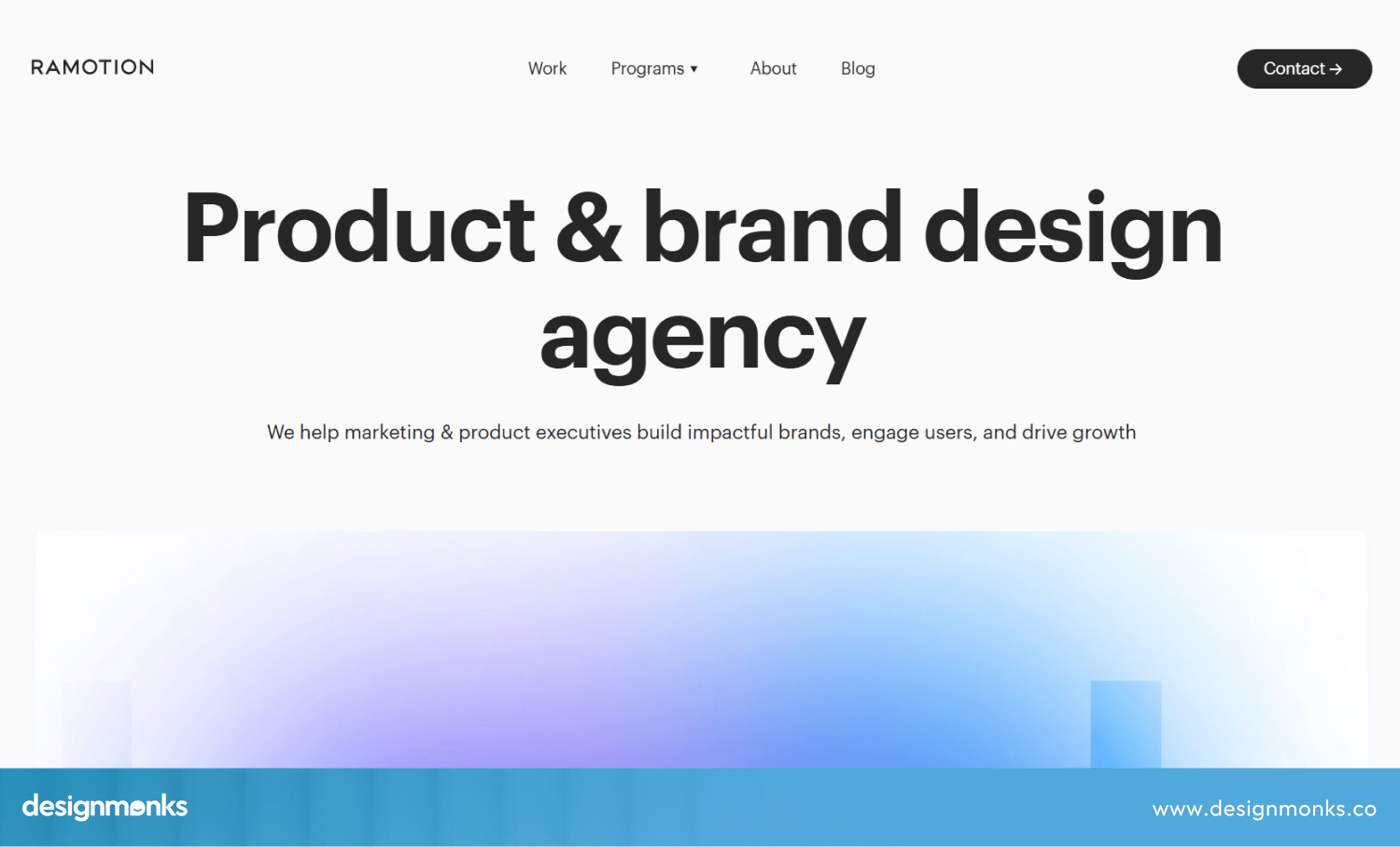
Ramotion tends to structure engagements around milestones like funding rounds, product launches, or major redesigns. They use a milestone-driven process with dedicated project management.
For SaaS graphic design, its strength lies in creating a clear visual identity that can carry across websites, marketing campaigns, presentations, and product visuals. It is a good fit for companies looking for a more strategic design partner rather than help with individual graphics.
Superside
Superside operates as a creative-as-a-service platform and gives SaaS and enterprise brands on-demand access to a large global team of designers through a subscription model.
Rather than a fixed agency roster, clients tap into hundreds of specialists across time zones. They cover everything from ad creative and branding to design systems and video.
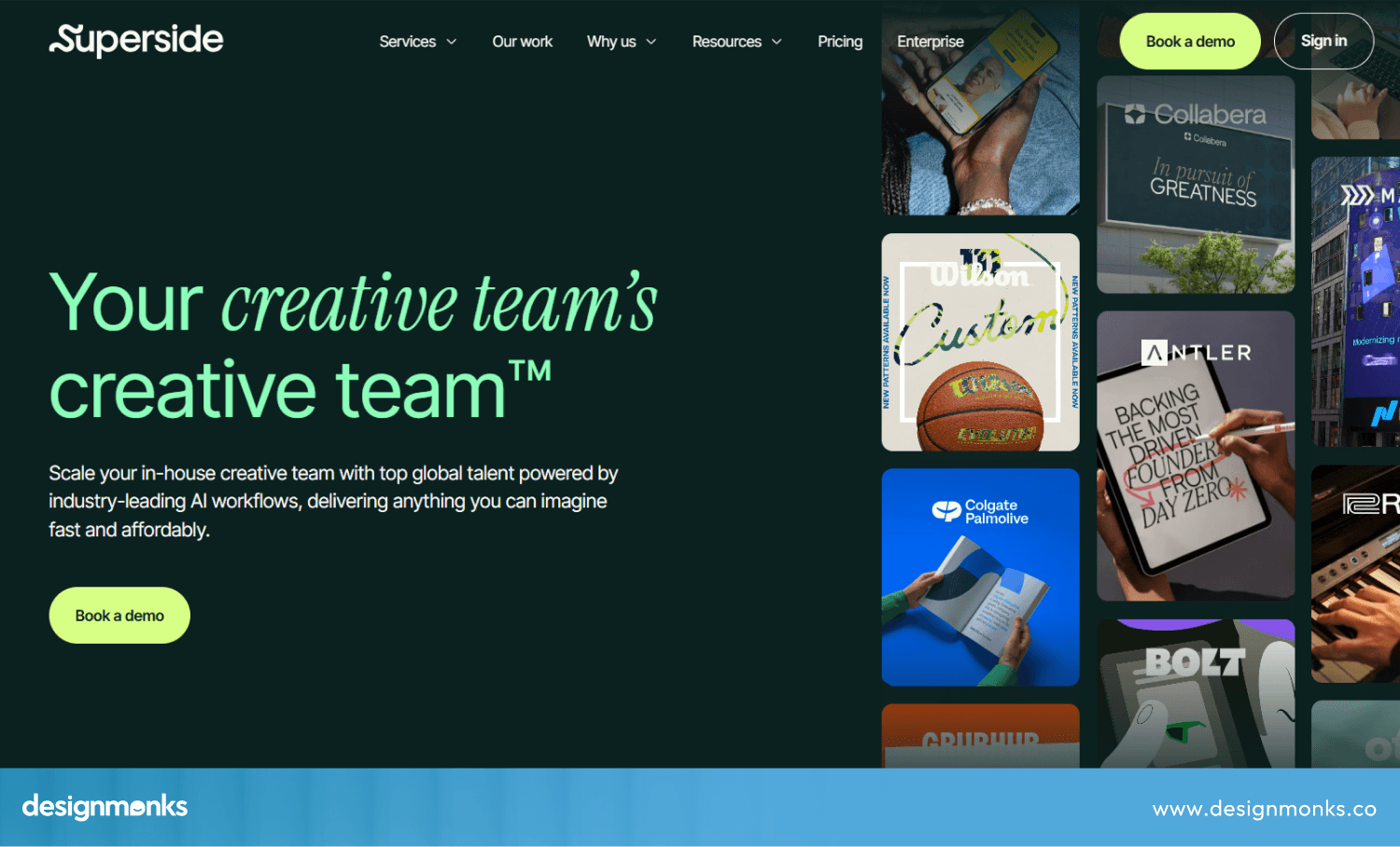
Superside emphasizes speed and pairs human designers with AI-assisted workflows to compress typical turnaround times.
This makes it useful for growing SaaS teams running multiple campaigns at once. Instead of hiring designers for every new project, companies can use one ongoing service to keep their creative pipeline moving.
Clay
Clay is a design agency founded in 2010. It takes a broader approach to SaaS graphic design by connecting brand identity, product visuals, and marketing design. This helps companies maintain the same visual style as they grow and add more channels.
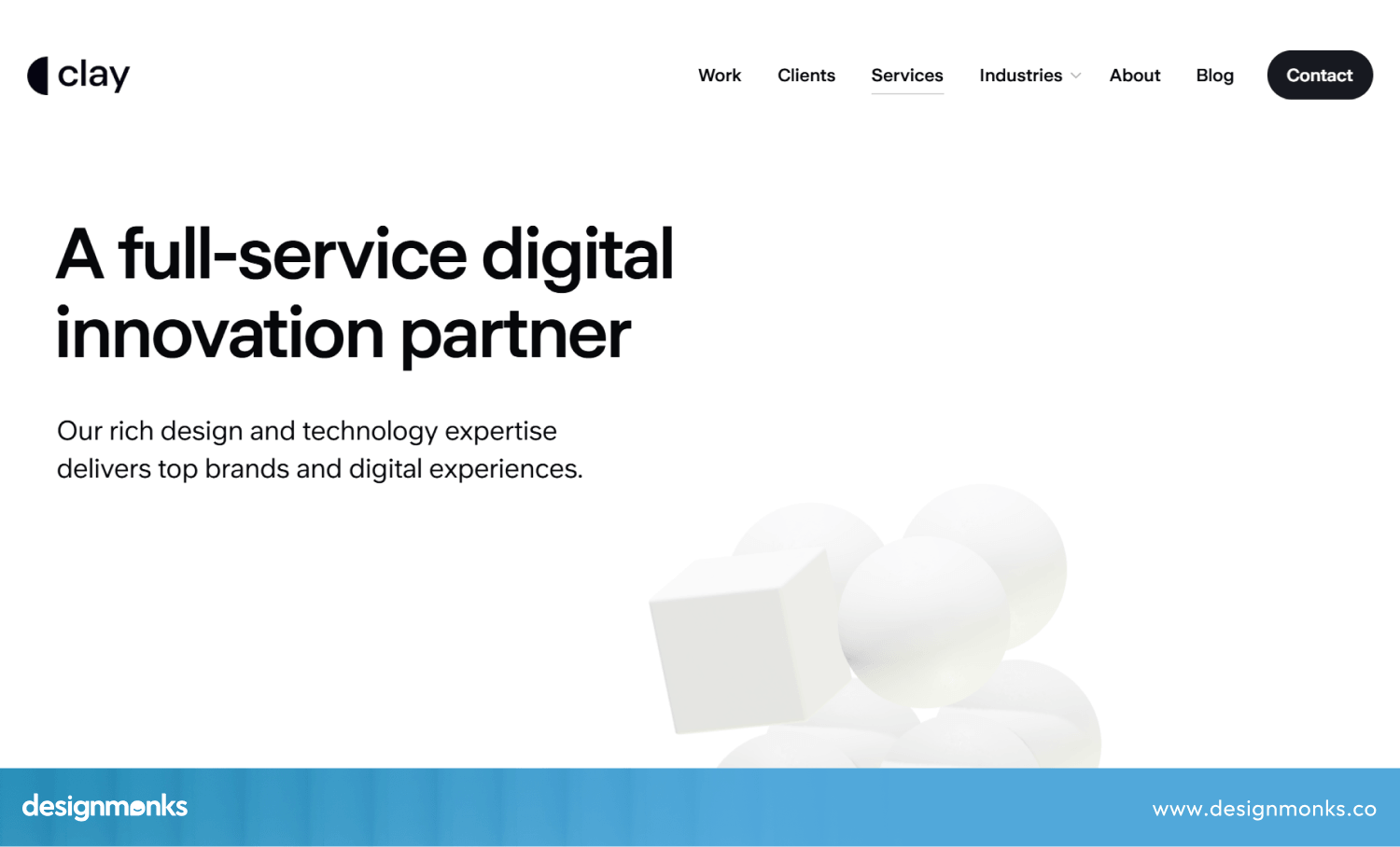
Clay works with SaaS companies going through major rebranding stages. This includes funding rounds, rebrands, and platform expansions. Its design work helps to keep the brand consistent as the company grows.
The focus is less on creating one-off graphics and more on building a visual identity that works across the business.
Halo Lab
Halo Lab is a design and development agency with roots in Ukraine and additional offices supporting startups and B2B brands.
Their SaaS offering covers graphic design, UX/UI, onboarding design, dashboard interfaces, and marketing website design within a single connected engagement. It aims to keep product and marketing visually aligned.
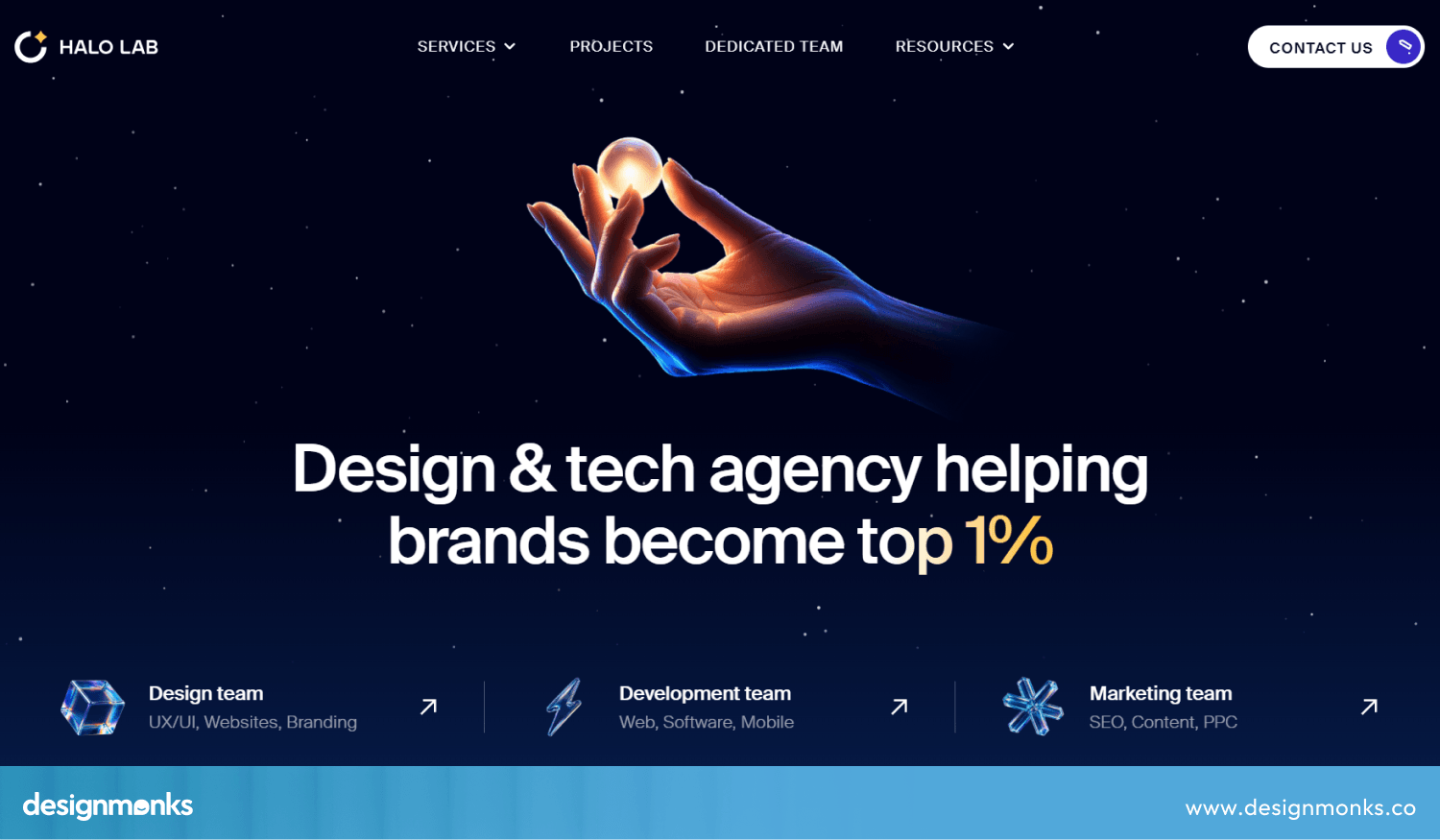
Halo Lab’s SaaS graphic design services help companies create visuals that support user growth. This includes website graphics, product visuals, launch materials, and other assets that help SaaS brands present their products clearly.
The agency also has an in-house team of designers, developers, and product experts. This allows it to work across both the product and marketing sides of a SaaS business.
For companies looking for one partner to handle product visuals, website design, marketing graphics, and UI/UX, Halo Lab can be a strong option.
Duck.Design
Duck Design is a subscription-based UI/UX and product design agency founded in 2019. It works with startups, SaaS companies, and enterprise brands with a fixed monthly fee model.
Clients get access to a large team of designers and a dedicated project manager, with services spanning graphic design, branding, website and landing page design, and SaaS product design.
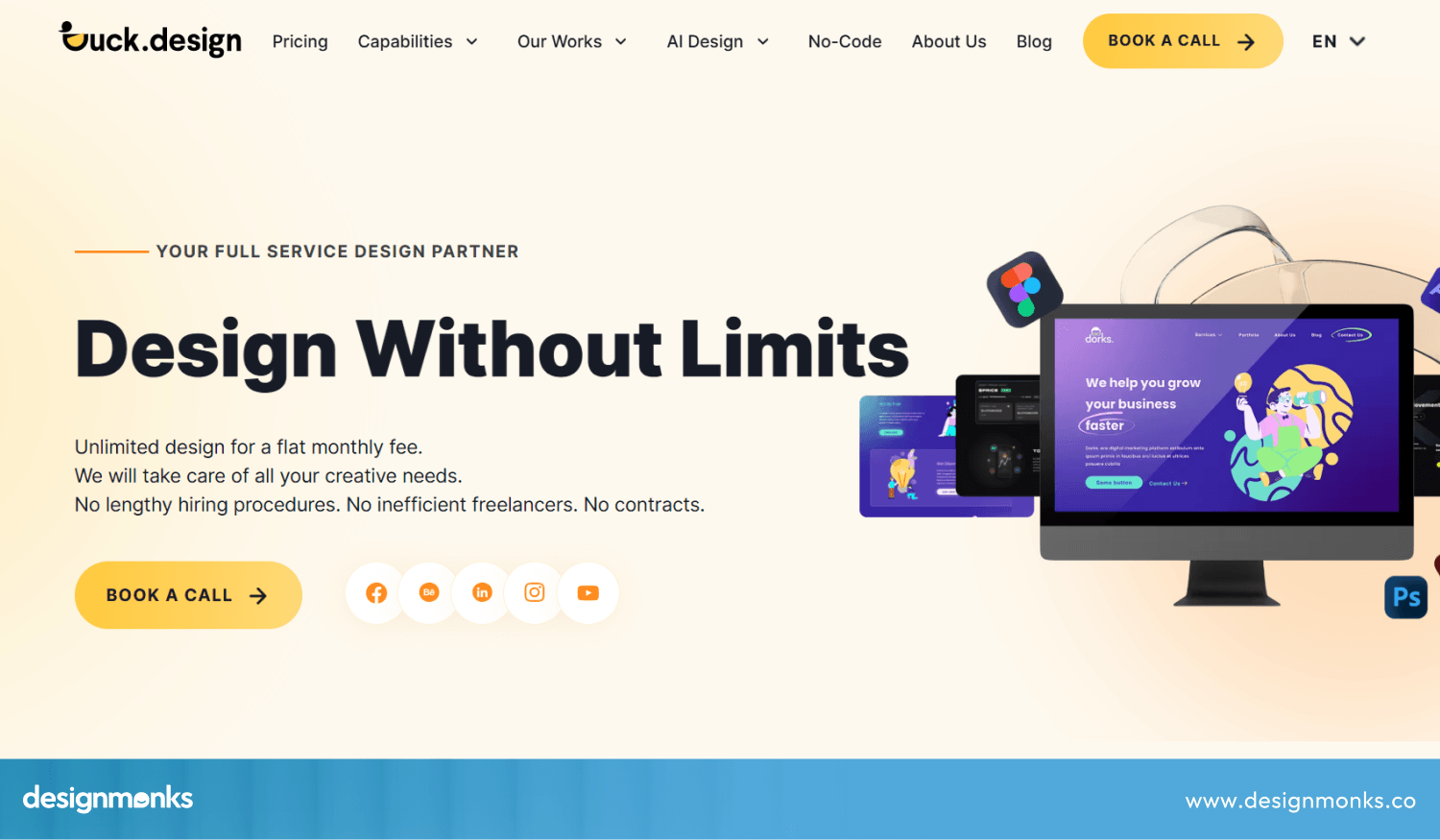
The subscription model works well for SaaS teams that want predictable costs and unlimited revisions instead of paying for each project separately. This flexibility, along with fast turnaround and clear communication, makes it easier for teams to keep their design work moving.
Clients and reviewers also highlight better engagement and conversion rates after redesigns from them.
Eleken
Eleken is a UI/UX design agency that works exclusively with SaaS companies. Its subscription model gives each client a dedicated product designer who is supported by a senior design lead.
Clients work directly with their designer instead of going through a project manager. This makes communication simpler and helps the designer understand the product better over time.
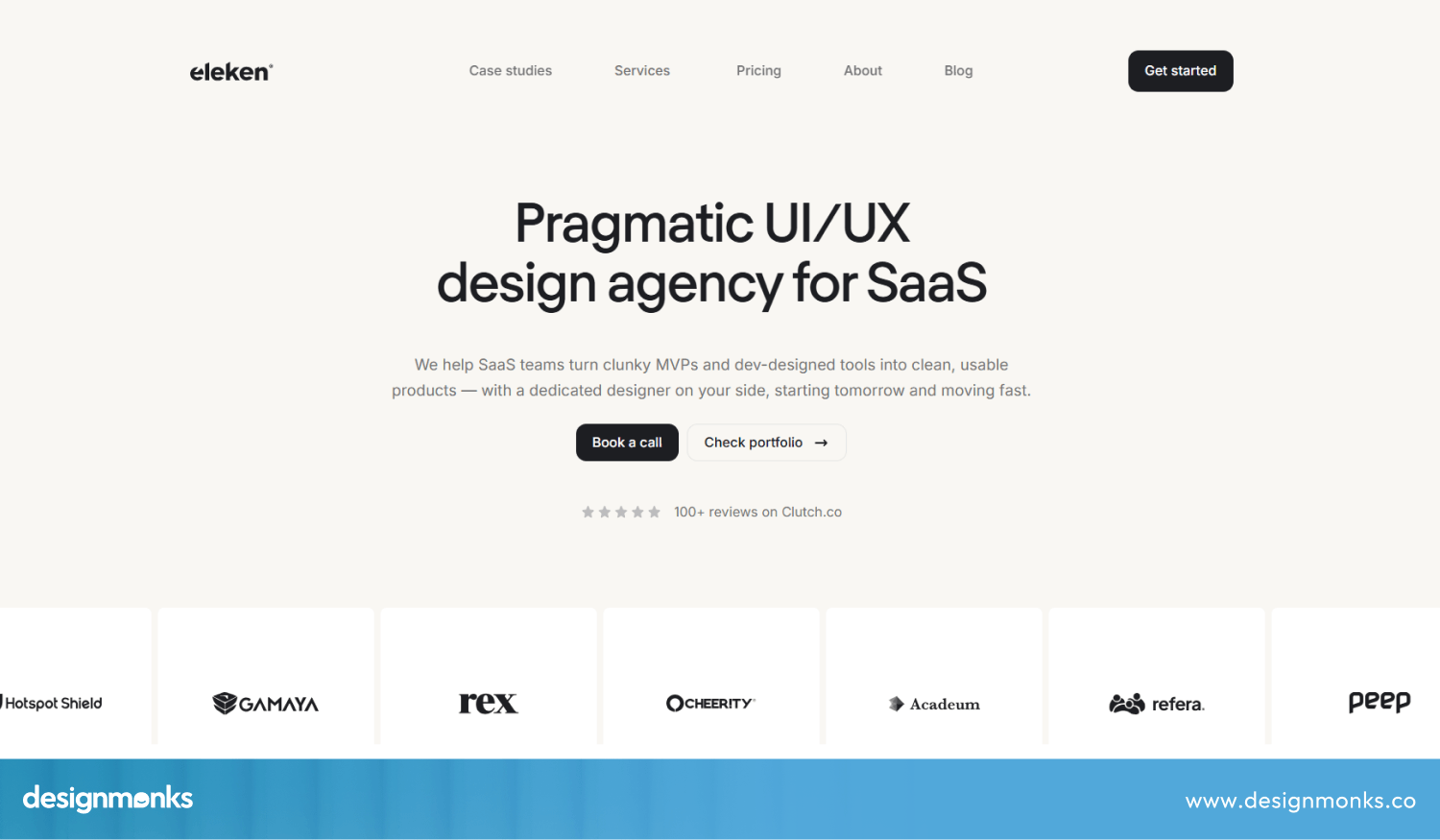
Eleken has worked on more than 100 SaaS products across industries such as fintech, healthcare, and geospatial analytics. Its focus is mainly on product design rather than standalone marketing work.
Landing pages are usually included only when they are part of a larger product design project. The flat monthly pricing and short trial period also give SaaS companies an easy way to test the service before making a longer commitment.
Fikri Studio
Fikri Studio is a SaaS-focused product design studio based in Indonesia. Founded in 2018, it aims to become a trusted design partner for SaaS companies across Southeast Asia.
The studio focuses on UI/UX, graphics design for SaaS products in areas such as finance, HR, customer service, e-commerce, and learning platforms. Each client gets a dedicated designer and project manager, along with a research-driven and collaborative design process.
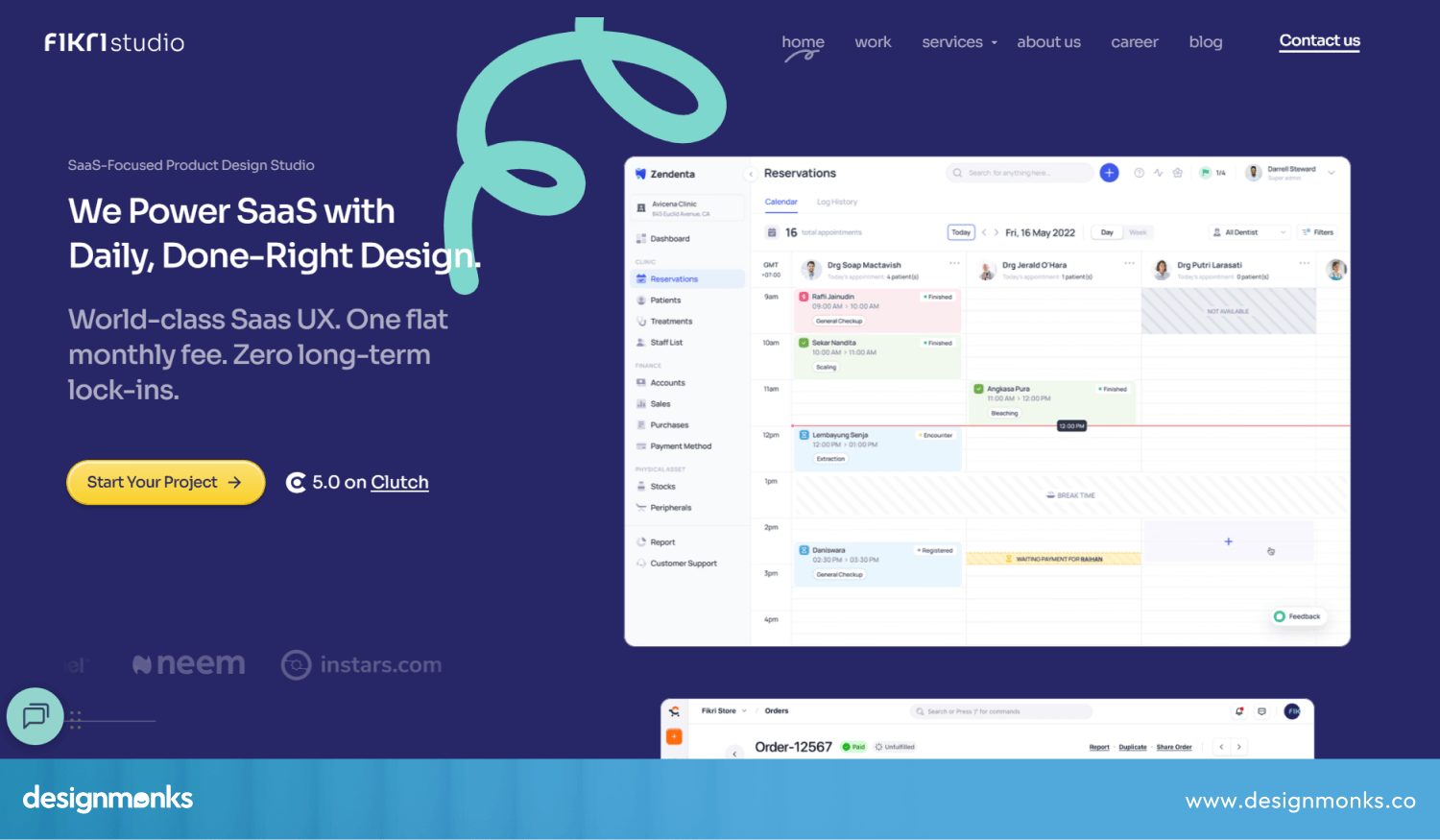
Fikri Studio also offers unlimited revisions and uses an agile workflow. It gives clients more flexibility throughout the project. Its pricing is generally more affordable than many Western agencies as well.
It's a good option for SaaS startups looking for specialized design support without a large budget.
Common Graphic Design Deliverables for SaaS Companies
SaaS companies rely on different types of visual content to market their products, explain features, support sales, and stay consistent across channels. These deliverables can range from simple social graphics to detailed reports and product visuals:
- Website Graphics: Visuals used across the website to make pages more engaging and explain the product.
- Hero Images: Large visuals at the top of homepages and landing pages that quickly communicate the main message.
- Product Mockups: Show the SaaS product inside browsers, laptops, phones, or other devices to give customers a better idea of how it looks.
- Dashboard Graphics: Polished product interface visuals used in websites, ads, presentations, and marketing materials.
- Presentation Templates: Reusable templates for sales decks, investor presentations, company updates, and internal meetings.
- Social Media Kits: Ready-to-use templates for product updates, announcements, campaigns, and other social posts.
- Email Templates: Reusable designs for newsletters, product announcements, promotions, and campaigns.
- Event Booth Graphics: Banners, backdrops, signs, and other visuals used at conferences and trade shows.
- Ebooks: Designed guides and other long-form content that make information easier to read and more engaging.
- Reports: Professionally designed documents that present research, industry data, benchmarks, and other complex information clearly.
SaaS Graphic Design Pricing
The cost of SaaS graphic design depends on how much design work you need, how often you need it, and the type of support you choose. Some companies only need a single project, while others need ongoing design help:
- One-Time Projects: This option works well for a specific project, such as a logo, pitch deck, landing page, or product launch graphic. Small projects can start around $300–$1,000, while larger branding or campaign projects can cost $2,000–$10,000+.
- Monthly Design Subscription: A monthly subscription provides ongoing design support for a fixed fee. Plans commonly range from $1,000 to $5,000+ per month. It depends on the number of requests, turnaround time, and services included. This works well for SaaS companies with regular design needs.
- Dedicated Design Team: A dedicated designer or team works as an extension of your internal team. Costs can range from around $3,000 to $15,000+ per month, depending on team size, experience, and workload. This suits SaaS companies with a large and continuous design workload.
Factors Affecting Pricing
Several factors can change the final cost:
- Project scope: More assets and complex projects usually cost more.
- Design volume: Regular or high-volume requests can increase monthly costs.
- Turnaround time: Urgent projects may require a higher budget.
- Designer experience: Senior or specialized designers generally charge more.
- Type of design: Adding UI/UX or product design can increase the cost.
- Engagement model: Agencies, freelancers, subscriptions, and dedicated teams have different pricing structures.
How to Choose the Right SaaS Graphic Design Agency
Choosing a SaaS graphic design agency is about more than finding good-looking work. You also want a team that understands your industry, works at your pace, and can support your design needs as your company grows. Here are the key things to consider:
Check SaaS Experience
Look for agencies that have worked with real SaaS companies. Experience with software brands can help the team understand common SaaS design needs, from product launches and website graphics to marketing campaigns and sales materials.
Review the Portfolio
Look through the agency's previous work on platforms such as Dribbble, Behance, or Clutch. Pay attention to SaaS websites, product visuals, marketing graphics, presentations, and campaign designs rather than focusing only on logos or general branding.
Understand the Design Process
Ask how the agency handles research, planning, feedback, revisions, and final delivery. A clear process can make it easier to manage multiple design requests and keep projects moving.
Check Communication and Turnaround Time
SaaS companies often work on tight timelines. Make sure the agency can respond quickly, provide clear updates, and deliver designs when you need them.
Consider Scalability
Your design needs may grow as your SaaS company expands. Choose a partner that can handle more projects, new campaigns, and different types of design work without making the process difficult.
SaaS Graphic Design vs General Graphic Design Agencies
A general graphic design agency can create strong visuals for almost any type of business. However, a SaaS-focused agency understands how software companies use design across different stages of the customer journey.
It is familiar with product launches, feature updates, digital marketing, SaaS websites, product visuals, and sales materials. This experience can make the design process more focused.
Instead of creating each graphic as a separate piece, the agency can make sure your website visuals, ads, social posts, presentations, and product graphics follow the same brand style. It can also create visuals that make complex software features easier to understand.
For SaaS companies with frequent launches and ongoing marketing needs, this industry knowledge can save time and help keep the brand clear, consistent, and professional across every customer touchpoint.
Real SaaS Graphic Design Examples
Looking at real SaaS brands can make it easier to understand what effective graphic design looks like in practice. These companies use different visual styles, but each connects its graphics to the product and brand:
HubSpot: Homepage design
HubSpot's homepage is a good study in restraint. The hero section stays clean and uncluttered, the call-to-action is impossible to miss, and the brand's orange-and-navy palette carries through consistently as you scroll.
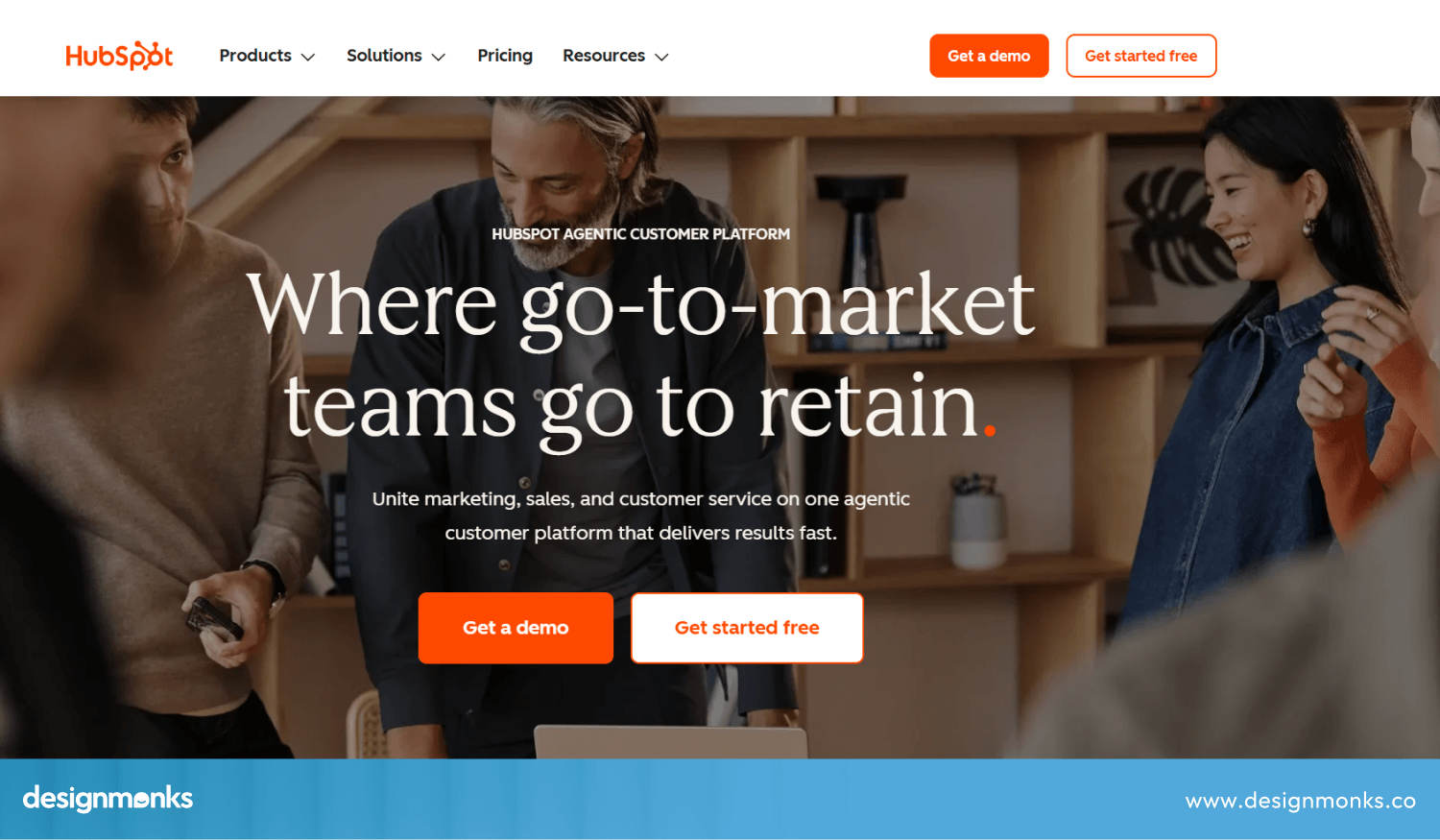
Social proof such as customer logos, numbers, and testimonials is placed right where visitors are starting to evaluate credibility. This reinforces trust before they even reach the product details.
Notion: Feature illustrations
Notion leans on minimal line illustrations to explain features that could otherwise feel abstract or technical. The style stays simple and low-clutter throughout. This keeps the visual hierarchy clear, and the illustration supports the message rather than competing with it.
Slack: Product marketing visuals
Slack's marketing visuals use bright, distinctly branded colors paired with a friendly, approachable illustration style. What stands out most is consistency.
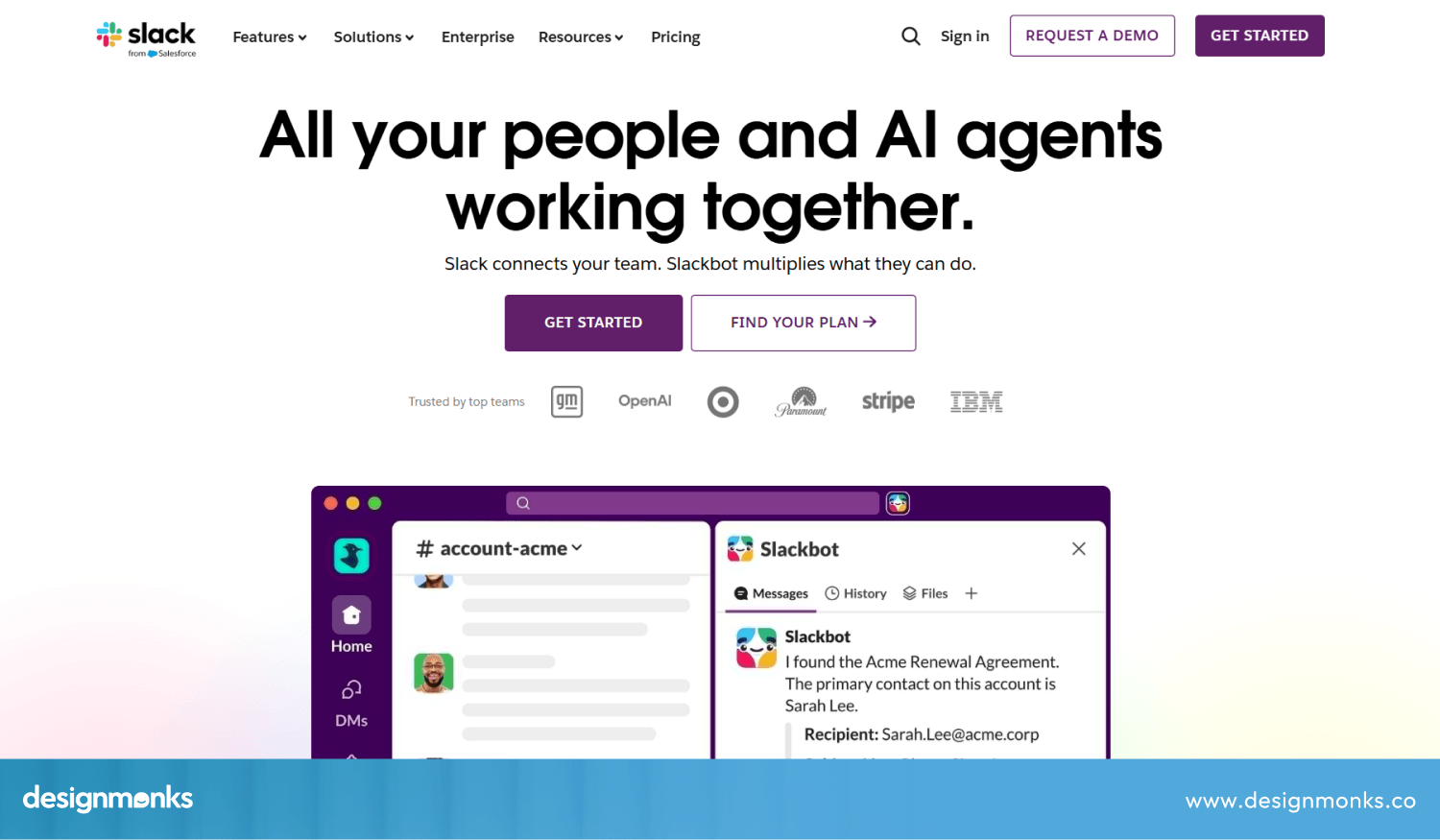
The same visual language shows up across the website, product screens, and social channels. So the brand feels cohesive no matter where someone encounters it.
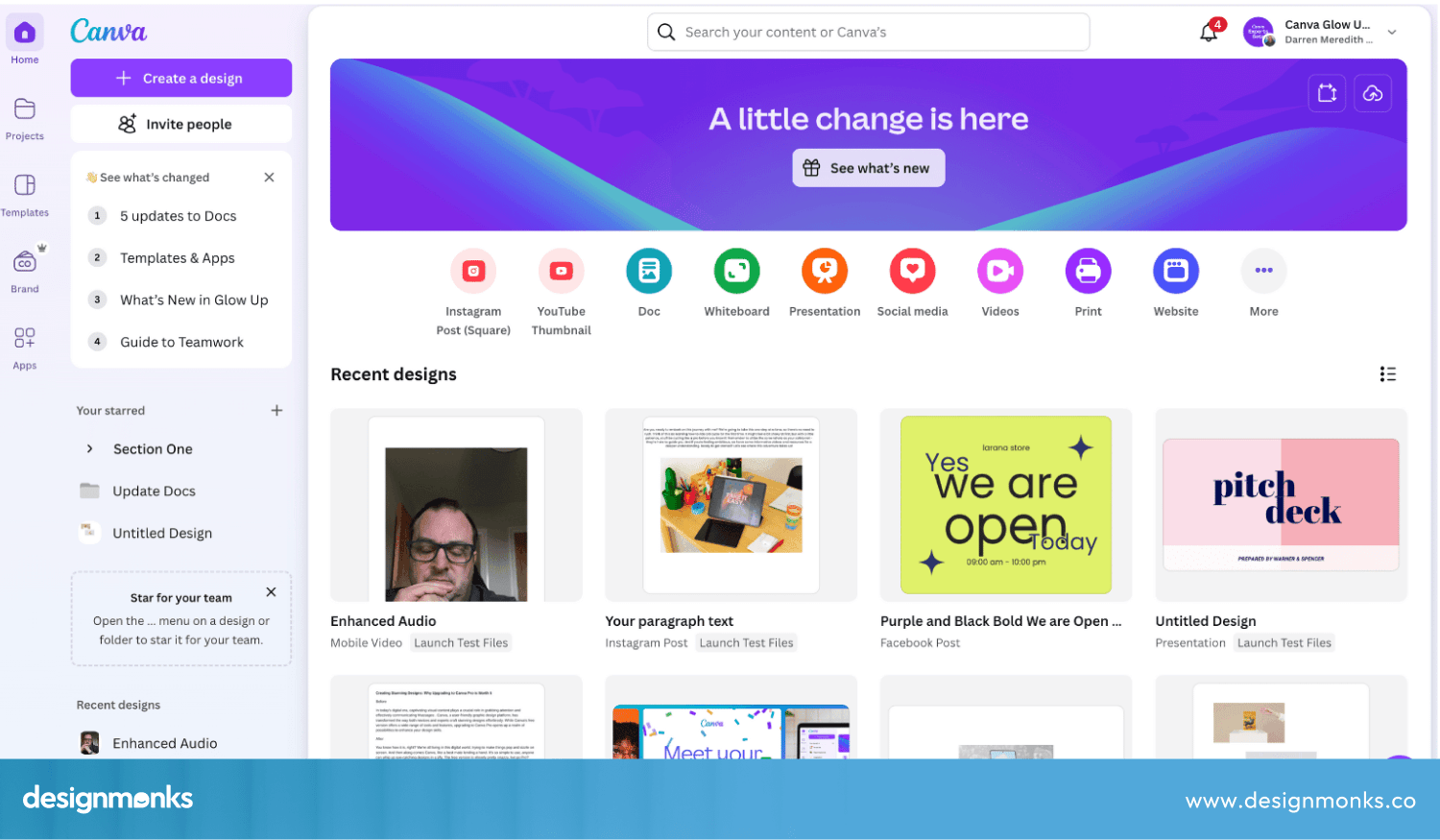
Canva: Social campaign graphics
As a design tool itself, Canva's own marketing sets a high bar. Bold typography, template-driven layouts, and product-forward visuals that put the tool front and center. The graphics double as implicit proof of what the product can do.
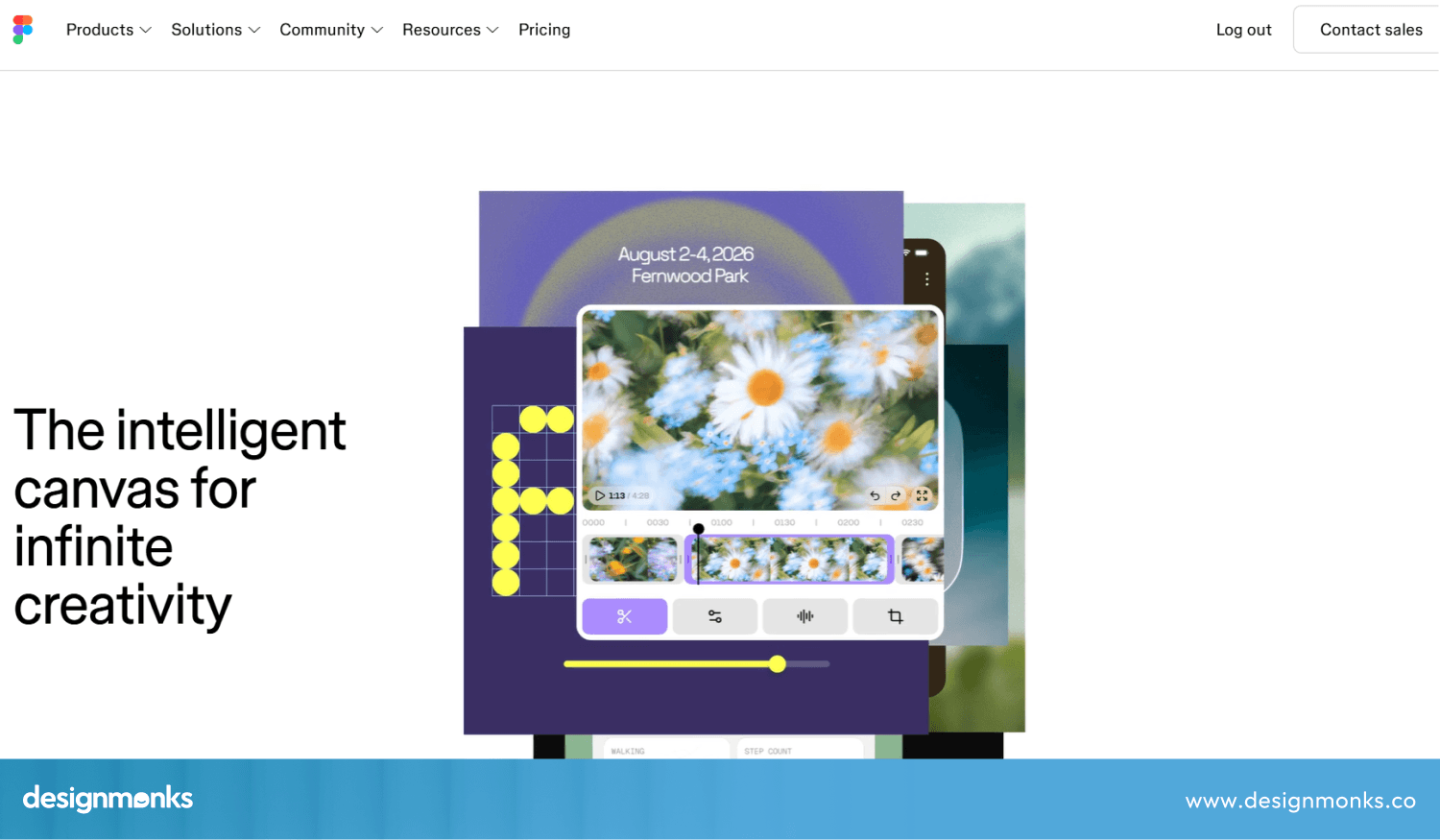
Figma: Landing page visuals
Figma's landing pages lean into product mockups and motion or interactive elements rather than static screenshots. This gives the page a modern, polished feel. It's a good example of using UI presentation itself as the hero visual, rather than illustrating around the product.
Across all five, the pattern is the same, clarity over cleverness. A consistent visual system applied everywhere the brand shows up, and a tight connection between marketing and product.
The same principles apply across a homepage, a pricing page, feature graphics, social ads, or a full product launch campaign. Every asset reinforces the same story instead of introducing a new one
Frequently Asked Questions
How much do SaaS design services cost?
The cost depends on the service and pricing model. One-time projects can start around $500–$5,000+, while monthly design subscriptions often range from $1,500–$10,000+ per month. Dedicated design teams can cost $5,000–$20,000+ per month depending on the team size and workload.
Is UI/UX included with graphic design service?
It depends on the agency. Some focus only on graphic design and marketing assets, while others also offer UI/UX and product design. Always check what is included before hiring.
Can agencies work as an extension of our team?
Yes, many SaaS design services, particularly subscription and dedicated-team models, are built specifically to function as an embedded extension of an internal marketing or product team.
What software is commonly used?
Figma is the industry standard for most SaaS design work, often paired with Adobe Creative Cloud tools and project trackers like Notion for feedback and delivery.
How long does a project take?
It depends on the project. A simple landing page may take a few days, while a full brand identity can take several weeks. Subscription services usually set turnaround times for each design request.


.avif)
.avif)
.avif)
.avif)


.avif)
.avif)
.avif)
.avif)






.avif)