.svg)




Key Takeaways
- Enterprise websites must scale seamlessly while supporting multiple teams and departments.
- Role-based access, content ownership, and governance prevent errors across large sites.
- High traffic, performance optimization, and compliance ensure reliable enterprise website experiences.
- Design systems, reusable components, and IA maintain consistency and efficiency at scale.
- Continuous SEO, monitoring, and post-launch maintenance keep enterprise websites competitive globally.
Big businesses don’t fail online because of ideas, they fail because their websites can’t keep up. An enterprise website design agency can help solve this problem by building websites that stay fast, stable, and organized.
An enterprise website design agency plans the structure, designs complex user journeys, and sets up systems so multiple departments can update content safely. They handle security, performance, and long-term scalability, ensuring the site grows as the business grows.
But how do these agencies handle complex websites and build platforms that grow effortlessly with the business? Keep reading to find out!
What Is Enterprise Website Design?
An enterprise website design is a carefully planned and strategic digital platform built for large, complex organizations. Unlike regular websites, enterprise websites must support multiple teams, departments, and stakeholders.
At the same time, they need to manage high volumes of content, users, and business processes. They are designed to deliver a reliable, fast, and consistent experience across different regions, languages, and systems.
Essentially, it’s a website that grows with the business rather than needing constant rebuilding. These large-scale enterprise websites face unique challenges, such as:
- Managing Multiple Departments: Big enterprises have many teams, like marketing, sales, HR, and support, all adding or updating content. Without proper workflows, approvals, and access controls, content can get messy or overwritten. Enterprise website design solves this by organizing roles, approvals, and collaboration so every team works efficiently.
- Handling Heavy Traffic and Performance Demands: Enterprise websites often receive thousands or millions of visitors at once. A website not built for this may slow down or crash. Enterprise website design ensures fast loading, smooth navigation, and reliable performance, even during peak usage.
- Supporting long-term scalability: As enterprises grow, they add new products, services, or global offices. Websites must expand seamlessly without needing a full rebuild. Scalable enterprise design allows the site to grow in pages, languages, regions, and features as the business evolves.
By addressing these challenges, enterprise website design ensures large organizations have websites that run smoothly, support teams, and grow with the business.
How Enterprise Website Design Differs from Traditional Web Design
Enterprise websites are very different from small business (SMB) websites. While SMB websites are usually simple and easy to manage, enterprise websites must support large teams, multiple departments, and complex systems.
Structurally, enterprise websites have thousands of pages, complex navigation, and multi-level user flows, while SMB sites usually have just a few pages and simple menus.
Moreover, enterprise websites face challenges that small websites rarely see. They must handle technical demands, like thousands of users visiting at the same time and connections to multiple systems such as CRMs, payment gateways, or analytics tools.
To manage this, enterprise sites are built with robust infrastructure, high-performance servers, and carefully integrated systems. These keep everything running smoothly, even under heavy traffic.
Governance-wise, enterprise sites have role-based access, internal approvals, and strict content ownership rules to keep updates organized. SMB sites usually have one or two people managing content, so this is rarely needed.
To understand this better, let’s dive into the key areas where enterprise websites tackle scale, governance, and security challenges:
Scale, Governance & Stakeholder Complexity
Big company websites aren’t run by just one or two people. Marketing, sales, HR, and other teams all need to add content, make updates, or approve changes. Without a proper system, things can get messy fast, and updates can overwrite each other.
In enterprise website design, managing who can change what is just as important as how the site looks. Large organizations need role-based access so teams only work on the sections they are responsible for, preventing errors and overlap.
Clear content ownership ensures every page has a defined owner, making updates faster and more organized across departments. Internal approvals add another layer of control, allowing content to be reviewed before publishing so it meets brand, legal, and company standards.
These systems are built into enterprise website design to keep large, complex websites stable, accurate, and easy to manage as the organization grows.
Performance, Security & Compliance Requirements
Enterprise websites must stay fast and reliable under constant pressure from large volumes of users across regions and systems. Performance issues at this scale don’t just affect user experience, they can disrupt operations, damage trust, and impact revenue.
That’s why enterprise website design focuses on stable infrastructure, performance optimization, and ongoing monitoring rather than one-time setup.
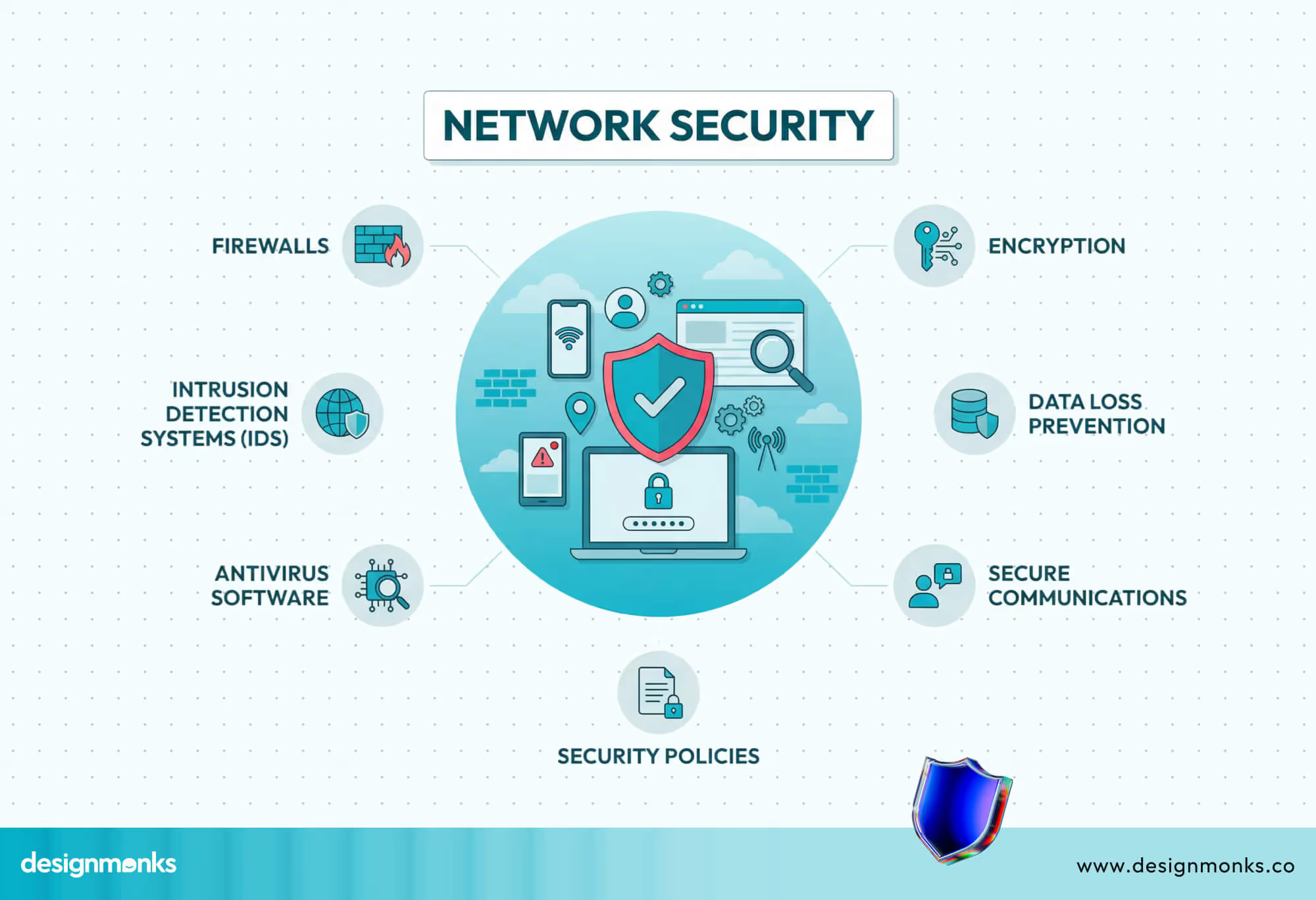
Compliance and security become far more critical at the enterprise level. Regulations like GDPR require strict control over how user data is collected, stored, and accessed, especially for organizations operating across multiple regions.
SOC 2 adds another layer by demanding verified security practices, access controls, and accountability across systems and teams. Enterprise website design builds these requirements directly into the platform, ensuring data protection, controlled access, and audit readiness from day one.
Core Components of Enterprise Website Design
Big websites don’t work by accident. When a company grows, its website needs a strong base to stay clear, fast, and easy to use. Enterprise website design focuses on a few key parts that help the website handle more users, more content, and more teams without becoming confusing:
Enterprise UX Strategy & User Journey Mapping
Enterprise websites are visited by many types of users, customers, employees, partners, and admins, and each has different needs. That’s why role-based UX is important: the website shows the right content and options to the right people.
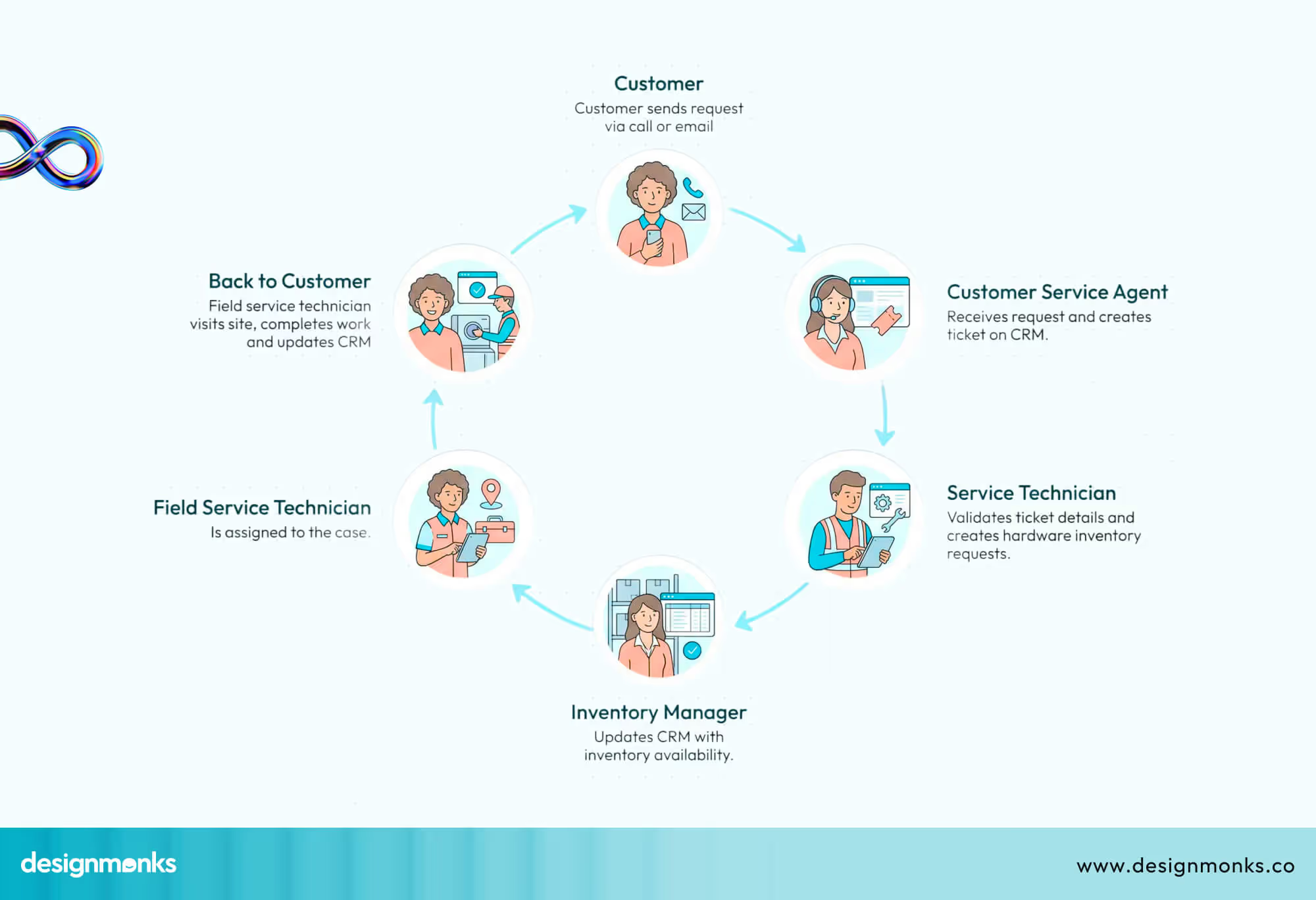
For example, an employee may see internal tools, a customer sees products and support, and an admin manages settings behind the scenes.
Designers use multiple personas to represent these different users. Each persona has goals, challenges, and tasks, helping the team design experiences that work for everyone.
Because enterprise websites are large, these users often follow complex user journeys. A single user might move through many pages, systems, or tools to complete a task. Planning these journeys carefully makes the website easier to navigate, reduces confusion, and ensures each type of user can find what they need quickly and efficiently.
Scalable Information Architecture
Big enterprise websites can have thousands of pages, hundreds of products, and even different versions for multiple regions or languages. Without a clear structure, it’s easy for users to get lost and for teams to struggle managing all that content.

Scalable information architecture (IA) organizes everything in a logical, flexible way. Menus, categories, and page hierarchies are designed to grow over time, so adding new pages, products, or regional content doesn’t require a complete redesign.
This makes the website easy to navigate for users and easy to manage for teams, no matter how large or complex the site becomes. A strong IA ensures that users always find what they’re looking for, while the company can expand its offerings smoothly.
Design Systems & Component Libraries
When many teams work on a large website, it’s easy for things to start looking different. Buttons, fonts, colors, and layouts can change from page to page if everyone is designing separately. Design systems and component libraries solve this problem.

They provide a set of reusable elements like buttons, headers, forms, and color schemes that all teams use. This keeps the look and feel consistent across every page, no matter who builds it.
Using these shared components also makes it faster to create new pages and reduces mistakes. It also helps the website stay professional, organized, and true to the brand as it grows.
5 Best Enterprise Website Design Agencies
Choosing the right enterprise website design agency is critical for building a digital platform that can scale, perform, and evolve with your organization. The agencies below stand out for their ability to combine strategy, UX, and technical execution for complex enterprise needs:
Design Monks
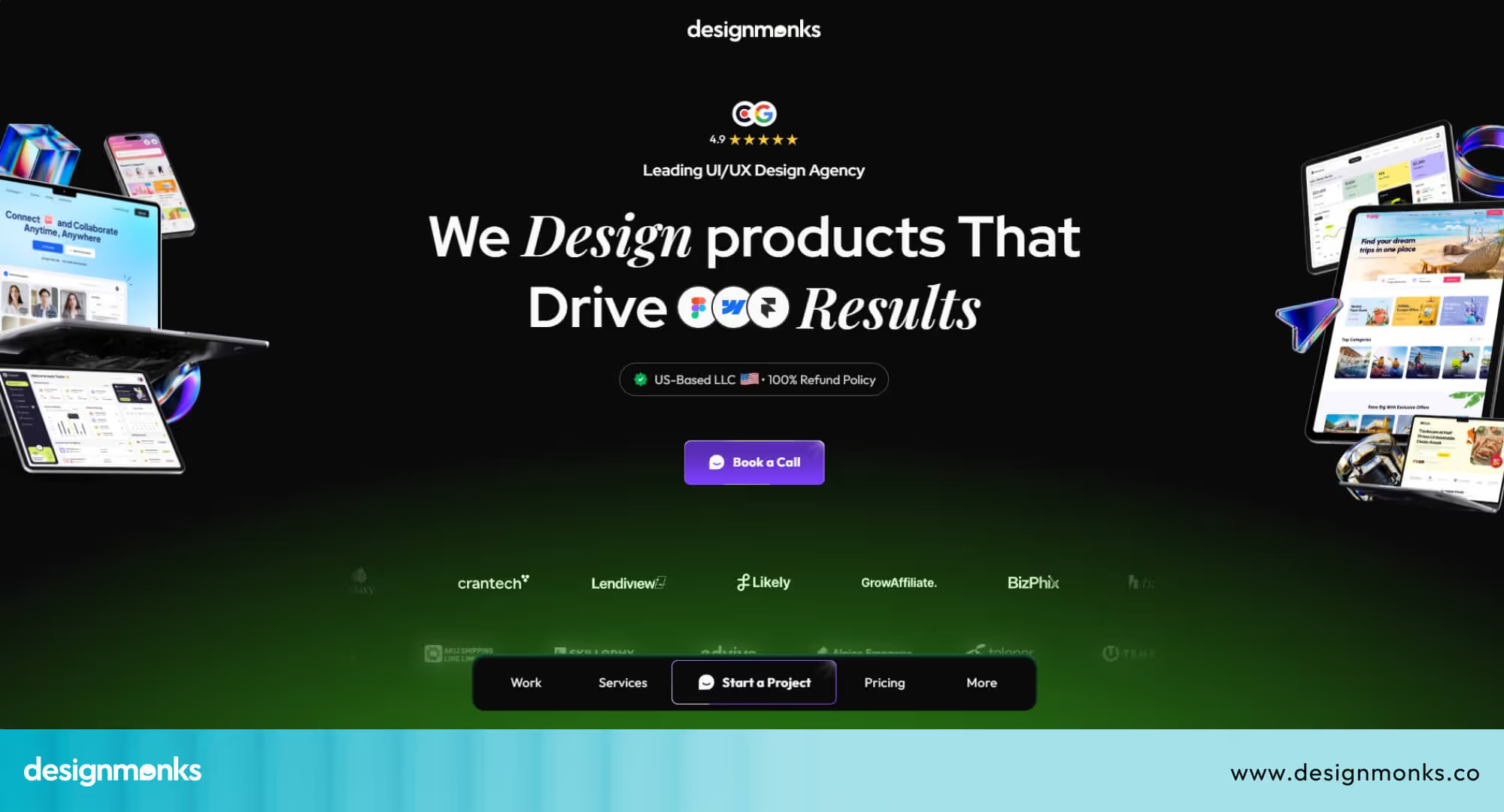
Design Monks is an enterprise website design agency that builds high-performing digital platforms by combining strategy, scalability, and flawless execution.
Overview:
- Website: Design Monks
- Locations: Dhaka, USA, Dubai, Johannesburg and more
- Price: $50 – $99/hr
- Clients: Telenor, Robi, SwissLife, Ostad, and more
- Ideal for: Enterprises that need fast execution, scalable UX systems, and reliable post-launch support
Trusted by enterprise brands like Robi and SwissLife, Design Monks has proven its ability to deliver scalable UX, clean architecture, and conversion-focused design.
What sets Design Monks apart is their enterprise-first mindset. Every project begins with understanding business goals, user journeys, and internal workflows. Their modular, system-driven design approach ensures websites remain easy to govern, update, and scale over time.
With nearly 95% client satisfaction, Design Monks delivers rapid, responsive, and reliable solutions that outperform competitors. For enterprises that want a website designed to grow with their business, engage users, and drive measurable results, Design Monks is the premier choice.
Superside
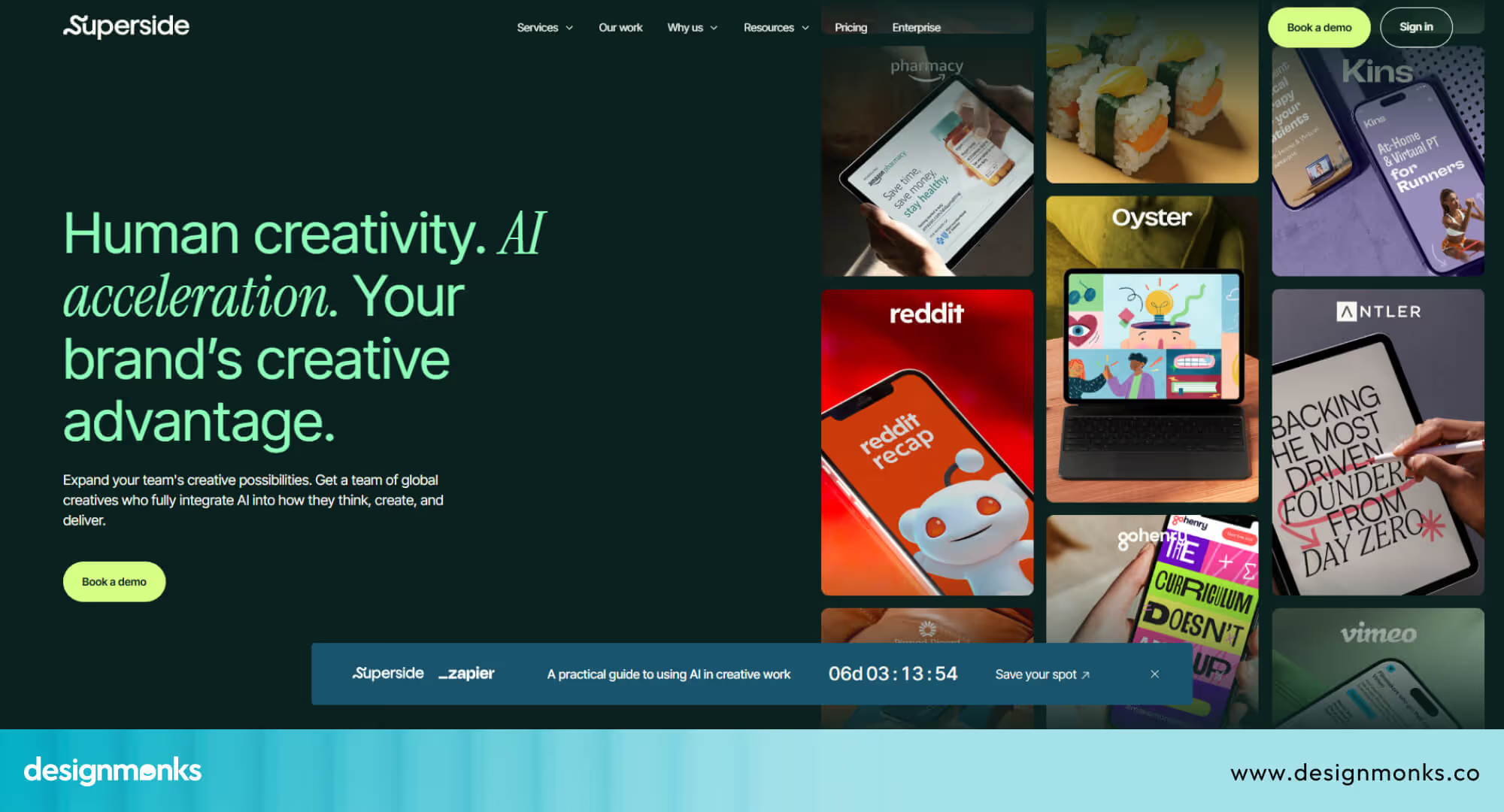
Superside is an enterprise design company built for organizations that need continuous, high-volume design support without friction.
Overview:
- Website: Superside
- Locations: Global
- Price: Subscription-based
- Clients: Facebook, Amazon, PUMA, Shopify, and more
- Ideal for: Enterprises needing ongoing, scalable design production and strategic design support
Operating as an extension of in-house teams, Superside helps large enterprises move faster by providing on-demand access to senior designers across branding, marketing, product, and web design.
Trusted by global brands, Superside specializes in supporting marketing and product teams. Their model removes traditional agency bottlenecks, making design easier to manage across campaigns, regions, and product lines.
What sets Superside apart is its subscription-based, always-on delivery model, designed specifically for enterprise workflows. Instead of one-off projects, Superside integrates with internal teams to handle everything from daily production tasks to large-scale design initiatives.
For enterprises with ongoing, multi-team design needs, Superside delivers fast, scalable execution without agency friction.
Pentagram
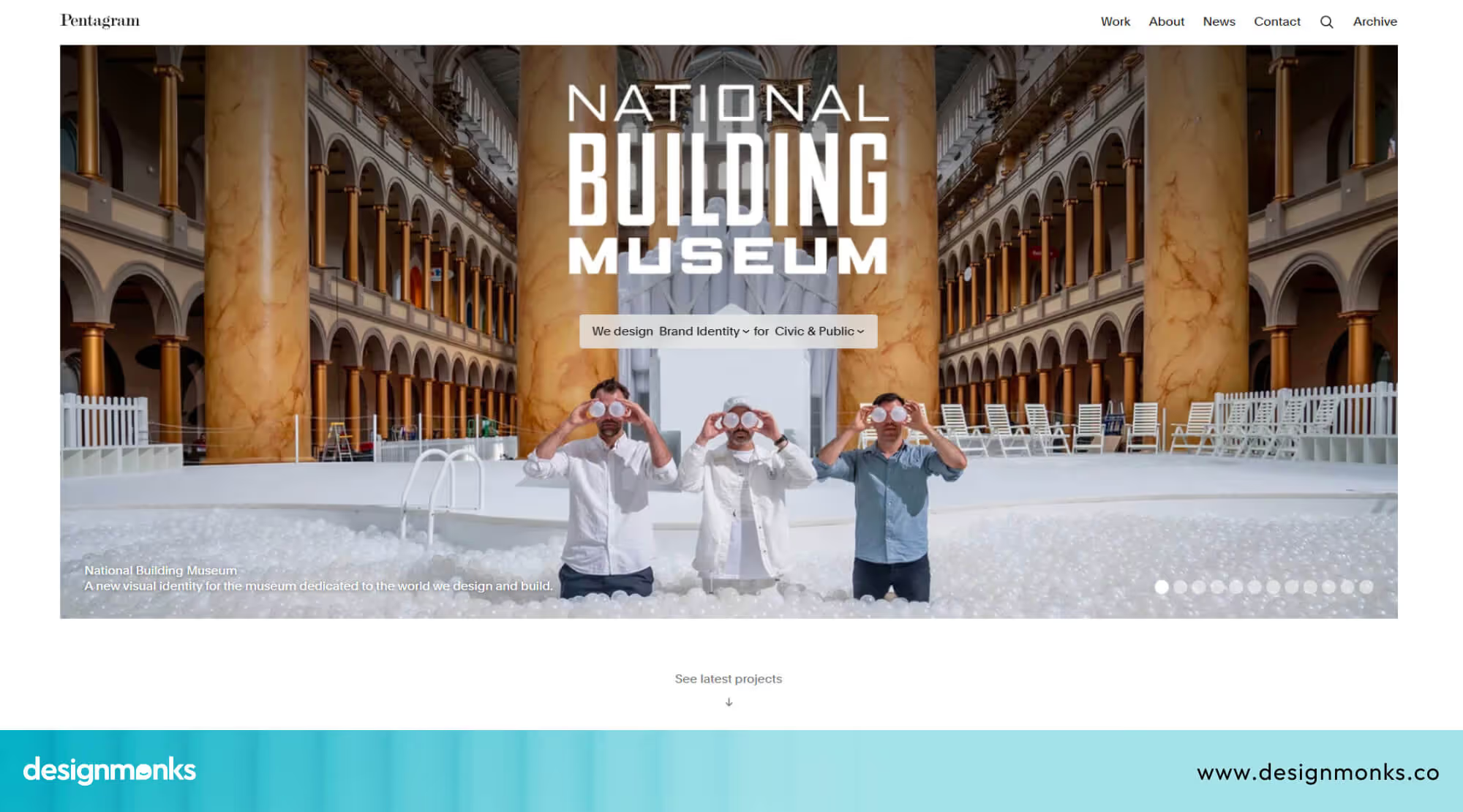
Pentagram is the world’s largest independently owned design studio, known for shaping some of the most enduring and influential enterprise brands globally
Overview:
- Website: Pentagram
- Locations: Austin, TX (+ global studios)
- Price: $50 – $99/hr
- Clients: igluu, YZD, Gates Foundation, and more
- Ideal for: Enterprises seeking iconic brand systems and long-term design leadership
With deep expertise spanning identity systems, digital experiences, and communications, Pentagram helps large organizations express clarity, authority, and consistency across every touchpoint.
What sets Pentagram apart is its partner-driven, craft-led approach. Every enterprise engagement is led by a design partner who brings decades of experience in building scalable brands and digital systems. Their work prioritizes clarity, structure, and longevity. This ensures enterprise websites and identities remain relevant across markets and years.
For enterprises that value design excellence, governance, and lasting brand impact, Pentagram remains a benchmark studio for world-class enterprise website and brand design.
Digital Silk
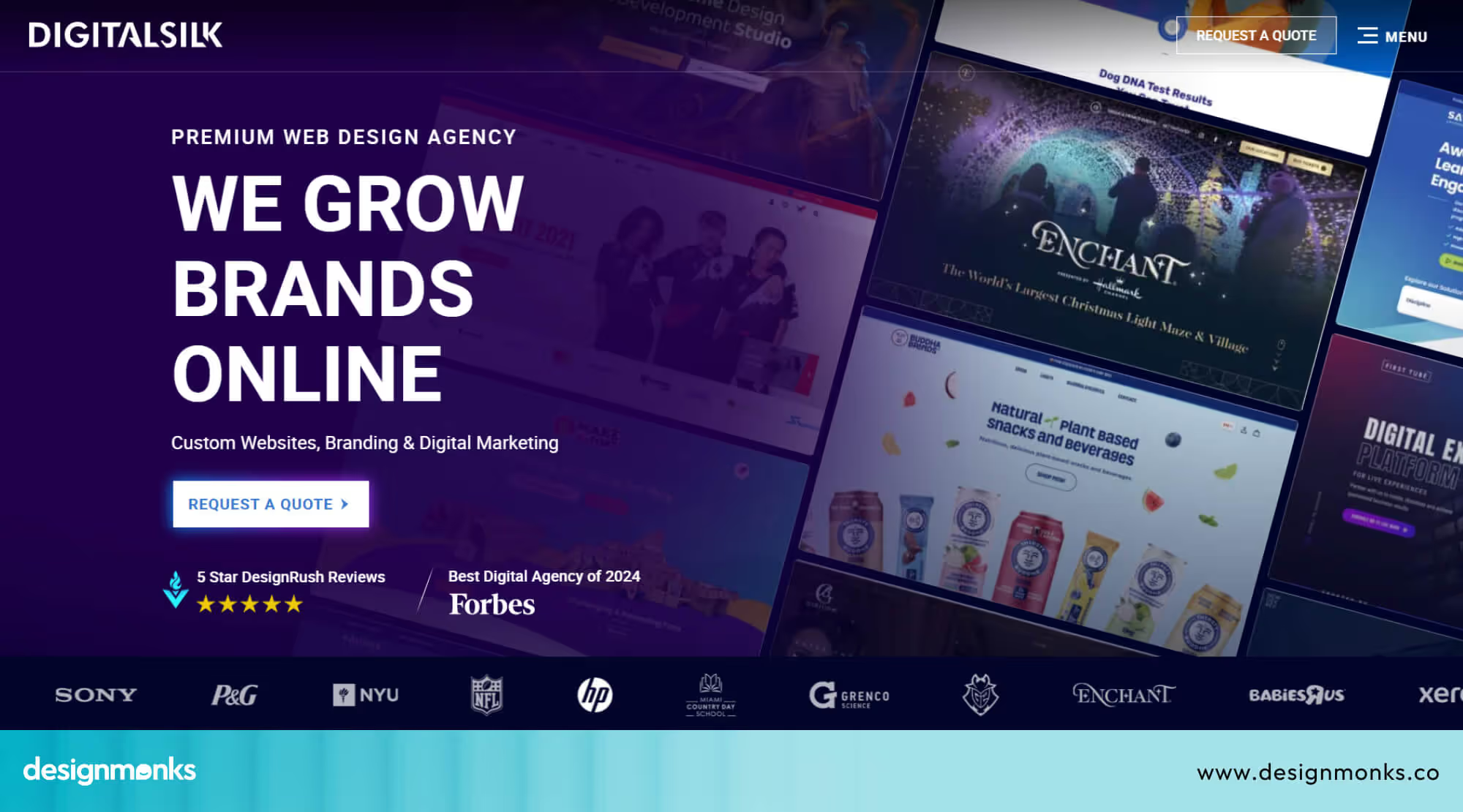
Digital Silk is a design agency focused on building custom, high-conversion digital experiences that support long-term brand growth.
Overview:
- Website: Digital Silk
- Locations: New York, NY (+ additional offices)
- Price: $100 – $149/hr
- Clients: SONY, P&G, Xerox, Northwestern University, and more
- Ideal for: Enterprises seeking conversion-driven websites with strong SEO foundations
Trusted by major brands like SONY, P&G, Xerox, and NYU, Digital Silk specializes in enterprise websites where performance, discoverability, and scalability matter as much as visual polish. Their approach is particularly suited to organizations looking to align brand storytelling with conversion optimization.
What sets Digital Silk apart is its results-first methodology. Every enterprise website is designed with clear performance goals such as lead generation, sales, and organic visibility.
Every enterprise website is designed around clear performance goals like lead generation, sales, and organic visibility. This is supported by custom UX, strategic content, and scalable technical execution.
For enterprises that prioritize measurable ROI from their digital presence, Digital Silk delivers enterprise websites built to convert and grow.
Lounge Lizard
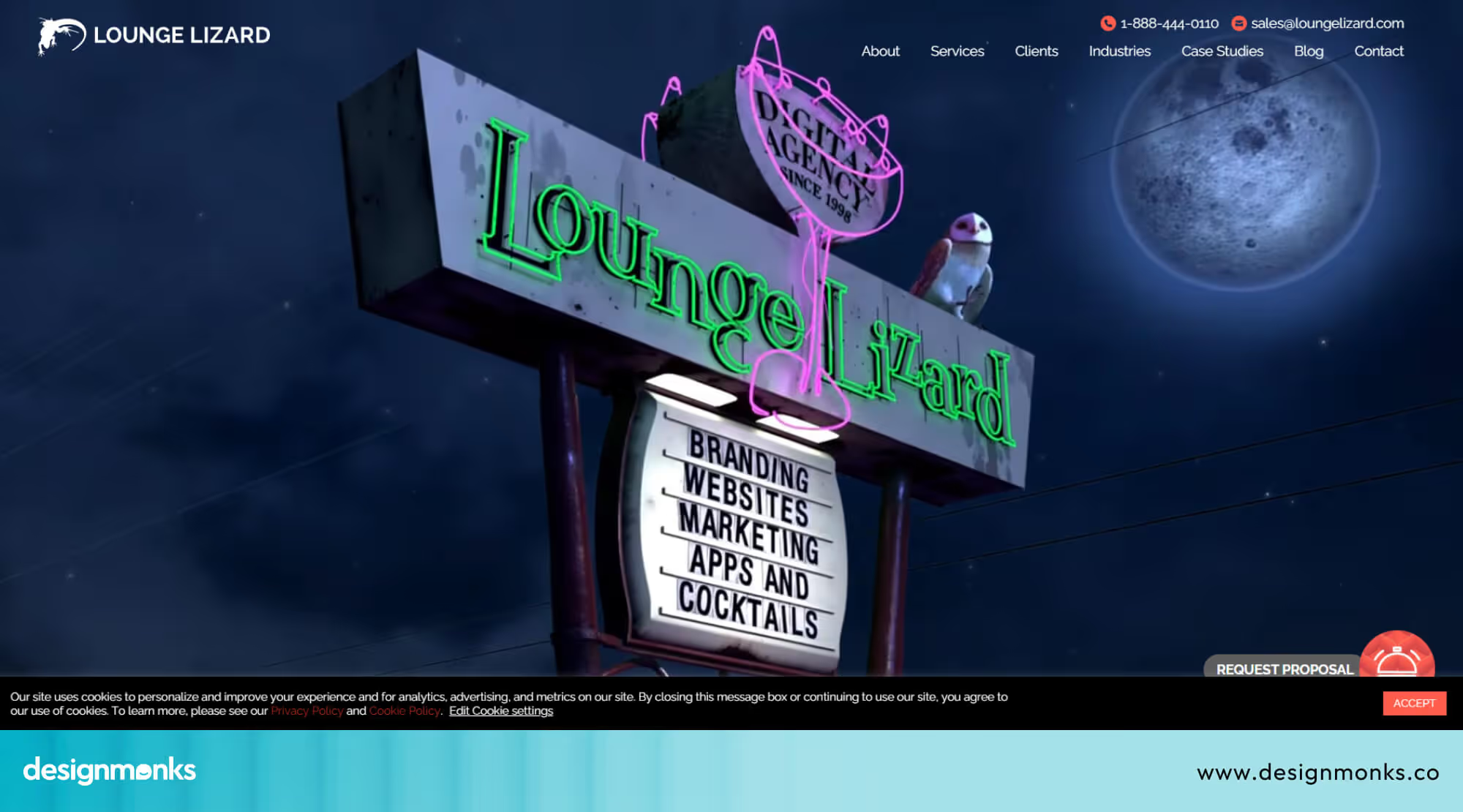
Lounge Lizard is a long-established web design agency known for driving internet growth through strategy, creativity, and performance.
Overview:
- Website: Lounge Lizard
- Locations: New York, NY (+ 10 global offices)
- Price: $150 – $199/hr
- Clients: Canon, Korg, Blue Owl, and more
- Ideal for: Enterprises seeking lead-driven websites with strong branding and SEO performance
With over 25 years of experience, they help enterprises strengthen brand storytelling while improving leads, sales, and search visibility. Lounge Lizard has partnered with both startups and enterprise organizations to deliver websites that combine strong branding with direct-response UX.
Their enterprise websites are built to stand out visually while supporting clear business outcomes such as higher conversions, stronger SEO rankings, and consistent brand storytelling across markets.
For enterprises that want proven experience, aggressive growth strategies, and high-impact web design, Lounge Lizard is a reliable long-term partner.
Enterprise SEO & Performance Optimization
SEO for enterprise websites is much more complex than for small sites. Large websites have thousands of pages, multiple languages, and different regions. Each page must be found and ranked correctly in search engines.
Poorly managed SEO can hide important pages or reduce traffic, affecting business goals. That's why enterprise SEO needs careful planning and ongoing monitoring to ensure visibility across global markets:
Technical SEO for Large-Scale Websites
Enterprise websites rely on technical SEO to stay visible. Indexation control ensures the right pages appear in search results, while crawl budget focuses search engines on high-value content.
Structured data helps search engines understand content like products or articles, and internal linking connects pages to improve navigation and ranking. These elements make large websites discoverable and competitive across global markets.
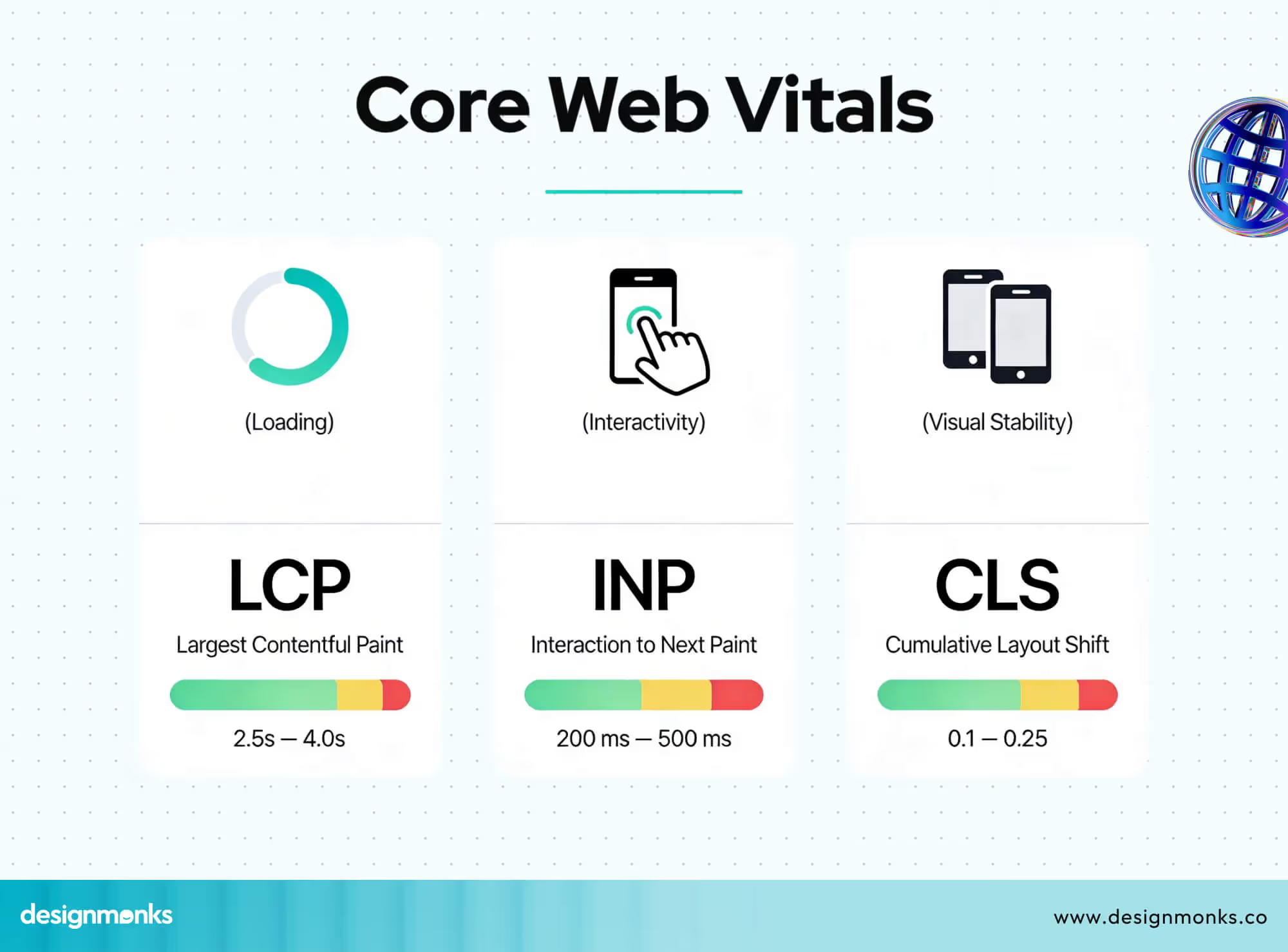
Core Web Vitals & Performance Monitoring
Performance affects revenue, user experience, and search rankings. Slow pages frustrate visitors, reduce engagement, and lower conversions. Core Web Vitals track loading speed, visual stability, and interactivity to ensure smooth experiences.
Enterprise websites monitor these metrics continuously, keeping pages fast and reliable. A well-optimized site keeps users engaged, ranks higher in search engines, and supports business goals like sales, leads, or subscriptions.
By connecting performance to UX and revenue, enterprise websites stay competitive, profitable, and efficient.
Enterprise Website Design Process (Step-by-Step)
Designing a large enterprise website requires a careful, step-by-step process to make sure the website works well, stays organized, and grows with the company. Here’s how it usually happens:
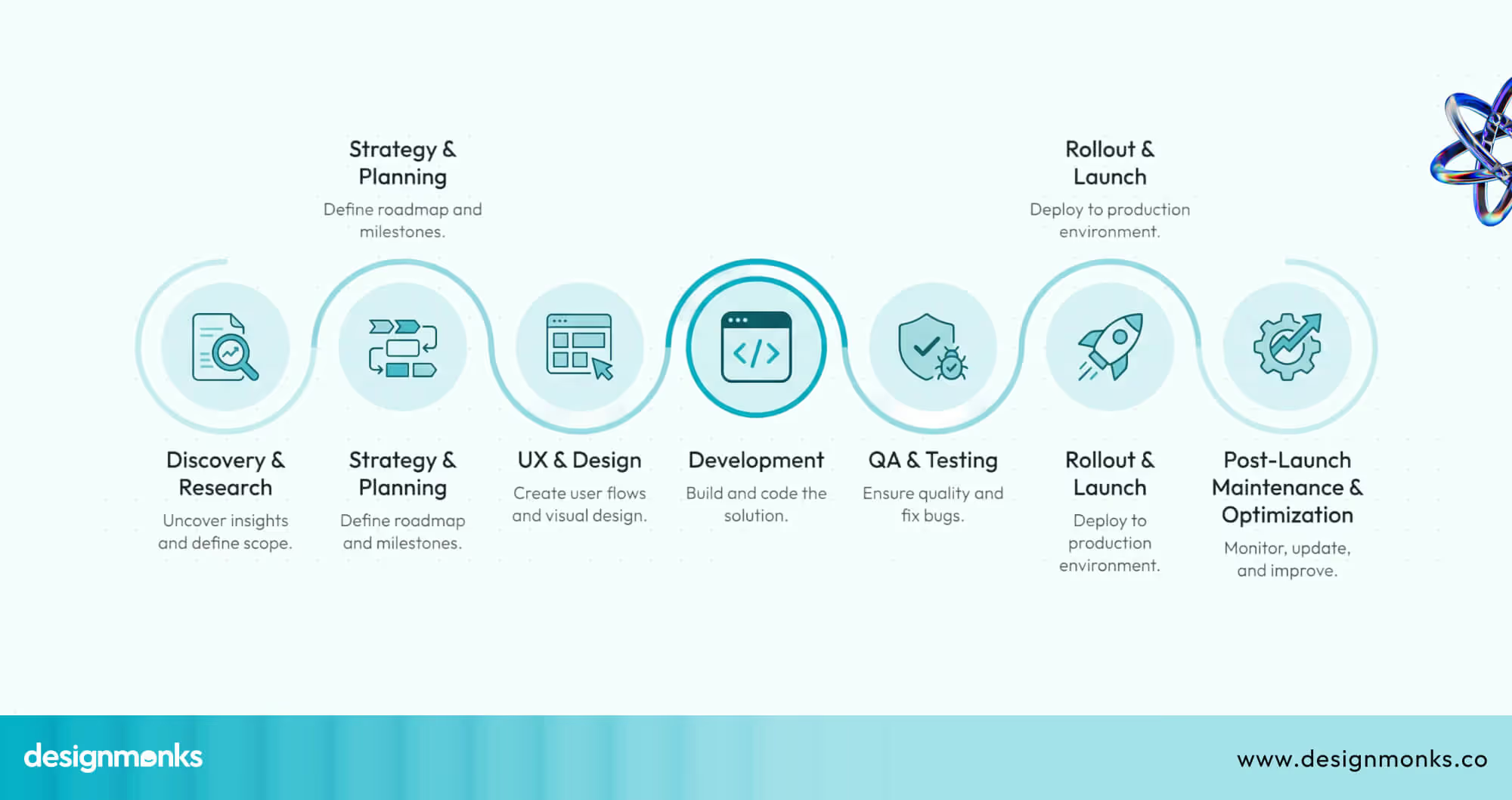
Discovery & Research
The process starts with understanding the business, its goals, and the people who will use the website. Agencies run workshops, conduct audits, and interview stakeholders to gather all the requirements. This ensures everyone is on the same page before work begins.
Strategy & Planning
Next, a clear plan is created. This includes deciding how the website will be structured, what features it needs, and how it will handle multiple teams and regions. Planning early reduces risks and surprises later.
UX & Design
Designers then focus on the user experience. They map user journeys, create wireframes, and design the look and feel of the website. At this stage, they make sure it’s easy to navigate for all types of users, from customers to employees.
Development
After the design is approved, the development team starts building the website. For enterprise websites, this isn’t just coding a few pages, it’s creating a large, complex system that connects multiple features, tools, and databases.
Developers often build the site in phases, which means sections or features are added one at a time. This approach makes it easier to manage, test, and adjust parts of the site without breaking anything else.
It also allows teams to review progress regularly, give feedback, and make sure the website is on track to meet the company’s goals.
QA & Testing
Quality assurance, or QA, is a critical step for enterprise websites. Every page, feature, and integration is tested to make sure it works correctly. This includes checking performance, fixing bugs, and ensuring the site works on different devices and browsers.
For large websites, QA often happens in multiple rounds to catch even small issues before the site goes live. This step prevents costly problems and keeps the website reliable from day one.
Rollout & Launch
Once testing is complete, the website goes live for users. But for enterprise websites, launching everything at once can be risky. That’s why phased rollouts are common: parts of the website are released gradually. This allows teams to monitor performance, fix unexpected issues, and gather user feedback without affecting the entire site.
Post-Launch Maintenance & Optimization
The process doesn’t stop at launch. Enterprise websites need regular updates, content management, performance monitoring, and optimizations. This is to stay secure, fast, and effective as the company grows.
5 Enterprise Website Design Examples & Use Cases (Original Advantage)
Enterprise website design isn’t one-size-fits-all. Different industries have unique needs, and the way their websites are designed can make a huge difference in usability, performance, and growth.
Here are some real-world examples showing how enterprise websites are used across industries:
- SaaS Enterprises: Companies like Slack and Salesforce serve millions of users with complex tools. Their websites guide users through sign-ups, dashboards, and support, while handling high traffic and constant updates smoothly. Clear user journeys make it easy for new users to get started.
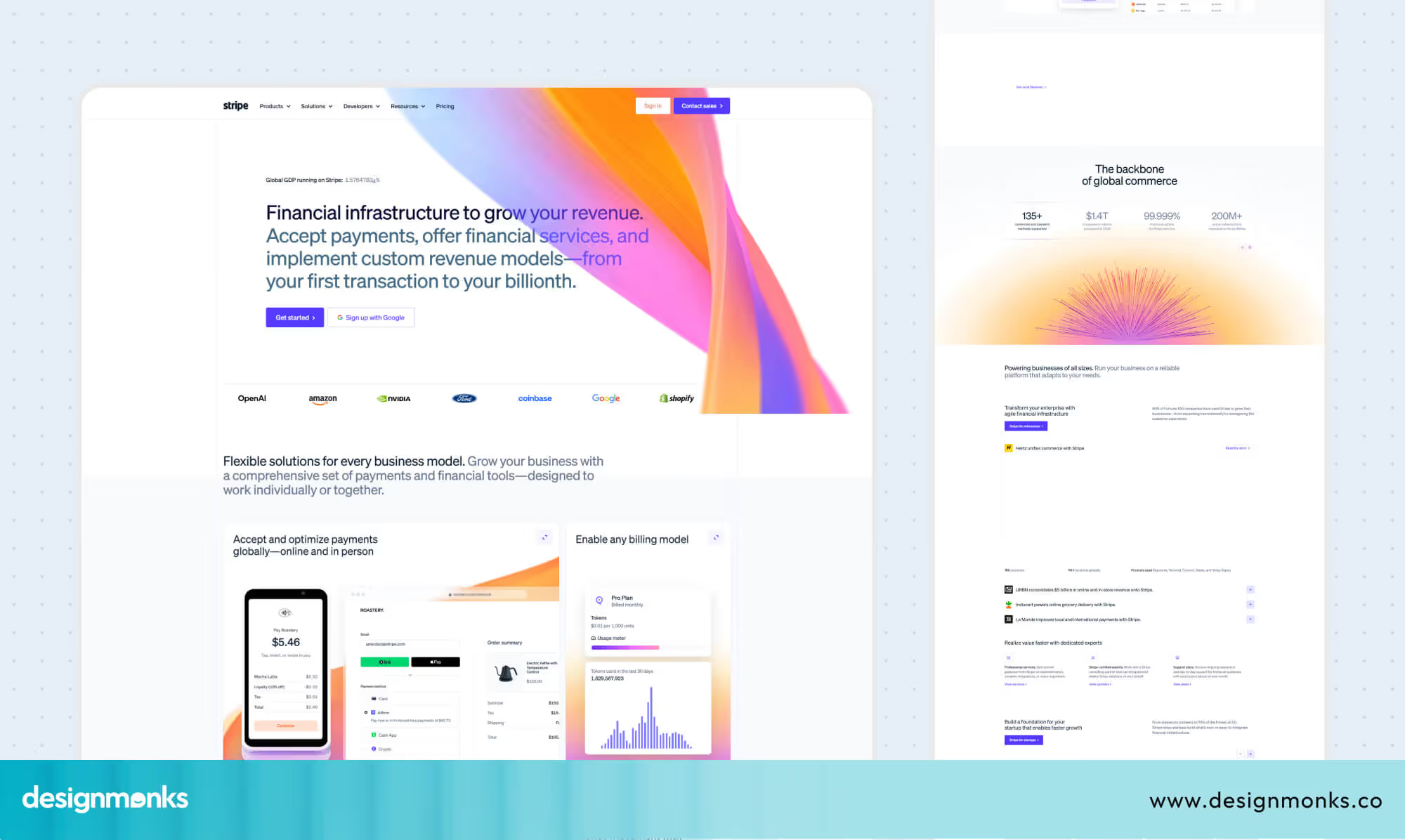
- Financial Institutions: Banks and fintech platforms such as Chase or Stripe manage sensitive data and transactions online. Enterprise website design ensures secure logins, accurate account management, compliance with GDPR/SOC 2, and smooth content updates without errors.
- Healthcare Organizations: Hospitals like Mayo Clinic or Cleveland Clinic provide patient portals, appointment booking, telehealth, and medical information. Enterprise websites keep thousands of pages organized, secure, and easy to navigate for patients, doctors, and staff.
- Global B2B Companies: Companies like GE or Siemens operate worldwide and sell complex products to other businesses. Their websites support multiple languages, regions, and product catalogs, while maintaining brand consistency with scalable structures and reusable components.
- E-commerce Enterprises: Large retailers like Amazon or Shopify Plus handle massive inventories and global orders. Enterprise website design keeps pages fast, transactions smooth, and experiences personalized, even during traffic spikes. Design systems help maintain consistency across thousands of pages.
Enterprise Website Maintenance, Governance & Scaling
Launching a website is just the beginning for large organizations. Enterprise websites need ongoing maintenance, governance, and scaling to stay fast, secure, and useful as the business grows.
After launch, content must be updated regularly, features need improvements, and new pages or sections are added. Enterprise website design includes systems to manage the content lifecycle, so updates happen without errors and teams don’t step on each other’s work.
Governance ensures that everyone follows company rules, compliance standards, and brand guidelines. At the same time, websites are built to scale, supporting more users, products, or regions over time without needing a complete rebuild. Proper maintenance and governance keep the site reliable, organized, and ready for the future.
FAQs
What makes an enterprise website different from a regular website?
Enterprise websites are built for large organizations. They handle more users, content, teams, and regions while staying fast, secure, and scalable.
Why is governance important for enterprise websites?
With many teams updating content, governance ensures role-based access, approval workflows, and clear ownership so nothing breaks or gets duplicated.
How does enterprise website design support growth?
Scalable structures, reusable components, and flexible systems allow the website to expand with more pages, products, languages, and regions without a full redesign.
How does performance affect business goals?
Fast, reliable pages improve user experience, search rankings, engagement, and revenue. Poor performance can reduce conversions and harm brand trust.
End Note
Building and maintaining a large website doesn’t have to be overwhelming. An enterprise website design agency ensures your site stays fast, secure, and easy to manage, even as your business grows.
By planning structure, user journeys, governance, and scalable systems, these agencies prevent common pitfalls that slow down or break large websites. With the right approach, your enterprise website can handle high traffic, support multiple teams, and continue driving results.


.avif)
.avif)
.avif)
.avif)


.avif)
.avif)
.avif)
.avif)






.avif)