.svg)




Key Takeaways
- High-performance websites require speed, stability, and responsive user interactions.
- Core Web Vitals directly impact rankings and real-world user experience.
- Strong infrastructure and rendering choices define performance limits early.
- Design systems reduce code bloat and improve consistency across pages.
- Optimization techniques and metrics turn performance into measurable business growth.
Most agency websites lose potential clients before a single word gets read. Slow load times, layout shifts, and sluggish responses quietly push visitors away. Google now ties search rankings directly to how a site performs, not just what it says.
That changes the game for agencies. Building a site that works under real traffic means making smart choices at every stage, from the server to the front-end code. Performance is no longer a technical afterthought; it’s a business decision.
What Defines a High-Performance Website Today
Performance used to mean fast loading. Now it means much more. A high-performing site loads quickly, stays visually stable, and responds to user input without delay. Google tracks all three through Core Web Vitals, a set of metrics that measure real-world experience rather than ideal lab conditions.
As of 2025, fewer than half of all mobile websites meet the requirements defined by these metrics. That gap is wide, and it is exactly where agencies can stand apart from competitors.
Speed, Stability, and User Experience
A slow page creates friction, and that friction costs visits. Research consistently shows that as load time stretches past a few seconds, the likelihood of a visitor leaving increases sharply. For an agency trying to land new business, a bounce is a lost opportunity.
Layout shifts create a different problem. When content moves around while the page loads, it signals poor craftsmanship. Users notice it even if they cannot name it. A stable layout builds trust from the first second.
Why Agencies Must Prioritize Performance
An agency's own website is its most public pitch. If it loads slowly or behaves erratically, that says something about the work the agency will deliver for clients.
Beyond first impressions, slower sites consistently rank lower in search results. Lower rankings reduce organic traffic. Less traffic makes growth harder and paid acquisition more expensive.
The Core Technical Foundations of High-Performance Agency Websites
Speed starts before the user sees anything. The infrastructure and rendering decisions made during the build phase set the ceiling for how fast a site can ever get.
Modern Frontend Frameworks and Rendering Methods
How a page is rendered affects how fast it feels. Static site generation builds pages in advance, so the server sends ready files with no delay. Server-side rendering generates pages when someone requests them.

Hence, that system works better for content that changes often. Single-page applications load once and update in place, but they need careful handling to keep the initial load from dragging.
Frameworks that support all three approaches let agencies choose the right method per page type. A homepage might use static generation. A client portal might use server-side rendering. The right choice depends on the content, not a blanket preference.
Optimized Hosting Infrastructure
No amount of code optimization compensates for a weak server foundation. Agencies managing several client projects need infrastructure that scales without manual intervention.
Specialized hosting for agency setups typically includes staging environments and centralized deployment pipelines. They can also handle traffic spikes without one project affecting another.
UX and Design Principles That Improve Website Performance
Design choices affect performance. A component-based design system keeps files small by standardizing reusable elements. When every button, card, and form follows a consistent pattern, the codebase is simple. Naturally, updates take less time and pages load less redundant code.
Performance-First Design Systems
A design system is a shared library of components, patterns, and rules that a team uses to build sites. When performance is baked into that system from the start, every page built from it inherits those gains automatically.
Component-based design keeps asset sizes down by standardizing reusable elements. One well-optimized button component, used across fifty pages, is far more efficient than fifty slightly different versions of the same button. This applies to cards, forms, navigation elements, and modals. Fewer styles mean less code and smaller files, so everything loads quickly.
A performance-first design system also makes maintenance easier.
Mobile-First and Responsive Layouts
Google mainly looks at the mobile version of a site to decide search rankings. That makes mobile-first design a practical requirement, not a preference. Designing for small screens first forces teams to cut what does not belong.
The result is a cleaner layout that scales up to a desktop rather than a bloated desktop layout squeezed down. Responsive sites also eliminate the need to maintain two separate codebases, reducing both costs and the risk of errors slipping through.
Performance Optimization Techniques Agencies Should Implement
A well-built site can still underperform if the assets sitting on it are not optimized. These techniques address the most common sources of avoidable slowness.
Image and Media Optimization
Images are usually the heaviest items on any page. Switching to modern image formats cuts file sizes noticeably without visible quality loss. Lazy loading delays the download of images that are off-screen until the user scrolls toward them. Together, these two adjustments often produce the biggest improvement in initial load time for most sites.
Code Optimization and Asset Management
Extra code slows every page load, even when that code does nothing visible. Minifying files removes whitespace and redundant characters.
Bundling combines multiple files into fewer requests. Stripping out unused CSS and JavaScript, a process handled automatically by most modern build tools, keeps page weight low without requiring manual line-by-line audits.
CDN and Edge Delivery
A content delivery network sends each request to the nearest available server. The shorter the physical distance data travels, the lower the latency.
For example, a visitor in Seattle and a visitor in Miami should experience roughly the same load time, and a well-configured CDN makes that possible without duplicating infrastructure.
Measuring Website Performance and Success
Optimization without measurement produces guesswork, not results. The only way to know whether a change helped is to track the right numbers before and after making it.
Core Web Vitals and Performance Metrics
Tools like Google PageSpeed Insights and Chrome DevTools surface both lab scores and real-user data. The real-user data is more important.
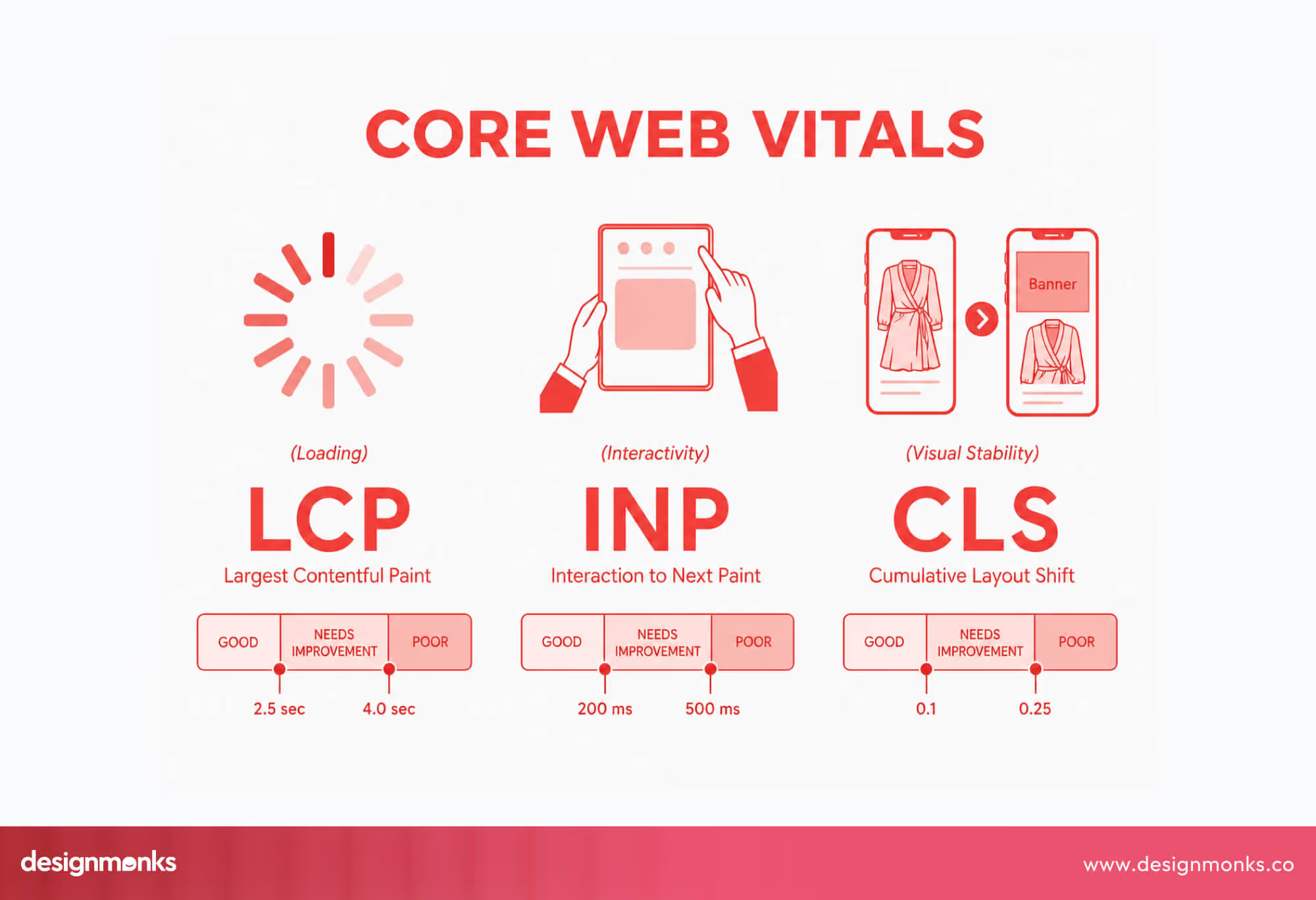
It shows what actual visitors experience, not what a controlled test simulates. Checking these scores monthly lets agencies catch regressions early, before a client notices traffic dropping.
Conversion and Engagement Metrics
Performance improvements show up beyond the technical dashboard. Sites that load faster tend to hold visitors longer. Visitors who stay longer are more likely to take action. Research shows that a large majority of users who have a slow experience on a site say they are less likely to return or buy from that brand again.
Sharing that kind of data with clients turns performance work from a technical conversation into a business case.
Bottomline
A high-performance agency website does not come from a single decision. It comes from consistent choices made at every layer, hosting, rendering, design, asset management, and measurement.
Agencies that treat performance as a core part of the build, not a final checklist item, end up with sites that rank better, hold visitors longer, and reflect well on the work they do for clients.
In a space where a visitor's first impression happens in under a second, that consistency is what separates forgettable sites from ones that actually win business.


.avif)
.avif)
.avif)
.avif)


.avif)
.avif)
.avif)
.avif)








.avif)