.svg)


Key Takeaways
- Choose agencies with proven experience designing complex software products and websites.
- Strong UX helps software websites explain complex products and drive conversions.
- Scalable design systems keep software websites consistent as companies continue growing.
- Agency pricing varies based on website size, research, design, development, and support.
- Compare relevant experience, process, product understanding, team fit, and long-term value.
The website is where your software gets its first chance to sell itself. It has to make the product easy to understand and give visitors a reason to keep exploring. That’s where a software company website design agency can make a real difference.
But choosing an agency isn’t as simple as picking the most impressive homepage. Pricing, software expertise, UX skills, development capabilities, and the type of projects an agency handles can make a big difference to the final result.
We compared five leading agencies to see where each one stands. Design Monks takes the top spot, but the other four bring some serious strengths of their own. Keep reading to find out which agency could be the right fit for your software business.
What to Look for in a Software Company Website Design Agency?
A strong software website needs more than attractive visuals. The agency should understand the product, simplify complex information, and build an experience that can grow with the company.
With that in mind, here's what we focused on for picking the best agencies:
Experience With Software Products
We looked for agencies with experience across SaaS, AI, B2B, enterprise software, and similar products. We also considered how often they work with complex features, integrations, pricing models, and technical audiences.
What we looked for: Multiple relevant software projects and experience with products similar to the ones they serve.
Strong Information Architecture
Software websites can become content-heavy quickly. Features, use cases, resources, integrations, and pricing all need a logical structure.
What we looked for: Clear navigation, sensible page structures, and an easy path to important information.
Ability to Simplify Complex Ideas
A good agency should make complicated products easier to understand without stripping away useful details. Screenshots, demos, diagrams, and clear copy can all help.
What we looked for: How effectively the agency turns complex product information into clear website experiences.
Conversion-Focused UX
Software websites often aim to generate demos, trials, signups, or qualified leads. We considered whether agencies design around these goals rather than focusing only on aesthetics.
What we looked for: Clear CTAs, thoughtful page flows, strong landing pages, and friction-free conversion paths.
Scalable Design Systems
Software companies constantly add features, pages, and campaigns. Reusable components and flexible templates help websites grow without losing consistency.
What we looked for: Design systems, reusable components, and structures that support future expansion.
Development and CMS Expertise
A website should be easy to manage after launch while remaining fast, responsive, accessible, and SEO-friendly.
What we looked for: Strong development capabilities and experience with platforms such as Webflow, WordPress, and HubSpot.
Together, these criteria helped us look beyond flashy portfolios and focus on what actually matters for software websites. We considered both the quality of the work and the agency’s ability to handle the complexity, scale, and business goals that come with software products.
5 Best Software Company Website Design Agencies
We compared five agencies based on their software experience, UX capabilities, portfolio, development expertise, and pricing. Here’s how they compare:
Now let's move to a more detailed discussion:
Design Monks
Design Monks is a leading UI/UX design agency specializing in software, SaaS, AI, and digital product experiences. Its portfolio covers different types of software products, including Netra, Materio, Trackory, and others.
The agency combines UX research, information architecture, UI design, prototyping, design systems, and development. This allows its team to work on both the website and the product experience behind it.
Overview:
- Services: Software website design, Web Design & Development, UI/UX Design, UX Research, MVP Design, Product Design, Prototyping, Design Systems, Branding, UX Audits, App Redesign, Post-Launch Support
- Engagement model: Project-based or monthly retainer
- Industries: SaaS, Fintech, HealthTech, EdTech, Crypto, Real Estate, and more
- Price: Starts at $1800
- Best for: Software website design
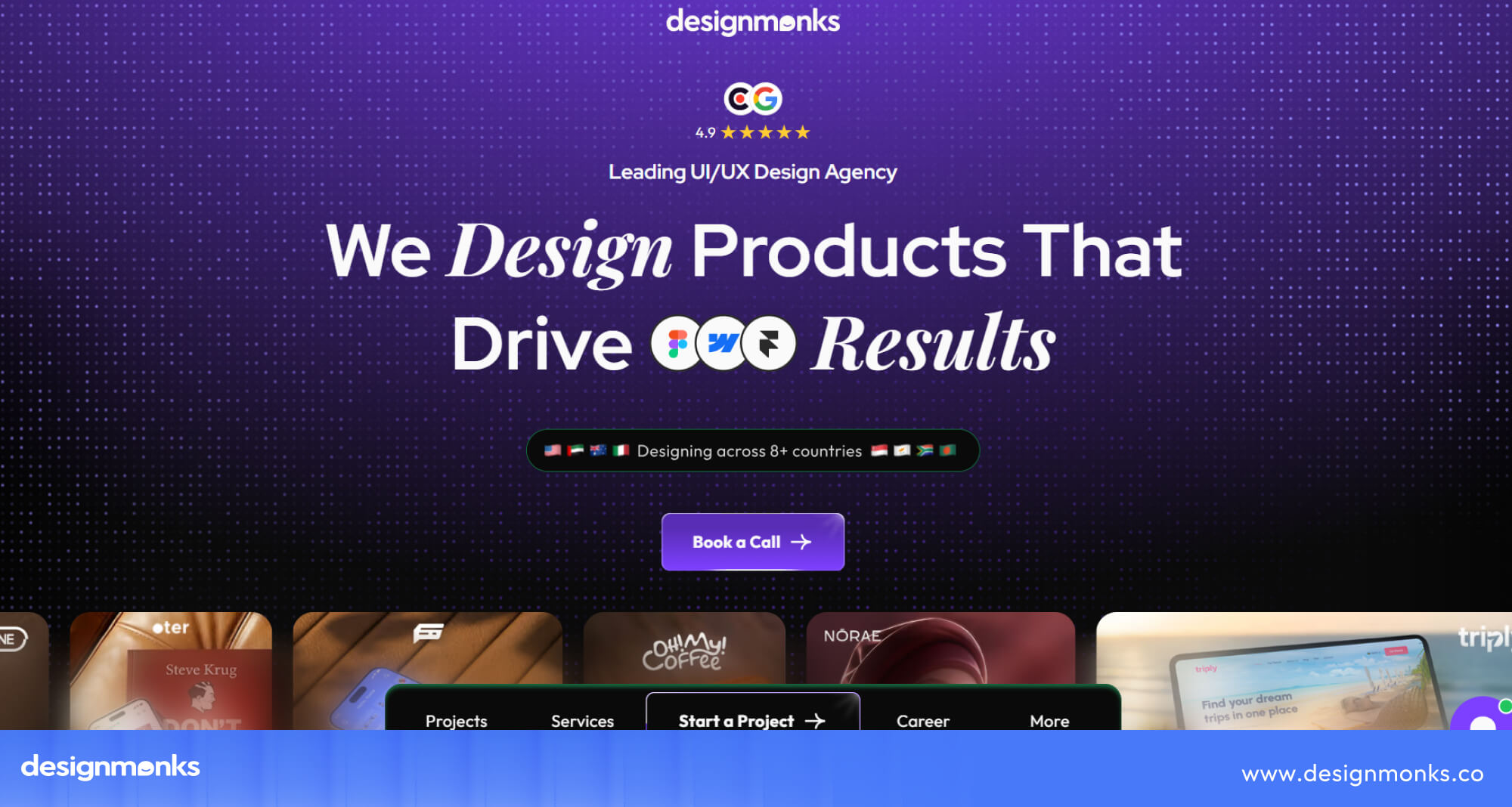
Their client portfolio includes globally recognized companies such as Samsung, ,Medease, Affine, Telenor, Pepsi, and Rakuten Viber, alongside startups and growing software businesses.
Why we picked it: Design Monks brings together software expertise, product-focused UX, and website design. This helps create a consistent experience from the first website visit to the product itself. It is our top pick for companies that need a website built around a complex digital product.
Eleken
Eleken has a much narrower focus than a traditional full-service agency. Its work centers heavily on SaaS product design. It covers UX/UI, dashboards, web applications, and product redesigns.
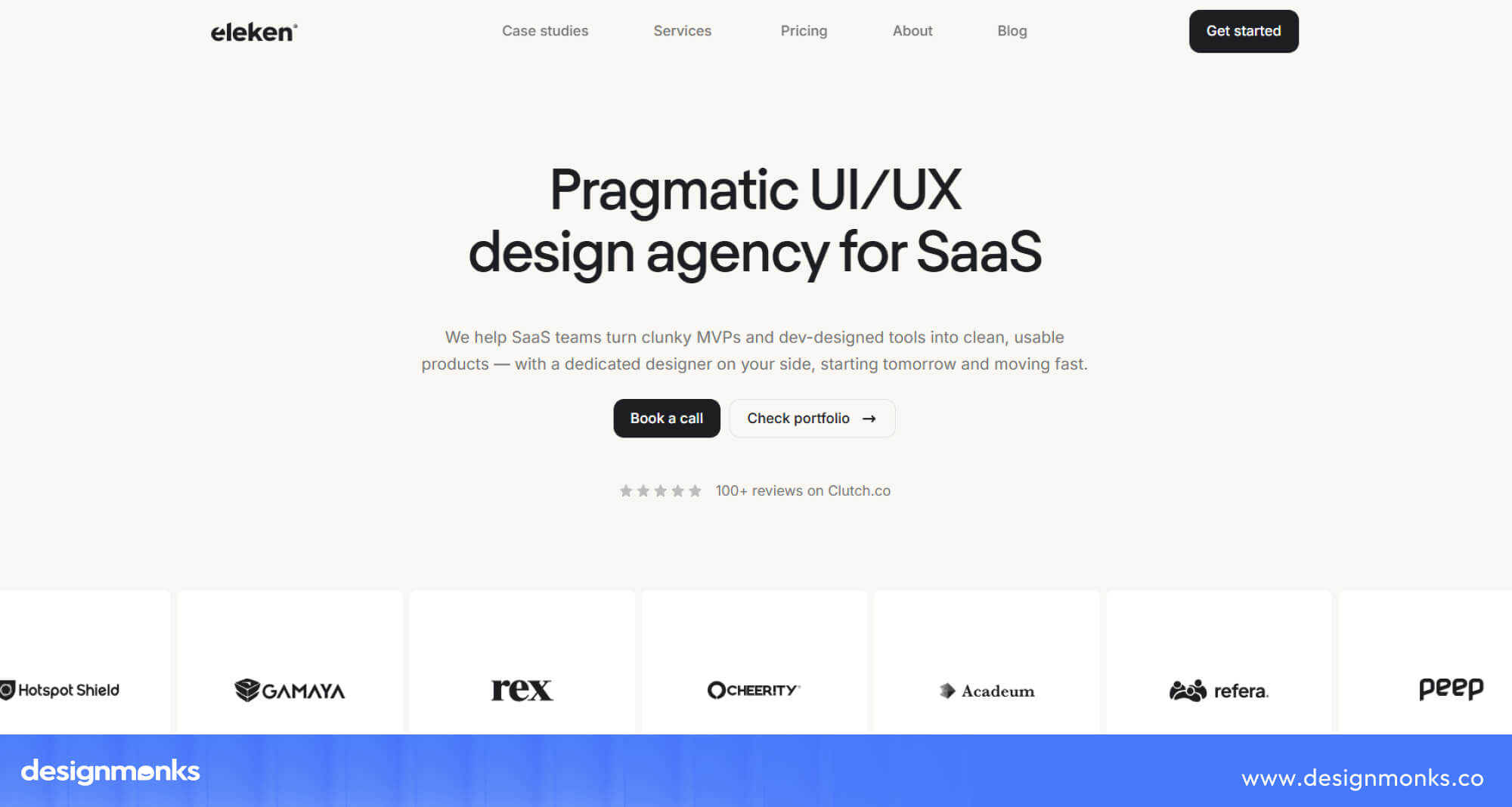
Its subscription-style model is also different from a typical project-based engagement. Companies can bring in design support on a monthly basis, which can work well for SaaS teams that need continuous design help rather than a single website launch.
Why we picked it: Its deep SaaS specialization makes it a strong option for companies that need ongoing product and website design support.
Baunfire
Baunfire takes a design-led approach to technology and B2B websites. Its work combines UX, visual design, content strategy, custom development, and interactive elements.
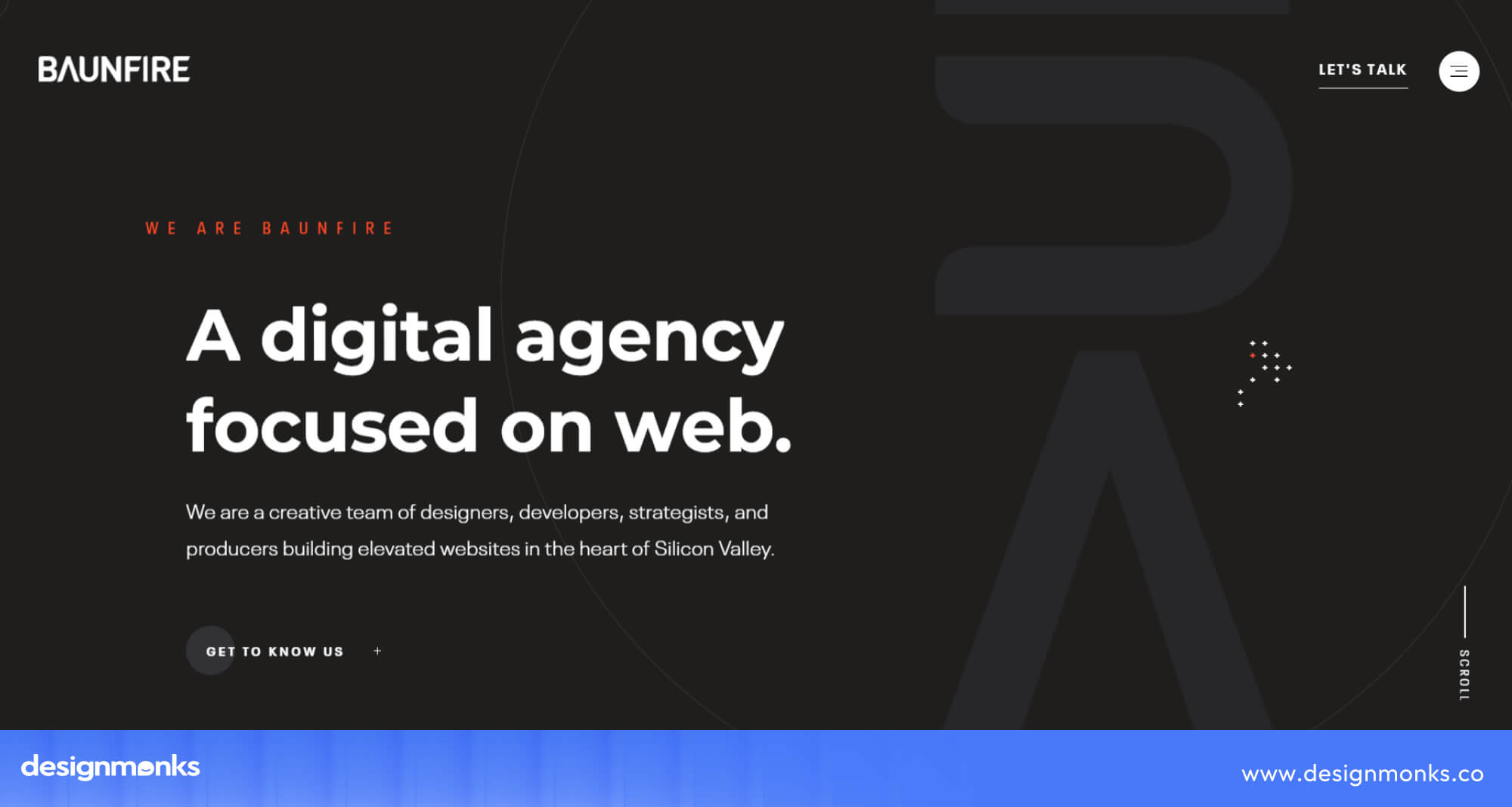
Its technology portfolio includes projects for companies such as CtrlStack, Incorta, Instabase, and Plex Systems. The agency has used custom illustrations, motion, content restructuring, and scalable component systems to make complex technology products easier to explore.
Why we picked it: Baunfire is a strong option for B2B software companies that want a distinctive, high-end website without sacrificing usability.
Bop Design
Bop Design approaches software websites from a broader B2B marketing perspective. Alongside web design and development, it offers services such as SEO, content marketing, copywriting, and branding.
That makes it particularly relevant for software companies where the website is expected to play a major role in generating organic traffic and qualified leads.
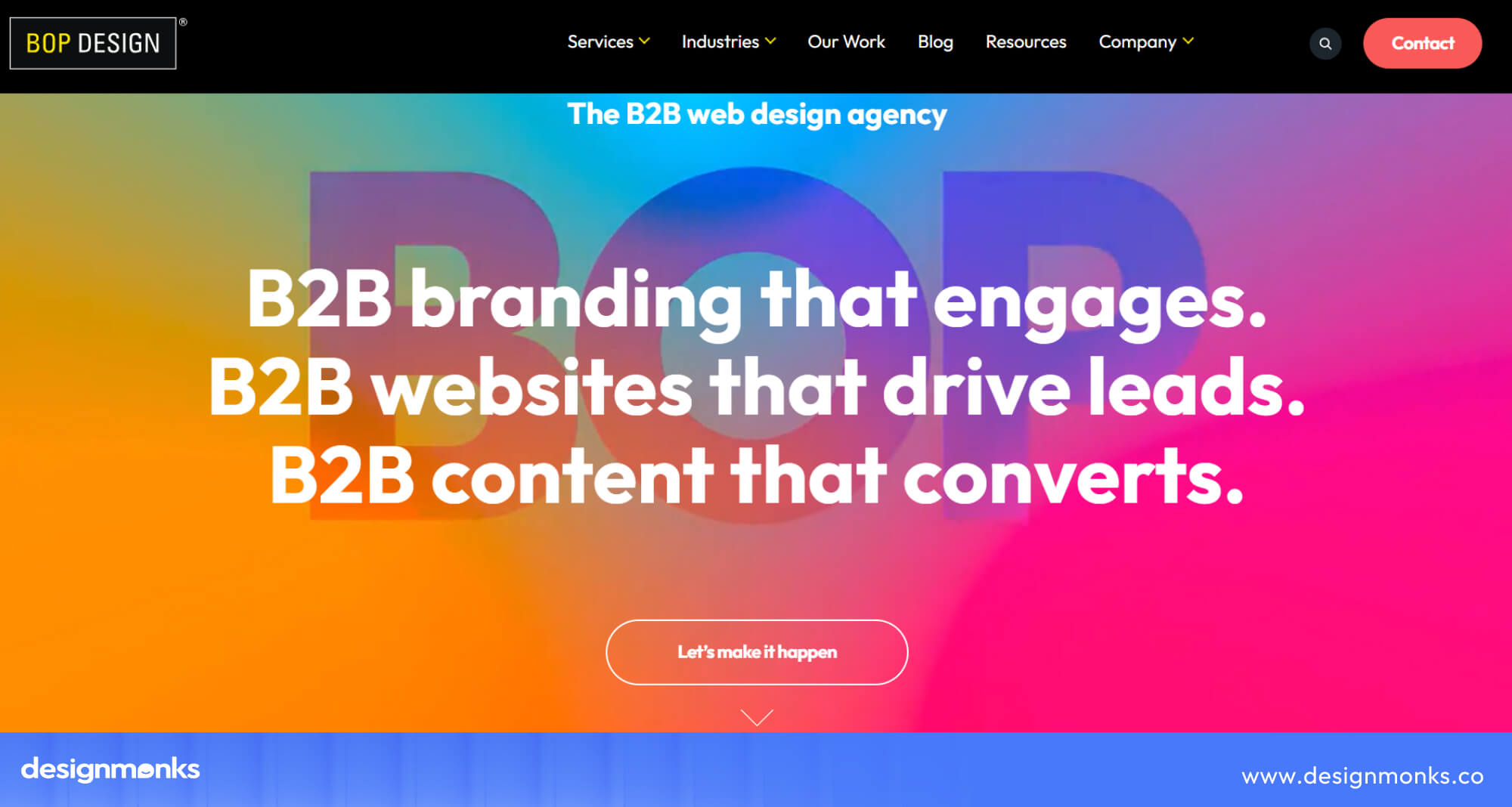
Why we picked it: Its combination of website design and B2B marketing makes it a practical choice for companies that want the website closely connected to their demand-generation strategy.
Lounge Lizard
Lounge Lizard works specifically with technology and SaaS companies and offers website design alongside development and digital marketing. Its SaaS services focus on product education, lead generation, demos, trials, and long-term growth.
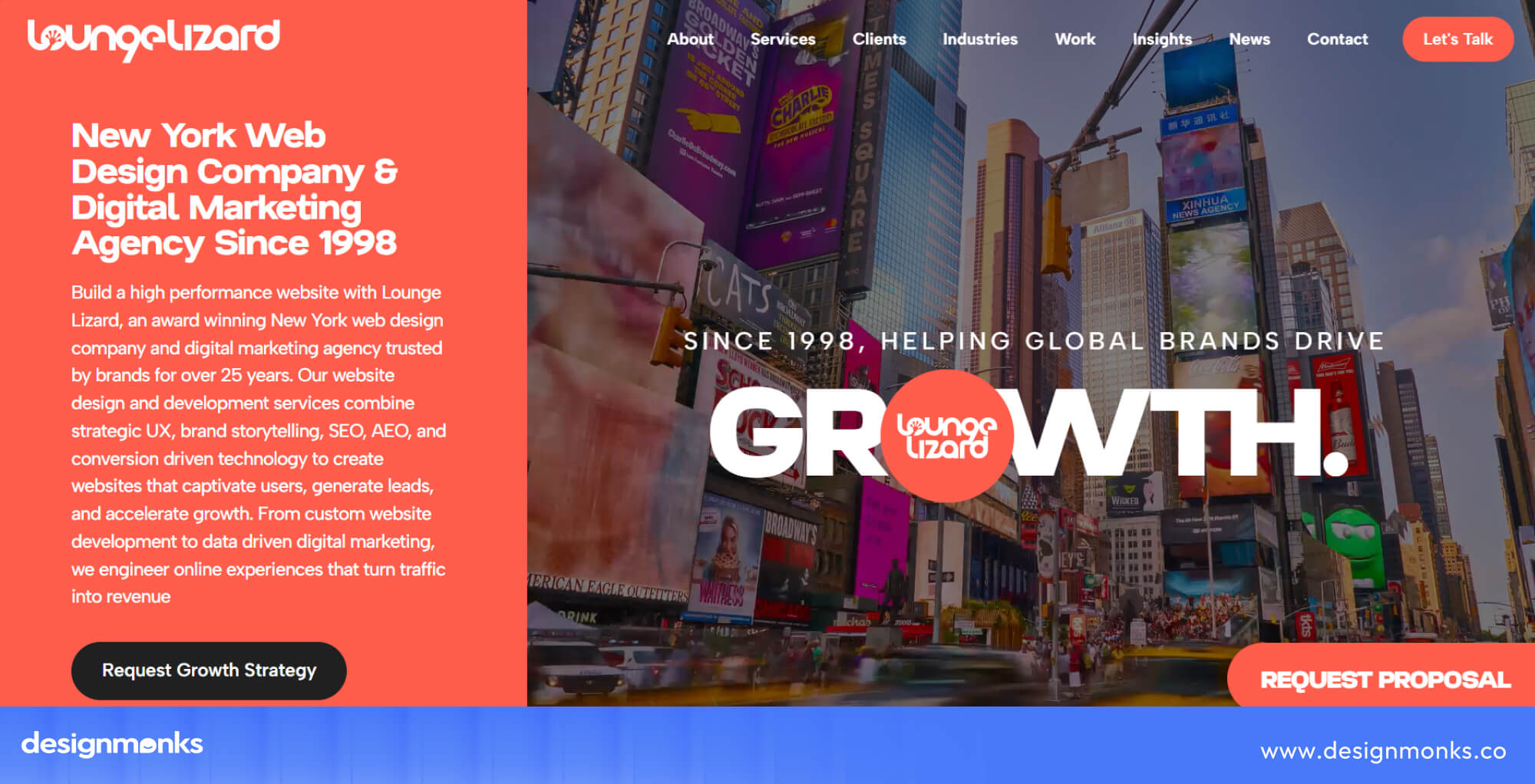
The agency also works with software and technology businesses on responsive design, WordPress development, SEO, and custom digital experiences.
Why we picked it: It suits technology and SaaS companies that want website design to be part of a wider digital growth strategy.
Top Software Website Design Case Study: Projects by Design Monks
To see what specialized software design looks like in practice, it helps to look at real projects. Design Monks has worked across different types of software products, from AI and legal tech to supply chain and data‑driven platforms.
Let's take a closer look at them:
Netra: A Dashboard That Thinks Like Its Users
Netra is a good example of designing around a data‑heavy network monitoring experience without making it feel complicated. The project focuses on creating a dashboard that works around how users actually consume and act on information.
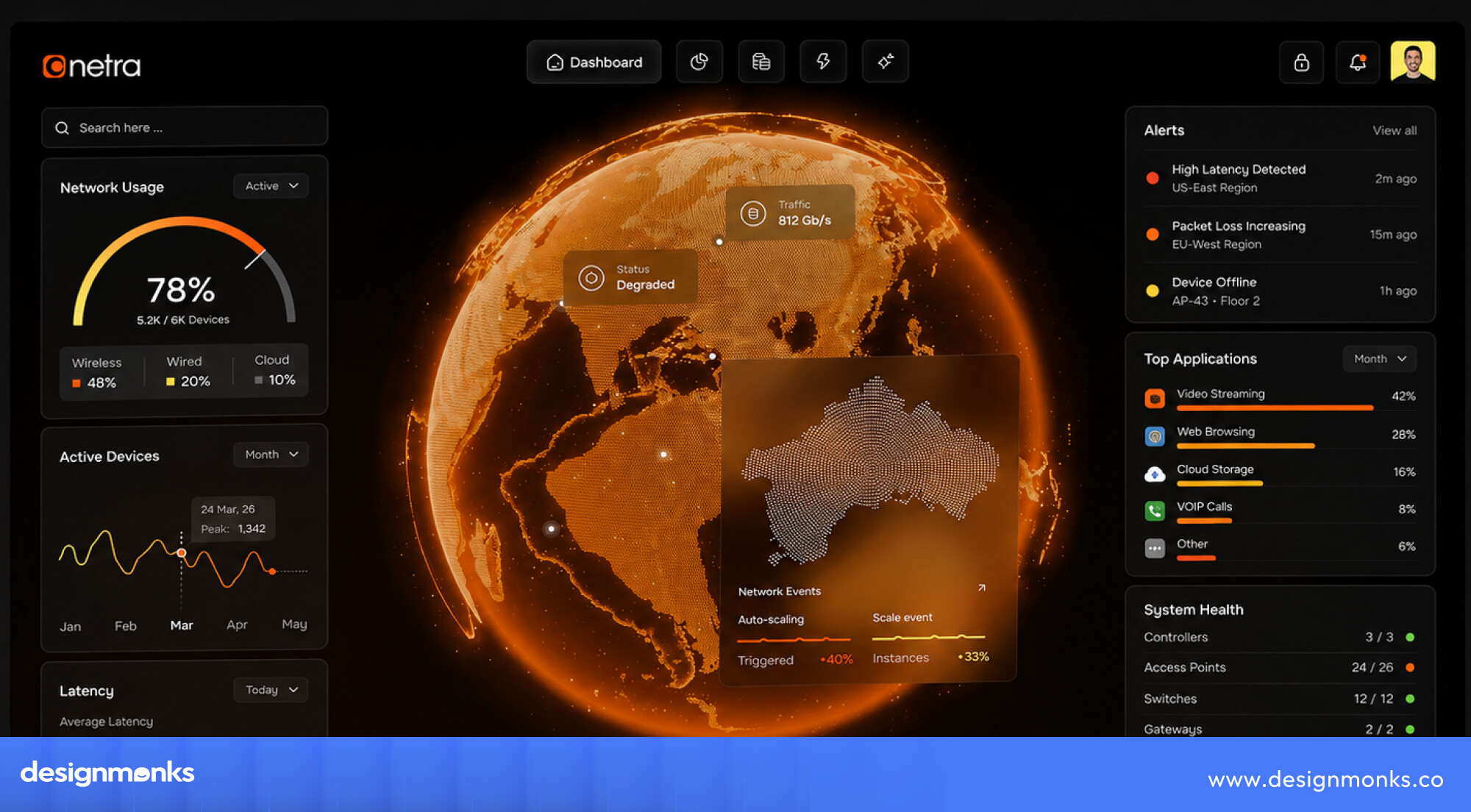
For software companies, this kind of work matters because a website or product experience needs to make complex information easier to understand. Clear layouts, useful data presentation, and intuitive navigation can help users find what they need without feeling overwhelmed.
Materio: Unified Supply Dashboard
Materio brings another challenge to the table, presenting complex supply and operational information through one unified experience. When software brings together multiple data points or workflows, the interface has to make those relationships easy to follow.
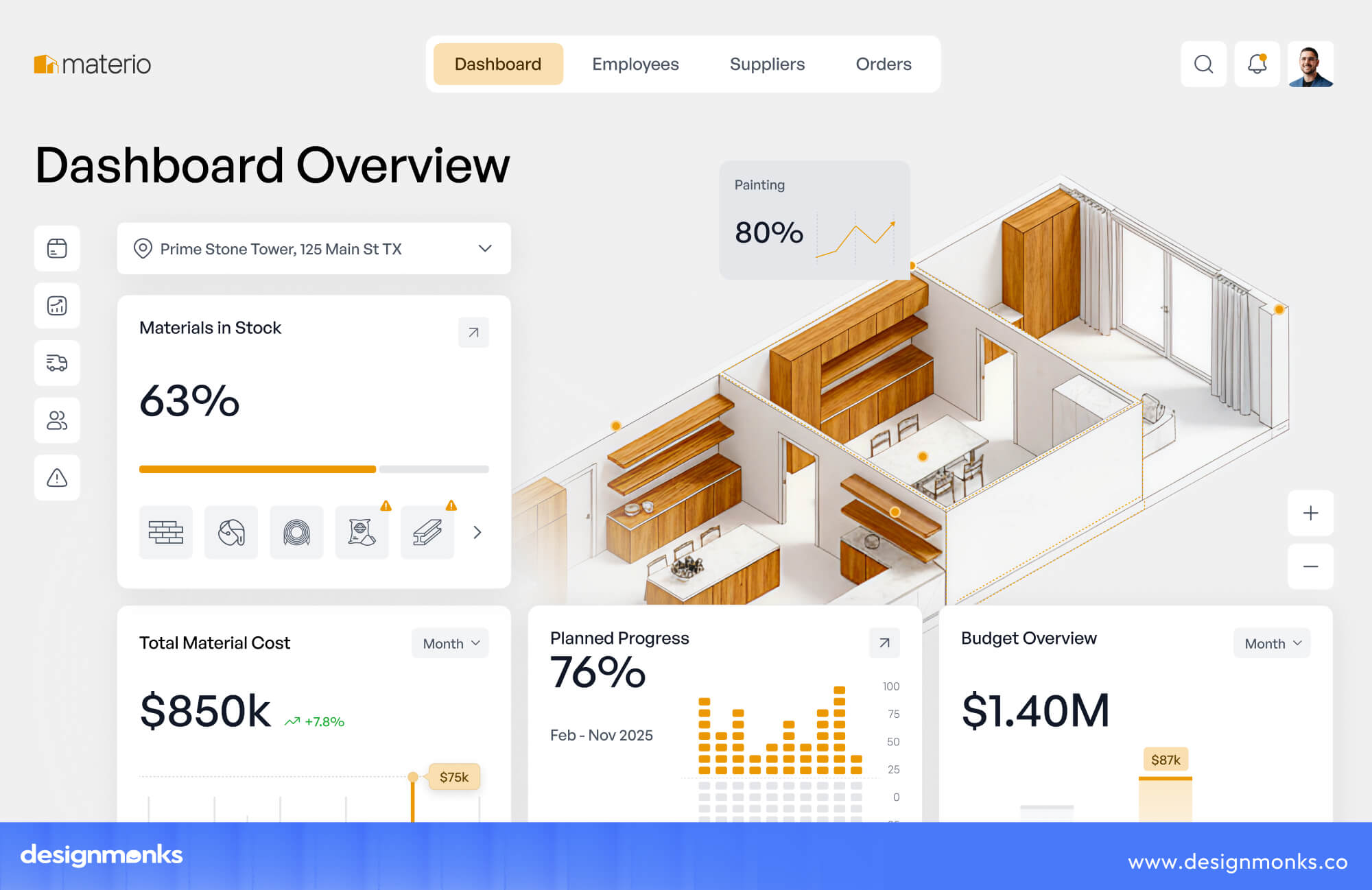
The Materio project demonstrates how thoughtful information structure and dashboard design can turn a complex software platform into an experience that feels more organized and manageable.
Trackory: Smart Shipment Intelligence
Trackory is built around shipment intelligence, where users need to make sense of information related to logistics and tracking. Clarity is especially important in such cases.
Users should be able to understand what is happening, find relevant information, and act on it without unnecessary friction.
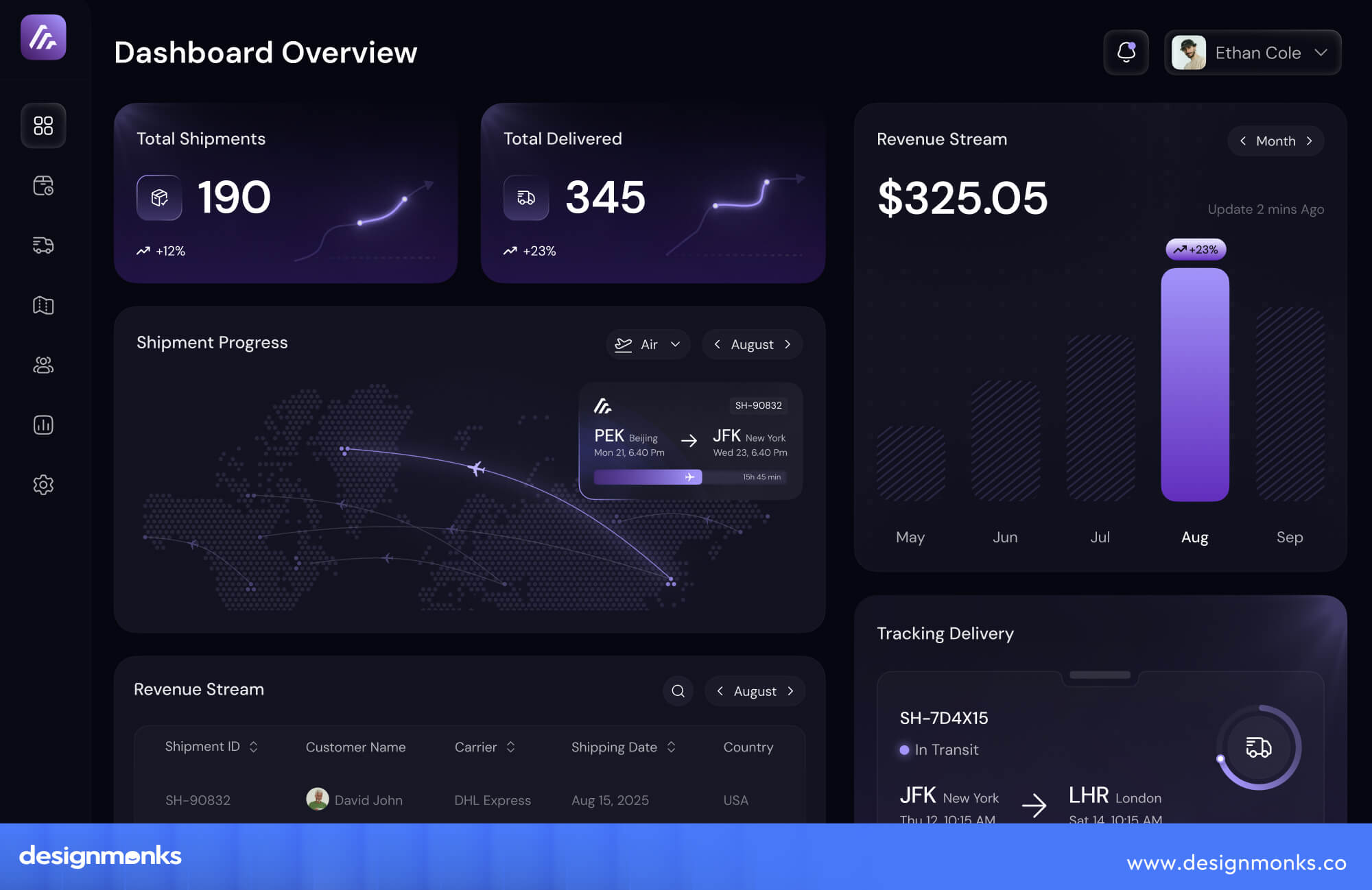
The project is a great example of how software design can combine data, workflows, and visual hierarchy to make a complex business process easier to navigate.
These projects highlight Design Monks’ range in software design. Each one tackles a different challenge, from AI to complex dashboards. The team brings together strong UX, clear information hierarchy, scalable design systems, and polished UI to make complex software feel easier to use.
Software Company Website Design vs. Traditional UI/UX Design
Software company website design and traditional UI/UX may share the same design fundamentals, but they serve different purposes. UI/UX is primarily concerned with how people interact with a product.
A software website has to introduce that product, explain its value, and persuade visitors to take the next step. That starts with the product itself. Software can be difficult to explain because it often comes with multiple features, use cases, integrations, and technical details.
The website has to turn all of that into a clear story without stripping away the information that matters to potential buyers. Those buyers aren't always the same people, either.
A developer may want to understand integrations and technical capabilities, while an executive may be more interested in business value and ROI. Unlike a product interface designed around a defined user group, a software website has to communicate with several decision-makers throughout the buying process.
This also changes the role of the design. In traditional UI/UX, success often comes down to making tasks easier and interactions more intuitive. A software website has another responsibility: moving visitors toward a decision.
Product pages, case studies, demos, pricing, and calls to action all need to work together to support that journey. The product itself becomes an important part of the visual experience.
Instead of relying mainly on generic imagery, software websites can use real interface screens, dashboards, workflows, and interactive demos to show what the product actually looks like in use. This makes the design more closely tied to the product than a typical marketing website.
And the work doesn't end when the site launches. Software products evolve constantly, so new features, integrations, and updates often need to be reflected on the website. A scalable design system and flexible CMS make it easier to keep the experience current.
That's what makes software website design a more specialized discipline. It brings together product understanding, UX, content structure, marketing, and visual design to turn a complex software product into something people can quickly understand and feel confident exploring.
What Affects Software Company Website Design Agency Pricing?
Software company website design can cost anywhere from $3,000 to $50,000+, with large enterprise programs sometimes reaching $80,000–$200,000+. This depends on the project's size, complexity, and agency:
- Website size: A small 5-page site may cost $3,000–$10,000, while larger SaaS or enterprise websites can reach $15,000–$50,000+.
- Custom design: Custom layouts, illustrations, animations, and interactive elements cost more than template-based designs.
- UX research and strategy: Competitor research, user research, and information architecture can add around $3,000–$10,000+.
- Development: A typical Webflow or WordPress build may cost $5,000–$15,000+, with custom integrations costing more.
- Content and copywriting: If the agency handles messaging and website copy, expect roughly $1,000–$10,000+, depending on scope.
- Ongoing support: Monthly design, updates, and optimization retainers can range from $1,000–$5,000+.
Each of these factors adds up to the main cost. So, when comparing agencies, look beyond the quote. Check what’s included in the price, including strategy, design, development, revisions, CMS setup, and post-launch support.
How to Choose a Software Company Website Design Agency?
Choosing the right agency isn't just about finding the most impressive portfolio. You want a team that understands your software, knows how to work with your team, and can build a website that serves a real business purpose.
Look at Relevant Software Projects
Start with the agency's portfolio, but look beyond visual appeal. Have they worked on SaaS, AI, B2B, enterprise, or other software products? More importantly, look at how they handled complex features, large amounts of information, and different user needs.
Understand Their Process
Once you find relevant work, find out how the agency gets there. A good team should spend time learning about your product, audience, competitors, and goals before jumping into design. Ask what happens during discovery, how feedback is handled, and how decisions are made.
See How Well They Understand Your Product
This becomes especially important during your first few conversations. Can the team ask useful questions about your software? Do they understand your features and target users? You want designers who care about the product rather than treating it like just another website project.
Ask What Happens After Design
If you need a finished website, design is only part of the job. Find out who handles development, which platform they'll use, and how your team can make updates later. A website should be easy to maintain once the agency hands it over.
Set Clear Goals From the Start
A website can look great and still fail to do its job. Decide what you want it to achieve before the project begins. That could be more demo requests, trial signups, qualified leads, or stronger brand credibility. Your agency should know what success looks like.
Think About Team Fit
You may have marketers, product managers, developers, and executives involved in the project. The agency needs to work well with all of them. Clear communication, realistic timelines, and a straightforward feedback process can make a big difference.
Compare Value, Not Just Price
Finally, don't choose based on the lowest quote alone. Look at what each agency includes, how much support you'll get, and how easy the website will be to manage afterward. A slightly higher upfront cost can be worthwhile if the site performs better and is built to grow with your company.
End Note
Choosing a software company website design agency comes down to more than budget or a polished portfolio. The right partner should understand your product, audience, and business goals, then turn them into a website that works.
Design Monks leads our list, but the best choice depends on what your software company needs most. Compare each agency’s strengths, services, pricing, and relevant work before deciding.
A smart choice now can give your product a website that keeps delivering long after launch.


.avif)
.avif)
.avif)
.avif)


.avif)
.avif)
.avif)
.avif)






.avif)