.svg)




Key Takeaways
- Ecommerce design demands different UX thinking than standard business websites.
- The right agency turns casual browsers into repeat, paying customers.
- Design Monks stands out for transparent pricing and story-led storefront design.
- Costs range from $1,800 to $100,000+, depending on platform and scope.
- Choosing the right agency means checking real case studies, not just claims.
A great product only sells if the store around it looks like it deserves the sale. Layout, load speed, and how easily someone finds "add to cart" decide whether a visitor buys or leaves within seconds. So how do you make sure your store gets that right instead of blending into the noise?
That answer usually comes down to who builds it. The right agency understands your category, your customer, and how to turn browsing into buying, not just a pretty homepage. But with hundreds of agencies claiming the same promises, which ones actually deliver? Names like Design Monks. Groove Commerce, View Source, and Barrel keep surfacing for real reasons.
If you're planning a new store or a redesign, this list is built for you. Keep reading to see who made the cut and why.
10 Best Ecommerce Web Design Agencies: At A Glance
Picking the right ecommerce design partner is harder than it looks, since agency websites all promise the same things (conversion-focused, custom, results-driven) regardless of what they actually specialize in.
We prioritized how much of each agency's real work is ecommerce versus a side service, the platforms they build on, and verifiable project evidence over marketing copy. Check the quick specs below, and we'll break down each one in detail after.
Why Good UX Isn't Optional for Ecommerce Success
In the ecommerce industry, design isn't decoration; it's the difference between a sale and an abandoned cart. A capable UI/UX design service shapes how fast someone trusts your store, finds what they want, and completes checkout without hesitation.
Image 1: Good UX for Ecommerce Success
- Faster Product Discovery: Clear categories and smart filters let shoppers find items in seconds instead of scrolling endlessly.
- Reduced Cart Abandonment: A simple, distraction-free checkout flow keeps buyers from dropping off at the final step.
- Mobile-First Browsing: Most shopping happens on phones now, so layouts must stay clean and fast on small screens.
- Built-In Trust Signals: Reviews, badges, and clear return policies reassure first-time buyers before they commit to a purchase.
- Faster Load Times: Every extra second of loading pushes conversion rates down, especially on product and checkout pages.
- Consistent Visual Hierarchy: Clear typography and spacing guide the eye straight to prices, CTAs, and key product details.
10 Best Ecommerce Web Design Agencies for Real Business
No matter how different an ecommerce website is from other fields, you can’t compromise on a good design for your business if you want to do real business. For that, you need a reliable agency.
You have already been introduced to them briefly, and now is the time for the details. Check the details properly and choose the one suit your business the most:
1. Design Monks
Before any ecommerce screen gets designed, Design Monks studies how a shopper actually browses a specific category, since furniture and electronics behave differently. Clients review staging links and prototypes at each phase, so nothing reaches development unchecked.
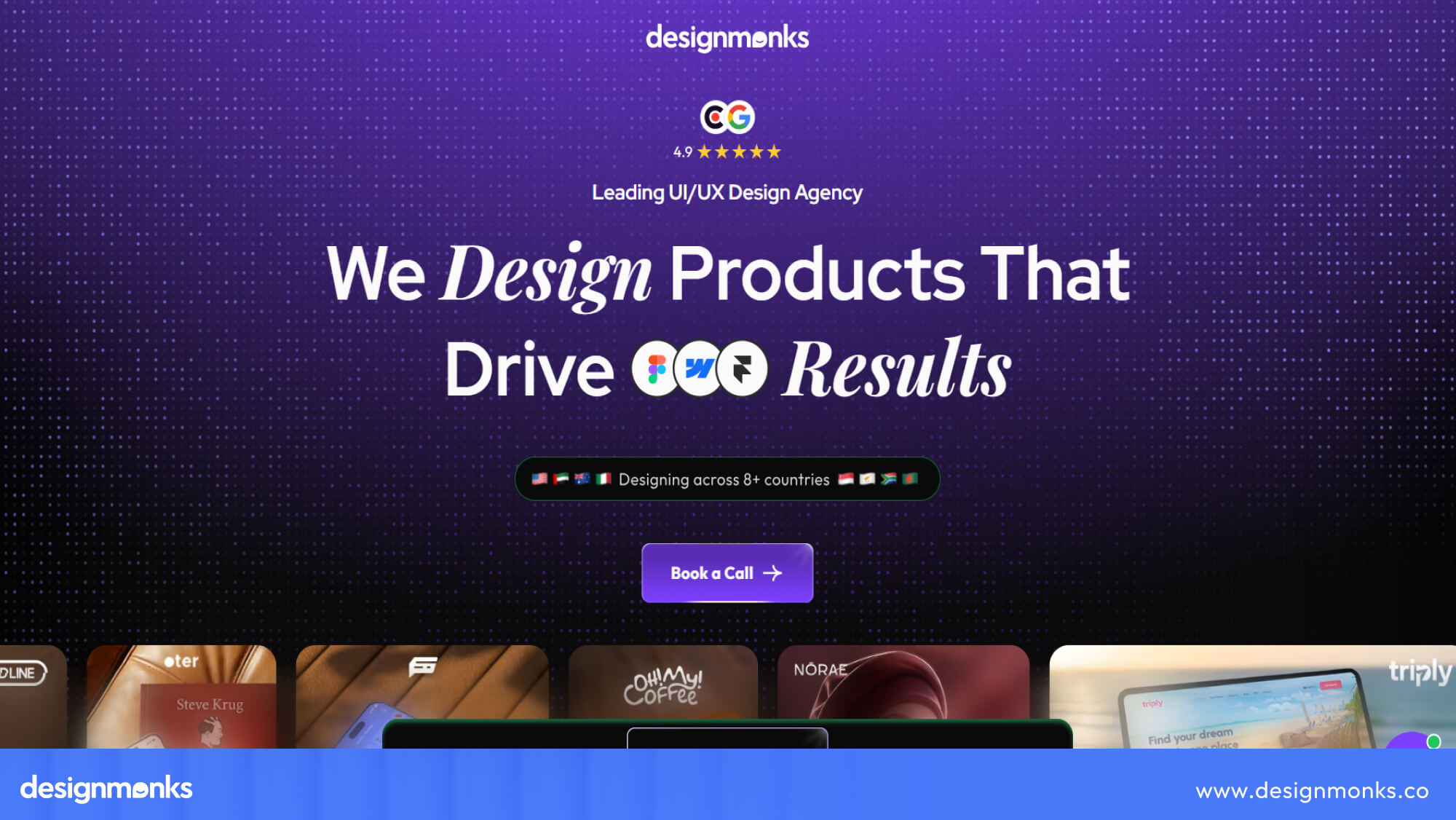
Their visual restraint is a real strength. Rather than leaning on discount banners and urgency countdowns, the team favors spacious layouts and refined photography that let products carry the page. That kind of quiet confidence is harder to execute well than a loud, sale-driven design.
They handle different types of difficulty without the quality slipping. Simple catalog sites and ambitious pre-launch storefronts get the same level of craft, and clients review staging links and prototypes at each phase, so nothing moves forward unchecked.
The reputation backs this up. A 5.0 rating across many verified Clutch reviews is hard to sustain at that volume, and client feedback often mentions the team catching issues before anyone else raised them.
Quick Facts
- Founded: 2021 in Dhaka, Bangladesh
- Team size: 50+ designers, strategists, and project managers
- Best for: Furniture, consumer electronics, and lifestyle ecommerce brands wanting an editorial, story-led storefront
- Platform capability: WordPress ecommerce and custom Shopify-style builds, alongside Webflow and Framer
- Clutch rating: 5.0 overall
- Pricing: Project-based from $1,800
- Client base: Startups through billion-dollar enterprises, including Y Combinator-backed companies
Let’s check some of the ecommerce website design projects by Design Monks:
1. Grace: Online Jewelry Store
Image 3: Grace
Cluttered layouts kill trust fast when someone is spending real money on jewelry. Grace counters that with a clean layout and high-quality visuals that let each piece feel worth its price.
New Arrivals and Exclusive Collections sections give shoppers a clear starting point instead of an endless scroll. Smooth navigation keeps everything feeling as refined as the jewelry itself.
2. Rova: Furniture Landing Page
Immersive luxury visuals often come at the cost of clear navigation, which is exactly what Rova avoids. Cinematic product framing sits alongside restrained interface elements, so browsing stays both beautiful and easy to follow.
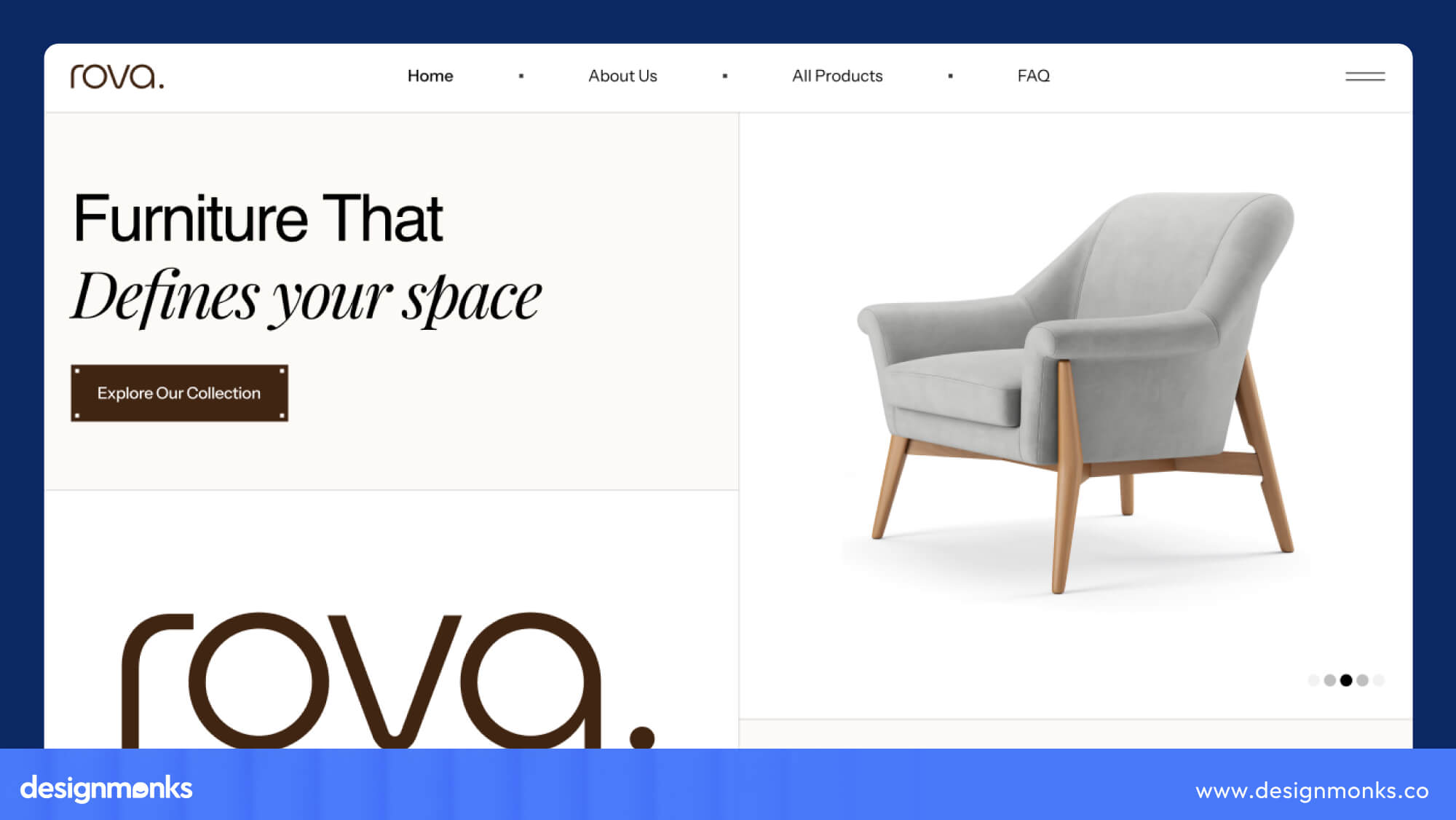
Careful whitespace and editorial typography keep the minimal design from feeling empty, and consistent spacing makes the whole layout calm to read on any screen.
3. Nuvio: Electronics Store
Nuvio treats speed as the whole design brief, since electronics shoppers compare fast and leave faster. A high-contrast black-and-orange palette and punchy CTAs point every section toward one action: add to cart.
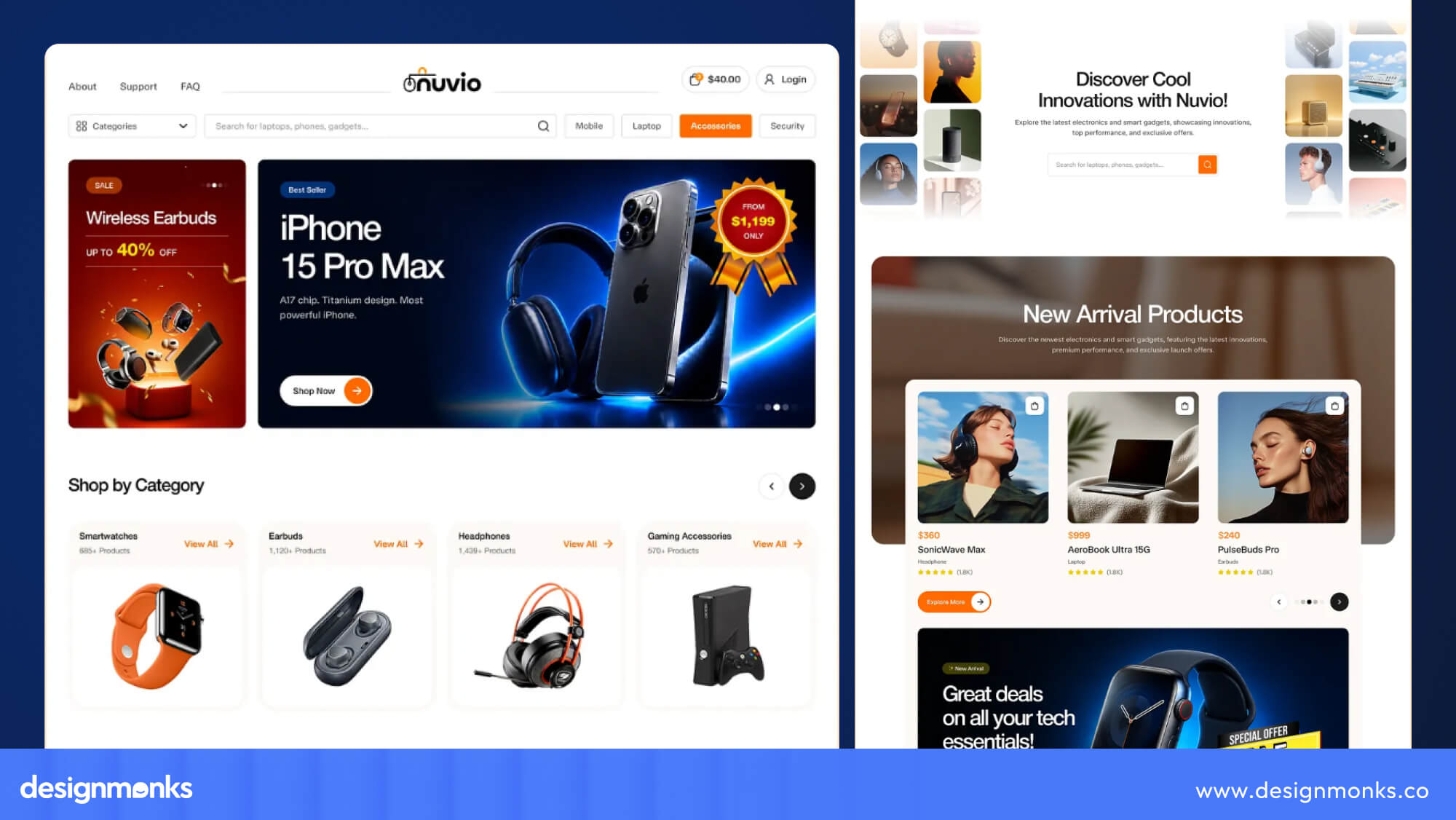
Countdown banners and a Shop by Category filter cut down decision time, while a trusted brand strip with Apple and Samsung builds confidence right before checkout.
4. Skinévo: Skincare Store
Skincare shopping gets overwhelming fast when every product claims to work. Skinévo's solution-cards carousel sorts products by actual skin concern (hydration, anti-aging, sun protection), so browsing starts from need rather than guesswork.
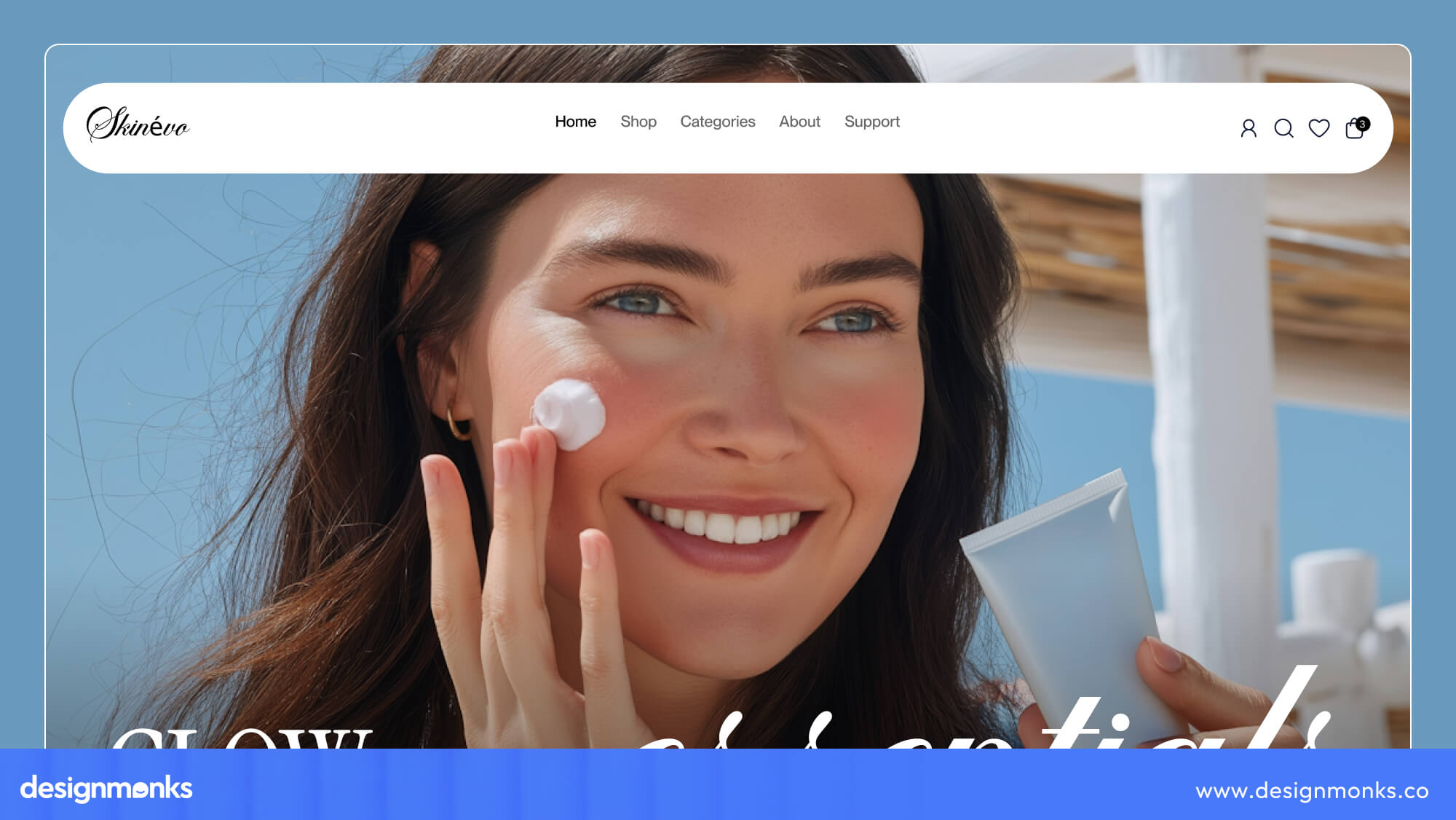
A trust stats bar and dermatologist badges add instant credibility, and a small Rethink, Reuse, Refill strip reinforces the brand's clean beauty values without breaking the calm, editorial feel.
Ecommerce Redesign Testimonials & Reviews
Design Monks also has experience redesigning ecommerce experiences, with client feedback highlighting improvements in usability, navigation, and the overall shopping journey. Their reviews reflect an approach that goes beyond refreshing the interface by making online stores easier and more engaging to use.
Client Testimonial: Hear directly from clients about their experience working with the agency:
Video
Client Reviews on Clutch: Browse verified client reviews to see feedback from clients across different ecommerce and digital product projects, including comments on design quality, communication, and project delivery.
%20(1).jpg)
2. Digital Silk
Image 7: Digital Silk
Digital Silk operates from Miami with additional offices in New York, Chicago, and San Diego, running ecommerce design as one part of a larger branding and marketing operation.
Recent projects include a Bang & Olufsen store that reached a 64% conversion rate and a Massimo Motor storefront rebuilt with mega-menu navigation for both retail and wholesale buyers. Absolute Dogs saw completed purchases grow 35.6% after a Shopify relaunch.
Forbes named the agency a top digital agency in 2025. Buyers should know that ecommerce work here comes bundled with SEO, PPC, and branding rather than offered alone.
3. Groove Commerce
Groove Commerce has worked only in ecommerce since 2007, out of Baltimore, and holds partner status with BigCommerce, Shopify Plus, and Klaviyo. Their US Open Shop project raised conversion rate by 36% on a tight timeline, and a custom shipping calendar built for Dippin' Dots pushed revenue up 47%.
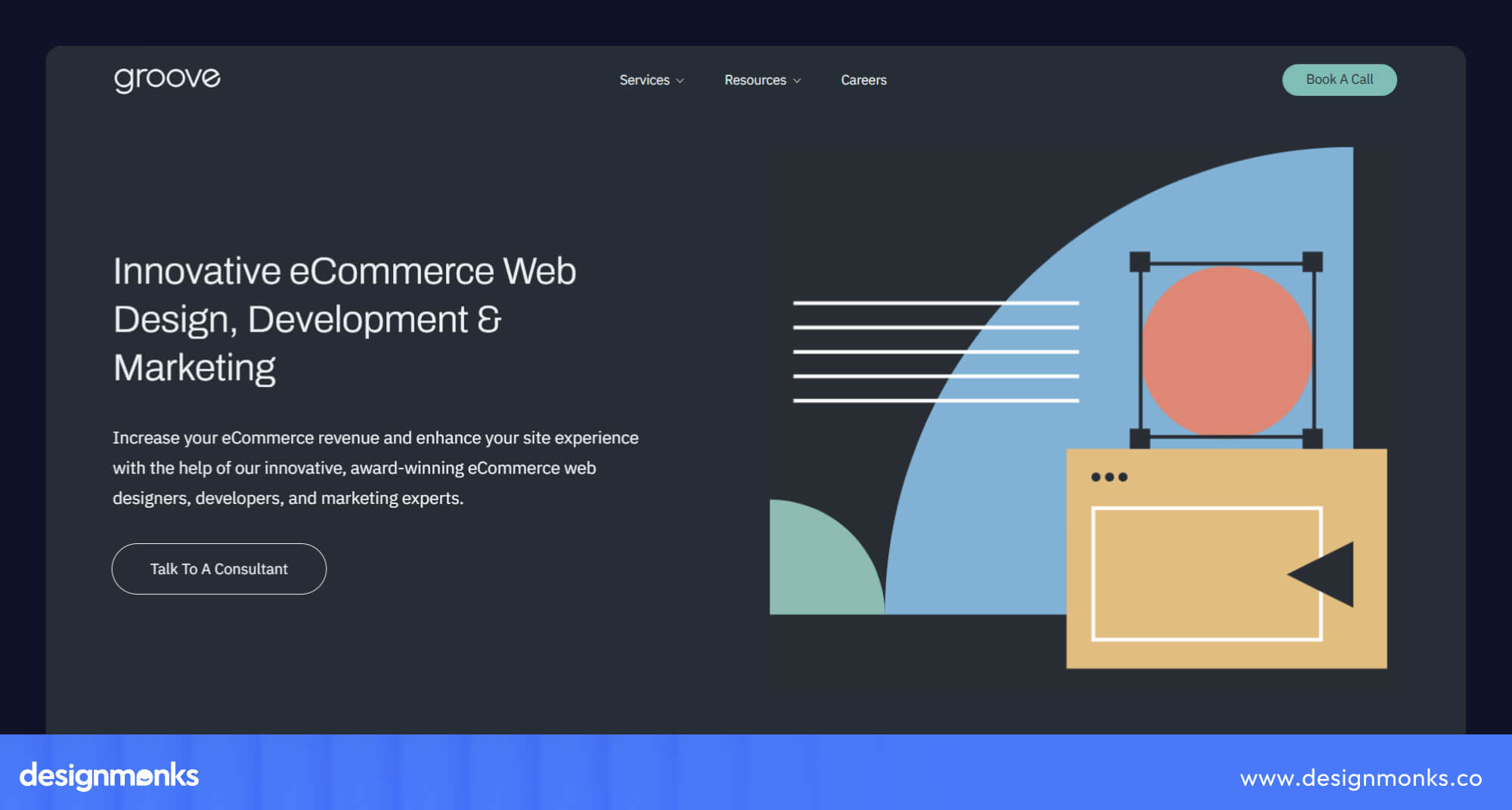
Testimonials from Cutter & Buck and KegWorks describe multi-year relationships rather than one-off builds. The agency groups design under six practices alongside development, SEO, paid media, and email, so a design engagement often expands into broader account management.
4. Huemor
Huemor's current site positions the company as a B2B digital agency for construction, engineering, manufacturing, and SaaS clients, not as an ecommerce specialist. Their homepage features Boston Dynamics and HITT Contracting, and every case study is a lead-generation site rather than an online store.
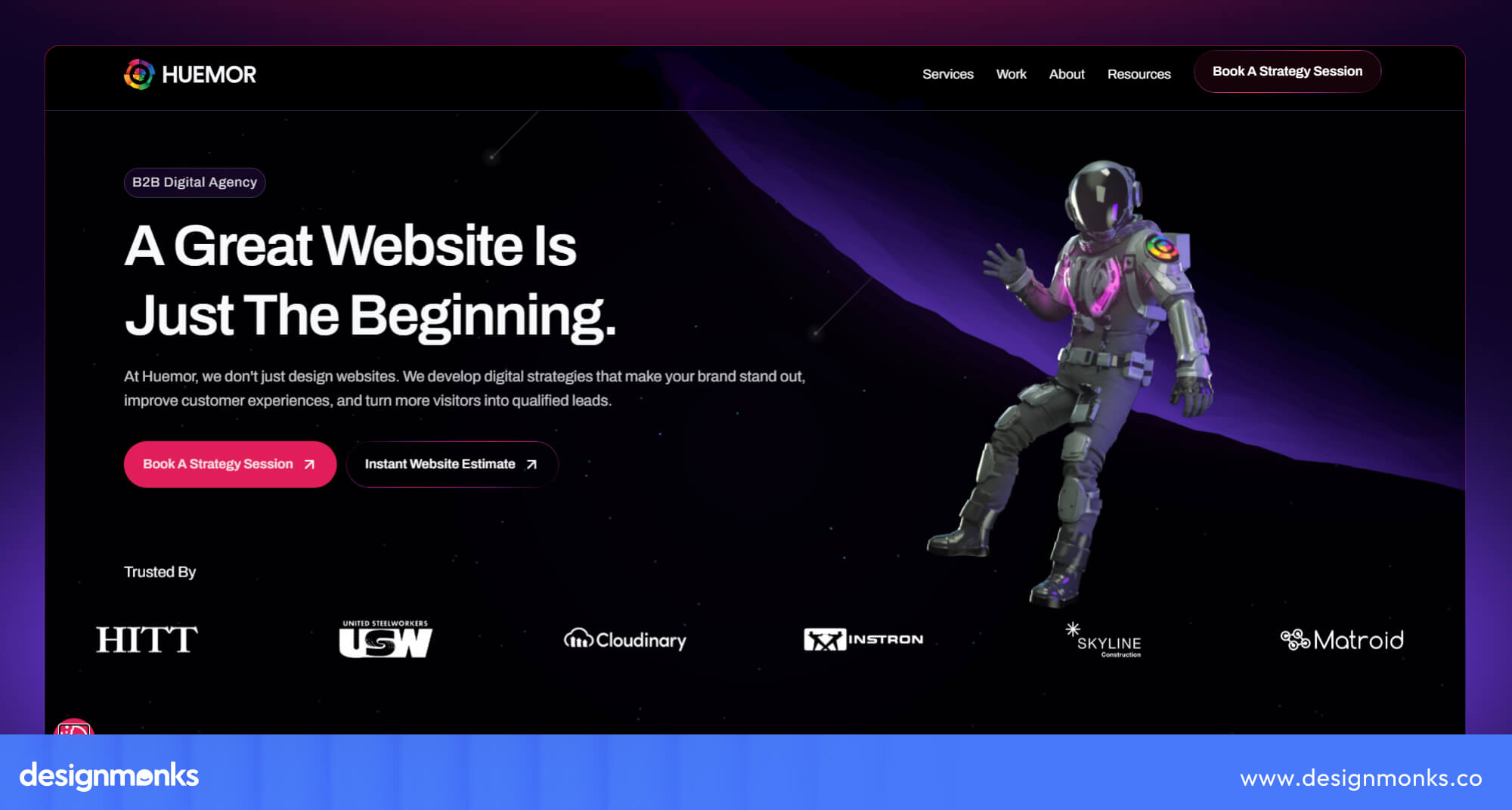
This is a real shift worth knowing before adding them to your list. Project pricing runs $50,000 to $100,000 by their own FAQ, and the focus is website redesign, SEO, and copywriting, not storefront or checkout work.
5. WebFX
WebFX is a 750-person digital marketing agency built around a proprietary platform called RevenueCloudFX, and ecommerce website design is one line item tucked inside a much larger menu covering SEO, PPC, and AI search optimization.
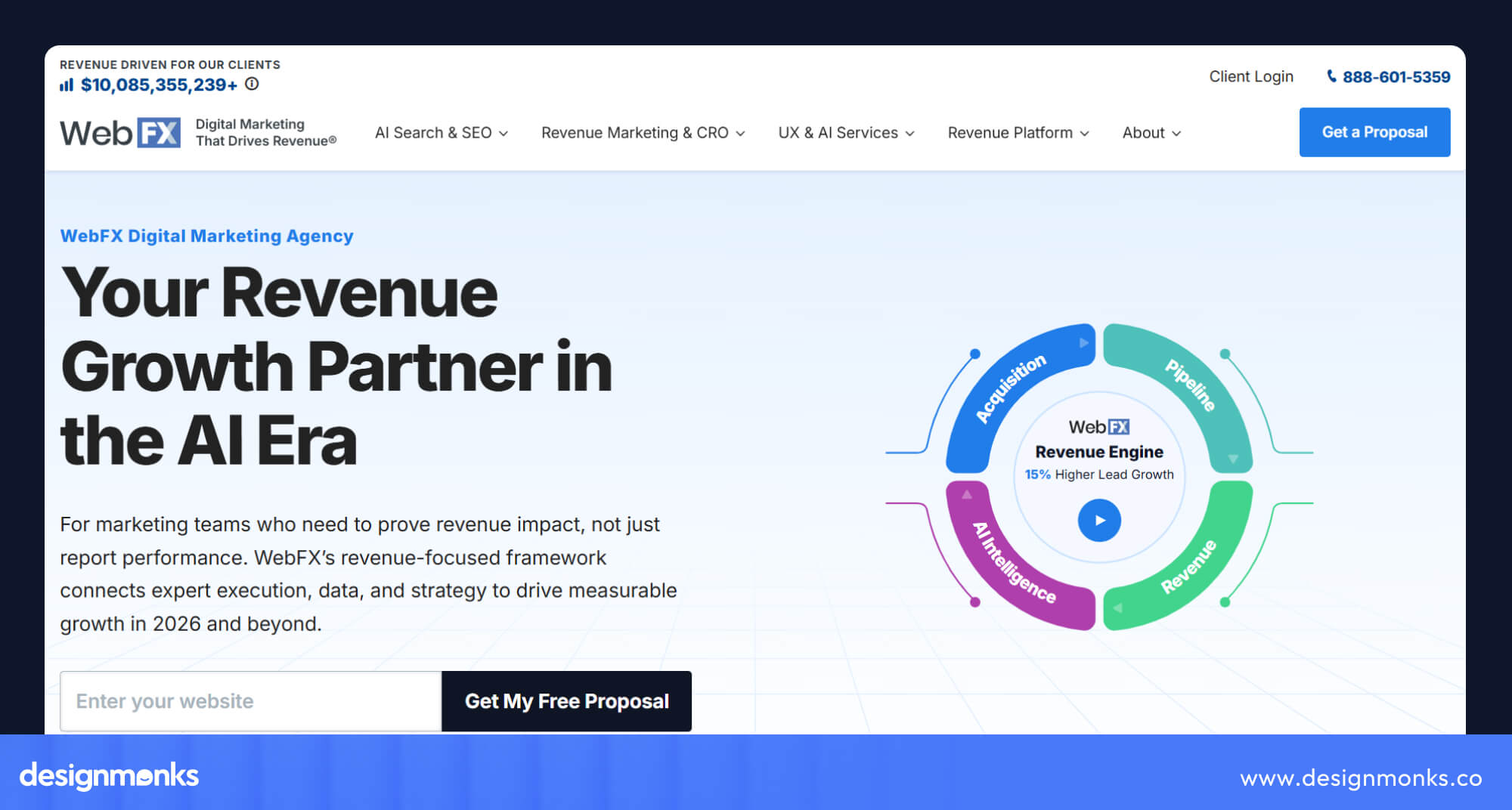
A case study for S. Clyde Weaver reports a 30%+ increase in ecommerce sales, and the agency also manages Amazon and Walmart marketplace advertising. With $10 billion in reported client revenue and 30 years in business, WebFX brings scale, but design work here sits clearly behind the marketing engine.
6. ParallelHQ
ParallelHQ describes itself as an AI-native product design studio for startups and SaaS teams, and its own site does not list ecommerce as a focus. Featured client work includes an AI documentation tool, a gold-investing app, and a biosignal API company, backed by Bessemer and Y Combinator.
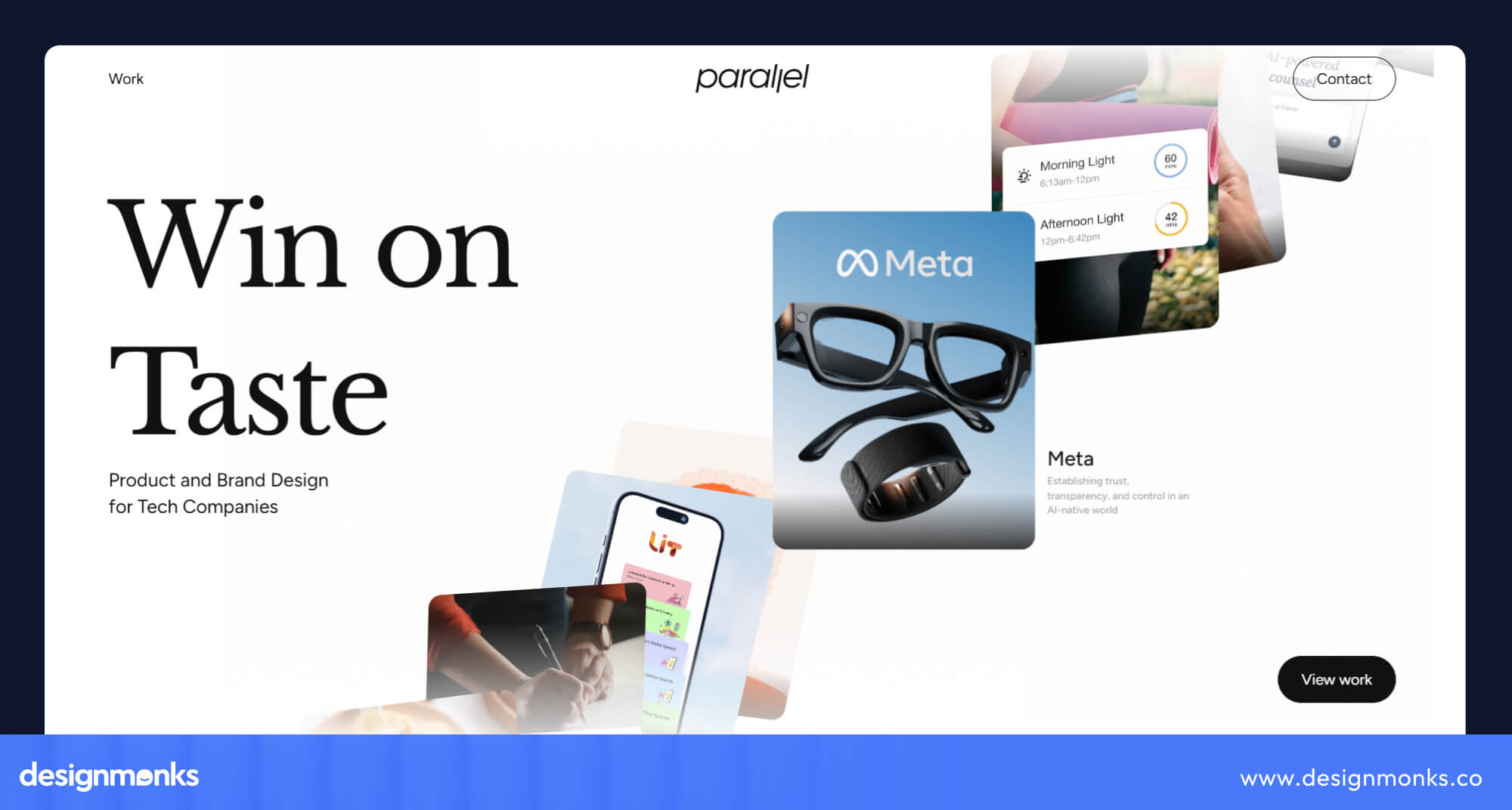
Their web design service exists mainly for marketing sites and landing pages rather than online stores. Include this one only if you want a general product-design studio, not a dedicated ecommerce shop.
7. Qubstudio
Qubstudio calls itself a digital product design agency and has built most of its reputation in fintech and banking work across the Middle East, including apps for Gulf Bank and ila Bank.
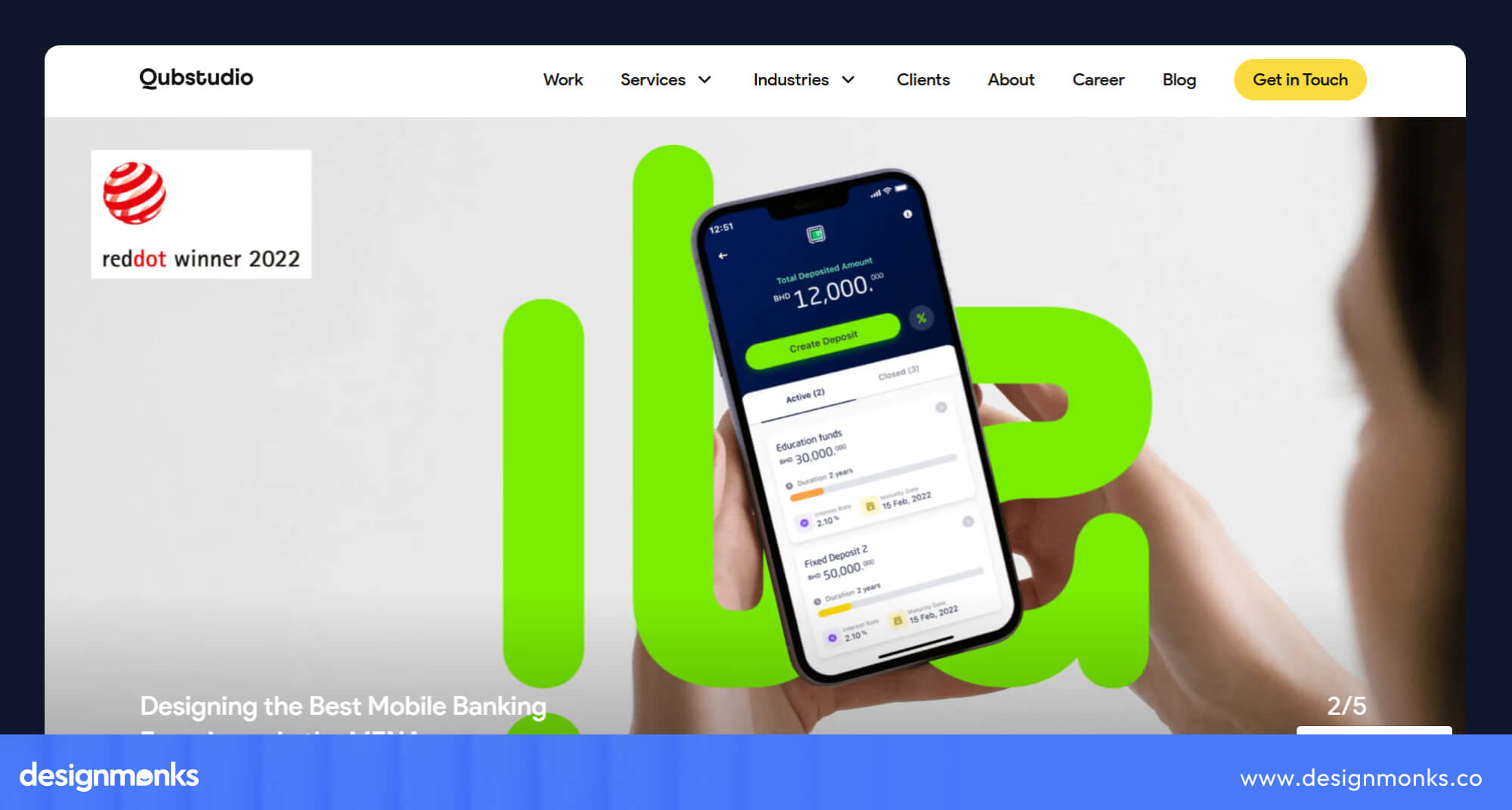
One ecommerce project stands out: BluePallet, a chemical ecommerce platform where their redesign produced a 151% jump in daily and monthly active users. Clutch ranks them among the top UX agencies worldwide, and they hold a Red Dot Award.
Ecommerce experience exists here but sits as a small slice of a portfolio weighted toward finance software.
8. View Source
View Source is a Brooklyn-based design and technology studio with 20 senior staff, three offices, and 140+ project launches to date. Ecommerce sits at the center of their work rather than on the side.
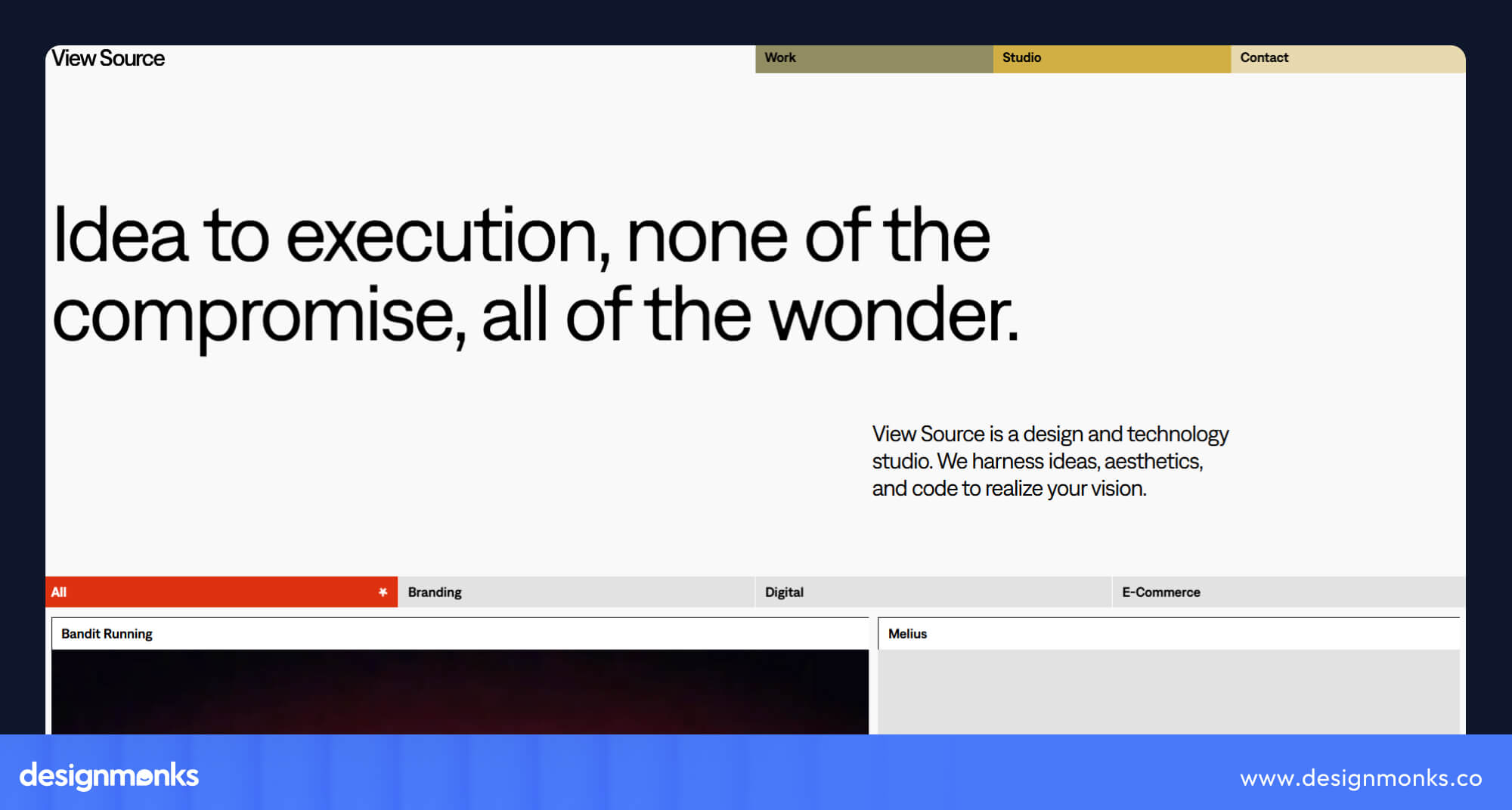
Their case study for Aura Bora reports a 75% increase in organic conversion, a 58% increase in repeat customers, and a 13% lift in average order value after a full Shopify Plus rebuild. Other ecommerce clients include Edie Parker and Maeve, the latter winning a 2026 Webby Award for Food & Drink.
The studio holds 62 industry awards total and leans toward fashion, beauty and consumer brands that want strong visual identity paired with the storefront build, not just a template swap.
9. SPINX Digital
SPINX Digital has operated out of Los Angeles since 2004 and lists ecommerce as one of fifteen industries it serves, alongside legal, healthcare, and architecture.
Ecommerce case studies include a Physicians Formula beauty store, an S&B Filters automotive parts site, and a configurator-heavy redesign for Lavi that won a Marcom Gold Award. The agency builds on Magento, Shopify, and WordPress, with Amazon and GE on its client roster.
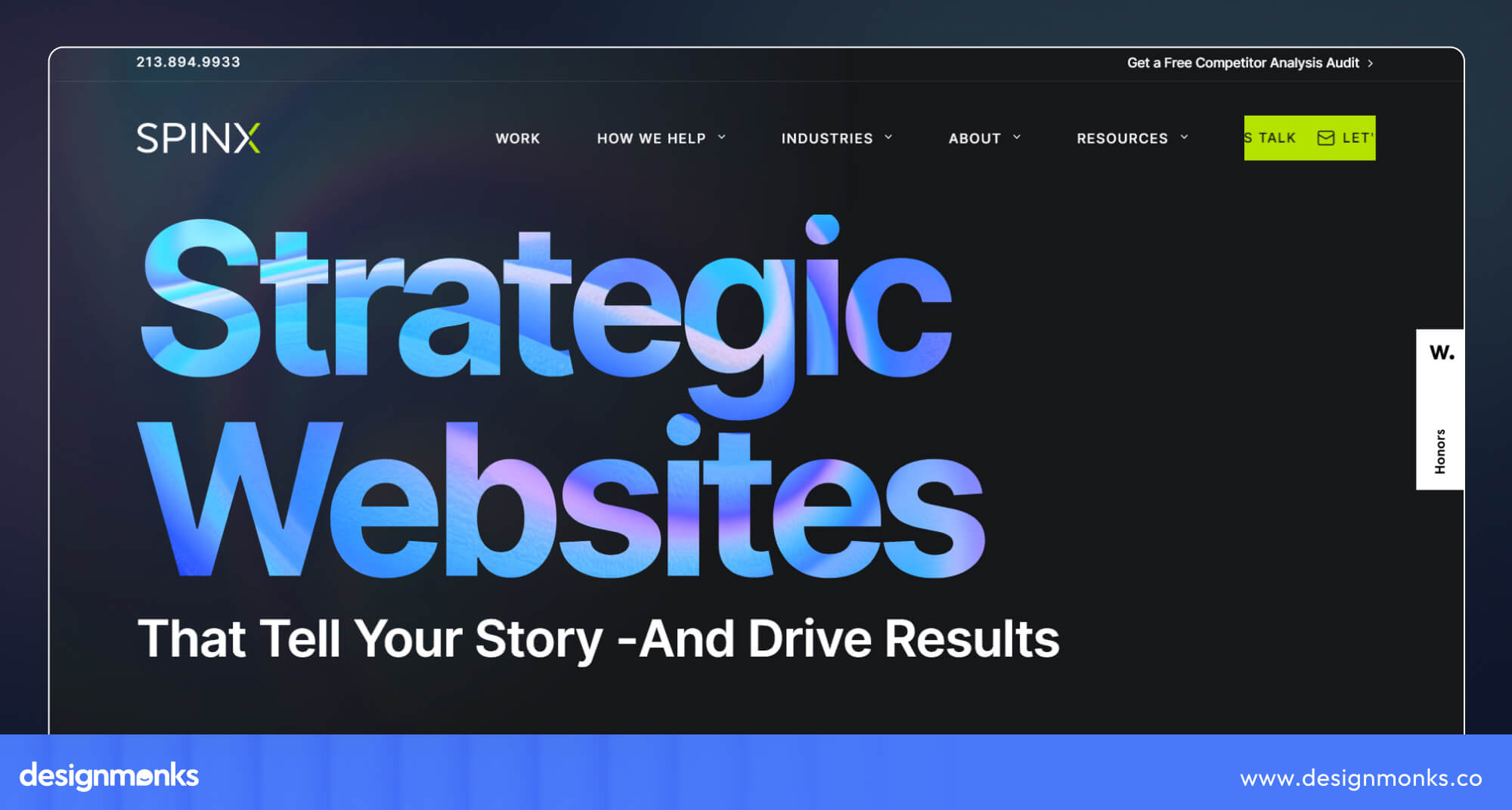
With 500+ projects and 40+ industry awards over two decades, SPINX brings broad experience, though ecommerce sits as one specialty among many.
10. Barrel
Barrel is a minority-owned design studio based in New York, working remotely with clients across the country. Their process opens with a deep content audit that checks brand voice against what shoppers actually search for, which matters most for CPG and food brands where the story behind a product shapes the sale.
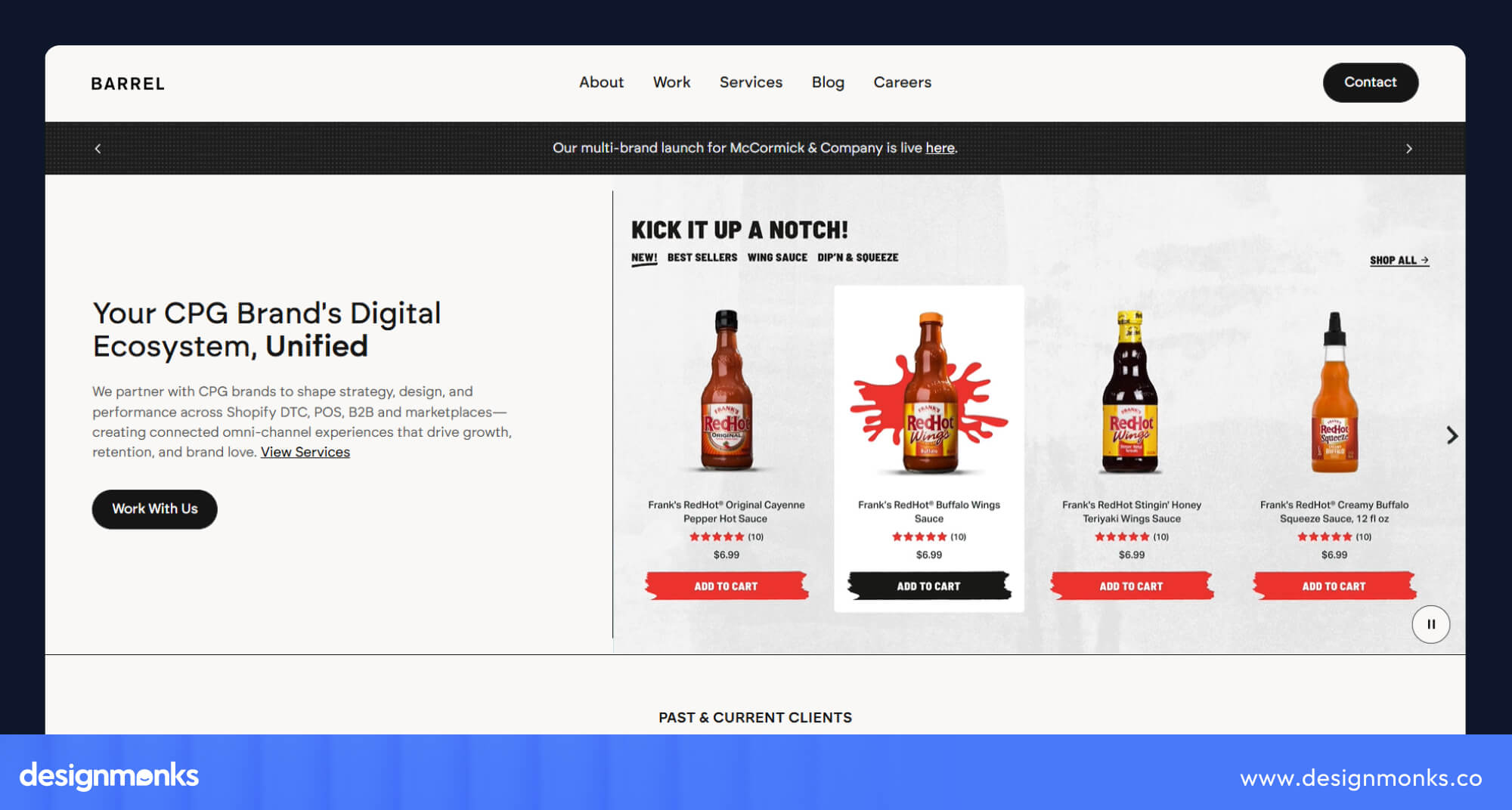
Client work includes Black+Decker, McCormick, and Once Upon a Farm, where a full migration followed by a lighter conversion-rate retainer lifted cart-to-checkout rates by 18%. The studio also handles rebrands and headless builds, and keeps engagements flexible rather than locking clients into long fixed contracts.
How Much Does It Cost to Design an Ecommerce Website?
Ecommerce website costs swing wildly depending on scope, platform, and how custom the build needs to be. A small Shopify store with a template-based design costs far less than a fully custom Magento or headless build with advanced filtering, subscriptions, or multi-currency support.
The design agency pricing model also varies by structure. Some charge flat project fees, others bill hourly, and a few offer monthly retainers for ongoing design and optimization work after launch. Knowing which model an agency uses upfront helps avoid surprise costs later.
Design Monks is a useful example of pricing done right, with projects starting around $1,800 and no hidden fees buried in a contract. Checking an agency's Design Monks price page or equivalent before reaching out saves time, since clear, upfront pricing is usually a sign the rest of the process will be just as transparent.
Shopify vs. WooCommerce vs. Magento: Which Platform Fits Your Store?
The right platform usually determines everything downstream for a business, from design flexibility to long-term maintenance costs. Each one suits a different stage of business, so the right choice depends less on trends and more on your catalog size, technical resources, and how much control you actually need.
Shopify
Shopify works best for brands that want to launch fast without managing servers or code. It handles hosting, security, and updates automatically, which frees up budget for design and marketing instead of backend maintenance. However, it’s essential to find the right Shopify design agency if you want to do real business.
- Fastest setup time among the three
- Best app ecosystem for add-ons
- Monthly subscription plus transaction fees
WooCommerce
WooCommerce for ecommerce fits brands already comfortable with WordPress who want more control over customization without the cost of a fully custom build. It's flexible, but that flexibility comes with more hands-on upkeep.
- No monthly platform fee, but hosting costs apply
- Full content and design control via WordPress
- Requires more technical maintenance over time
Magento (Adobe Commerce)
Magento suits larger catalogs and enterprise retailers who need deep customization, multi-store management, or complex B2B pricing rules. It demands real development resources, so it rarely fits small or early-stage stores.
- Best for high SKU counts and complex catalogs
- Strong multi-currency and multi-store support
- Requires dedicated developers to run well
How to Choose the Right Ecommerce Design Agency for Your Brand
Most guides repeat the same generic checklist. Here's what actually separates a good agency from a forgettable one, based on details buyers rarely think to check.
Ask What Happens Before Any Design Work Starts
Most agencies jump straight to mockups, but the better ones run an ecommerce UX audit of your current site or competitors first, catching friction points like confusing filters or a clunky checkout before wasting time on visuals nobody needed.
Check Who Actually Owns the Files After Launch
Some agencies keep design files locked inside their own accounts. If you switch agencies later, you start from zero. Ask upfront whether you get full ownership of Figma files, source code, and assets once the project closes.
See If They Design Beyond the Storefront
A polished homepage means little if your team struggles behind the scenes. Agencies who also handle ecommerce dashboard design, inventory views, and order screens understand the full operational picture, not just the parts customers see on the front end.
Check How They Test on Real Devices, Not Just Previews
A design that looks flawless in Figma can break on an older Android phone or a slow connection. Ask whether the agency tests on actual devices and real network speeds, not just clean, fast desktop previews during pitches.
Watch How They Handle Pushback During the Sales Call
Notice how an agency responds when you question an idea before signing anything. Agencies that get defensive early tend to behave the same way mid-project, while ones that ask clarifying questions usually adapt better once real work starts.
Find Out What Happens After Launch, Not Just Before
A store's first version is rarely its best one. Ask whether the agency offers ongoing optimization based on real user data, or if support ends the moment the site goes live, leaving you to catch problems alone.
Questions to Ask Before Hiring an Ecommerce Design Agency
A good portfolio isn't enough to judge fit. Before signing anything, ask these questions directly, since the answers often reveal more about how an agency actually works than their case studies ever will.
- Who exactly will work on my project, senior staff or juniors?
- What happens if I want to switch platforms mid-project?
- Do I own the full design files after launch?
- How do you test designs on real devices before delivery?
- What's your typical timeline from kickoff to launch?
- How many revision rounds are included in the price?
- Do you offer support after the site goes live?
- Can you share a client reference I can contact directly?
End Note
The best ecommerce website in the world means nothing if it's built by the wrong partner for your brand. Choosing the right agency comes down to matching your stage, budget, and platform needs with a team that has real, verifiable work in that space, not just polished marketing copy. Ask the right questions, check pricing transparency, and look past the portfolio highlight reel before deciding.
Still unsure which agency fits your store? Reach out to Design Monks directly. Their team can walk you through your options and help you figure out the right next step.


.avif)
.avif)
.avif)
.avif)


.avif)
.avif)
.avif)
.avif)







.avif)