.svg)



Key Takeaways
- Design Monks Founders' Joined the Rajshahi AI Summit 2026
- Northern Bangladesh is building a serious and growing tech community.
- Human skills like judgment, empathy, and taste remain irreplaceable by AI.
- Designers who combine creativity, strategy, and AI will lead the future.
- In-person communities create opportunities that no online platform can fully replace.
"Is AI going to take my job?" That question is not a joke anymore. For developers, designers, and content creators across Bangladesh, it has become a daily source of real anxiety.
The concern is even sharper here than in many other countries. Bangladesh's growing tech workforce is still young and still building its footing. When AI tools start doing in minutes what a skilled professional takes days to complete, the pressure feels immediate and personal.
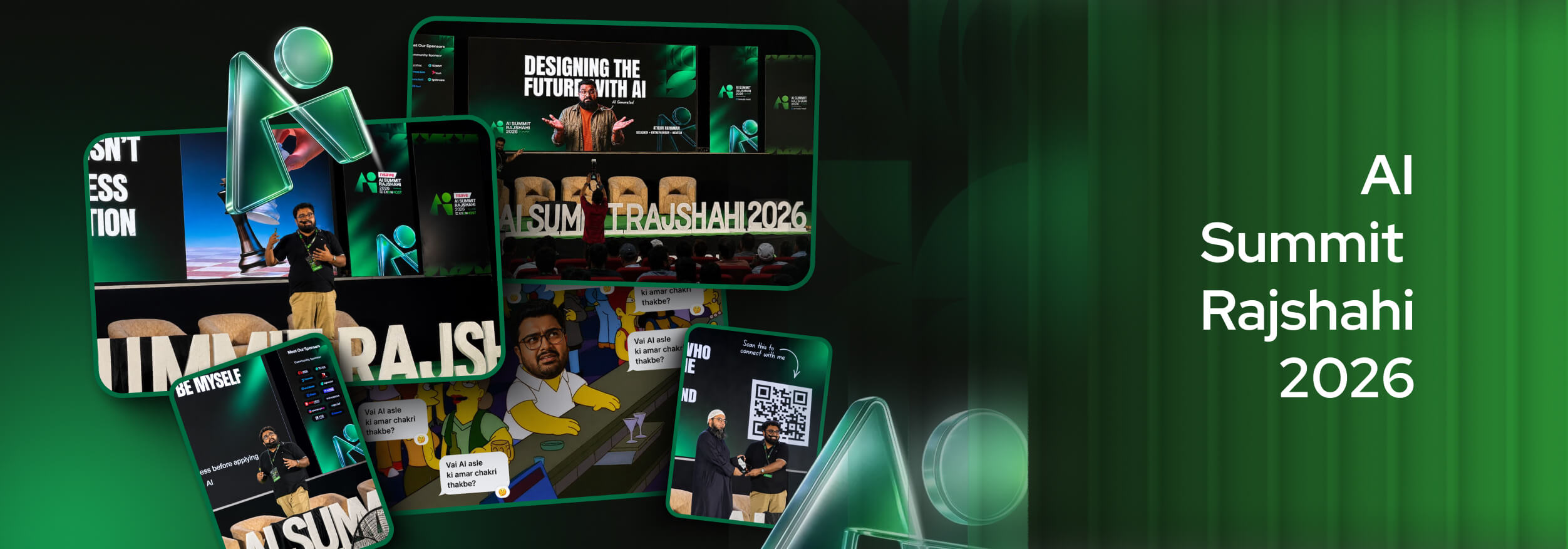
That is exactly why an event like the nsave AI Summit Rajshahi 2026 mattered so much. Organized by the Rajshahi Tech Community and Bangladesh Tech Entrepreneur Society, it brought over 520 attendees, 28 speakers, and 40 guests together at the event.
Why Now Is the Time This Event Was Needed
People are frustrated. AI is moving fast, and for many professionals, that speed feels threatening rather than exciting. That frustration deserved a real response, not just optimism.
The Job Market Is Shifting in Real Time
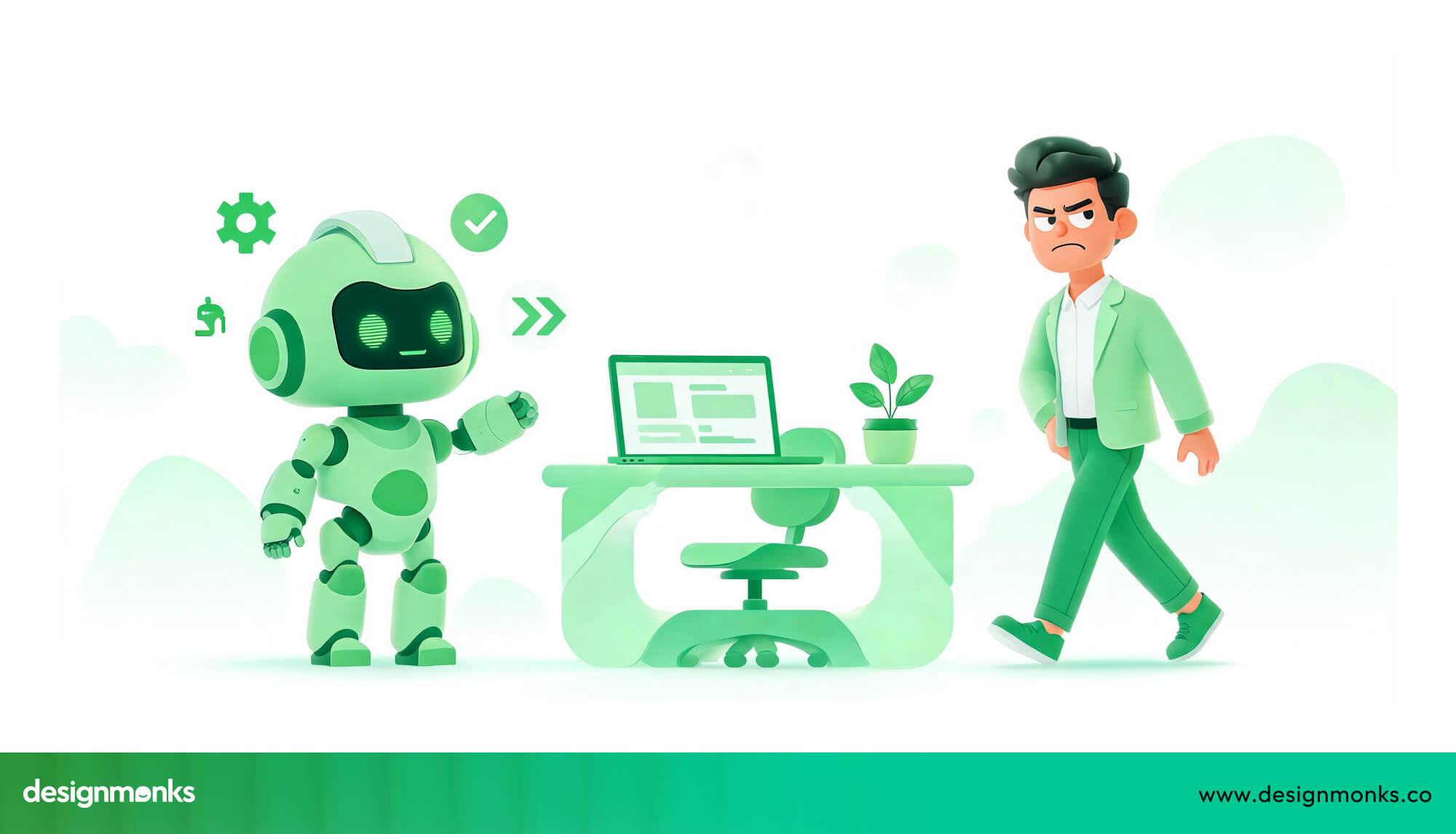
The anxiety is not imaginary. Junior roles in content, design, and development are already changing. Professionals who spent years building their skills are now watching even free AI design tools and tools from other fields perform similar tasks in seconds. That is a real shift worth talking about openly.
Bangladesh's Tech Industry Is at a Turning Point
Bangladesh has built a strong base of freelancers, agency professionals, and startup founders over the past decade. Now that the foundation faces its biggest test. How this community adapts to AI will shape the next ten years of the industry here.
Access to Honest Guidance Has Been Unequal
Most of the credible conversations about working with AI have happened in Dhaka or in English-language global forums. Professionals in Northern Bangladesh have had fewer chances to hear from people who are actually doing this work day to day.
There Are No Easy Answers, and That Needs to Be Said
Generic advice like "just learn AI" does not help much when you do not know where to start or who to learn from. What people needed was specific, lived experience from professionals in familiar fields, not broad reassurances.
Community Can’t Be Replaced by Online Content
Watching a YouTube tutorial and sitting in a room with a working professional who answers your question directly are completely different experiences. That direct, in-person access to knowledge is rare and genuinely valuable.
2026 Is the Year Decisions Get Made
The professionals who figure out how to work alongside AI in 2026 will be ahead. Those who wait another year or two may find the gap harder to close. This summit arrived at the moment when the decision to engage with AI is most consequential. Also, it’s time for designers and developers to get better AI career advice to find their bright path.
Why Rajshahi?
For years, tech events of this scale have been almost exclusively a Dhaka story. The capital gets the conferences, the meetups, the speaker series, and the networking rooms. Rajshahi and the rest of Northern Bangladesh have largely watched from a distance.
That gap is not because the talent is absent. It is because the infrastructure for gathering that talent has not existed here in the same way.
Choosing Rajshahi for a summit of this size was itself a statement. The region has a growing base of developers, designers, and digital entrepreneurs who are building real businesses and real careers. They deserve access to the same conversations that Dhaka professionals take for granted.
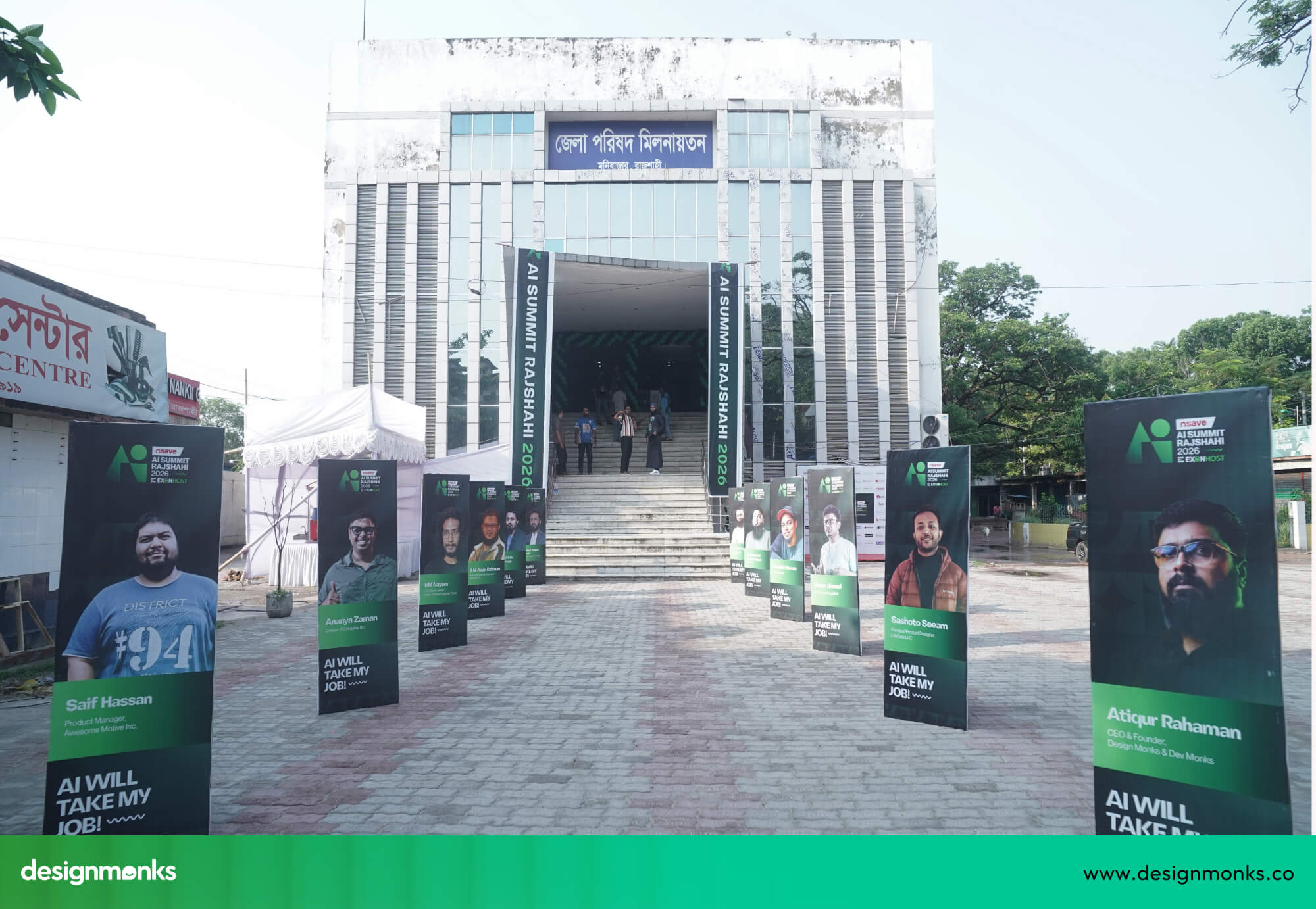
That’s why Rajshahi Tech Community and Bangladesh Tech Entrepreneur Society took the initiative of this event, and NSAVE and ExonHost raised their hands to power it. However, the event managed to gather over 520 attendees, 28 speakers, and 40 guests together at the District Council Auditorium on May 9, 2026, to answer that question honestly.
Well, the timing also made Rajshahi the right choice. As AI tools become more accessible, the geographic barriers to participating in the tech economy are shrinking. Northern Bangladesh doesn’t stop just catching up; it is positioning itself to grow alongside the rest of the country's digital industry.
The Question on Everyone's Mind: Will AI Take My Job?
This was the tension sitting underneath almost every conversation at the summit. The speakers did not pretend the question was silly or overblown. They took it seriously because it is serious.
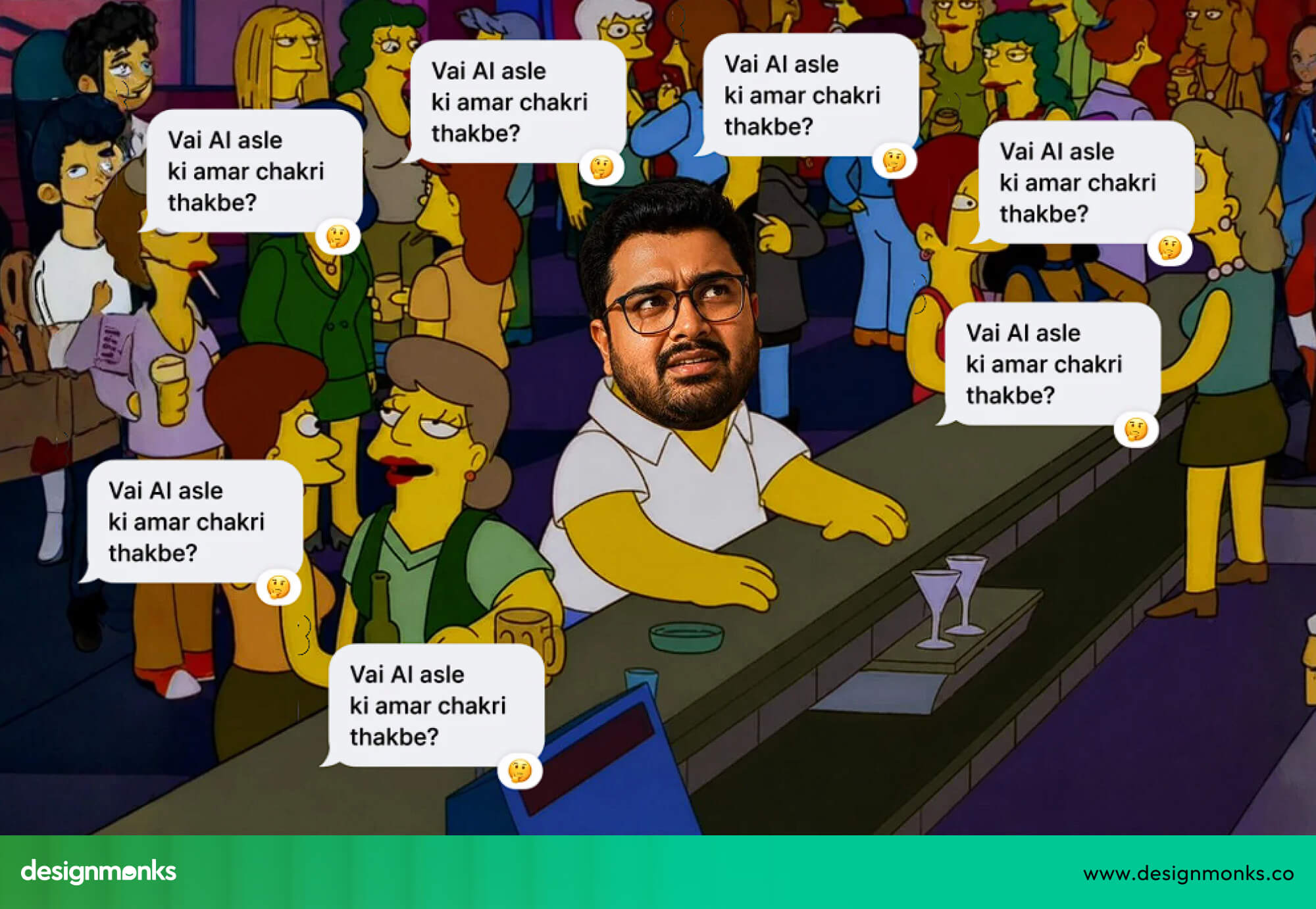
AI Is Already Changing What Work Looks Like
Many tasks that were done manually two years ago are now handled by AI tools. That is true in design, development, writing, and marketing. The nature of the work is changing, and the professionals in that work need to change with it.
The summit made space to say that honestly. Pretending nothing is changing would have been less useful than acknowledging that the ground is shifting and then talking about how to stay on it.
The People Who Adapt Are Not the Ones Who Fear AI Less
Adapting to AI is not about being fearless. It is about being deliberate. The professionals on stage were not comfortable with AI because they ignored the risks. They were comfortable because they had spent time actually using the tools in their work.
That hands-on familiarity is what made the difference. Fear tends to shrink when it is replaced with knowledge from direct experience rather than speculation.
AI Can’t Replace Judgment, Context, or Relationships
A tool can generate a design, write a draft, or structure a codebase. It cannot understand a client's history, read a room, or make a call that depends on years of professional instinct. Those things still belong to the people doing the work.
This was a consistent point from multiple speakers. The human layer of the job, which involves judgment, trust, and context, is not disappearing. It is becoming more important as the production layer gets automated.
The Right Question Is Not "Will It Replace Me?" but "How Do I Use It?"
Framing AI as something happening to you puts you in the wrong position. The professionals at this summit had shifted their thinking early. They stopped asking whether AI would take their place and started asking what they could build with it.
That shift in framing is not a small thing. It changes what you pay attention to, what skills you prioritize, and what opportunities you spot before others do.
Atiqur Rahman: Leading the Conversation on AI and Creative Tech
Atiqur Rahaman, CEO and Founder of Design Monks and Dev Monks, took the stage with a talk that cut straight to what the room was actually thinking. His session, titled "Designing the Future with AI," did not open with reassurances. It opened with a question he asked directly to the audience: how many of you worry that AI might replace designers?

His answer to that was grounded in something more useful than optimism. He showed people that it’s still the time to start designing. You just need to know the roadmap to be an AI UX designer in 2026.
As he put it, "AI is not killing all jobs. It is killing certain types of work while increasing demand for different skills." That one line reframed the whole conversation, and the room felt it.
He walked through how the design process itself has changed, showing how AI now fits into every phase of the workflow:
- Research: summarizing user feedback, processing reviews, and analyzing survey data faster than any team could manually do.
- Idea generation: producing early concepts and exploring directions in a fraction of the usual time.
- Wireframing: getting to structured layouts quicker, leaving more time for the thinking that actually matters.
- Content: writing microcopy, generating assets, and keeping brand consistency at scale.
His real-world examples from Design Monks made it concrete. Projects that once took two months were delivered in four days. A 250-page requirements document became a structured app wireframe within 24 hours.
But the sharpest part of his talk was not about speed. It was about what AI still cannot touch. Judgment, cultural understanding, taste, business intuition, empathy, and the ability to lead a team through hard decisions remain firmly human. "AI can do incredible things," he said, "but it can't be you."

His conclusion was direct: "The future belongs to designers who can combine creativity, strategy, and AI." Not the ones who know the most tools. The ones who think the clearest.
Meet the Speakers Who Took the Stage
The speaker lineup was put together with a specific goal in mind. This was not a room full of academics or international keynote speakers with no stake in the local industry. Every person on that stage is working in the field right now.
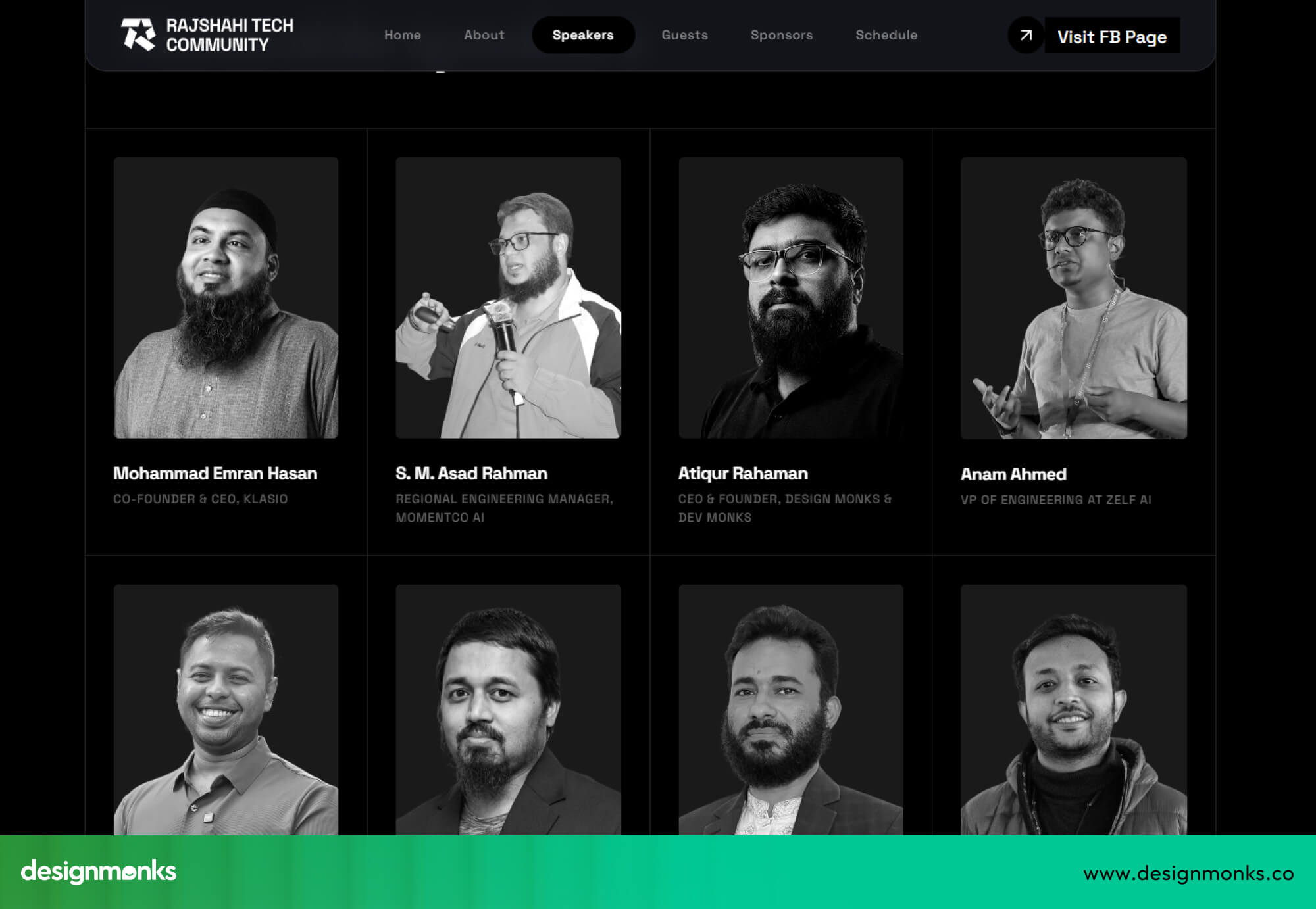
The selection covered a real range of disciplines. Founders, engineers, product designers, content creators, and operations leaders were all represented. That breadth was intentional because AI is not a developer problem or a designer problem. It is reshaping every role.
What connected them was not their job title but their approach. Each speaker chosen has spent time working out, in practice rather than in theory, how AI fits into professional work that real clients and real companies depend on.
Honorable Speakers
- Mohammad Emran Hasan: Co-Founder & CEO, Klasio
- S. M. Asad Rahman: Regional Engineering Manager, Momentco AI
- Atiqur Rahaman: CEO & Founder, Design Monks & Dev Monks
- Anam Ahmed: VP of Engineering at Zelf AI
- Ananya Zaman: Creator, PC Helpline BD
- Nasir Uddin Bin Borhan: CEO at Nurency
- Rashed Hasan Akash: Blogger and Agentic AI Strategist
- Sashoto Seeam: Principal Product Designer, LifeData LLC
- Abdullah Noman: Product Designer
- HM Nayem: CTO at Stack Learner
- AHM Modasser Billah: Backend Developer, Doist
- Saif Hassan: Product Manager at Awesome Motive Inc.
- Shahriar Hasan: Co-Founder & COO, Indispro Digital
- M Asif Rahman: Founder & Chairman, Startise
- Parvez Akther: Founder & CEO, ThemeXpert Ltd.
- S M Mehedi Hasan: Managing Director, Coder71 Limited
- Al Mahmud: Co-Founder & CEO, Bit Byte Technology Ltd.
- Muraduzzaman Konok: CEO, Xerone IT
- Abir Khan: Co-Founder & CTO at THESOFTKING Limited
- Nidal Siddique Oritro: Senior Engineering Manager, Cantaloupe Inc
- A K M Saiful Islam: Co-Founder & CTO at Dev Monks
- Abdul Aouwal: Founder, Zetechdigital
- Aminul Islam: Software Engineer, Employers.io
- Masum Billah Bhuiyan: Founder & CEO, Giant Marketers
- Nahid Hasan: Founder & CEO, Bizcope
- Afshana Rahman: Co-Founder, xCloud | CMO, Startise
- Abdur Rakib: COO at Programming Hero & Phitron.io
- Abrar Sami: Product Marketing at Dorik
Honorable Guests
- Abu Huraira Bin Aman: CTO at ThemeXpert Limited
- Anis Uddin Ahmad: CTO, FIGLAB
- AL EMRAN: CTO at NO-BS Marketplace
- Faisal Ahammad: Open Source Contributor
- Faisal Bappy: Independent Contractor at Upwork
- Farid Rony: Founder, Learn Shopify with Farid
- Imran Khan Limon: Founder & Creative Head at Usarion
- Jahangir Alam: Founder & CEO, EFOLI
Beyond the Talks: Networking and Community
The sessions ended, but the conversations did not. The corridors between talks were just as active as the auditorium itself, with people comparing notes, exchanging contacts, and following up on questions that the main sessions had opened up.
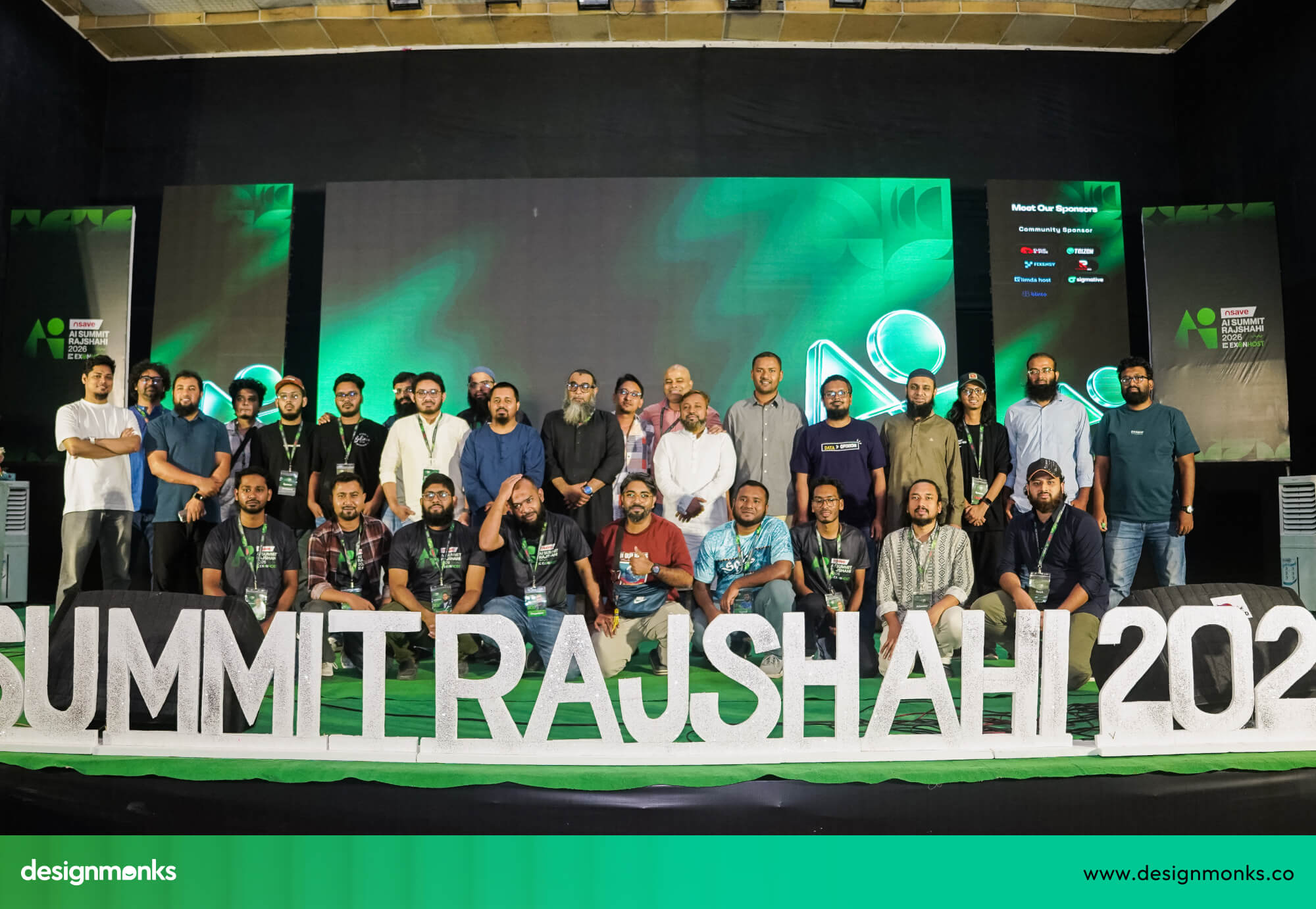
For many attendees, this was the first time they had been in a room with professionals working at this level from their own region. That proximity matters. It changes what feels possible when you can see, in person, that people from your city are doing serious work at serious companies.
Designers were talking to developers. Founders were talking to engineers who might become their next hire. Students were standing next to CEOs and actually getting answers to the questions they had been sitting on for months.
That kind of encounter is hard to replicate online. A comment thread or a LinkedIn message does not carry the same weight as a ten-minute conversation where someone looks you in the eye and tells you what actually worked for them.
What the Summit Left Behind
The 520-plus people who filled that auditorium in Rajshahi on May 9 did not leave with just a notebook of ideas. They left with a clearer sense of what to do next, and a few new people to do it with.
Events like this do not solve the AI question permanently. But they move the conversation from fear to action, which is the only direction worth moving in.
What the summit proved, more than anything, is that Northern Bangladesh is not watching from the sidelines anymore. The talent is here. The drive is here. And now, so is the community.


.avif)
.avif)
.avif)
.avif)


.avif)
.avif)
.avif)
.avif)







.avif)