.svg)



Key Takeaways
- Clinic websites must prioritize trust, clarity, and fast booking experiences.
- Mobile-first design is essential since most patients search and book online.
- Agencies outperform freelancers for growth, offering SEO, UX, and ongoing optimization.
- Strong trust signals, real photos, reviews, and credentials significantly improve conversions.
- Avoid templates, slow pages, weak CTAs, and poor local SEO visibility.
Your website is like your front desk online. It gives the first impression before a patient even calls or visits. That’s why clinic website design matters so much. In just a few seconds, a patient decides if your clinic feels safe and trustworthy.
But many clinic websites fail here. They use stock photos, hide key details, and feel confusing. Because of this, patients leave without booking. A good clinic website design feels clear, friendly, and easy to use. It builds trust and guides patients to book an appointment.
In this guide, you’ll learn which agencies build strong clinic websites, what makes a site stand out, and how to choose the right team without wasting your budget.
What Makes a Clinic Website Design “Best”?
Not every good-looking website is actually a good clinic website. Patients come to your site when they're worried, in pain, or making a big decision. So the best clinic website design doesn't just look nice, it makes people feel safe and guides them straight to booking.
Here's what separates the best from the rest:
Clear Patient Journey & Navigation
If a patient can't find what they need in two clicks, they leave. Simple navigation with services, doctors, and a "Book Now" button easy to spot keeps patients moving forward instead of bouncing away.
Good information architecture builds trust before a single word is even read.
Appointment Booking UX
The booking process should be fast and painless. A clean online scheduling form with minimal steps, clear time slots, and instant confirmation turns visitors into patients. Every extra click you add is a patient you risk losing.
Mobile-First Experience
More than 60% of clinic traffic comes from mobile. Patients search for clinics on their phones during lunch, late at night, and between errands. If your site isn't built for mobile first, you're turning away the majority of your visitors before they even read a word.
Trust Signals That Convert
Real patient testimonials, doctor profiles with actual photos, visible certifications, all of these tell a patient this place is real and safe. Please skip the stock photos and use real pictures. Authenticity converts far better.
Accessibility & Compliance
A great clinic website must be accessible to all patients, including those with disabilities. This means following WCAG (Web Content Accessibility Guidelines) and using proper contrast ratios, alt text for images, keyboard-navigable menus, and readable font sizes.
Your site must meet WCAG accessibility standards and handle patient data in line with HIPAA. This protects your patients and your practice.
Freelancers vs Agencies: Which Is Right for Your Clinic?
One of the first decisions you'll face when building a clinic website is whether to hire a freelancer or work with an agency. There's no universally right answer. It depends on your clinic's size, budget, and how much ongoing support you actually need.
Here's a simple way to think about it:
Choose a freelancer:
- You're a solo practitioner or a brand-new clinic with a tight budget
- You need a clean, functional site fast, without a lot of complexity
- You have someone in-house who can handle SEO, updates, and maintenance after launch
- Your website is a starting point, not your primary patient acquisition tool
Choose an agency:
- You're running a multi-location clinic or growing practice
- You need more than design. SEO, compliance, booking integration, and ongoing support all matter to you
- You don't have internal resources to manage the website after it goes live
- You want measurable results, not just a good-looking page
The truth is that freelancers can deliver solid work at a lower cost, but they typically hand off the finished site and step back. Agencies, especially healthcare-focused ones, stay involved. They optimize, update, and grow your site alongside your clinic.
For example, agencies like Design Monks focus on not just building clinic websites but also improving performance over time through UX refinement, SEO, and conversion-focused design. So the website continues to support patient acquisition long after launch.
For most clinics beyond the very early stage, an agency partnership pays for itself through better patient acquisition and fewer headaches down the road.
How to Choose the Right Clinic Website Design Partner?
Picking the wrong agency costs you time, money, and patients you'll never know you lost. So before you sign anything, here's what to actually look for:
Healthcare Industry Experience
This one matters more than most clinic owners realize. A general agency might build beautiful websites, but they don't know how patients think, how medical content should be structured, or what compliance actually looks like in practice.
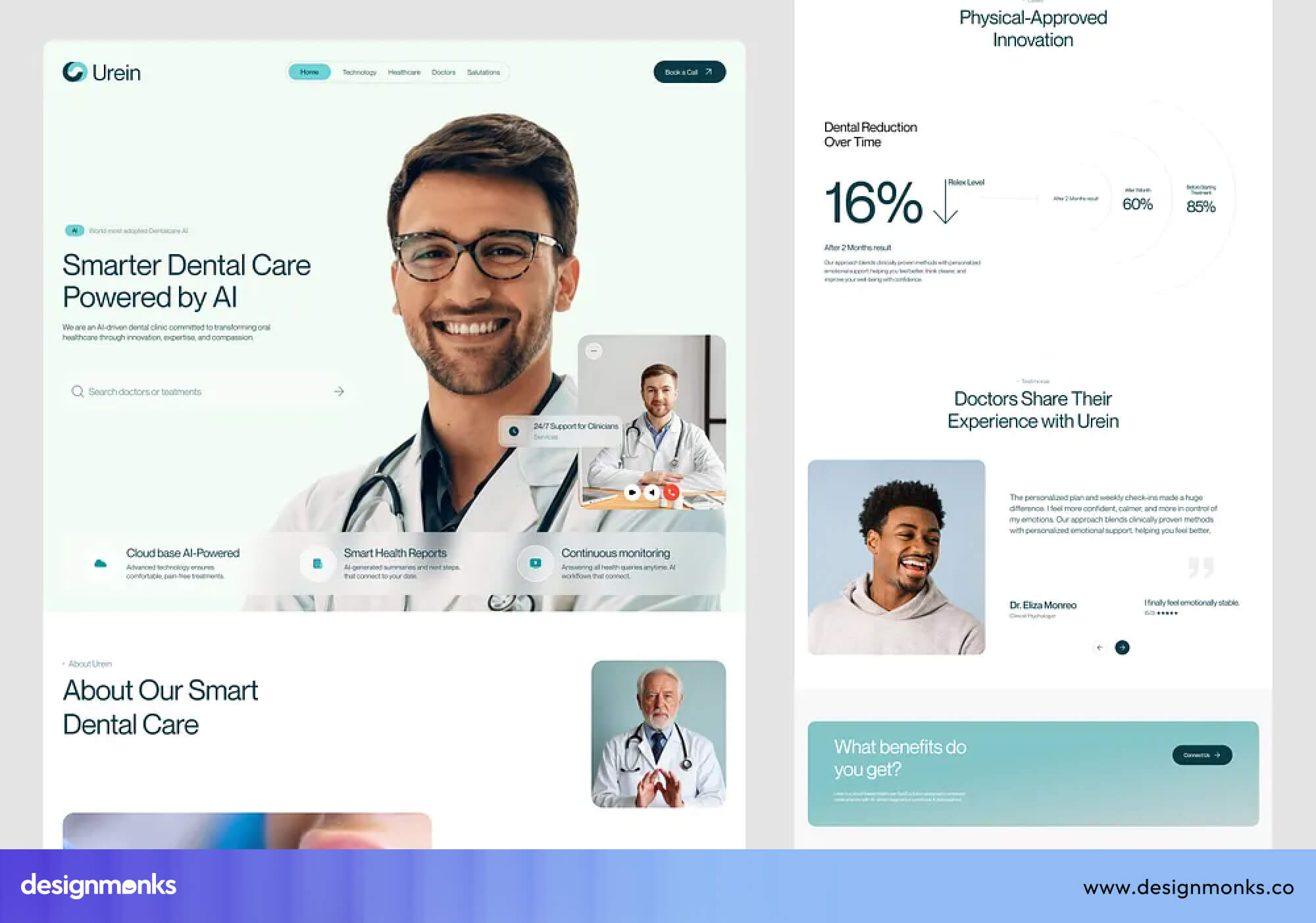
Ask to see the real healthcare UX design they've done. Then check if those sites actually rank and convert. A pretty portfolio means nothing without performance behind it.
SEO & UX Capability
Your website needs to be found before it can do anything else. The right agency bakes SEO into the build from day one, not as an afterthought.
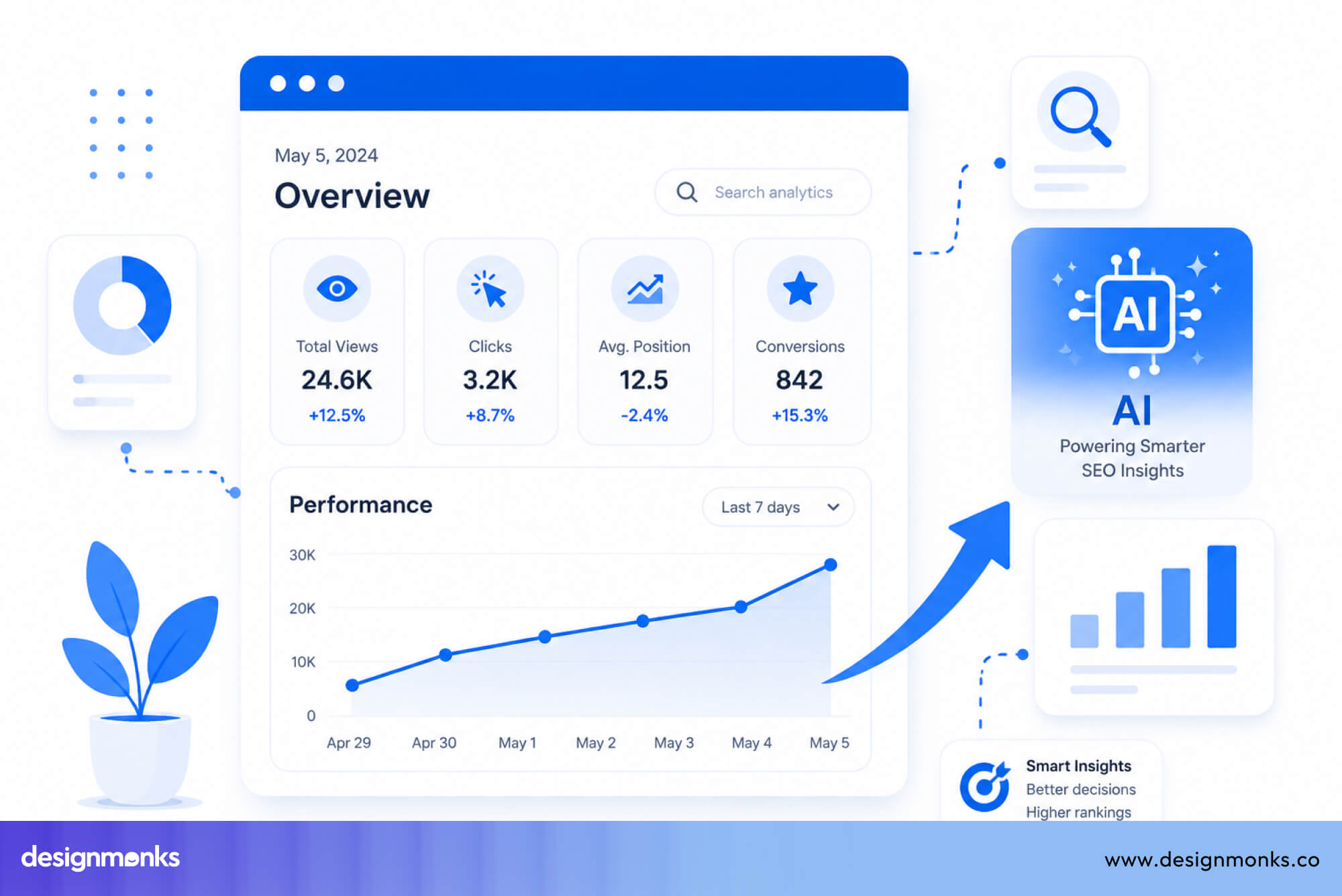
They think about local search, page structure, and load speed alongside the design. UX capability also matters just as much. An agency that runs UX audits and designs with conversion in mind will deliver measurable ROI, not just a good-looking site.
Compliance Knowledge
Ask directly, “How do you handle patient data in forms and booking systems?” If the answer is vague, keep looking. HIPAA and ADA compliance aren't optional, and the right agency will treat them as starting points, not checkboxes.
CMS Scalability
With time, your clinic will grow, new doctors will join, and new services will be added. Your website's CMS (Content Management System) should make it easy for you to update content without calling a developer every time.
So, you need to look for agencies that build on scalable platforms like WordPress, Webflow, or custom headless CMS solutions. They should also train your staff to use the CMS after launch, so you're not dependent on them for every small change.
5 Best Clinic Website Design Agencies
Choosing the right clinic website design agency is important. A good agency helps your website look clean, easy to use, and trustworthy. This means more patients will feel confident and book appointments.
Below are different types of agencies that specialize in clinic and healthcare websites:
1. Design Monks
If you want a clinic website that doesn't just look good but actually works hard for your business, Design Monks is a name worth knowing.
Design Monks is a UI/UX design agency, meaning they focus on how a website looks and how easy it is to use. They focus on a mix of creativity, client-focused strategy, and deep industry insights. Their collaborative process ensures the designs align with your goals.
Overview:
- Website: Design Monks
- Location: Global (Remote-first team)
- Price: Mid to Premium range
- Clients: Medease, Crantech, Telenor, Affine, and many more
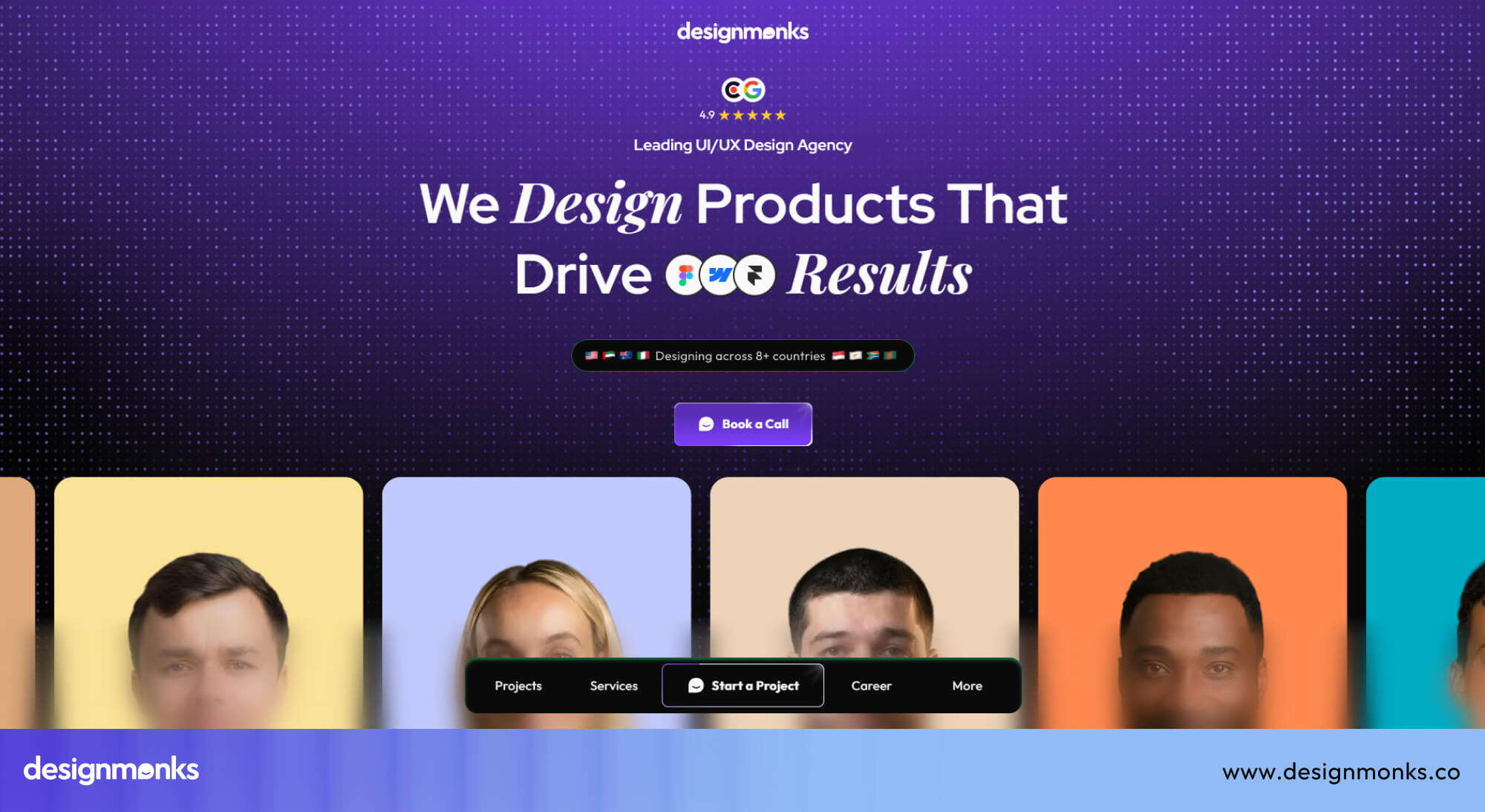
They don't just build a pretty website and walk away. They sit with you, understand your clinic's needs, and build something that fits your patients and your goals. Designmonks
They are also known for working well with startups and smaller clinics. They understand the unique challenges startups face and offer affordable and flexible design solutions that fit your budget and needs.
So if you're running a new clinic and don't have a massive budget, they're a solid option.
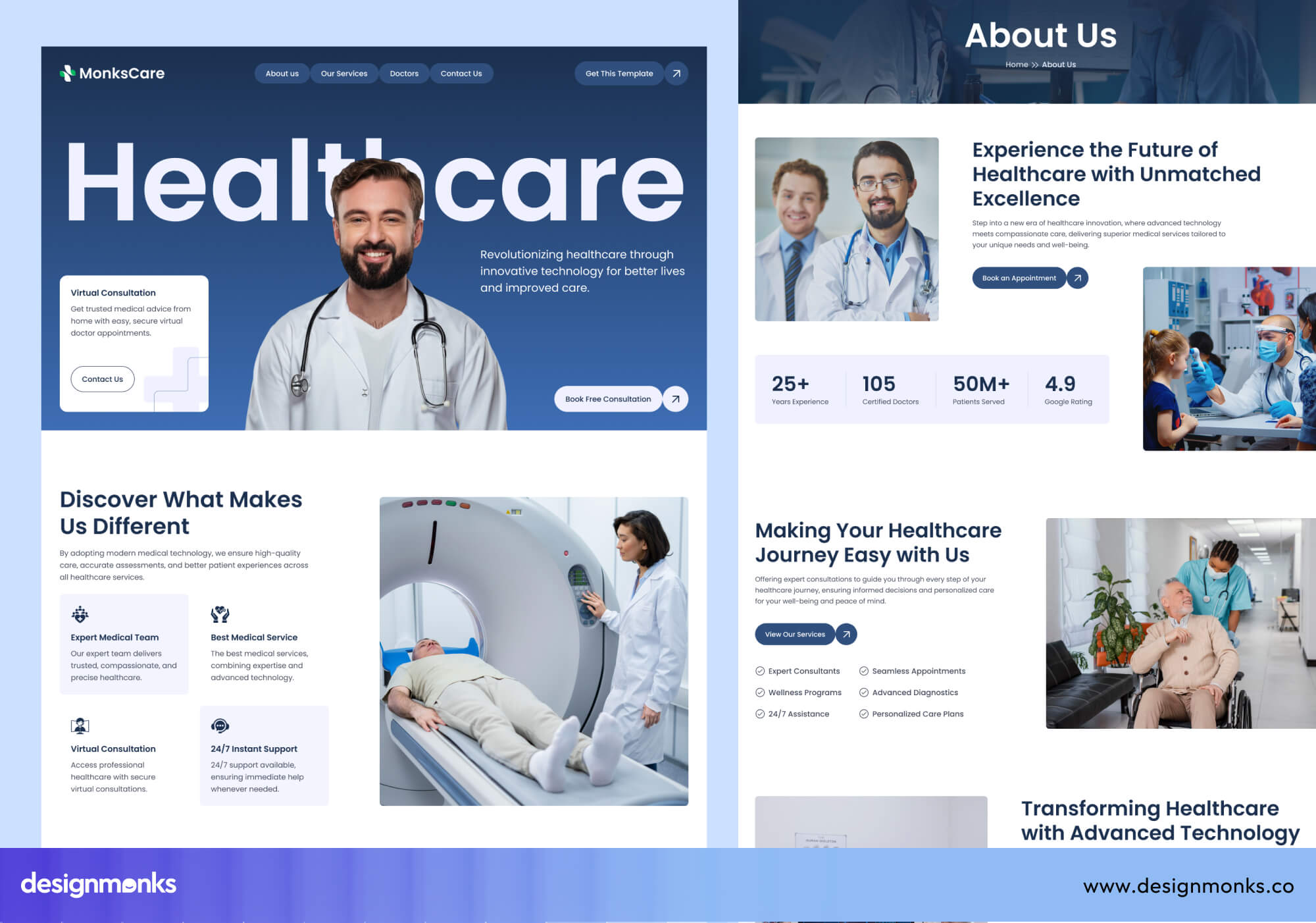
One thing that also makes their work stand out is their use of Webflow. Their Webflow designs are created with real business needs in mind. They make sure the website is not only visually strong but also smooth, fast, and practical for everyday use
Their portfolio on Dribbble also shows a wide range of healthcare app design, web design, mobile design, and branding work. It provides real experience in the healthcare space.
For small to mid-sized clinics, startups, and private practices that want a modern, user-friendly website with strong branding, Design Monks is a strong option without the high cost of enterprise agencies.
2. Intrepy
Intrepy is a healthcare-focused boutique agency that works mainly with doctors, clinics, and private practices. They understand how patients search online and what makes them trust a clinic.
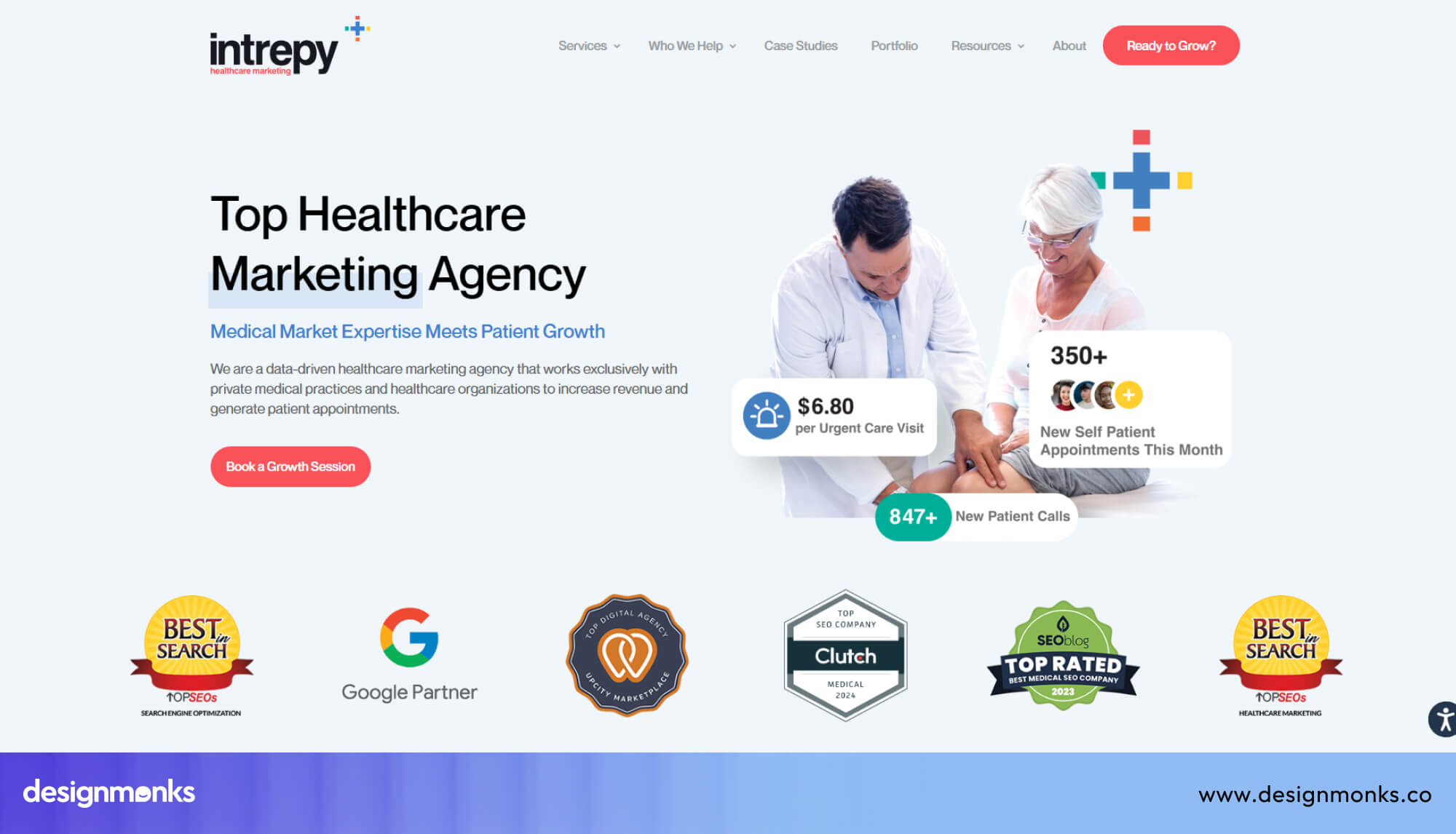
Intrepy focuses on both website design and patient growth. This means they don’t just design your site, they also help bring more visitors through SEO. Their websites are simple, clear, and built to convert visitors into appointments. They also focus on local marketing, which is very useful for clinics trying to attract nearby patients.
If your goal is to get more patients consistently, Intrepy is a strong boutique option.
3. Kanopi Studios
Kanopi Studios is a boutique agency known for building clean, accessible, and easy-to-manage websites, especially using WordPress.

They focus on performance, accessibility (making websites easy for all users, including people with disabilities), and long-term usability. This is important for healthcare websites where clarity and trust matter.
Kanopi is a good fit for clinics that:
- Have a lot of content (services, blogs, patient info)
- Need a reliable and scalable website
- Want strong technical support
They may not be flashy, but they build websites that are stable, secure, and easy to grow over time.
4. Digital Silk
For larger healthcare brands that need a polished, scalable website, Digital Silk is a capable enterprise option.

Digital Silk focuses on clean layouts, advanced appointment systems, HIPAA-compliant solutions, and strong search optimization strategies for global healthcare brands.
They build custom, ADA-compliant websites for diagnostic centers, research facilities, and biotechnology companies, prioritizing usability, accessibility, and security. Client feedback for their healthcare work is generally strong.
Where they fall short for smaller clinics is the price point and the feeling of being one of many accounts at a large agency. You get quality, but the personal attention a boutique agency gives you isn't always guaranteed here.
5. WebFX
WebFX is one of the biggest names in digital marketing, and its healthcare division reflects that scale for better and worse.
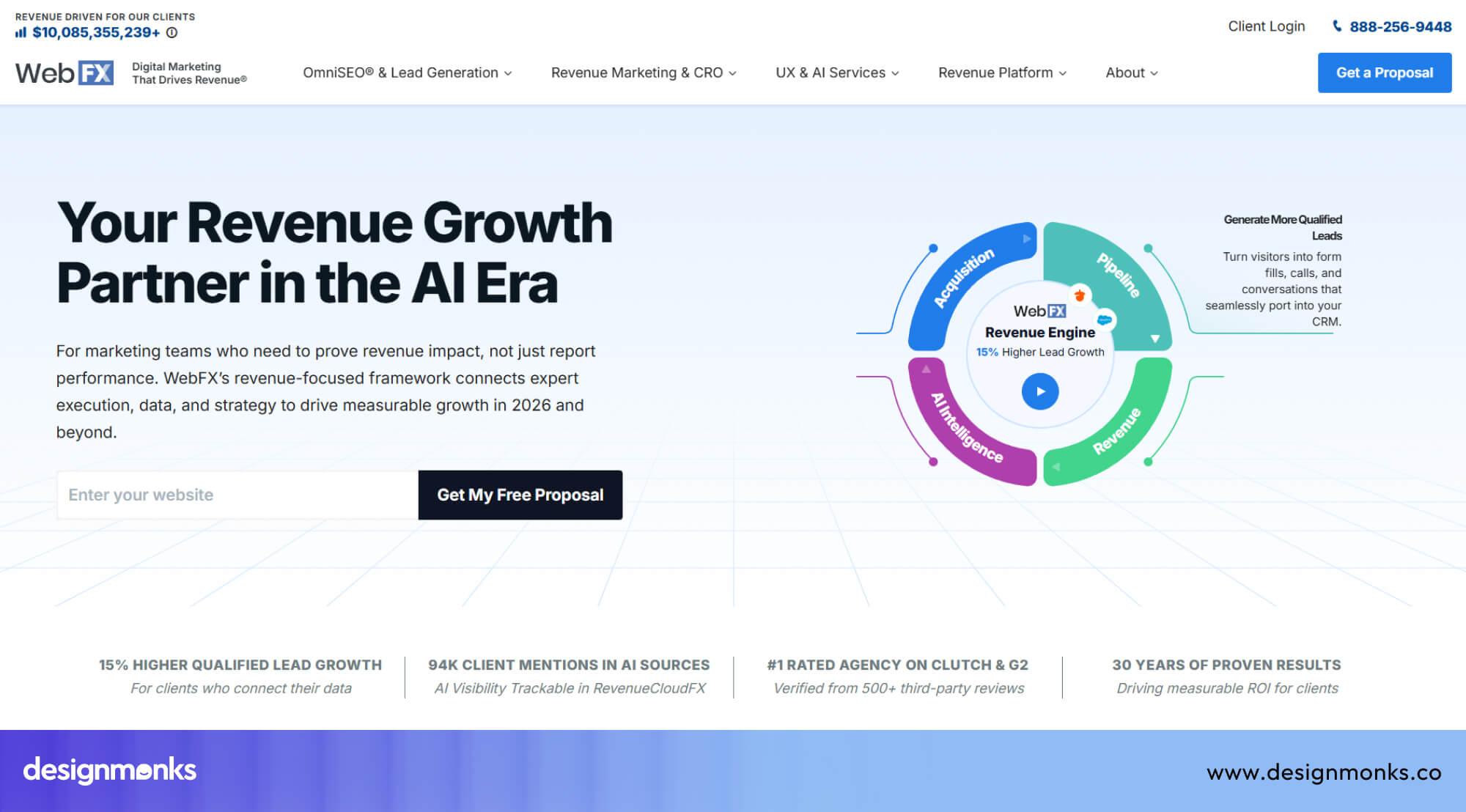
Their proprietary MarketingCloudFX platform ties website activity to actual patient bookings, which is genuinely useful for larger organizations that need to justify marketing spend.
Healthcare clients report consistent improvements in patient inquiry volume and booking rates, with 20% or more ROI improvement documented.
The downside is that WebFX is a large machine. Smaller clinics often report feeling lost in the process. If you want a team that truly knows your clinic's personality and builds around it, a more focused agency will serve you better.
What Does Clinic Website Design Cost?
One of the first questions clinic owners ask is, " How much will this cost?” The honest answer is it depends on your clinic's size and needs. Here's a simple breakdown to help you plan:
Small Clinic Budget ($2,000–$8,000)
Solo practitioners and small single-location clinics don't need to spend a fortune to get a great website. In this range, you can expect a clean custom design on WordPress or Webflow, basic SEO, mobile optimization, and appointment booking integration.
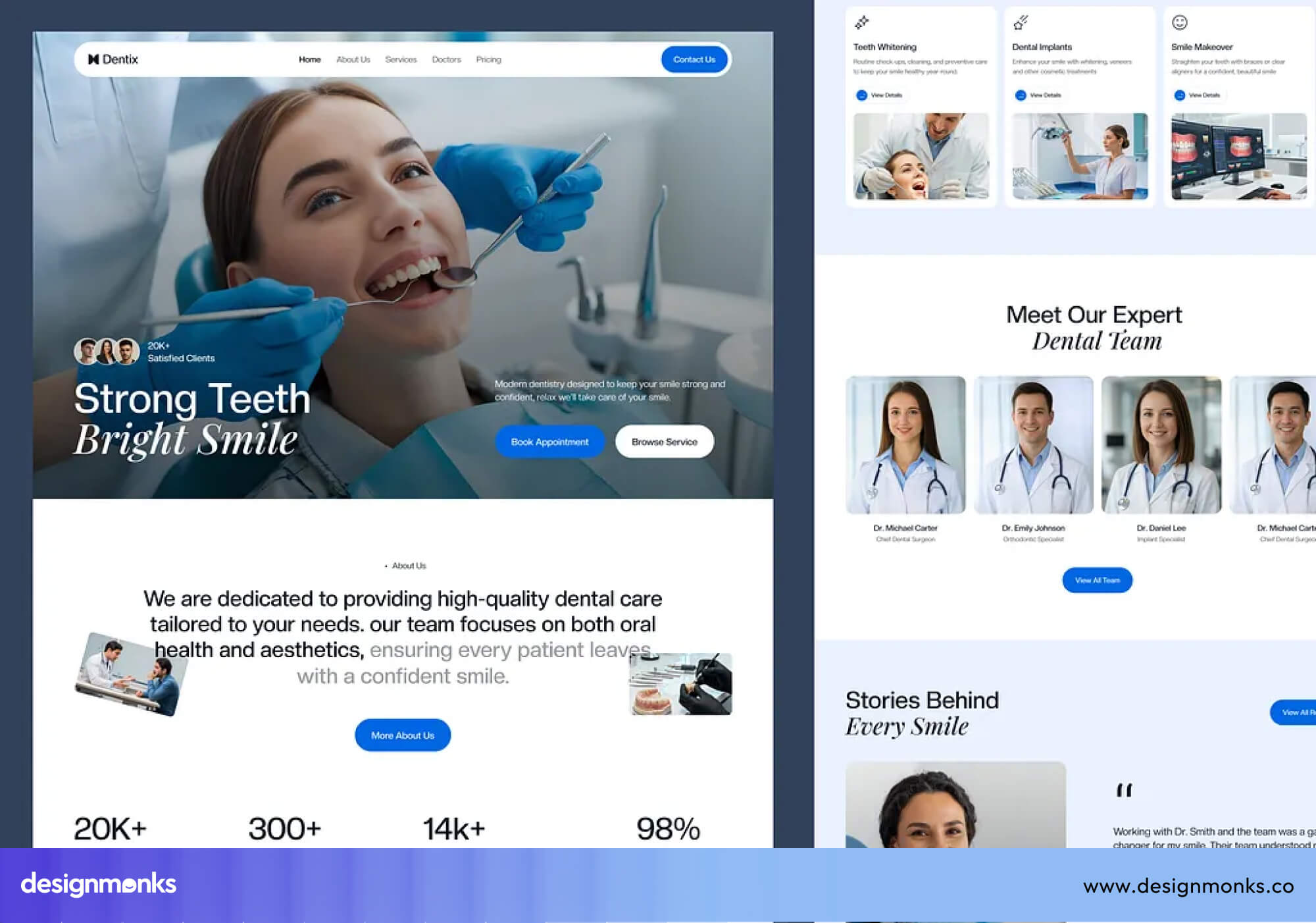
Monthly maintenance, such as hosting, security, and updates, typically runs $100–$300/month. One warning though, avoid suspiciously cheap packages built on generic templates.
They look like savings upfront, but quietly cost you patient trust and bookings over time.
Multi-location Clinic Budget($10,000–$30,000)
More locations mean more complexity. Each branch may need its own local SEO landing page, and your booking system needs to route patients to the right clinic automatically.
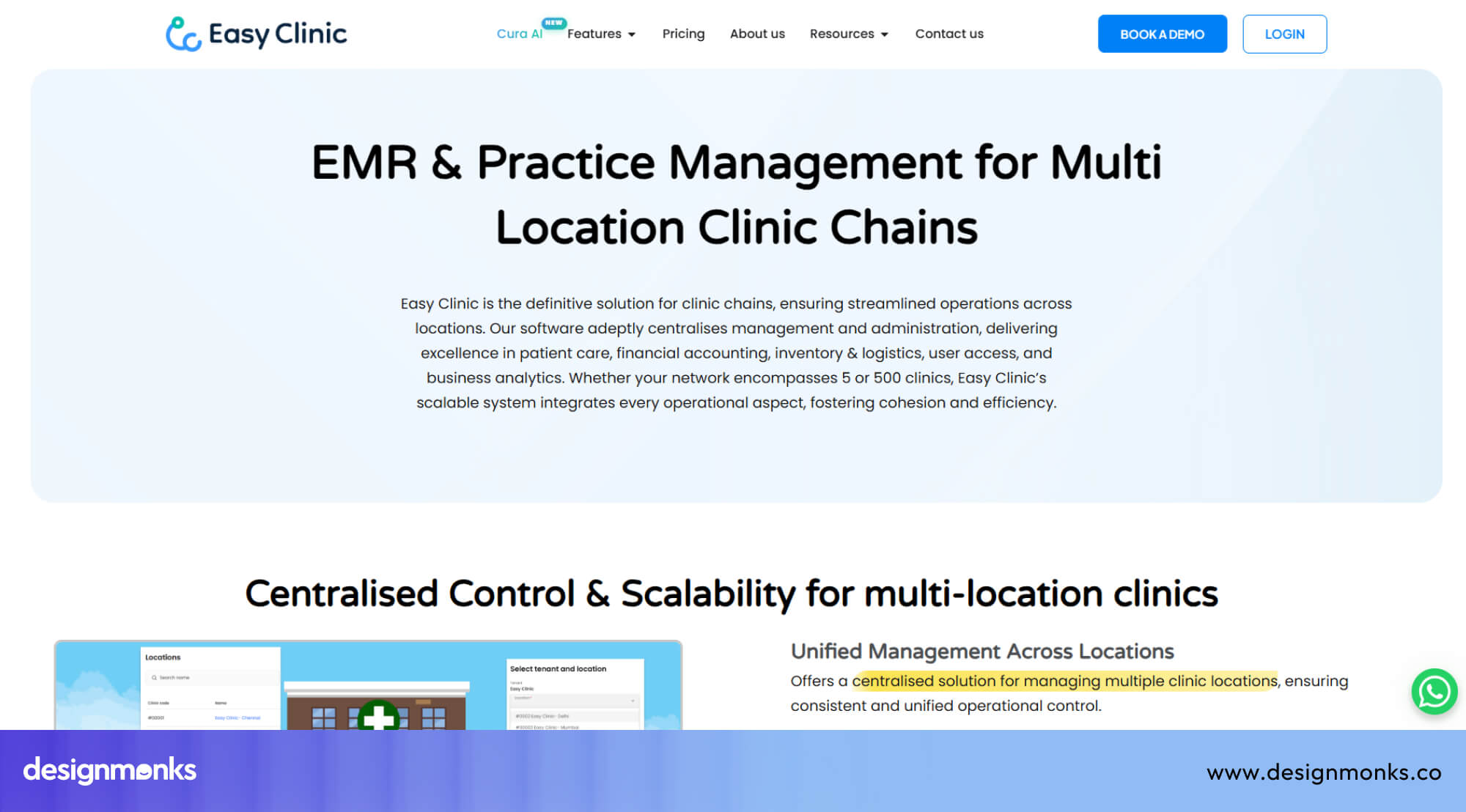
Staff pages, service listings, and content all need to flow through one central CMS that your team can actually manage. It costs more, but a well-built multi-location site pays for itself by growing patient volumes across every branch. Monthly maintenance here runs roughly $300–$800/month.
Enterprise Hospital Budget ($40,000–$150,000+)
At this level, you're not just building a website, you're building a full digital healthcare ecosystem. That means patient portals, real-time EHR integrations, multilingual content, HIPAA-compliant data handling, and accessibility auditing.
Dedicated support teams and ongoing development are part of the package. Monthly retainers typically range from $1,500 to $10,000+, depending on scale and complexity.
Why Do Most Clinic Websites Fail?
Most clinic websites don't fail because of bad intentions, they fail because of small, avoidable mistakes that quietly drive patients away. Here are the most common ones:
Generic Templates
Thousands of clinics use the exact same healthcare template with a different logo dropped in. Patients can feel it immediately, and the site feels impersonal and easily forgettable. If your website looks like everyone else's, patients have no reason to choose you.
Weak CTAs
If there's no clear "Book an Appointment" button sitting above the fold on your homepage, you're losing patients at the very first moment.
Every single page on your site should have one obvious next step. Without it, visitors will wander and then leave.
Bad Mobile UX
Most patients find you on their phones. Tiny buttons, slow load times, and fonts that are hard to read on a small screen. These aren't just minor annoyances. They're conversion killers. So a mobile-first approach isn't optional anymore.
No Local SEO
A beautiful website that nobody can find is useless. Without proper local SEO such as location pages, Google Business Profile integration, and local keywords, patients searching "clinic near me" will land on your competitor's site instead of yours.
Trust Deficit
Stock photos of models in white coats don't build trust, but real photos of your actual team do. Moreover, if your site has no genuine reviews, no doctor profiles, and nothing that proves real humans work there, patients will move on fast.
Slow Pages
Google penalizes slow sites in search rankings. Patients abandon pages that take more than three seconds to load. Fast hosting, compressed images, and clean code aren't extras, they're essentials.
Future of Clinic Website Design
The best clinic websites of 2026 are already being shaped by trends that most clinics haven't caught up to yet. Getting ahead of these shifts now gives your practice a real competitive edge:
AI Scheduling
Static booking forms are becoming outdated fast. AI-powered scheduling assistants can answer patient questions in real time.

They can check provider availability, suggest the right appointment type based on what the patient describes, and confirm the booking. All of this can be done without a single staff member involved. Less front-desk pressure, happier patients, and more bookings completed.
Personalized Content
The next generation of clinic websites won't show every visitor the same page. A first-time visitor sees something different from a returning patient. Someone browsing on a phone in your neighborhood sees location-specific messaging and nearby provider profiles.
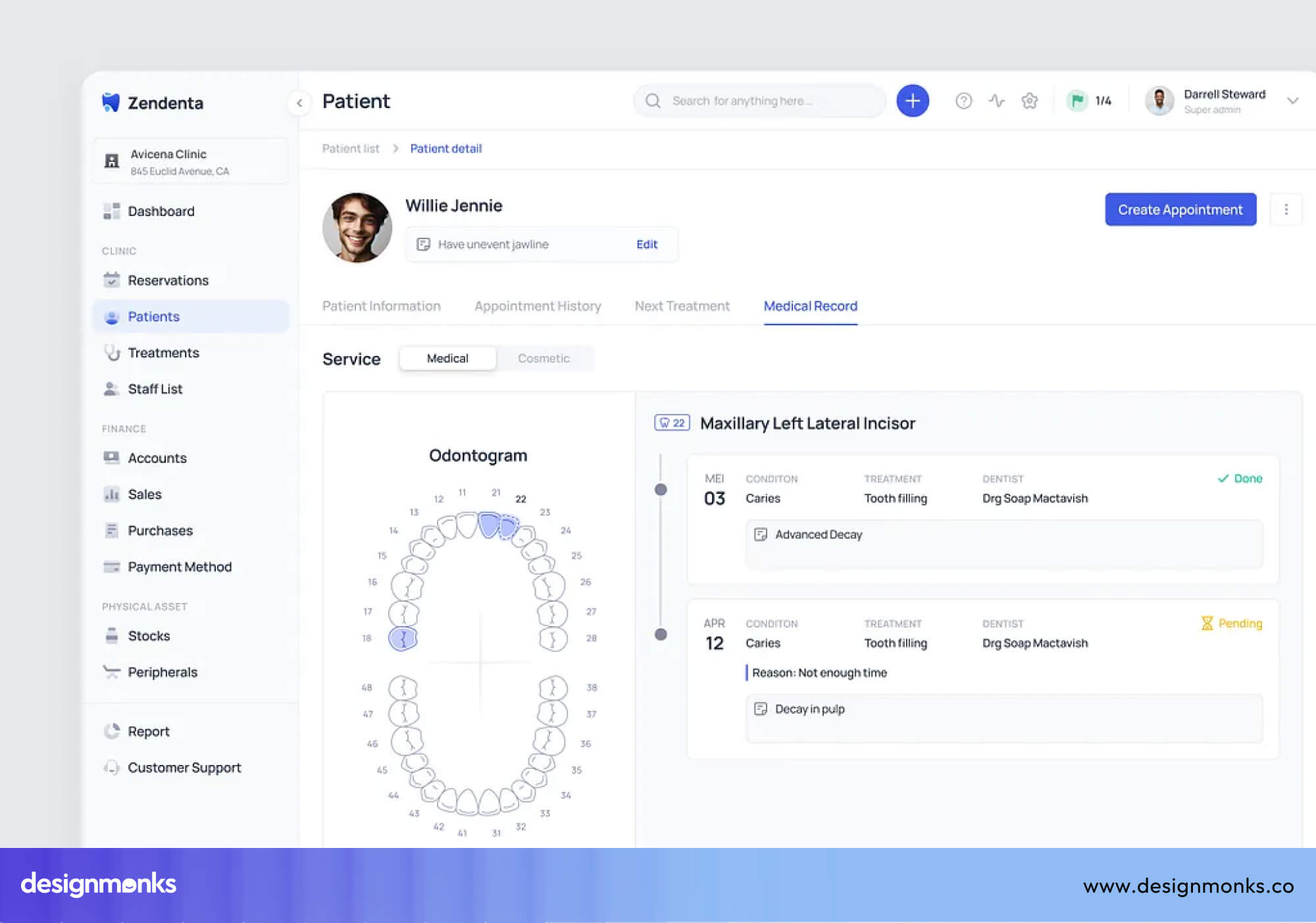
This kind of personalization is already standard in e-commerce and is moving quickly into healthcare. Clinics that adopt it early will see stronger engagement and fewer drop-offs.
Conversational UX
More patients are searching by voice, such as "find a dermatologist near me open Saturday". This is a very different query from typed search, and it needs a different content strategy.
Chatbots on clinic websites are also evolving from basic FAQ tools into genuinely helpful patient assistants. Clinics that optimize for conversational UX now will capture a growing segment of search traffic that their competitors are completely missing.
Conclusion
Your clinic’s website design is one of the most powerful ways to attract new patients. In 2026, first impressions happen fast. Within seconds, people decide if they trust your clinic or not.
When your website is clear, easy to use, and works well on mobile, patients feel more comfortable and are more likely to book. Choosing the right agency plays a big role here. Whether you go with a focused team like Design Monks or a larger agency, the best choice depends on your goals and budget.
So invest in a better website today so you can build trust and more bookings tomorrow.


.avif)
.avif)
.avif)
.avif)


.avif)
.avif)
.avif)
.avif)






.avif)