
Key Takeaways
- Webflow combines visual website building, CMS functionality, and managed hosting.
- Contentful offers headless content management for websites, apps, and platforms.
- Webflow suits marketing websites, while Contentful supports complex digital experiences.
- Webflow includes built-in SEO tools, Contentful requires frontend SEO implementation.
- Compare subscription fees, development costs, and maintenance before choosing either platform.
A website can look perfect on the outside but become a headache behind the scenes when content starts growing. That's one of the reasons the Webflow vs Contentful debate matters a lot. Both platforms help businesses manage digital experiences, but their approaches to design, content, and development are quite different.
Webflow brings website building, visual editing, and content management together. Contentful takes a different route by separating content from presentation. This gives developers more control over how information reaches different platforms.
So, which one deserves a place in your tech stack? Let's compare their features, pricing, SEO capabilities, and flexibility to find the right fit for your business.
What Are Webflow and Contentful?
Webflow and Contentful are content management platforms, but they serve different purposes. Webflow combines website design and content management, while Contentful focuses on organizing and distributing content through APIs.
Understanding this difference will make the rest of the comparison easier:
What Is Webflow?
Webflow is a visual website development platform that lets users design, build, and manage websites without writing code for every element. Its visual Designer gives users control over layouts, typography, colors, animations, and responsive behavior.
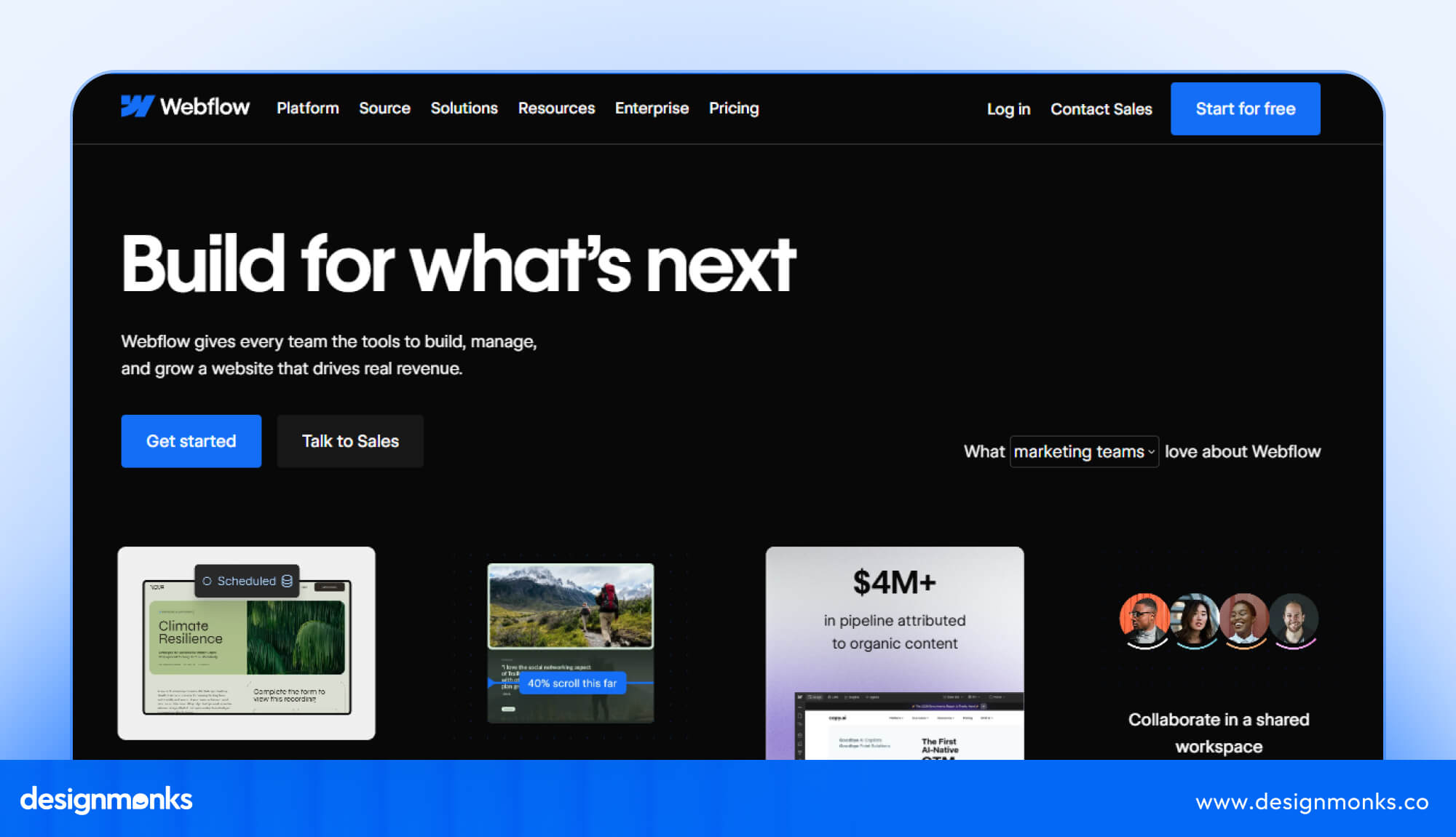
It also includes an integrated CMS for managing dynamic content such as blog posts, team profiles, case studies, and product pages. Users can organize this information into Collections and display it across different website pages.
Webflow also provides managed hosting, publishing tools, and built-in SEO settings. This makes it useful for businesses that want to manage their website's design and content in one place.
What Is Contentful?
Contentful is an API-first headless CMS that helps businesses create, organize, and distribute content across different digital platforms. Unlike a traditional website builder, it doesn't provide a complete visual environment for designing and publishing a website.
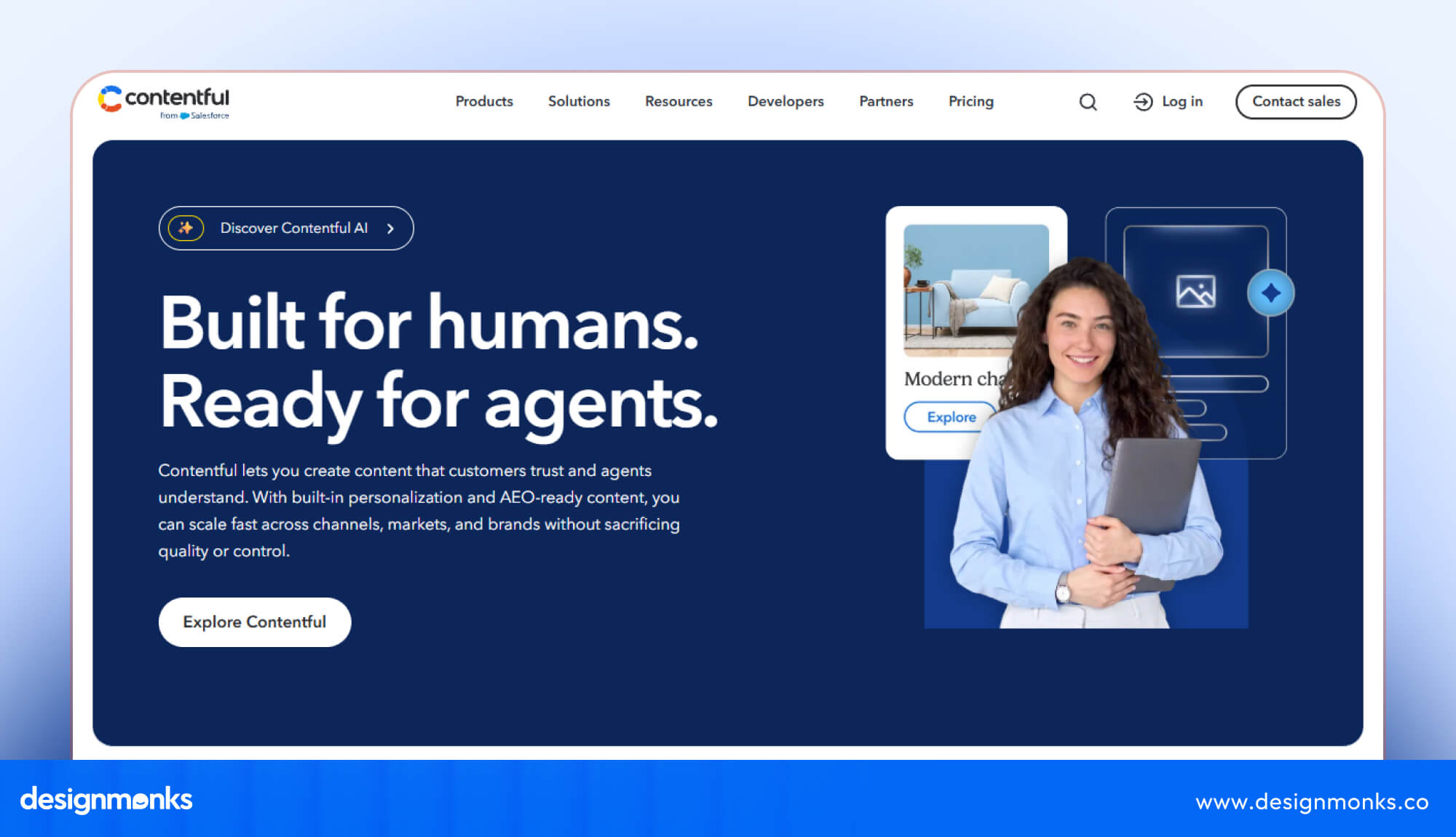
Instead, Contentful stores content in structured entries using content types and fields. Developers can then retrieve this information through APIs and display it using a separately developed frontend.
For example, a business can manage product descriptions, blog posts, and promotional messages in Contentful and deliver them to its website and mobile application. This makes it useful for organizations that need to manage content across multiple channels.
Webflow vs Contentful: Key Differences at a Glance
The biggest difference is how each platform handles website development and content delivery. Webflow offers a more connected website-building experience, while Contentful separates content management from frontend development.
Webflow vs Contentful: Feature-by-Feature Comparison
Looking at individual features helps explain where these platforms differ in everyday use. Let's compare the capabilities that matter most when building and managing a website:
Website Design and Visual Editing
Webflow has a clear advantage when it comes to visual website design. Its Designer lets users create page layouts, adjust spacing, customize typography, and build responsive designs through a visual interface.
Users can see how their changes affect the website without developing every element separately.
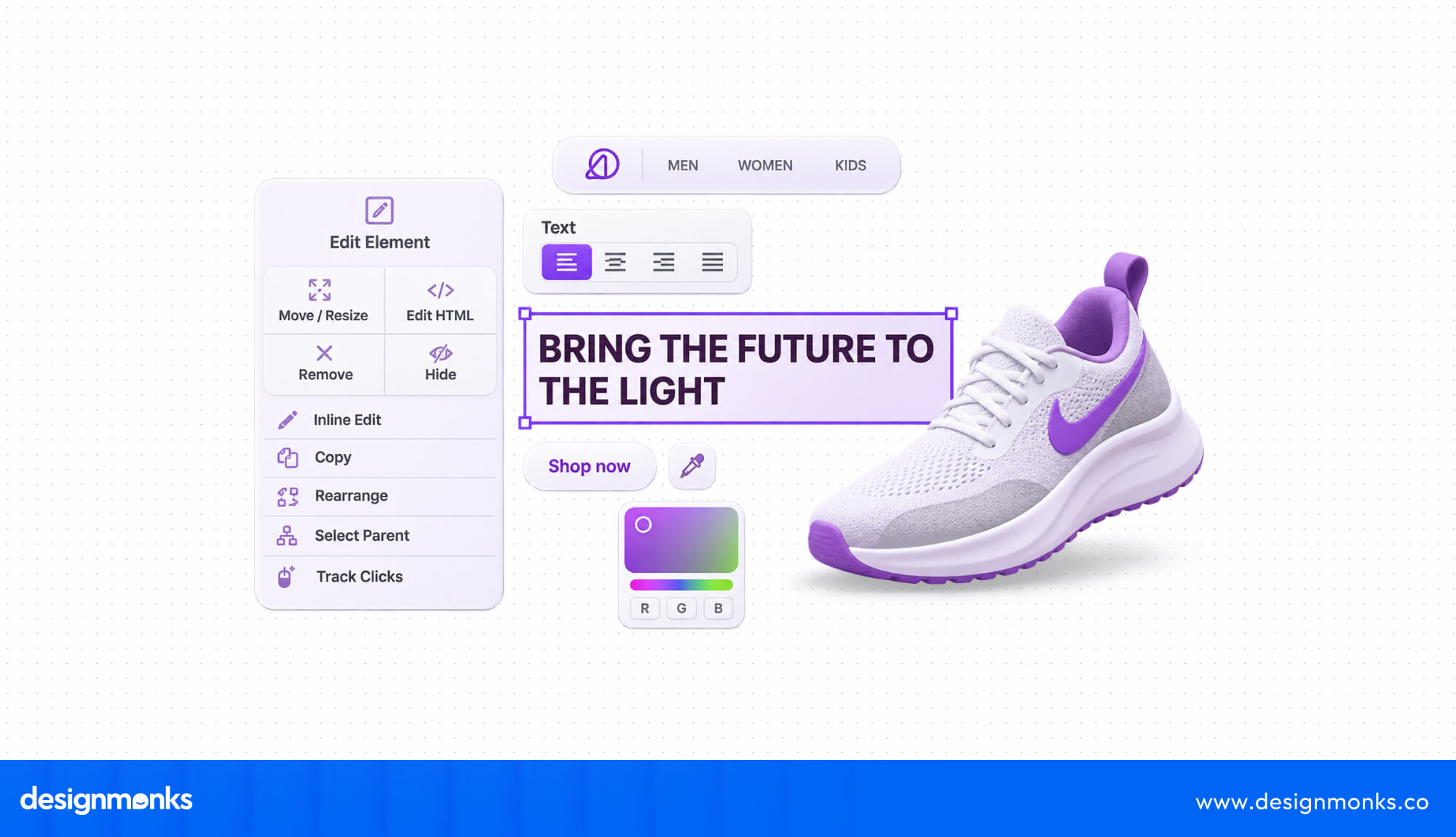
Contentful takes a different approach. It provides content editing and preview capabilities, but it doesn't offer Webflow's complete visual website-building environment.
Developers must connect the content to a frontend built with technologies such as React or Next.js.
This makes Webflow more convenient for designers and marketing teams who want direct control over website appearance. Contentful is better suited to projects where developers need freedom to build custom digital experiences.
CMS and Content Management
Both platforms help teams organize website content, but their content structures work differently.
Webflow uses Collections to manage repeating content, such as blog articles, team members, and customer testimonials. Each Collection can contain custom fields for text, images, links, and other information.
Users can then connect these fields to website layouts.
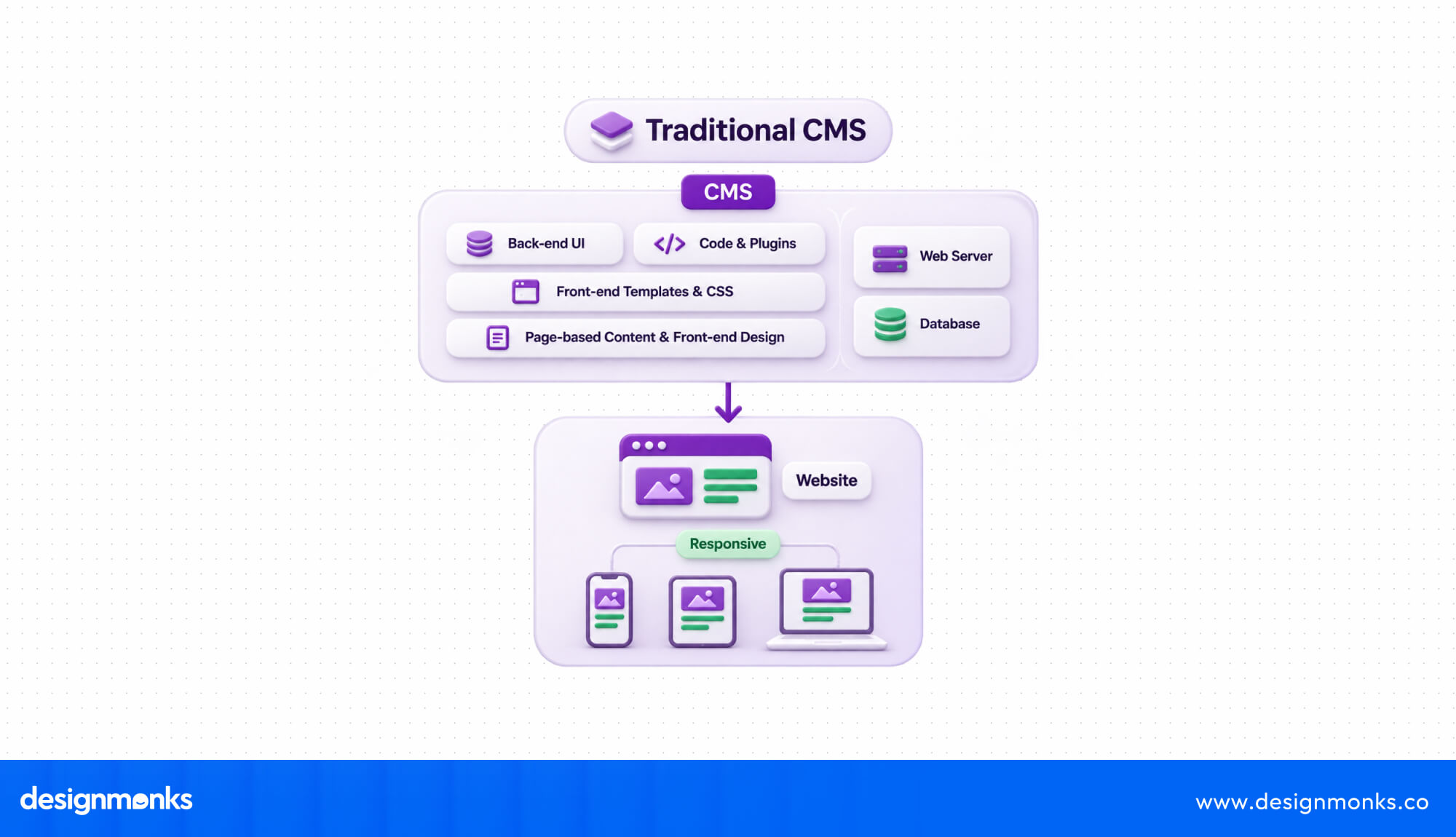
Contentful uses content types and entries. A content type defines the structure of information, while an entry contains the actual content. For example, a blog article content type might include a title, author, featured image, category, and body.
Contentful also supports relationships between content entries. This makes it easier to reuse information across different channels.
Webflow is straightforward for managing content within a website. Contentful offers more flexibility when the same information needs to appear across multiple websites, applications, or digital products.
Content Editing and Publishing Workflow
The editing experience can make a big difference for teams that publish content regularly.
Webflow allows users to update website content through its Editor and visual editing tools. A marketing team can change text, replace images, and publish updates without asking developers to modify every page.
Designers can also work directly in the Designer when larger layout changes are needed.
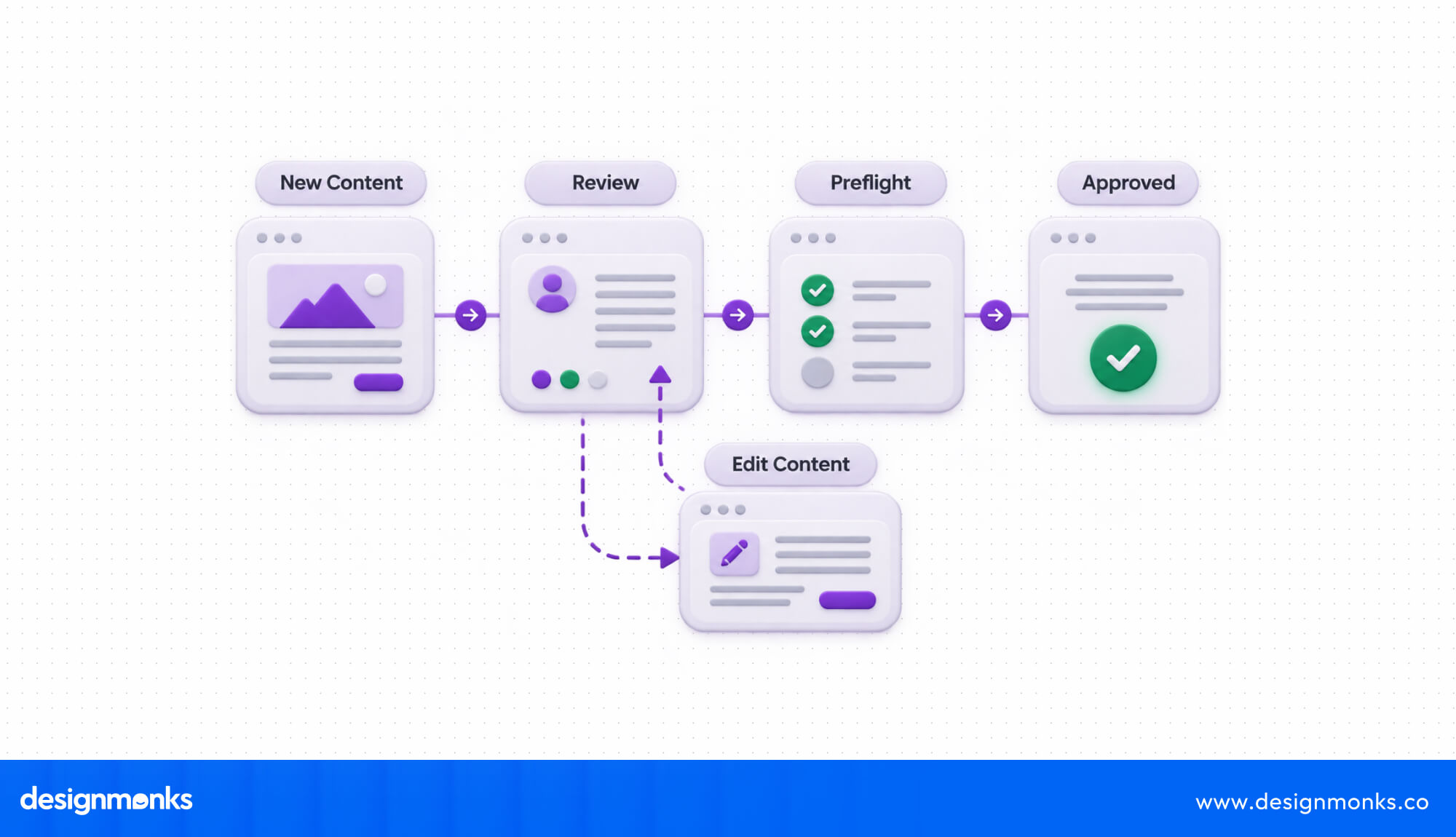
Contentful provides a content workspace where editors create entries, organize information, and manage publishing. Teams can use content previews and collaboration features to review changes before publishing.
However, the appearance of the final content depends on the connected frontend.
For teams that want to make quick visual changes, Webflow offers a more direct workflow. Contentful is more suitable when several teams manage structured content that appears across different digital platforms.
Customization and Development Flexibility
Webflow makes website customization accessible through its visual tools. Users can adjust layouts, create interactions, customize responsive behavior, and add custom HTML, CSS, or JavaScript when needed.
However, developers still work within Webflow's platform structure. This may limit some highly customized applications or projects that require complete control over the underlying frontend architecture.
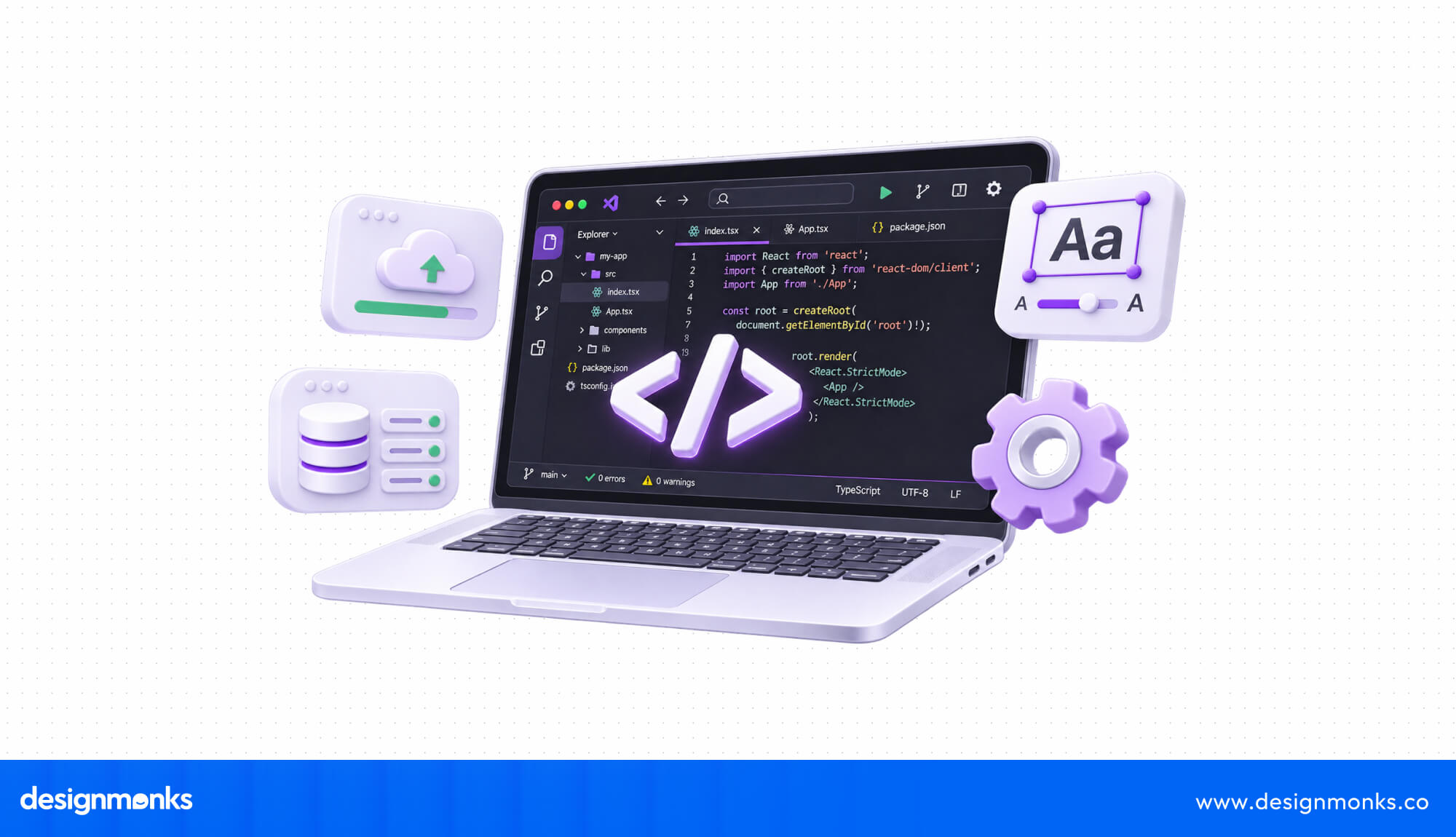
Contentful gives developers more freedom because it doesn't dictate how the frontend must be built. They can use React, Next.js, or other technologies and retrieve content through REST or GraphQL APIs.
Webflow also offers APIs for working with CMS content, so it isn't limited to closed integrations. Still, Contentful is designed around a headless approach from the beginning.
Choose Webflow for convenient visual customization. Choose Contentful when frontend flexibility and custom development are higher priorities.
SEO Capabilities and Website Performance
Both platforms can support search engine optimization, but the amount of technical work required is different.
Webflow includes several built-in SEO controls. Users can edit meta titles and descriptions, customize URLs, manage redirects, add image alt text, and configure XML sitemaps. It also supports custom code for implementing additional SEO requirements.
Contentful can support the same SEO requirements, but developers must build the necessary functionality into the frontend.
Website performance also depends on how each website is built. Webflow provides managed hosting and infrastructure, while Contentful websites depend on the frontend framework, hosting provider, caching, and implementation quality.
Webflow is generally easier for standard website SEO. Contentful offers more technical flexibility, but developers need to handle more of the implementation.
Integrations and API Capabilities
Both platforms support external integrations, but their approaches differ. Webflow connects with marketing, analytics, and automation tools. Its APIs also let developers manage CMS content programmatically.
Contentful is built around APIs, making it easier to deliver content to websites, apps, and other platforms. It can connect with CRM systems, ecommerce tools, and custom frontend frameworks.
Webflow suits common website integrations, while Contentful is better for projects that need API-driven content delivery across multiple channels.
Hosting, Security, and Scalability
Webflow includes managed hosting, SSL support, and content delivery, so businesses don't need separate website hosting. This makes website maintenance easier because design, content, and hosting stay in one place.
Contentful provides cloud-based content management, but businesses must arrange separate frontend hosting. They also need to manage deployments, security, caching, and performance.
Both can support business growth. Webflow suits growing websites, while Contentful works better when content needs to reach multiple websites, apps, and digital channels.
Webflow vs Contentful: Pricing Comparison
Pricing is an important factor when choosing between Webflow and Contentful. Both offer free plans, but their paid options differ:
Webflow Pricing
Webflow offers three main Site plans:
- Starter: Free. Build and publish basic websites using a Webflow subdomain.
- Basic: $15/month. Billed annually, it supports custom domains and up to 300 static pages. But it does not include CMS or e-commerce features.
- Premium: $25/month. Billed annually, it includes CMS features, up to 20,000 CMS items, and 40 CMS Collections.
Webflow also offers Workspace plans. Core costs $19/month, while Growth costs $49/month, both billed annually. These plans add team collaboration and project management features.
Remember, Site plans cover website hosting, while Workspace plans support team workflows.
Contentful Pricing
Contentful offers three main Platform plans:
- Free: $0/month. Includes up to 10 users, 100,000 API calls, and 50 GB of monthly CDN bandwidth.
- Lite: $300/month. Supports up to 20 users, one million API calls, and 100 GB of monthly CDN bandwidth. It also includes collaboration and publishing features.
- Enterprise: Custom pricing. Offers advanced security, custom usage limits, additional content spaces, and dedicated support.
Contentful also charges extra for additional Lite Spaces. Check the included resources and possible add-on costs before choosing a plan.
Which Platform Offers Better Value for Money?
Webflow offers better value for businesses that want website design, CMS functionality, and hosting in one place. Its Premium Site plan starts at $25/month, making it a practical option for content-rich business websites.
Contentful's paid Lite plan starts at $300/month, and businesses may also need separate frontend development, hosting, and maintenance. However, its flexibility can justify the cost for complex content workflows and multichannel projects.
Overall, Webflow suits standard websites, while Contentful better serves larger, developer-led digital experiences.
Pros and Cons of Webflow and Contentful
Both platforms have useful features, but each comes with limitations. Understanding these trade-offs can help you avoid choosing a platform that doesn't match your team's needs.
Webflow Pros and Cons
Pros:
- Visual website design makes customization easier.
- Integrated CMS and hosting simplify website management.
- Built-in SEO controls support common optimization tasks.
- Marketing teams can publish updates without relying on developers for every change.
Cons:
- Developers have less control over the underlying infrastructure.
- Some advanced projects require custom code or external tools.
- CMS features and usage limits depend on the selected plan.
Contentful Pros and Cons
Pros:
- API-first architecture supports different frontend technologies.
- Structured content makes information easier to organize and reuse.
- Content can be delivered across websites, applications, and other channels.
- Developers have greater control over the frontend experience.
Cons:
- Building a complete website requires a separate frontend.
- Initial setup can be more technical.
- Frontend hosting and maintenance require additional planning.
- Costs can increase as usage and team requirements grow.
Webflow vs Contentful: Which Platform Is Better for Different Use Cases?
The best platform depends on what you're building, who will manage it, and how content needs to reach your audience:
Best for Marketing Websites and Landing Pages
Webflow is generally the better choice for marketing websites and landing pages. Its visual Designer allows teams to create branded experiences, update content, and publish campaigns without managing a separate frontend.
It's especially useful for businesses that frequently change page layouts, promotional content, and website messaging.
Best for Content-Heavy Websites and Blogs
Both platforms can support content-heavy websites, but their strengths differ. Webflow works well for blogs and editorial websites with manageable content structures and a connected visual publishing workflow.
Contentful is more suitable when content needs complex relationships, structured fields, and distribution across several platforms. It can also support larger editorial operations that require centralized content management.
Best for SaaS and Digital Products
For a SaaS company, Webflow can be a practical choice for the marketing website, landing pages, and blog. Contentful can manage content that needs to appear inside the product, on the website, and across other digital experiences.
The right choice depends on whether the project mainly needs a marketing website or a centralized content system for several digital products.
Best for Enterprise and Multichannel Content Management
Contentful is a strong option for enterprises that distribute content across websites, mobile applications, and other digital channels. Its structured content and API-based delivery help teams maintain consistent information across different experiences.
Webflow can also support enterprise marketing websites through its enterprise features, collaboration tools, and managed website environment.
However, organizations with complex multichannel content requirements may find Contentful more suitable.
Can You Use Webflow and Contentful Together?
Yes, businesses can use Webflow and Contentful together when they need both visual website development and centralized content management. However, connecting them isn't necessarily a simple, built-in setup.
For example, a company might use Contentful to manage blog content and product information, then connect that content to a custom frontend. Webflow could separately manage the marketing website.
Another option is to build a custom integration that retrieves Contentful content through its APIs and displays it within an appropriate website experience.
This requires development work and careful planning around content synchronization, previews, publishing, and SEO. An expert agency like Design Monks can help you with this custom work and use both platforms together.
Using both platforms makes sense when their separate strengths solve real business needs. For a simple website, combining them may add unnecessary complexity and cost.
Webflow vs Contentful: Which One Should You Choose?
The choice between Webflow and Contentful comes down to how you want to build and manage your digital experience.
Choose Webflow if you need a visually designed website, integrated CMS, managed hosting, and straightforward publishing. It is especially useful for marketing websites, landing pages, business websites, and blogs where design and content updates happen regularly.
Choose Contentful if you need structured content that can be delivered across websites, mobile apps, and digital products. It is a stronger option for organizations with developer resources and more complex content requirements.
You can also consider a hybrid setup if your business needs both visual website development and centralized content management. Before deciding, consider your team's technical skills, budget, website complexity, and long-term content strategy.
FAQs
Is Webflow better than Contentful?
Neither platform is better for every project. Webflow is better for building and managing websites visually. Contentful is better for structured content management and API-based delivery across multiple digital channels.
Is Contentful a website builder?
No. Contentful is a headless CMS, not a traditional visual website builder. It manages structured content and delivers it through APIs. You need a separate frontend to display that content as a complete website.
Is Webflow considered a headless CMS?
Webflow is primarily an integrated website builder and CMS. It provides APIs for working with CMS content, but its standard approach combines content management with website design and publishing rather than separating the frontend completely.
Does Contentful require coding?
No, content editors can create and manage content through Contentful's interface without coding. However, developers are generally needed to build the frontend, connect APIs, and configure how content appears on a website or application.
Which platform is better for SEO, Webflow or Contentful?
Webflow is easier for standard website SEO because it includes built-in controls for metadata, URLs, redirects, and sitemap settings. Contentful can support strong SEO, but developers must implement the necessary features in the frontend.
Can Contentful replace Webflow?
Yes, Contentful can replace Webflow as the content management system behind a website. However, it cannot replace Webflow's visual website-building experience on its own. You will need a separate frontend and hosting setup.
Can Webflow handle enterprise websites?
Yes. Webflow offers enterprise-level website management, security, collaboration, and governance features. It can work well for enterprise marketing websites, although highly customized applications may need additional development tools.
Is Contentful suitable for small businesses?
Contentful can work for small businesses with specific content management needs and developer support. However, its technical setup and pricing may be more than a small business needs. Webflow is often simpler for a standard business website.
Conclusion
Choosing between Webflow and Contentful depends on your website goals, budget, and team's technical skills.
Webflow is a practical choice for businesses that want visual design tools, built-in CMS features, and managed hosting in one platform. Contentful is better suited to projects that need flexible content management and delivery across multiple digital channels.
Before deciding, consider your development resources, content workflow, and long-term needs. Need help bringing your website to life? Design Monks can help you plan, design, and build a digital experience using either Webflow or Contentful, customized to your business goals.