.svg)




Key Takeaways
- Formative UX research starts by uncovering real user needs, behaviors, and pain points.
- These insights help teams replace assumptions with evidence before making design decisions.
- Teams use interviews, observations, surveys, and other methods to explore problems.
- By analyzing recurring patterns, researchers turn findings into clear design opportunities.
- Research insights ultimately guide better products, reduce risks, and improve user experiences.
Imagine spending months building a feature, only to discover users never wanted it. Formative UX research exists to prevent exactly that. It helps teams explore user needs before writing code or creating polished designs. It reduces risk while increasing confidence in every decision.
The goal isn't to validate an idea you've already chosen. It's to discover opportunities you may have overlooked. Through interviews, observation, field studies, and other research methods, teams replace opinions with evidence and build products around genuine user problems.
Whether you're launching, redesigning, or improving a product, this guide shows how formative UX research leads to smarter design decisions. Keep reading!
What Is Formative UX Research?
Formative UX research is a type of exploratory research conducted before or during the design process. It is done to understand user needs, behaviors, and pain points before a solution has been built or finalized.
Instead of testing whether something works, formative research asks a more fundamental question: what should we even be building, and for whom?
The term "formative" comes from the idea of forming a product or design direction. It sits early in the UX research lifecycle, often before wireframes, prototypes, or even a clear feature list exists.
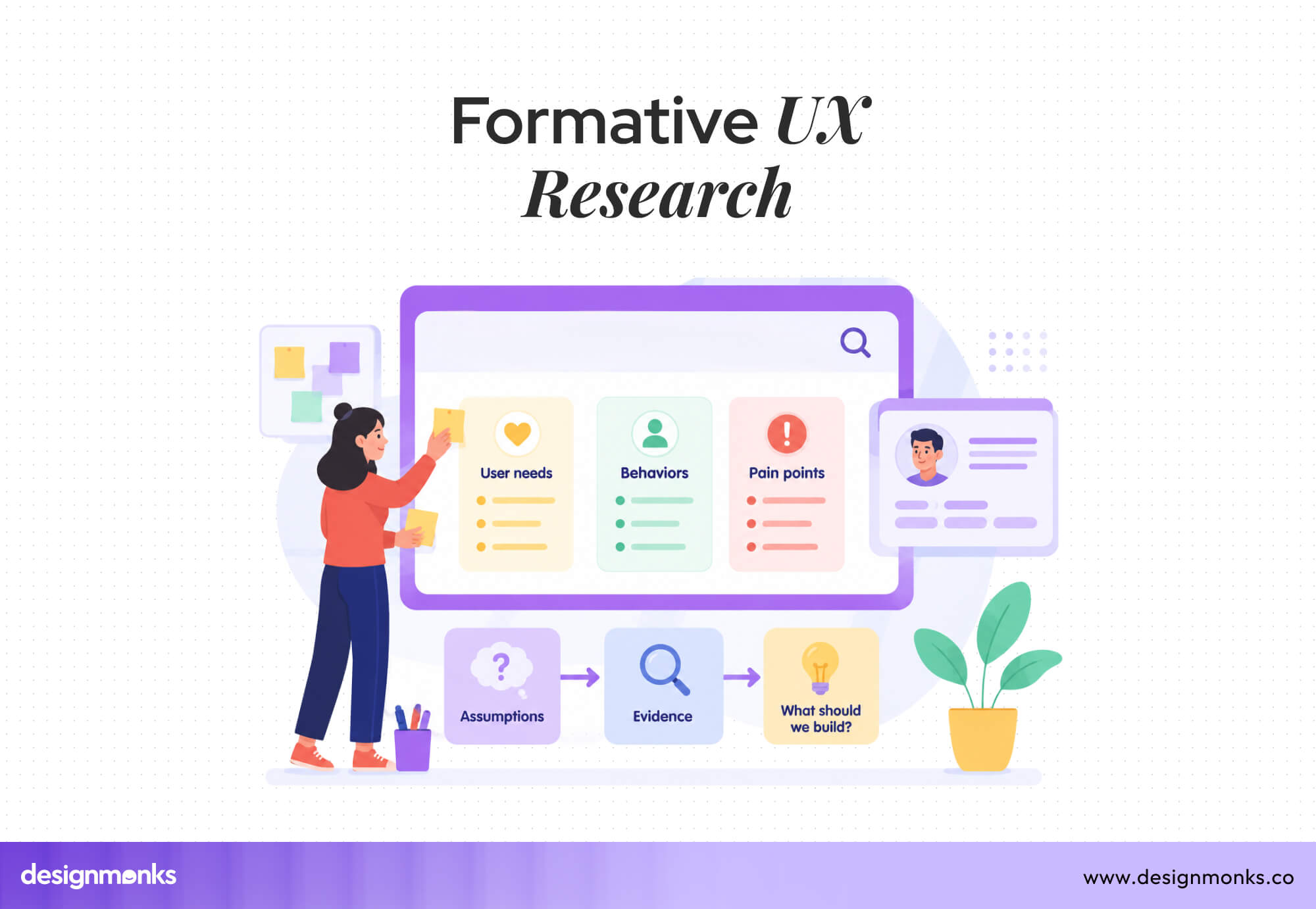
Teams use it to reduce guesswork, replace assumptions with evidence, and make sure design decisions are grounded in real user needs rather than internal opinions about what users probably want.
Formative research draws heavily from generative and design research traditions. It's less concerned with measuring performance (how fast, how easy, how satisfying) and more concerned with discovery: What problems do people actually have? What are they doing today to work around those problems?
These research findings become the raw material for product strategy and design decisions.
Primary Goals of Formative Research
Teams use formative research before building a product to understand users and reduce costly mistakes. Instead of relying on assumptions, they gather real insights to guide design decisions. The main goals are to:
- Identify problems users face in their daily tasks.
- Discover pain points hidden behind data or assumptions.
- Find unmet needs that current solutions don't address.
- Spot new opportunities for better products or features.
Formative research is about exploring, not proving. It helps teams uncover new ideas instead of confirming existing ones.
Why It Matters in Product Design
Designing without user research is a risky guess. Formative research helps teams make smarter decisions by understanding real user needs before development begins.
When products are built around user insights from the start, they require fewer changes later. It also makes usability testing more effective because the product is already based on real problems, not assumptions.
In short, formative research reduces risk and leads to better product decisions.
Formative vs Summative UX Research
Formative and summative UX research both improve products, but they serve different purposes. Let's check out their key differences:
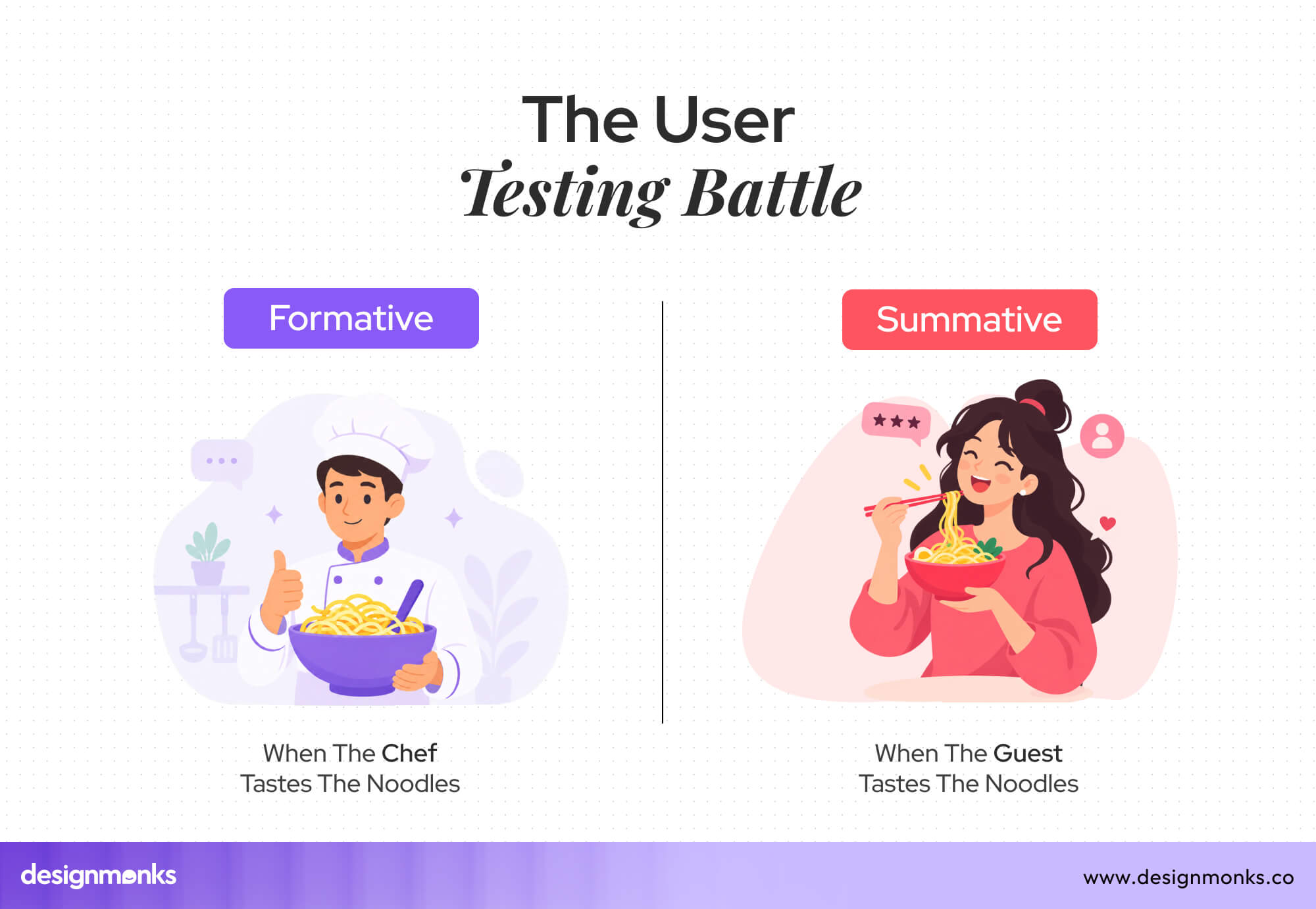
Formative research produces the raw material, such as themes, pain points, and mental models, that inform what gets designed. Summative research then evaluates whether the resulting design actually solves the problem it was meant to solve.
When to Use what?
Use formative UX research when you need to understand the problem before building a solution. It's most useful when:
- Launching a new product or service.
- Exploring ideas for a new feature.
- Entering a new market or audience.
- Redesigning an existing product.
- Learning about user needs, behaviors, and pain points.
- Setting product strategy before design and development begin.
Use summative research when you already have a design or product and need to evaluate how well it performs. It's ideal for:
- Testing wireframes, prototypes, or live products.
- Measuring usability and task success.
- Finding usability issues before or after launch.
- Validating design decisions with real users.
- Comparing different design options through UX testing.
- Improving the product based on research findings.
Can They Be Used Together?
Yes. In fact, the best UX teams use both throughout the product lifecycle. They begin with formative research to understand users and shape ideas. Once a prototype or product is ready, they use summative research and usability testing to validate the experience.
The results often reveal new questions or opportunities, leading to another round of formative research. This continuous cycle helps teams keep improving their products instead of treating research as a one-time activity.
When Should You Conduct Formative UX Research?
Formative UX research is most valuable whenever you're making important product decisions. While it's commonly used at the beginning of a project, it can provide valuable insights throughout the product lifecycle:
Before Designing
Start with formative research before creating wireframes or prototypes. This helps you understand user needs, pain points, and goals. It gives your team a clear direction before any design work begins.
At this stage, the focus is on learning, not validating. The insights you gather help shape product strategy and reduce assumptions before design starts.
During Ideation
As your team explores different ideas, research helps identify which concepts solve real user problems. Early feedback prevents teams from investing time in ideas that seem promising but don't match user needs.
It also helps prioritize ideas with the greatest value before moving into design.
Before MVP Development
Before building an MVP, validate that your core idea solves a genuine problem. It's much easier and less expensive to adjust an idea before development than to rebuild features after launch.
Research at this stage confirms whether your solution addresses a real user need. It also helps prioritize the features that will deliver the most value in the first release.
During Feature Discovery
Formative research doesn't stop after launch. When planning new features, talk to users, observe their workflows, and uncover unmet needs. These insights help you prioritize features that deliver real value instead of adding unnecessary complexity.
This keeps your product aligned with changing user needs as the market evolves. Instead of adding features based on assumptions, you build improvements backed by real user insights.
Common Formative UX Research Methods
Formative UX research includes a variety of methods, each designed to answer different questions about your users. While no single method works for every project, teams often combine several approaches to build a complete picture of user needs, behaviors, and opportunities:
User Interviews
User interviews are often the first step in formative research. By speaking directly with users, you can understand their goals, frustrations, motivations, and decision-making processes.

These one-on-one conversations reveal insights that data and analytics alone cannot explain, making interviews the foundation of many UX research projects.
Contextual Inquiry
Once you understand what users say, the next step is to observe what they actually do. Contextual inquiry places researchers in the user's natural environment.

They can watch real workflows, habits, and challenges. This often uncovers problems users don't mention because they've become part of their daily routine.
Field Studies
Field studies take observation a step further. Instead of focusing on a single task, they explore how users interact with products in their everyday environment over a longer period.
This broader view helps teams understand the context surrounding user behavior and discover factors that influence their decisions.
Focus Groups
After gathering individual insights, focus groups help researchers compare opinions across multiple participants.
Group discussions are useful for exploring new ideas, understanding different perspectives, and identifying common themes. However, they work best when guided by a skilled moderator who encourages everyone to contribute.
Diary Studies
Some user behaviors can't be observed in a single session. Diary studies ask participants to record their experiences over several days or weeks.
This helps researchers understand long-term habits, recurring challenges, and changing needs. They're especially useful for products people use occasionally or over extended periods.
Surveys (Exploratory)
After exploring user experiences in depth, teams often use exploratory surveys to gather feedback from a larger audience. Open-ended survey questions help confirm whether many users share the themes found in interviews, observations, or diary studies.

This broader perspective helps researchers identify recurring patterns and decide which areas deserve deeper investigation.
Competitive UX Research
Finally, competitive UX research looks beyond your own product. By studying how users interact with competing solutions, teams can identify unmet needs, understand user expectations, and uncover opportunities to create a better experience.
The goal isn't to copy competitors but to learn where your product can stand out.
The Formative UX Research Process
A successful formative research study follows a clear process. While every project is different, these six steps help teams collect meaningful insights and turn them into better product decisions:
Define Research Goals
Start by deciding what you want to learn. Clear research goals keep the study focused and help you choose the right participants and research methods. Instead of asking broad questions, focus on specific objectives related to your users or product.
Recruit Participants
Next, recruit people who match your target audience. The quality of your participants has a direct impact on the quality of your findings. Speaking with the right users leads to more accurate and useful insights.
Choose Methods
Select the methods that best support your research goals. User interviews are ideal for understanding motivations, while observations, surveys, or diary studies may be better for exploring behaviors or gathering broader feedback. Many teams combine multiple methods to gain a more complete picture.
Conduct Research
Run interviews, observations, or other research sessions in a consistent way. Encourage participants to speak freely, ask follow-up questions, and avoid leading them toward a specific answer. The goal is to understand their real experiences, not confirm your assumptions.
Analyze Findings
Once the research is complete, organize your notes and look for recurring themes. Group similar observations together to identify common pain points, behaviors, and opportunities. These patterns are often more valuable than individual comments.
Turn Insights into Design Decisions
The final step is putting your findings into action. Use the insights to refine user personas, improve product requirements, prioritize features, or adjust your design direction. Research creates value only when it leads to better decisions.
Questions to Ask During Formative UX Research
The quality of your research depends on the quality of your questions. Instead of asking questions that lead users toward an answer, use open-ended questions that encourage them to share real experiences.
The goal is to understand what users do, why they do it, and where they struggle. Here are some sample questions you can ask:
Behavior-Based Questions
- Can you walk me through the last time you completed this task?
- What steps did you take?
- Which part took the most time?
- Did you face any challenges?
Motivation Questions
- What were you trying to achieve?
- Why did you choose this approach?
- What matters most when completing this task?
- What would make the experience better?
Pain Point Questions
- What frustrates you most about this process?
- Which step feels the hardest?
- Have you created any workarounds?
- What would you change if you could?
Workflow Questions
- What happens before you start this task?
- What tools do you use along the way?
- What happens after you finish?
- Is there anything that interrupts your workflow?
Real Examples of Formative UX Research
Formative UX research isn't just about collecting insights, it shapes product decisions before development begins. The following examples show how different companies used early research to identify user needs, improve experiences, and build better products:
SaaS Dashboard Example
When Design Monks redesigned the Netra dashboard, the team began with user interviews and workflow observations instead of jumping straight into the interface.
The research revealed that users weren't struggling because of missing features, they were overwhelmed by too much information and had difficulty finding the metrics they needed most.
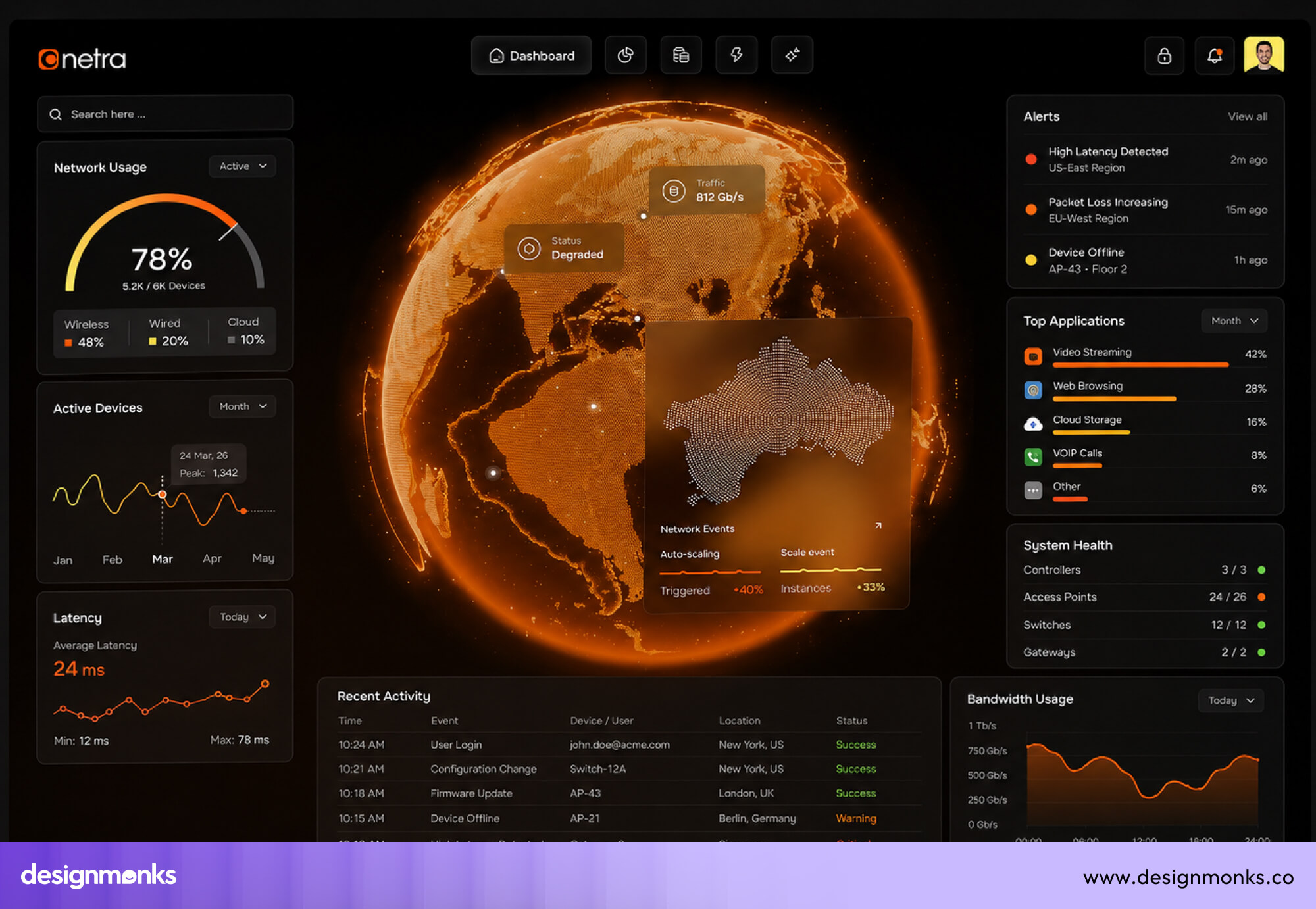
Instead of adding more functionality, Design Monks reorganized the dashboard to better align with users' daily workflows. Frequently used metrics were given priority, navigation was simplified, and visual clutter was reduced to help users focus on the information that mattered.
By letting research guide every design decision, the team transformed a complex dashboard into a more intuitive and efficient experience that better supported users' day-to-day work. And the result was a huge improvement in user engagement.
Mobile Banking App
When exploring new banking features, Monzo relied on user interviews and diary studies to understand customers' financial habits. Rather than focusing only on transactions, the research uncovered that users wanted clearer insights into their spending and better ways to manage their money.
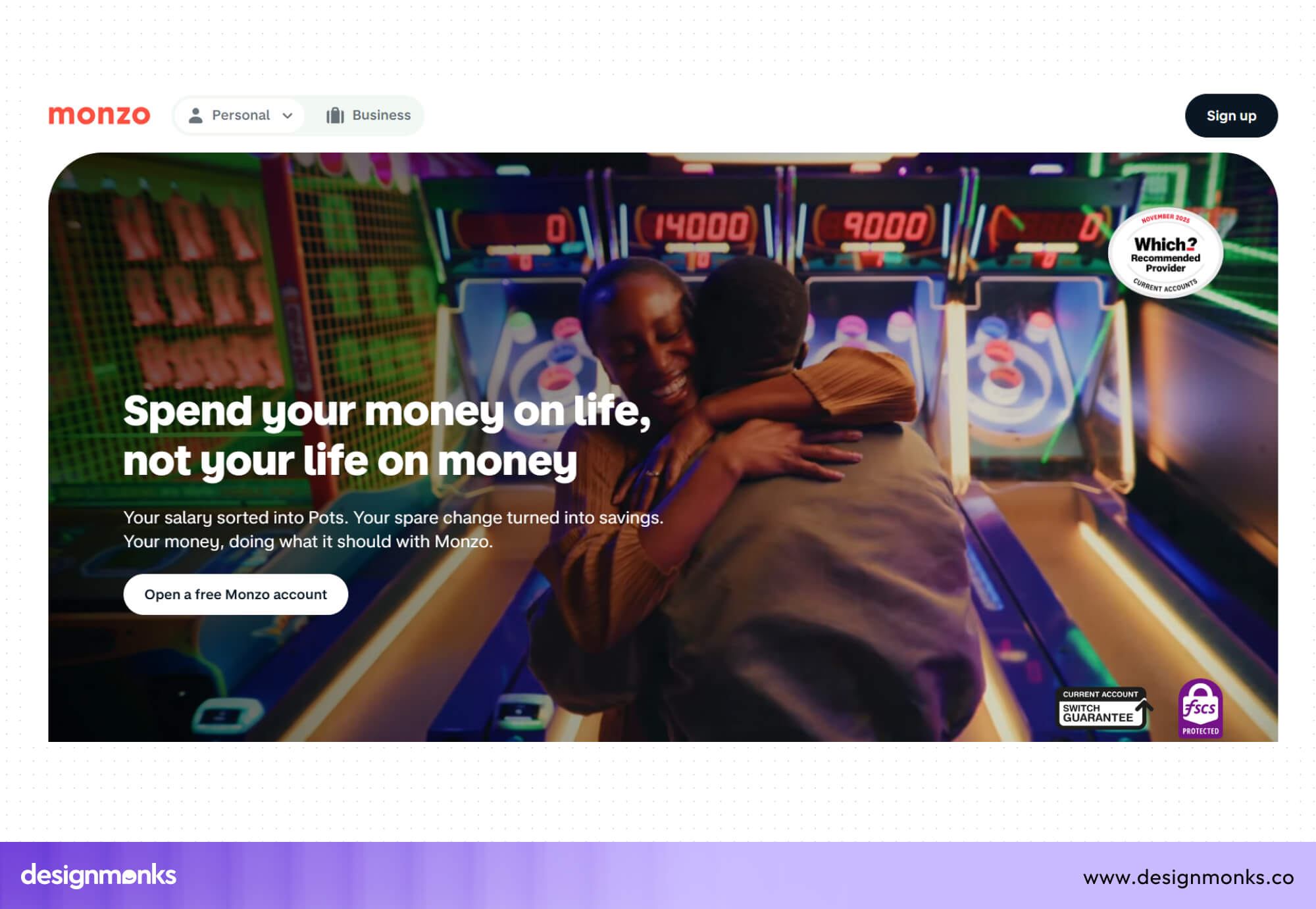
These findings influenced new budgeting and money management features that matched real user needs. By conducting research before development, Monzo created tools that felt more useful and relevant to everyday banking.
Airbnb Professional Photography Program (2009–2010)
From 2009 to 2010, Airbnb wanted to understand why some listings consistently received more bookings than others. Through interviews, user feedback, and marketplace research, the team discovered that high-quality photos played a major role in building trust and encouraging guests to book.
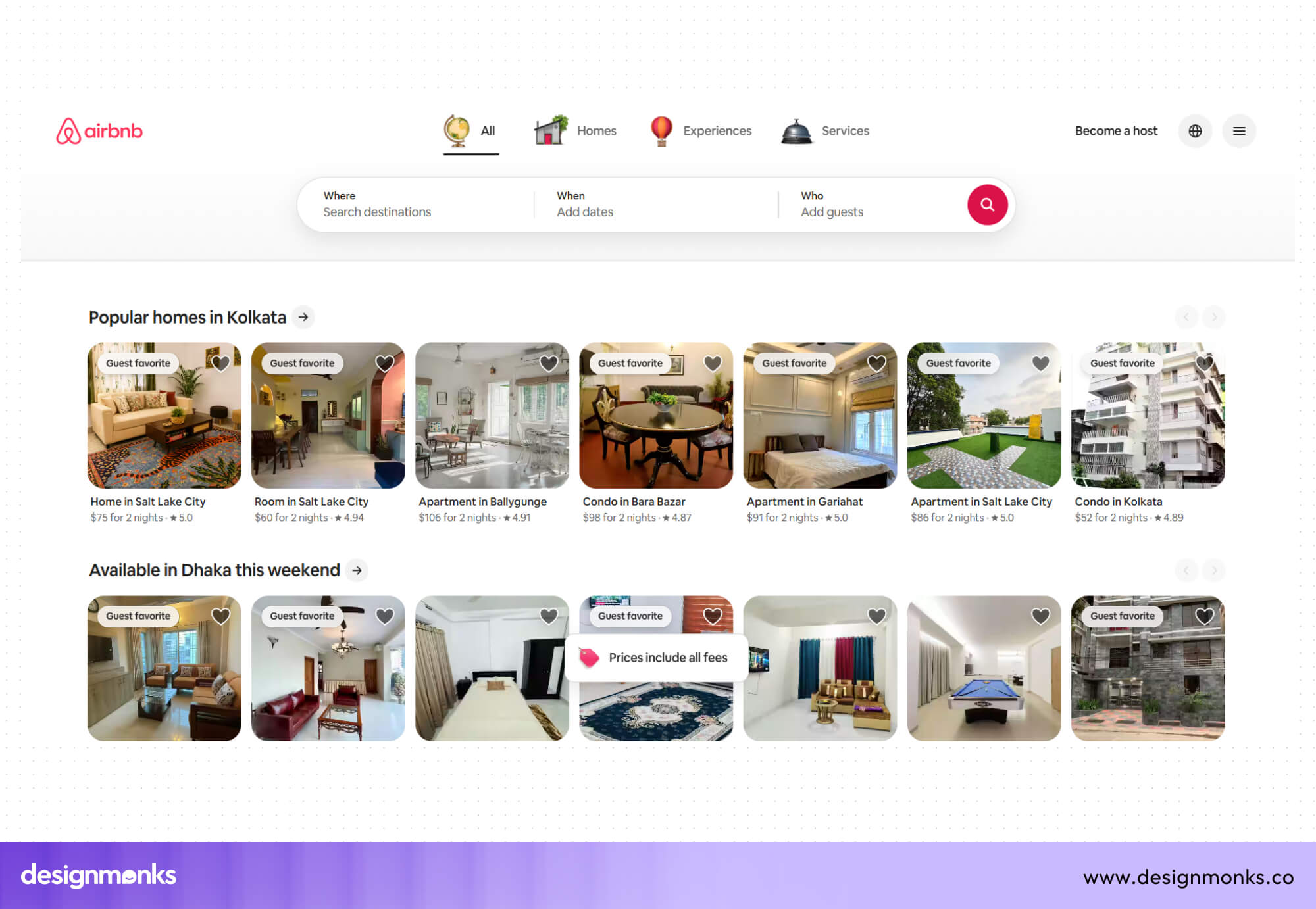
Instead of redesigning the booking experience, Airbnb introduced its Professional Photography Program, allowing hosts to upload professional images of their properties.
This simple, research-driven decision improved listing quality, increased bookings, and strengthened user confidence across the platform.
Common Mistakes to Avoid
Even well-planned formative research can produce misleading results if it's not conducted carefully. You need to avoid these common mistakes to collect accurate, unbiased, and actionable insights while doing formative UX research:
- Recruiting the wrong users: Research findings are only valuable if they come from your target audience. Choose participants who match your ideal users to ensure the insights reflect real needs and behaviors.
- Asking leading questions: Avoid questions that suggest a preferred answer. Instead, ask open-ended questions that encourage participants to share their honest experiences and opinions.
- Relying on opinions instead of behaviors: People don't always do what they say they'll do. Focus on real experiences by asking users about past actions and observing how they complete tasks.
- Misunderstanding small sample sizes: Formative research doesn't require large numbers of participants. The goal is to uncover recurring patterns and pain points, not to produce statistically significant results.
- Ignoring qualitative insights: Analytics show what users are doing, but interviews and observations explain why. Combine both types of data to build a complete understanding of user behavior.
- Skipping synthesis: Collecting research is only the beginning. Organize your findings, identify recurring themes, and turn those insights into clear design recommendations that improve the product.
Best Practices for Effective Formative UX Research
Successful formative UX research is more than choosing the right method. Following a few proven best practices helps teams collect reliable insights and make better design decisions:
- Start with Clear Research Goals: Define what you want to learn before recruiting participants or choosing research methods. Clear objectives keep the study focused and make the findings easier to apply.
- Recruit the Right Participants: Research is only valuable when it reflects your target users. Select participants who match your audience, goals, and use cases to gather meaningful insights.
- Ask Open-Ended Questions: Encourage participants to share stories and experiences instead of giving simple yes-or-no answers. Open-ended questions often reveal motivations, behaviors, and pain points that structured questions miss.
- Combine Multiple Research Methods: One single method doesnt tell the whole story. Combining interviews, observations, surveys, and other techniques gives your UX team a more complete understanding of user needs.
- Focus on Patterns, Not Individual Opinions: Don't make design decisions based on one participant's feedback. Look for recurring themes across multiple sessions to identify the most important user problems.
- Turn Research into Action: Research only creates value when it influences design decisions. Use your findings to improve user flows, prioritize features, and support evidence-based design through continuous iterative design.
Frequently Asked Questions
Is formative research qualitative?
Most formative research is qualitative because it focuses on understanding user behaviors, motivations, and experiences. However, exploratory surveys and other lightweight quantitative methods can also support formative research.
How many participants are enough?
The right number depends on your research goals and method. For user interviews, many UX teams begin seeing recurring themes after interviewing around 5 to 10 participants, then continue if additional insights are needed.
Is usability testing formative?
Yes, usability testing can be formative. It is formative when it's conducted during design to identify problems and improve a prototype. When used to evaluate a finished product or measure performance, it's considered summative research.
What is the difference between formative and generative research?
Generative research focuses on discovering user needs and new opportunities at the earliest stages of product development. Formative research builds on those insights to shape, refine, and improve design concepts before development. In practice, the two terms are often used interchangeably because both support early product discovery.
How long does formative research take?
The timeline depends on the project's scope. A small study with interviews and analysis may take one to two weeks, while larger research projects involving multiple methods can take several weeks. The key is allowing enough time to recruit participants, analyze findings, and turn insights into design decisions.


.avif)
.avif)
.avif)
.avif)


.avif)
.avif)
.avif)
.avif)






.avif)