.svg)



Key Takeaways
- Design thinking firms solve problems by focusing on real user needs
- They offer services like research, ideas, prototyping, and product planning
- Top firms mix design, strategy, and fast execution for better results
- A clear process helps test ideas and build practical solutions
- Choosing the right firm depends on experience, team, and real results
Strong ideas don’t happen by chance, they come from looking at problems differently. That’s where a design thinking consulting firm plays a key role. They help businesses approach challenges through human-centered innovation and turn uncertainty into clear, actionable direction.
Rather than relying on assumptions, these firms use structured methods to understand users, redefine problems, and create solutions that deliver real value. From product innovation to business strategy, they connect ideas with measurable outcomes.
Whether you're growing a startup or improving an established business, the right approach can change how you move forward. To understand how businesses apply this in real scenarios, let’s look at the firms, processes, and services involved.
What Is a Design Thinking Consulting Firm?
A Design Thinking Consulting Firm helps organizations solve complex problems by focusing on people first. Instead of rushing to solutions, these firms use Design Thinking, Human-Centered Design, and innovation consulting methods to deeply understand what users need, uncover hidden challenges, and create practical solutions that actually work.
This approach combines product innovation with business strategy. Companies don’t just get ideas, they get a clear, structured way to solve problems, improve their innovation strategy, and achieve long-term business growth.
These consultancies work closely with teams to align business goals with real user needs, so solutions are both practical and impactful.
These firms are especially useful when things are uncertain. Whether launching a new product or improving an existing service, they bring structure, clarity, and user-centered innovation services to guide decisions.
What Design Thinking Consulting Firms Actually Do
Design thinking firms offer a mix of research, strategy, and execution services that guide organizations from idea to implementation. Core services of Design thinking consulting firms are:
- User Research: They conduct interviews, surveys, and observations to understand how users behave, what they need, and where problems exist.
- Ideation Workshops: Through structured Ideation Workshops, teams brainstorm ideas, explore different solutions, and prioritize the most impactful ones.
- Rapid Prototyping: Instead of spending months building a final product, firms create quick prototypes to test ideas early and reduce risk.
- Product Strategy: They help define product direction, features, and long-term plans aligned with business goals.
Companies usually hire design thinking consultancies when they need help solving important problems. This can include starting new innovation projects, improving products that aren’t doing well, making customer experiences better, going through digital changes, or reaching new markets and users.
No matter the situation, the main goal is the same, it is to reduce guesswork and create solutions based on what real users actually need. By focusing on people first, these firms help businesses make smart decisions and build products or services that really work.
Top 5 Design Thinking Consulting Firms
Choosing the right design thinking consultancy firm is crucial when your business wants to innovate, solve complex problems, and create products or services that truly resonate with users.
Here are five top firms known for excelling in Design Thinking, human-centered innovation, UX, product strategy, and business transformation:
Design Monks
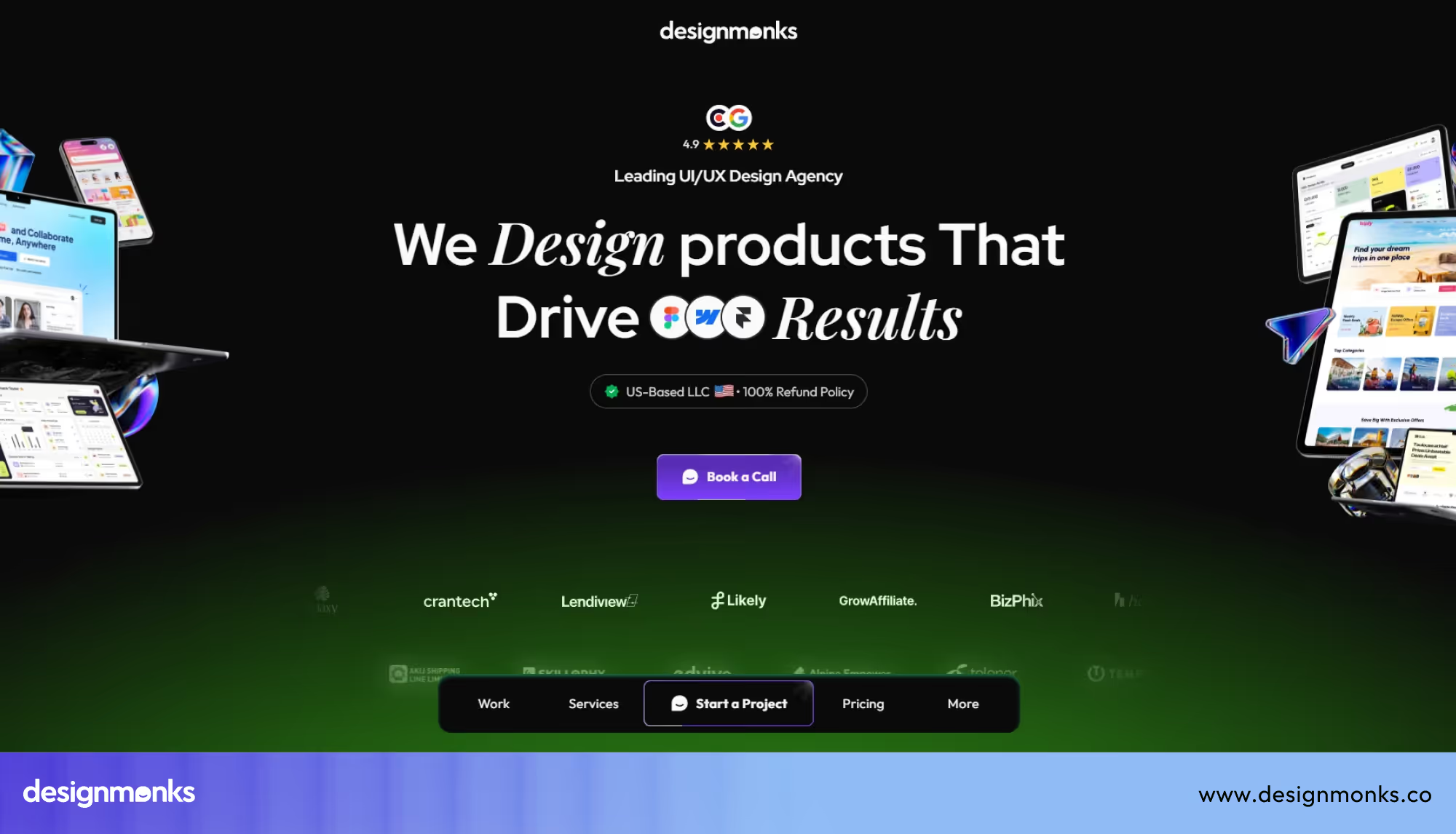
Design Monks stands out as the go-to consultancy firm for companies that want to solve complex problems while keeping users at the center of their solutions.
Overview:
- Website: Design Monks
- Price: $50 - $99 / hr
- Locations: Global (Bangladesh, USA, London, Johannesburg, Netherlands, and more)
- Clients: Pepsi, Onethred, Likely, edvive, Liberate Labs, and more
They specialize in Design Thinking, UX strategy, product design, and innovation consulting. They help businesses take ideas from research to implementation. Their approach combines rapid prototyping, ideation workshops, and user research to ensure every solution is practical, measurable, and user-focused.
Design Monks has worked with digital products globally and has helped platforms scale efficiently while maintaining excellent user experience. They guide teams through structured innovation frameworks that align business strategy with human-centered insights.
With offices in Bangladesh, the USA, and many parts of Europe, Design Monks provides flexible pricing and scalable services, making them ideal for both startups and growing companies seeking impactful design thinking consulting.
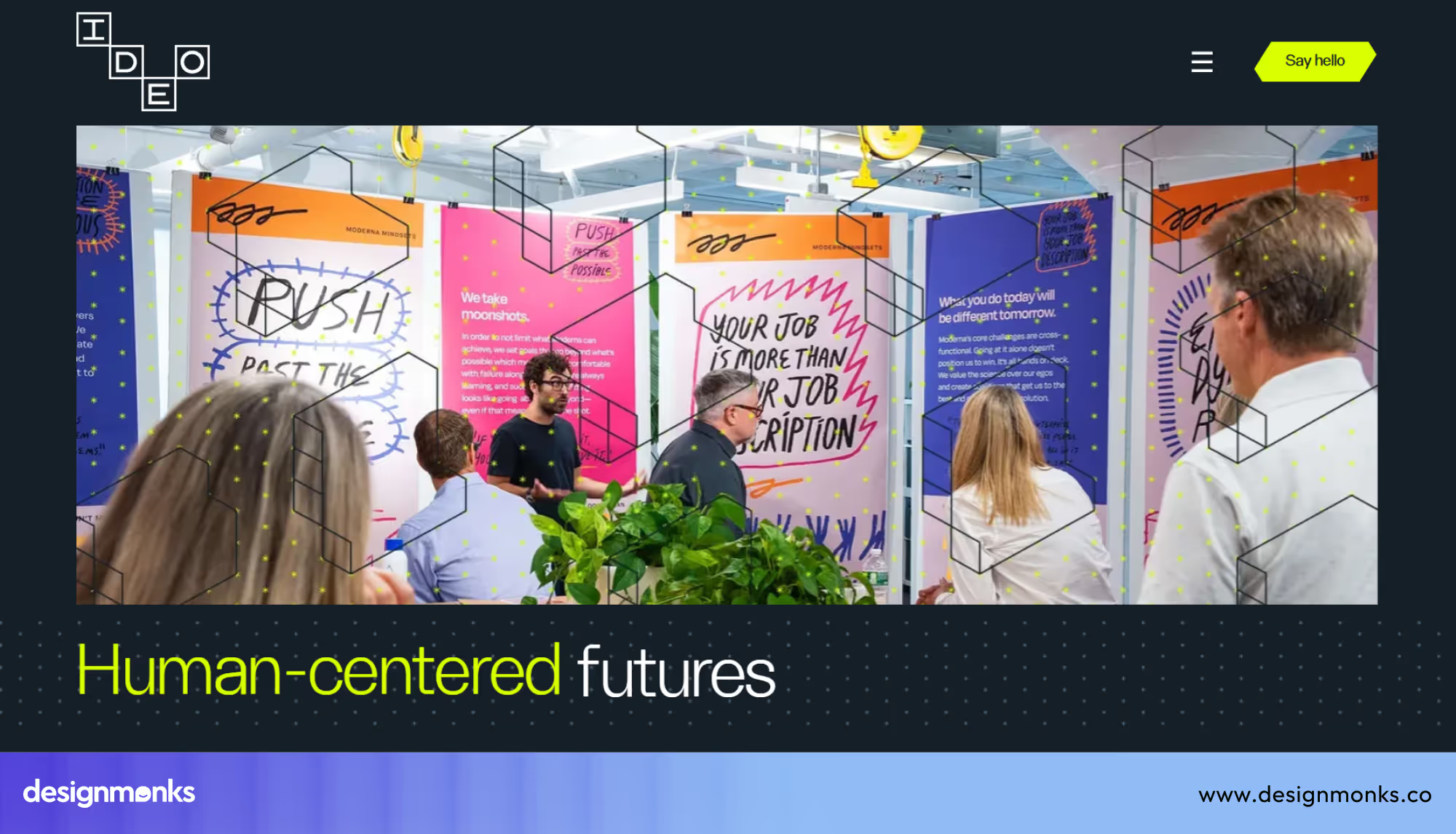
IDEO
IDEO is widely regarded as one of the original innovators in Design Thinking and human-centered design.
Overview:
- Website: IDEO
- Price: Based on the projects
- Locations: Cambridge, Chicago, London, San Francisco, and Shanghai
- Clients: Boom Supersonic, Sanofi, Gates Foundation, Alicorp, Jack Technology, and more
They help companies rethink products, services, and systems using research-driven insights, collaborative workshops, and prototyping. Their services cover everything from innovation strategy to UX design and organizational change.
IDEO has a global presence with offices in the US, UK, Europe, and Asia. They have delivered transformative projects for companies by combining creativity with rigorous methodology.
IDEO excels in helping large enterprises create scalable design thinking processes that produce measurable business outcomes. This makes them ideal for organizations that want both high-level strategy and practical innovation execution.
Frog Design
Frog Design focuses on applying Design Thinking to complex business challenges, blending design, technology, and strategy.
Overview:
- Website: Frog Design
- Price: Based on the project
- Locations: Barcelona, Bangalore, Copenhagen, London, Lyon, and more
- Clients: Uniliever, IKEA, Tiffany & Co, Volvo Ground, and more
Their teams specialize in design thinking, product innovation, service design, UX, and digital transformation. They help companies improve customer experiences and implement effective solutions.
Frog Design has led notable projects and transformed digital experiences while aligning with business goals. They use rapid prototyping, user research, and ideation workshops to test and validate ideas early, reducing risk and improving outcomes.
With offices across the US, Europe, and Asia, Frog is ideal for mid-to-large enterprises seeking measurable impact through innovative design thinking solutions.
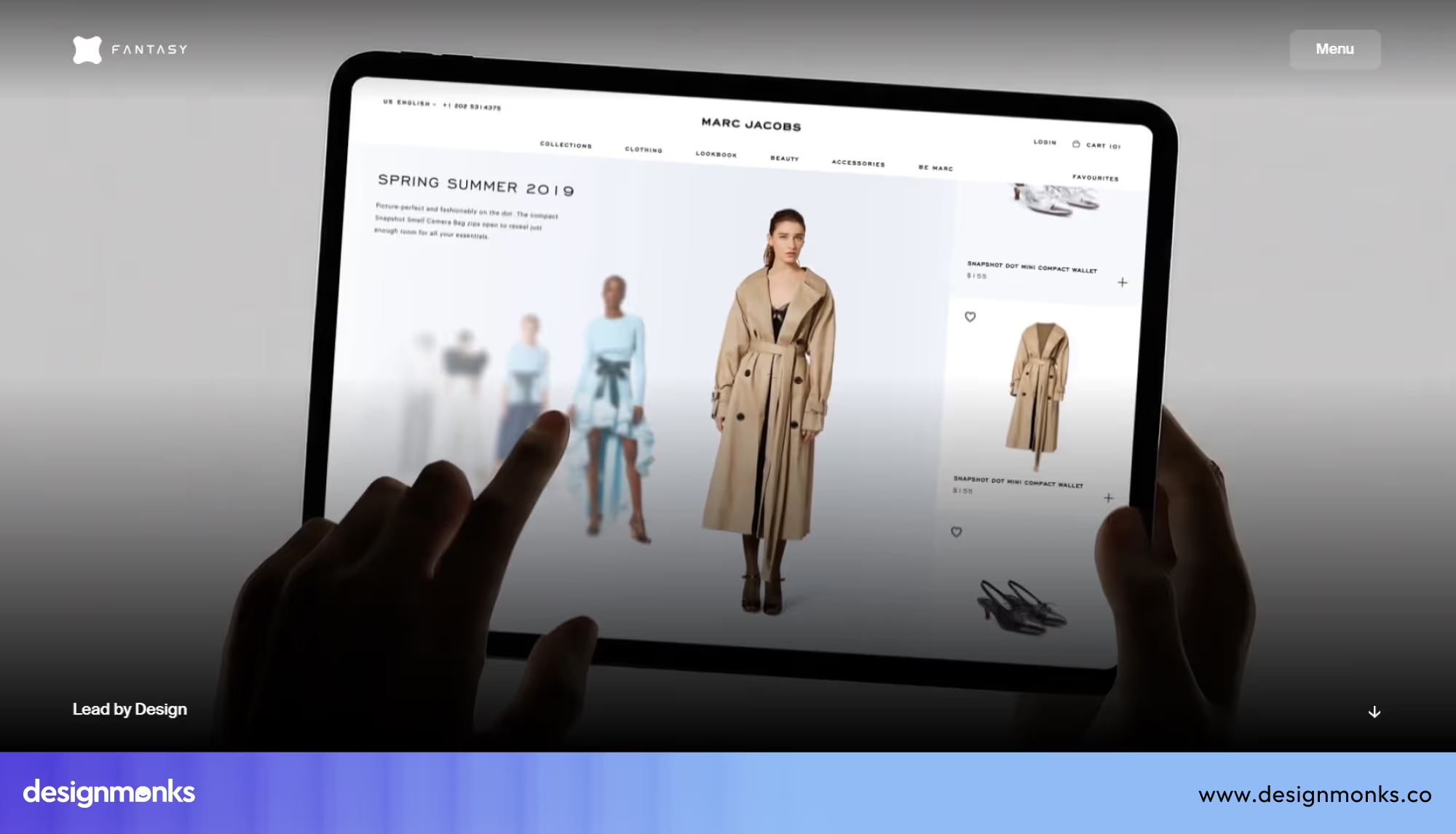
Fantasy
Fantasy is recognized for applying Design Thinking principles to complex digital challenges, helping clients create products and experiences that are both innovative and user-focused.
Overview:
- Website: Fantasy
- Price: Based on Project
- Locations: USA, Canada
- Clients: Basel, Royal Caribbean, Harrods, Kohler, and more
Their services go beyond high-end UX and visual design to include human-centered research, ideation workshops, rapid prototyping, and digital innovation consulting. This approach ensures solutions are grounded in real user needs and aligned with business goals.
They have partnered with leading brands delivering platforms that are not only visually engaging but also practical and highly usable. With offices globally, Fantasy is ideal for companies seeking Design Thinking-driven solutions that combine strategic insight, iterative testing, and meaningful user impact.
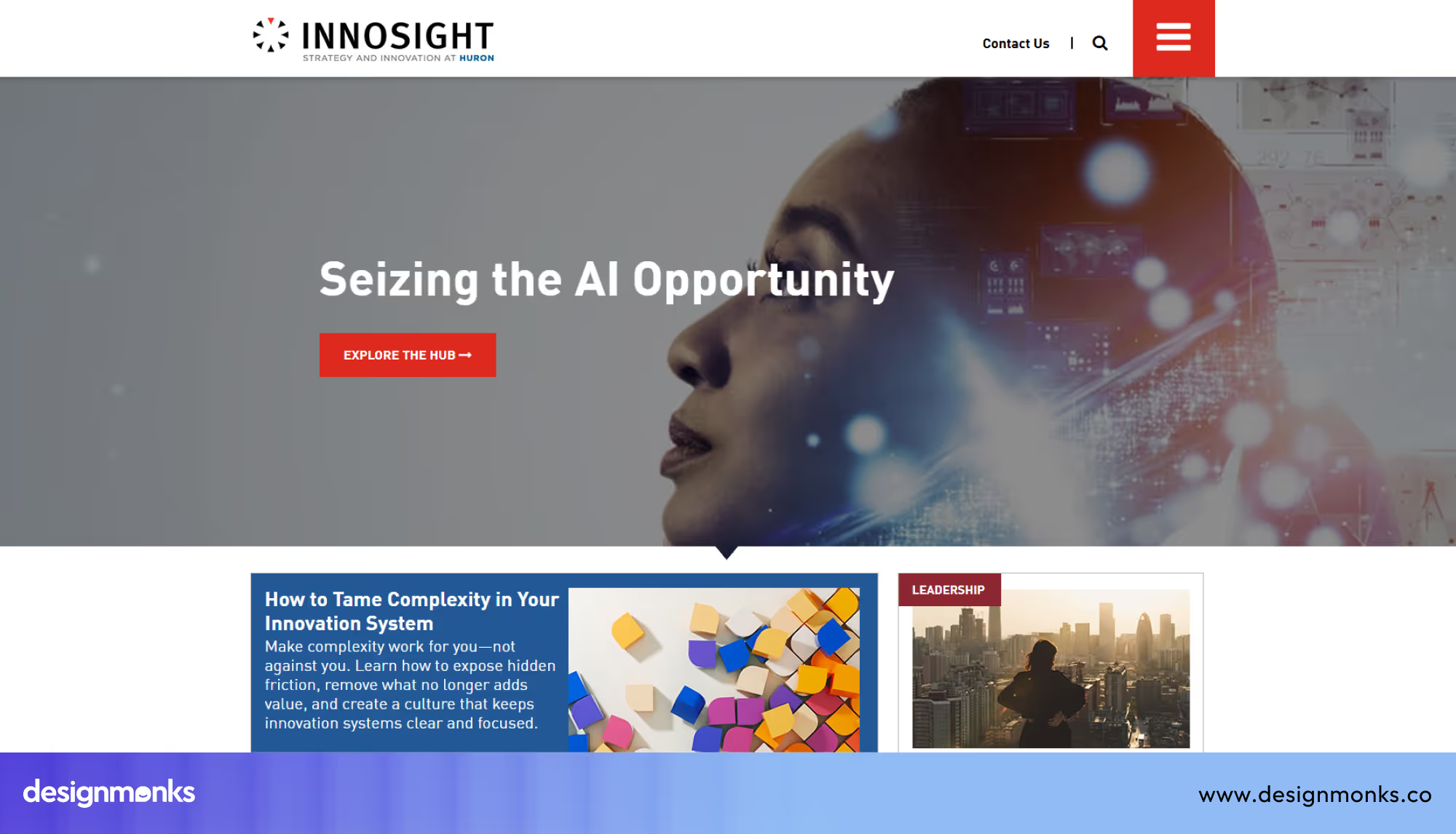
Innosight
Innosight specializes in applying Design Thinking to business strategy and innovation management.
Overview:
- Website: Innosight
- Price: Based on Projects
- Locations: Singapore, Switzerland, and more
- Clients: Dow, Grab, Medtech Co, Regional Utility Co, and more
They focus on helping organizations transform growth models, rethink product portfolios, and implement innovation initiatives that drive long-term value.
They have supported enterprises using structured frameworks to uncover opportunities and guide strategic decisions. Innosight’s approach includes market research, ideation workshops, strategy consulting, and ensuring solutions are both innovative and commercially viable.
With global offices, they are ideal for large organizations aiming to align human-centered insights with business transformation goals.
The Design Thinking Process Used by Consulting Firms
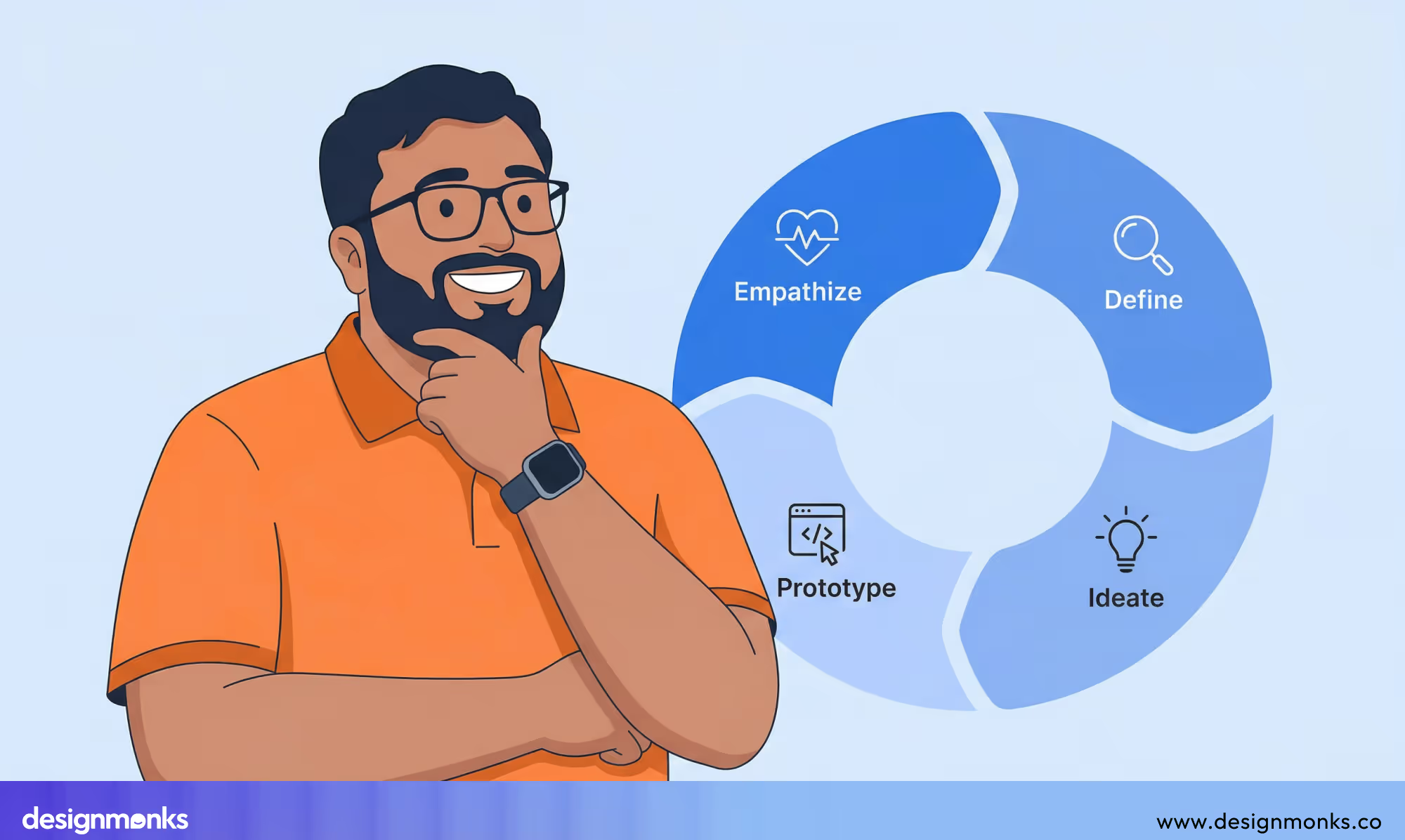
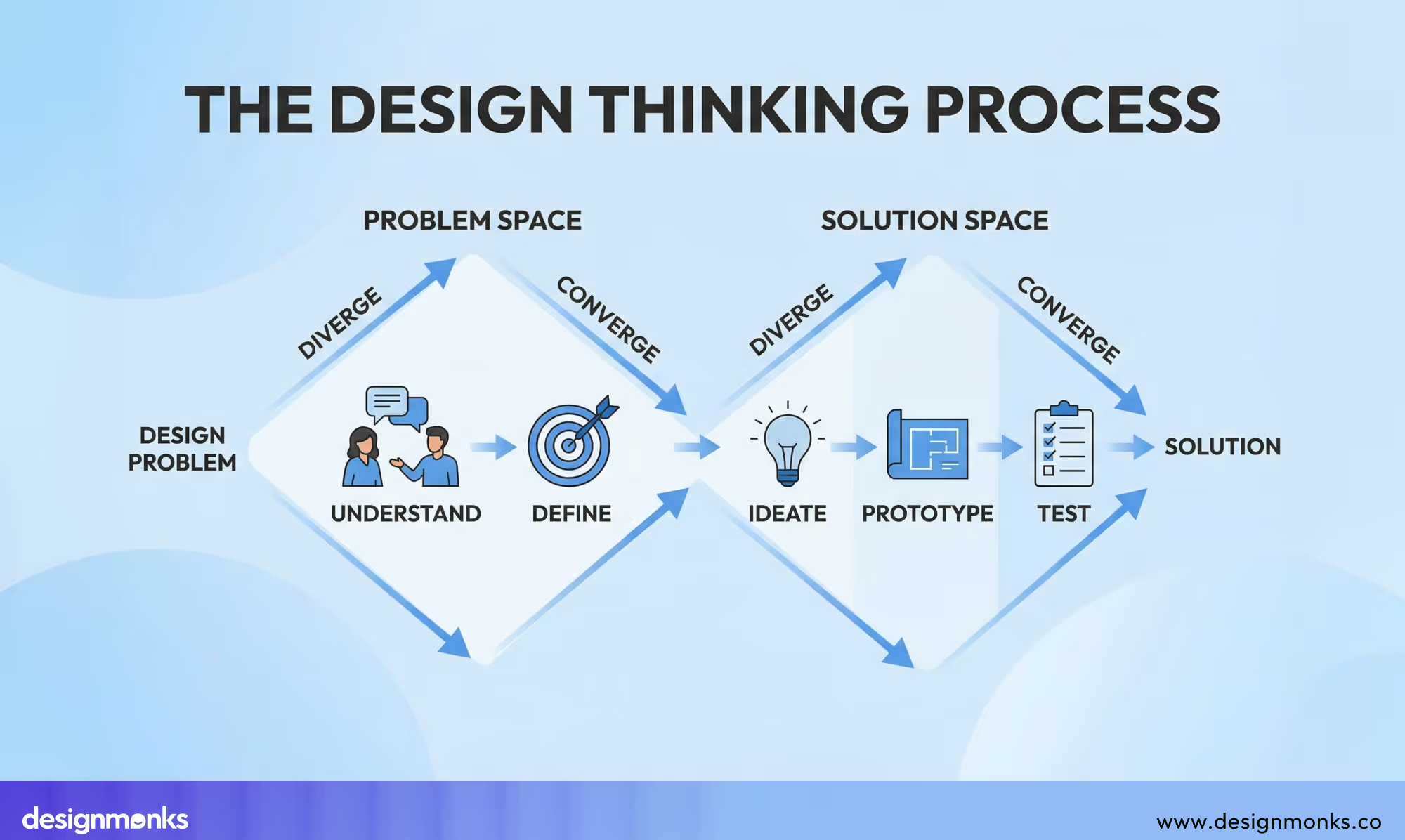
Most consulting firms follow a structured Design Thinking process to ensure consistency and results. This process includes stages like Empathy, Ideation, Prototyping, and Testing, forming a complete innovation methodology.
By following this structured approach, teams move from unclear problems to real, actionable solutions. It ensures every idea is grounded in user needs, tested early, and refined continuously.
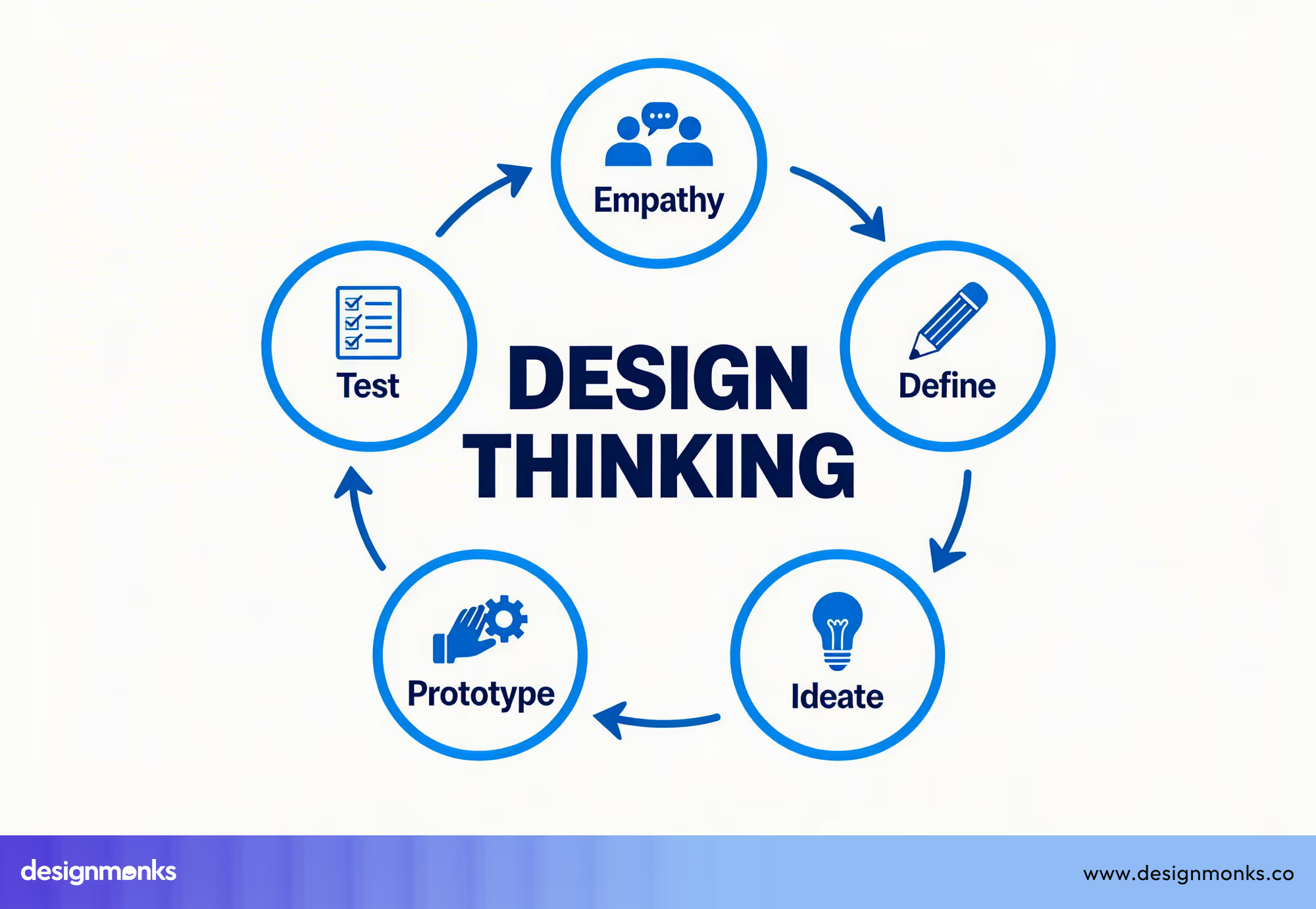
Empathize: Understanding User Needs
The first step is all about knowing your users. Consultants spend time doing user interviews, field observations, and ethnographic research. They want to see how people behave, what they need, and where they struggle.
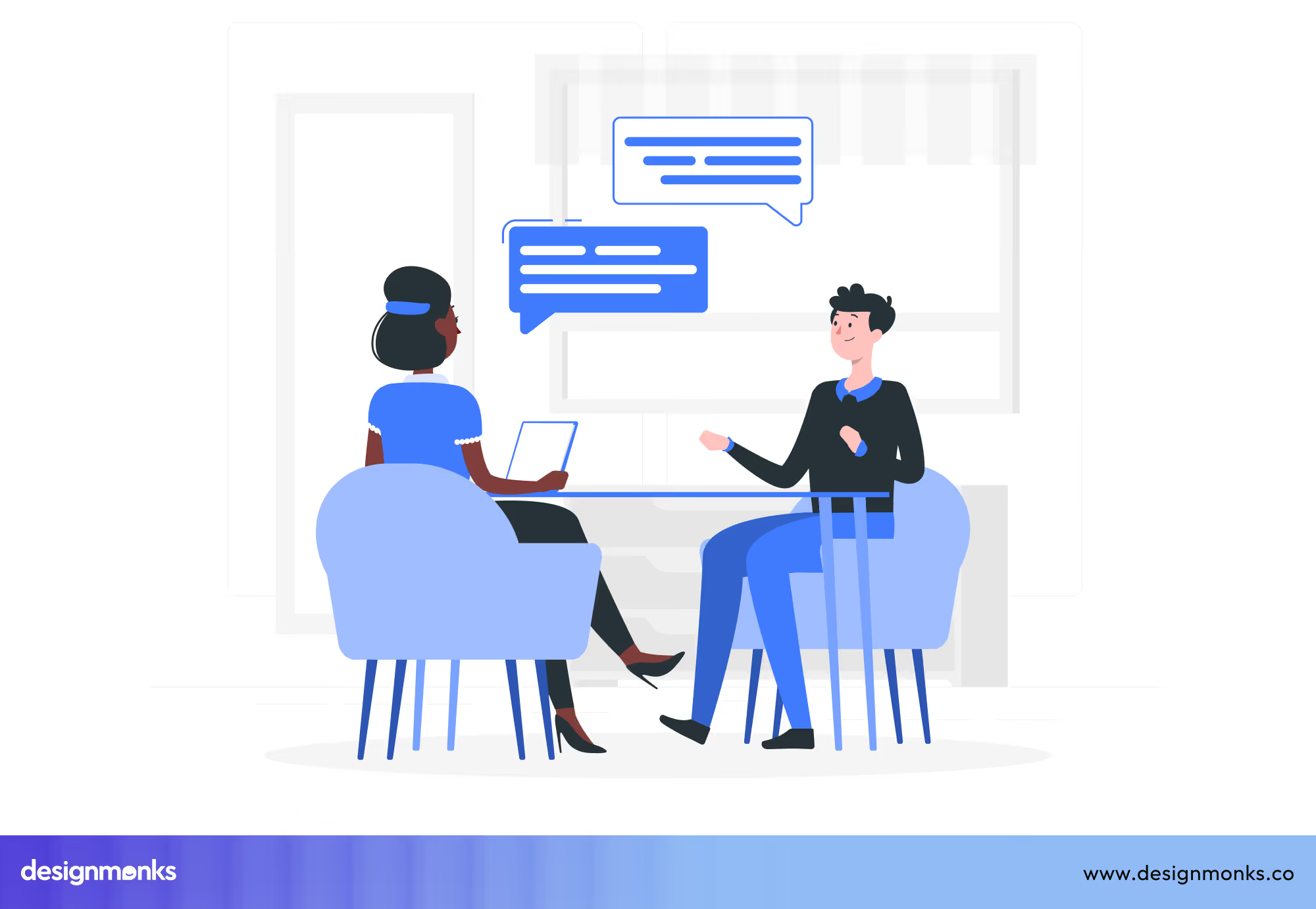
This stage focuses on:
- Observing real user behavior
- Identifying pain points
- Understanding motivations
Without empathy, solutions often miss the mark because they aren’t based on real human needs.
Define: Framing the Right Problem
After gathering insights from users, the next step is to make sense of the information and frame the real problem clearly. Instead of jumping to solutions, consultants organize research findings into specific challenges.
They ask questions like what exact issue users are facing, why it matters, and what outcome the team should aim for.
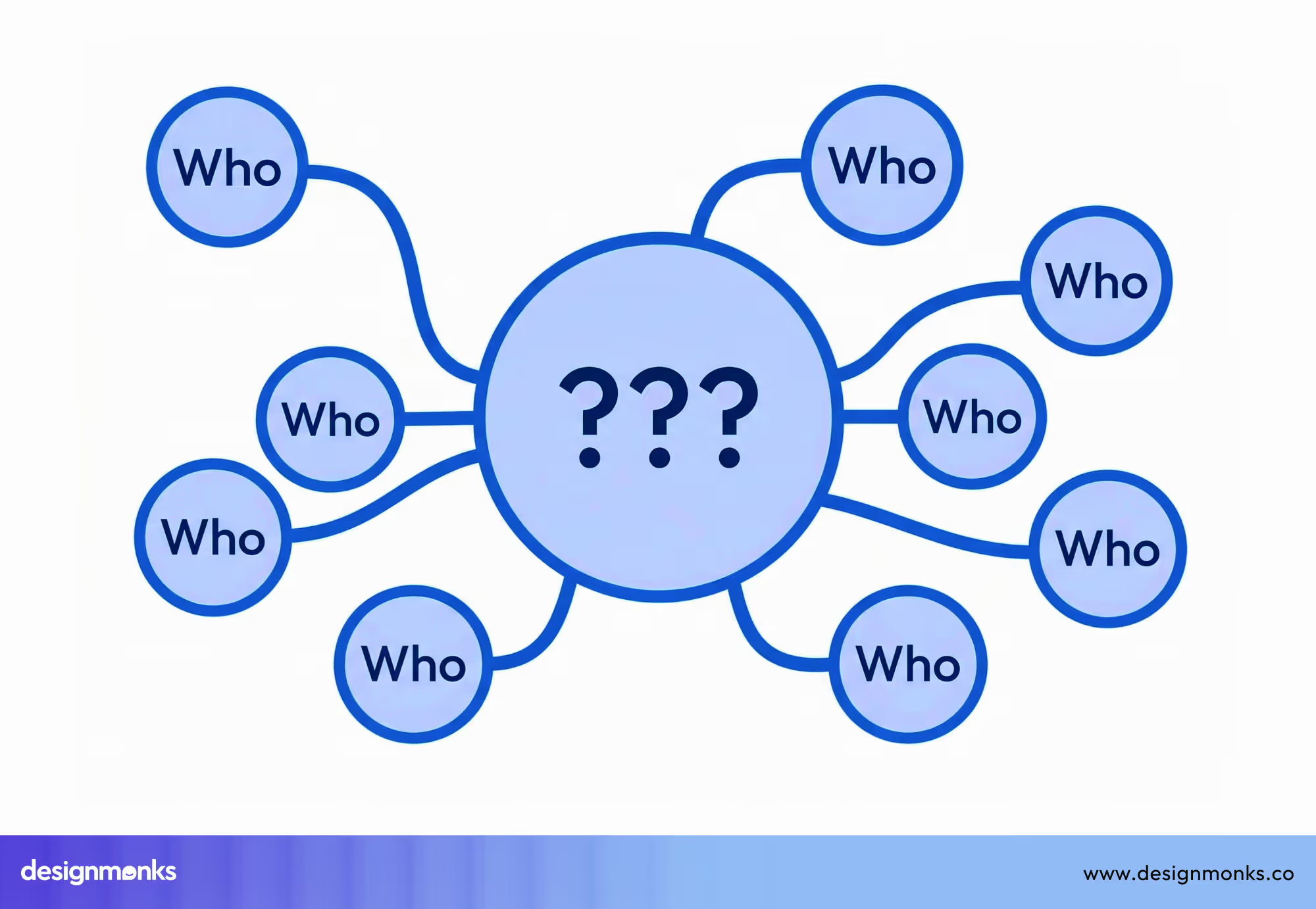
Having a well-defined problem ensures everyone is focused on the right priorities. It improves decision-making, saves time, and lays a strong foundation for the next stages of the design thinking process.
A clear problem definition is what separates guesswork from actionable innovation.
Ideate: Generating Innovative Solutions
Now comes the creative part. Teams brainstorm lots of ideas, using structured frameworks that encourage:
- Different perspectives and diverse thinking
- Collaboration across roles
- Focusing on quantity first, quality later
The goal is to come up with many possible solutions and then select the most practical and impactful ones.
Prototype: Turning Ideas into Tangible Solutions
Prototyping is about bringing ideas to life quickly so they can be tested and improved before full-scale development. Design thinking consultancies create simple mockups, wireframes, or interactive models that represent the concept.
These prototypes let teams see how ideas function in the real world, spot issues early, and adjust solutions as needed. This step encourages experimentation, learning, and giving users a tangible experience to provide feedback.
Rapid prototyping reduces risk, saves time and resources, and ensures that the final solution is practical, usable, and closely aligned with both user needs and business goals.
Test: Validating Solutions with Real Users
Testing is the final but ongoing step. Here, prototypes are tried and evaluated by real users to see what works and what doesn’t. This stage is crucial because it:
- Provides early insights on usability
- Confirms whether the solution meets user needs
- Reduces risk before full implementation
Teams often repeat user testing multiple times, refining the product until it’s ready to launch confidently. It’s a cycle of feedback, improvement, and validation that ensures solutions are practical, effective, and truly user-centered.
Services Offered by Design Thinking Consulting Firms
Design thinking consulting firms provide a range of services designed to help businesses innovate, improve products, and create meaningful user experiences. Their work bridges the gap between strategy, design, and execution, ensuring every solution is practical, user-focused, and aligned with business goals.
At the heart of their services are areas like Design Strategy, UX Design, Product Design, Service Design, and Innovation Workshops. These offerings help organizations build better products, enhance user experience, and drive digital product innovation.
Each service focuses on applying human-centered methods to solve real problems, not just aesthetics or technology:
Design Thinking Workshops
Workshops are where teams start thinking differently. These are interactive, hands-on sessions where employees learn how to solve problems using design thinking. Typically, these sessions include:
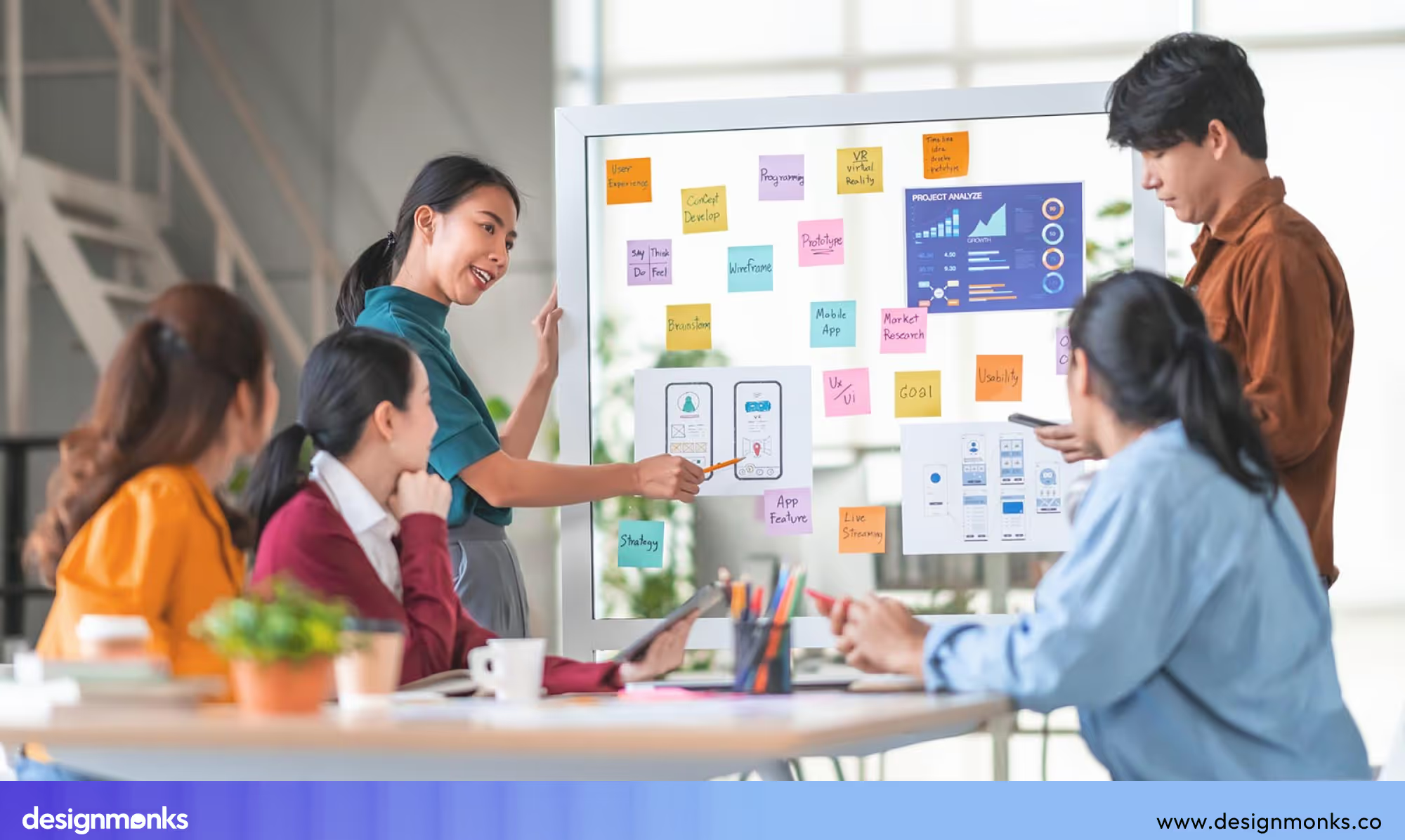
- Real problem-solving exercises
- Group ideation and brainstorming
- Simulations based on real business challenges
But the real value comes from how these workshops are run. Strong consultancies don’t just teach theory, they guide teams through actual problems. Firms like Design Monks focus on making workshops practical and outcome-driven, so teams can immediately apply what they learn in real projects.
Innovation Strategy Consulting
A lot of companies struggle with innovation because there’s no clear direction behind it. That’s where innovation strategy consulting comes in.
Consulting firms help businesses build clear roadmaps, align teams, and identify real growth opportunities. Instead of chasing random ideas, companies get a structured plan that connects innovation directly to business goals.
The best firms take this further by making sure strategy is not just a document, but something teams can actually execute. They focus on bridging strategy with action, ensuring ideas don’t stay stuck in planning but move forward into real implementation.
UX & Product Design Consulting
This is where everything comes together. UX and product design consulting is about turning ideas into real digital products that users can interact with.
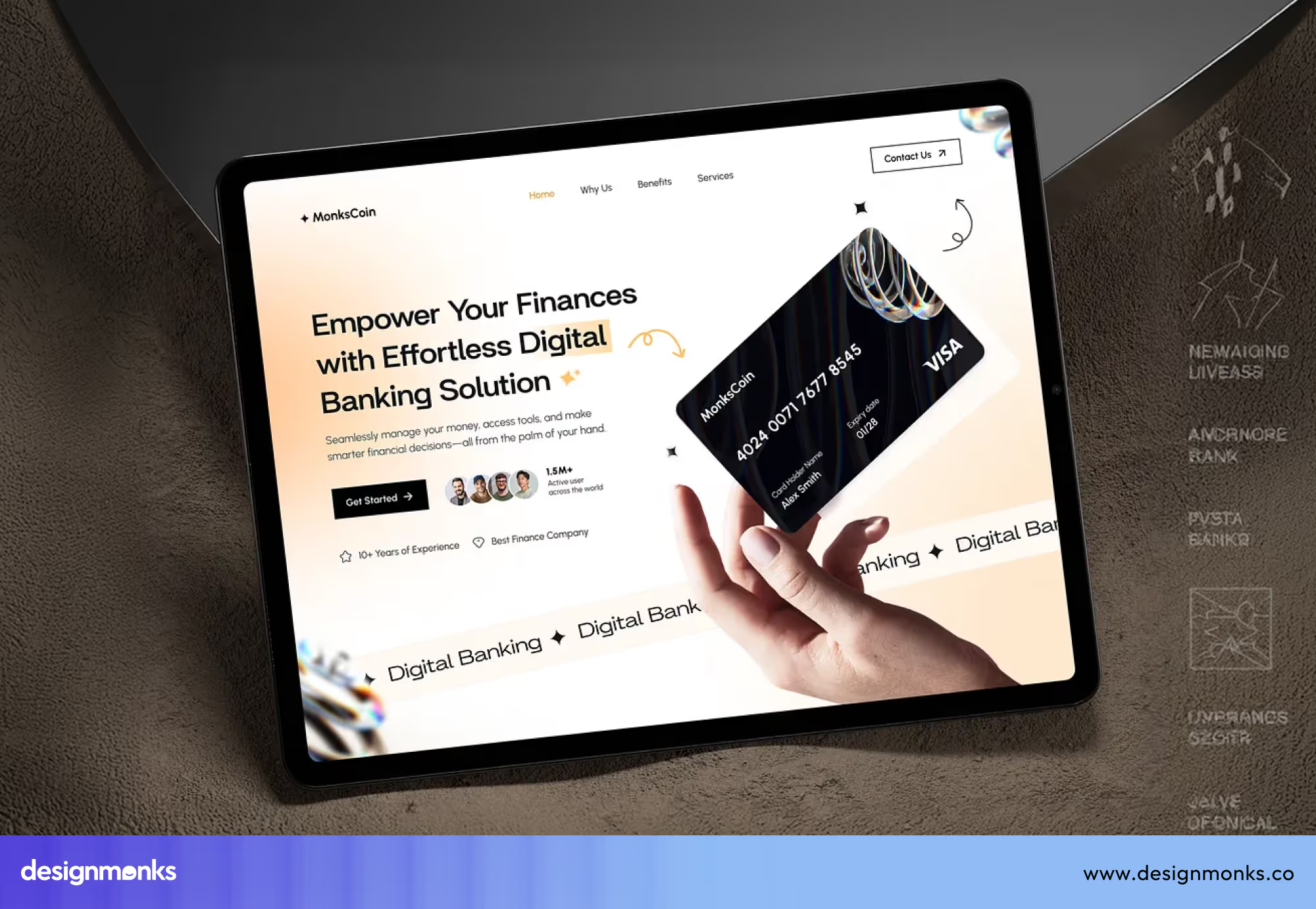
Firms apply experience design consulting principles to create intuitive interfaces, improve usability, and build scalable solutions. This is especially important for SaaS platforms, mobile apps, and digital products, where even small usability issues can affect growth.
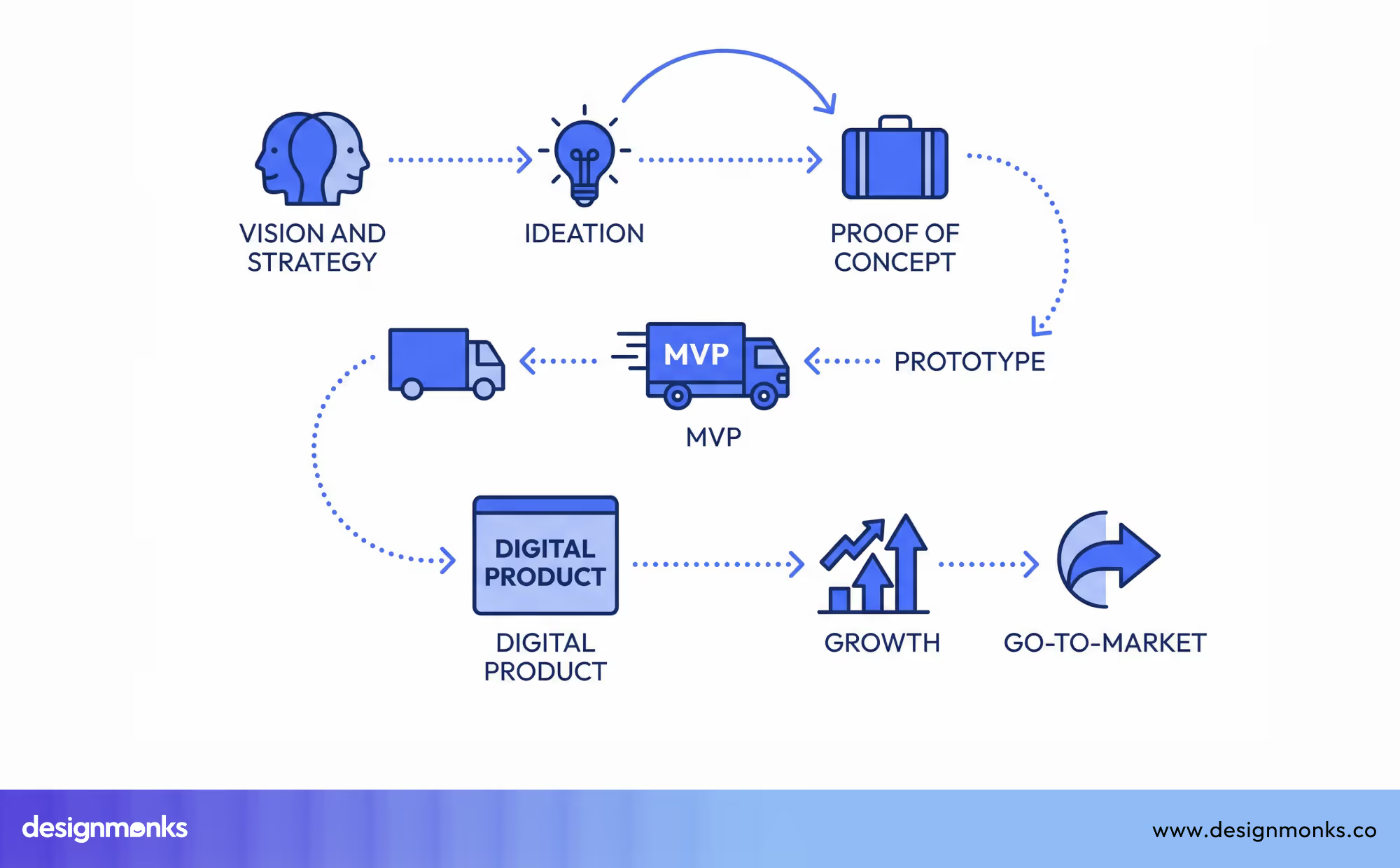
What sets top firms apart is their ability to move quickly while staying user-focused. Design Monks stands out here by combining rapid prototyping, continuous testing, and strong UX expertise, helping companies launch products faster while reducing risk.
Industries That Use Design Thinking Consulting
Design thinking is used across many industries because, at the end of the day, every business is trying to solve problems and improve user experience.
No matter what industry you’re in, the goal is the same, build products and services that are simple, useful, and easy for people to use. Here’s how different industries actually use design thinking in real life:
- FinTech: Used to create secure and user-friendly financial products like mobile banking apps and payment systems. It helps simplify complex features so users can manage money without confusion.
- Healthcare: Helps improve patient care and service delivery by making systems easier for both patients and doctors. The focus is on better experiences and smoother processes.
- SaaS: Focuses on making products simple, clear, and easy to use, which helps keep users engaged and reduces drop-offs over time.
- E-commerce: Improves customer journeys and conversion rates. From browsing products to checkout, every step is designed to feel smooth and effortless.
- Enterprise Software: Works on simplifying complex systems so employees can use tools easily, work faster, and avoid unnecessary confusion.
How to Choose the Right Design Thinking Consulting Firm
Choosing the right design thinking consulting firm can make a big difference in your results. The right partner won’t just give ideas, they’ll help you solve real problems and build solutions that actually work:
Evaluate Their Design Thinking Expertise
Start by looking at how the firm approaches problems. A good consulting firm should follow a clear and structured design thinking process, not guesswork. Ask simple questions like:
- Do they follow steps like research, ideation, prototyping, and testing?
- How do they understand user needs?
- How do they test and improve ideas?
Strong firms explain their process clearly and show how they move from problem to solution step by step. Companies like Design Monks stand out here because they focus on practical, user-centered methods and make their approach easy to understand and apply.
Review Case Studies & Innovation Outcomes
Before choosing any firm, it’s important to look at their past work. A reliable consulting partner should be able to show real examples of what they’ve done, including measurable improvements in products or user experience, clear before-and-after results, and experience in your industry.
This helps you understand whether they can actually deliver, not just promise. For example, Design Monks has worked on multiple digital products and focuses on showing clear outcomes rather than just ideas, which makes it easier to trust their capabilities.
Assess Team Capabilities
Design thinking works best when different experts work together. So, it’s important to check the team behind the firm. A strong team usually includes:
- UX researchers
- Product designers
- Strategists
This mix ensures that ideas are not only creative but also practical and aligned with business goals.
Look for a Practical, Hands-On Approach
Some firms focus too much on theory and presentations. What you really need is a team that works with you and builds real solutions. The right firm will:
- Collaborate closely with your team
- Test ideas quickly
- Focus on real user feedback
Firms should focus on execution, not just strategy, and help businesses move faster from ideas to actual results.
At the end of the day, the best design thinking consulting firm is one that understands your users, works closely with your team, and delivers real impact. If you’re looking for a partner that combines clear process, strong UX thinking, and practical execution, Design Monks is definitely a strong option to consider.
Design Thinking Consulting vs Traditional Consulting
Traditional business consulting usually focuses on analysis, reports, and strategy recommendations. Firms study the problem, create detailed plans, and suggest what companies should do next.
While this approach is useful for big-picture thinking, it often stays at the planning level and doesn’t always move quickly into real execution.
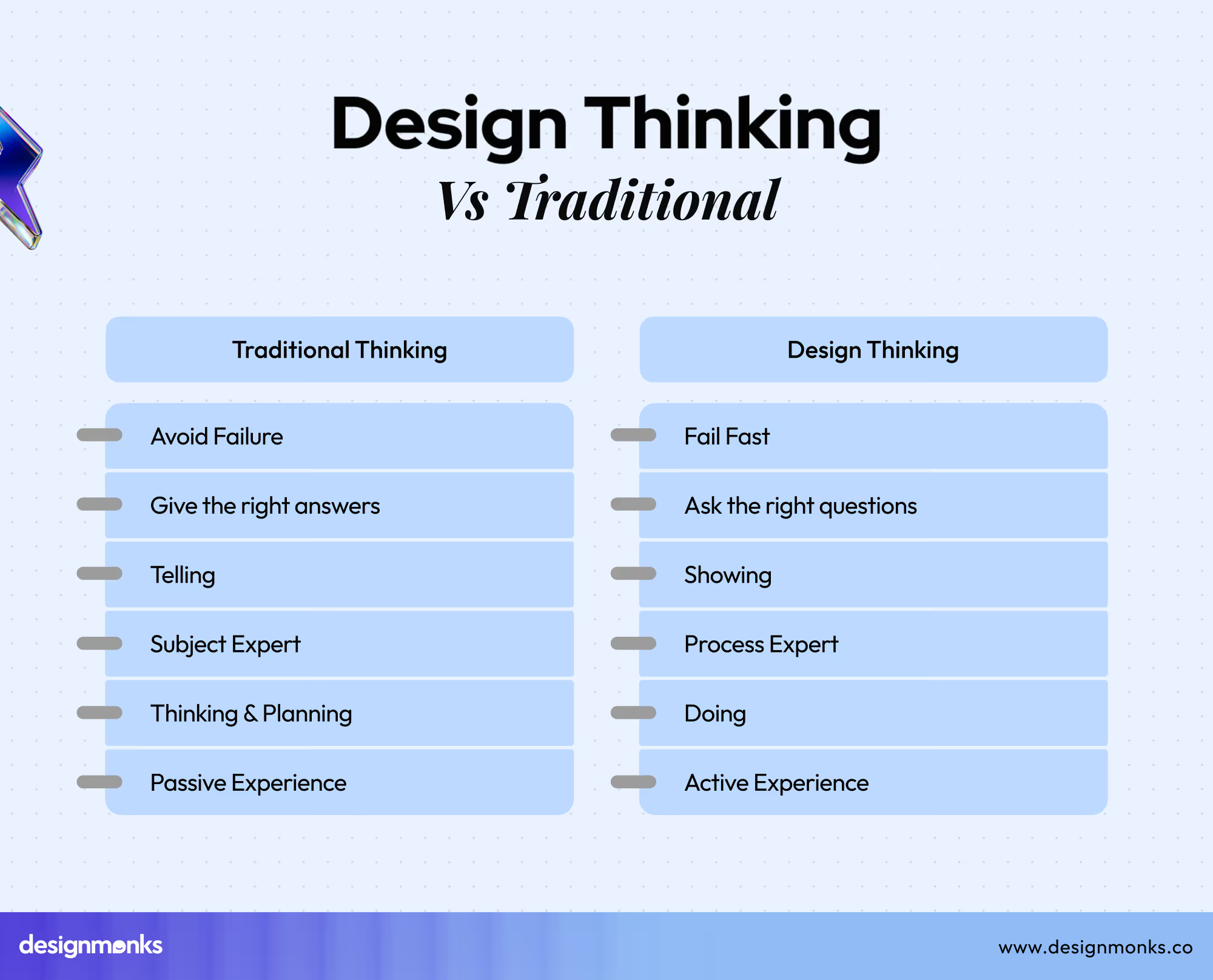
Design thinking consulting takes a different approach. Instead of starting with assumptions, it focuses on Human-Centered Design, real user insights, and practical solutions. These firms spend time understanding users, identifying real problems, and then building solutions that actually work in real life.
The biggest difference is in how the work is done. Traditional consulting focuses more on strategy and recommendations, while design thinking consulting is hands-on and action-driven. Teams don’t just plan, they design, prototype, test, and improve solutions continuously.
Because of this, design thinking consulting is often more practical and user-focused. It helps businesses move faster, reduce guesswork, and create solutions that are not only strategic but also tested and ready to succeed in the real world.
Case Study: How Design Thinking Consulting Drives Innovation
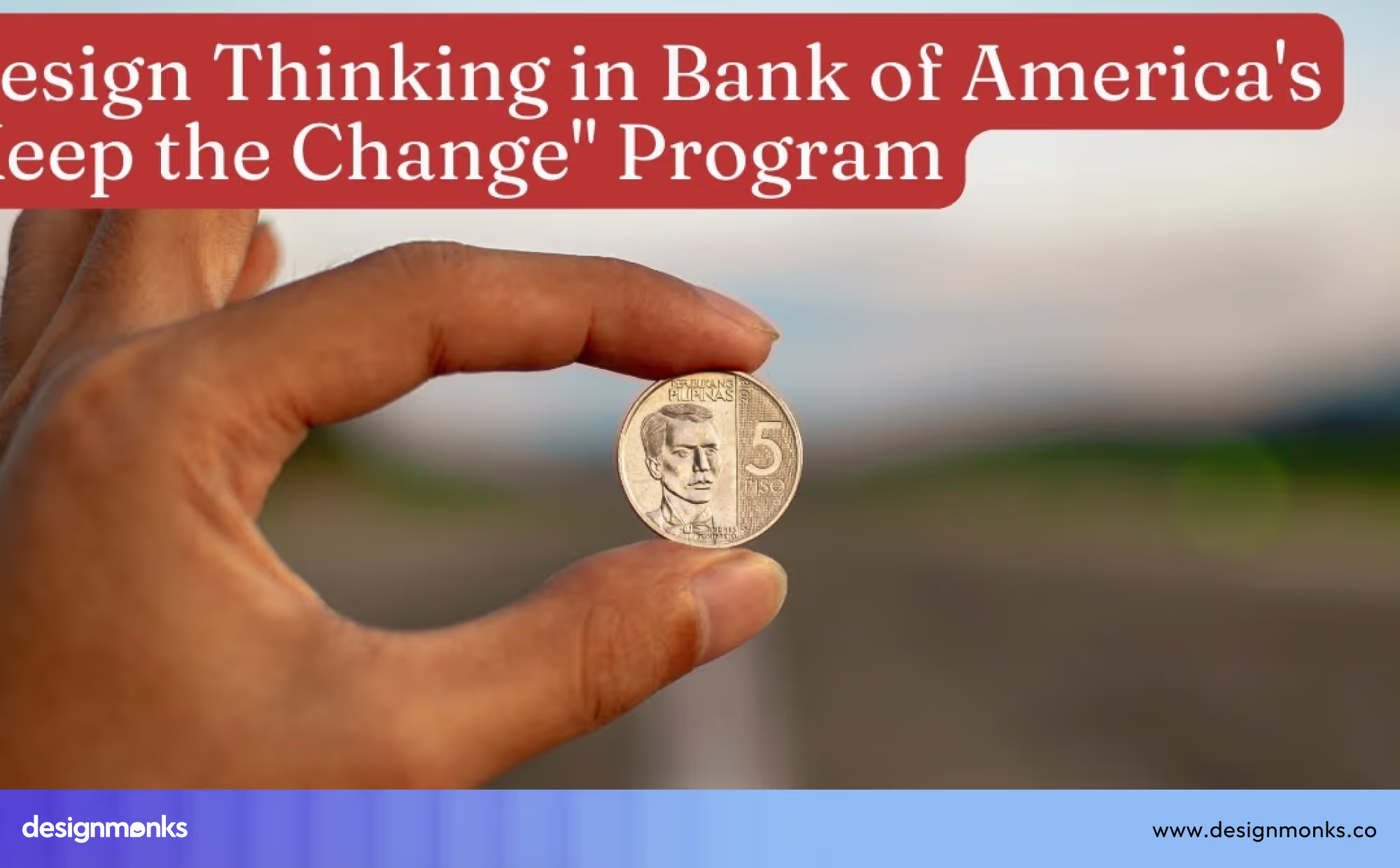
Understanding how design thinking works in real life becomes much clearer through real examples, and one of the best examples comes from the collaboration between Bank of America and IDEO, which led to the highly successful “Keep the Change” feature:
Problem
Bank of America wanted to help customers save more money, especially younger users and those who found it hard to save regularly. Most existing financial tools were not engaging, and saving often felt like extra effort.
Many people had the intention to save, but they struggled to do it consistently in their daily lives.
Process
IDEO approached the problem using the Design Thinking Process, starting with deep user understanding. They conducted user interviews to learn how people spent and saved money, and they observed real-life banking habits to find patterns.
Through this research, they discovered something simple but important, people didn’t necessarily need more motivation, they needed an easier way to save.
So instead of asking “how do we make people save more,” they reframed the problem to “how can we make saving effortless in everyday life?”
Prototype
To test this idea, IDEO quickly built a simple solution using rapid prototyping. They introduced a feature that rounds up every purchase to the nearest dollar and automatically transfers the extra amount into a savings account.
This idea was tested with real users, and based on feedback, the experience was improved step by step. The goal was to make sure the feature felt natural, simple, and easy to use before launching it fully.
Results
The final product, called “Keep the Change,” was a huge success. Millions of customers signed up for the feature, and over time, they saved billions of dollars without even thinking about it. It also increased customer engagement and improved overall satisfaction with the bank.
This case clearly shows how human-centered design and design thinking consulting can turn a small insight into a powerful solution. Instead of forcing users to change their behavior, the solution fits naturally into their daily routine, making it easier for them to do the right thing.
FAQs About Design Thinking Consulting Firms
What industries benefit most from design thinking consulting?
Industries like FinTech, Healthcare, SaaS, E-commerce, and Enterprise Software benefit the most because they rely heavily on user experience and innovation.
How much does design thinking consulting cost?
Design Thinking Consulting costs vary depending on project scope, firm expertise, and duration. Small workshops may cost a few thousand dollars, while full-scale transformation projects can be significantly higher.
How long do design thinking consulting projects take?
Short engagements like workshops may take a few weeks. Larger projects involving product development or transformation can take 3 to 6 months or longer.
Can startups benefit from design thinking consulting?
Yes, startups can use design thinking to validate ideas, reduce risk, and build products that match user needs from the beginning. It helps them move faster and make better decisions early on.


.avif)
.avif)
.avif)
.avif)


.avif)
.avif)
.avif)
.avif)






.avif)